

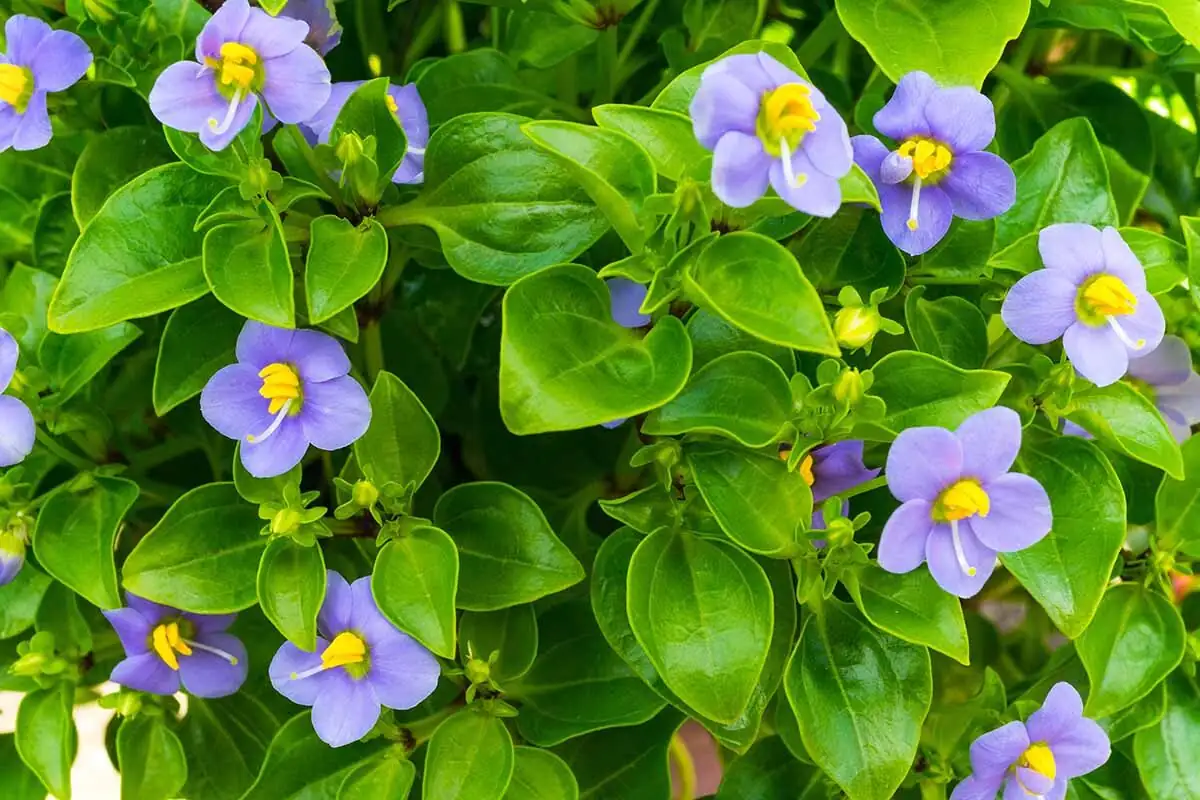
It’s hard not to smile at a pot of Persian violet in full sail—those neat, lavender-laced blooms punctuated by bright golden centers look like tiny suns rising over a calm sea. Compact, glossy, lightly fragrant, and generous with flowers in the cool months, Exacum affine invites you to slow down, breathe, and let a gentle kind of devotion take root indoors.
A “violet” by name, a borrower by meaning
Here’s the twist: Persian violet isn’t a true violet (Viola). Botanically, it belongs to the Gentian family (Gentianaceae) and hails from the island of Socotra (Yemen). The “violet” in its common names—also sold as Arabian violet, German violet, or Mexican violet—comes from the color and the demure size of the plant, not its lineage.
That borrowed name carried something unexpected with it: a whole vocabulary of feeling. In the 19th century, Victorians popularized floriography—the “language of flowers”—where violets (Viola) stood for modesty, gentle devotion, faithfulness, and understated love. As Exacum affine charmed European parlors with winter-to-spring blooms, it naturally absorbed those violet meanings by association. The plant’s own personality—small, tidy, quietly fragrant—only strengthened the fit. A gift of Persian violet could whisper: “I admire you softly, steadily, sincerely.”

A quick, clear-eyed look at floriography
- Floriography thrived in the 1800s as a playful, coded way to send sentiments. Different dictionaries didn’t always agree, but violets consistently leaned toward modesty and faithful affection.
- Exacum affine wasn’t part of those original lists; its meanings are “borrowed” through name and resemblance. Think of it as cultural cross-pollination.
- Today, modern East Asian gift-plant culture often frames Persian violet with qualities like calmness, delicacy, and refined beauty—ideals the plant embodies in any room with its soothing, violet-and-gold palette.
Color therapy meets feng shui: where serenity takes root
Persian violet’s bloom is a masterclass in contrast: cool violet-to-lavender petals ring a bright, golden-yellow center (those are the anthers). This palette does a lot of quiet emotional work:
- Violet feels contemplative and soothing—ideal for winding down a space.
- Yellow’s sunny note adds optimism and renewal without overwhelming the eye.
In feng shui–inspired styling, many practitioners use purple accents to signal refined energy and auspiciousness, while yellow and soft gold echo grounded, nurturing vibes. To invite serene, renewing qi with Persian violet:
- Place it where you actually pause: a reading chair, bedside table, home office shelf, or entry console. Calm must meet you where you live it.
- Honor the plant’s needs with placement that also suits the space’s energy—bright, indirect light near an east- or north-facing window maintains both bloom and balance.
- If you map your home with the Bagua:
- Southeast (often enhanced by purple accents) can underscore contemplative prosperity and growth.
- The home’s center or relationship areas (frequently supported by warm earth tones) can benefit from the flower’s golden heart and nurturing presence.
- Keep lines clean. A white, charcoal, or soft stone-gray pot lets the bloom carry the visual message; a brushed brass saucer nods to that golden center without visual clutter.
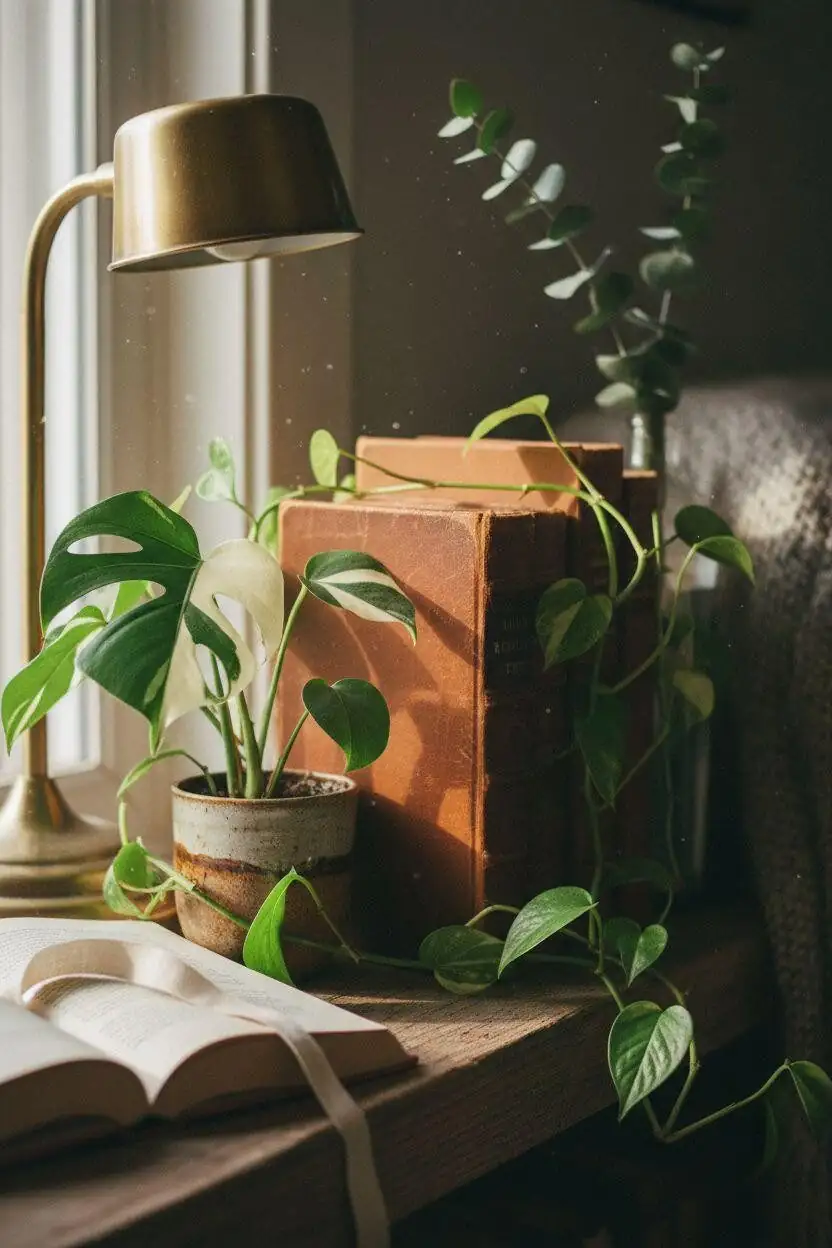
Note: feng shui schools vary. Let the healthiest placement—bright, gentle light, cool air, and even moisture—lead the way. A thriving plant is the best energy amplifier.
Meet Exacum affine up close
- Family and form: A compact, mound-forming tender perennial from the Gentianaceae.
- Native origin: Socotra Island (Yemen); now a beloved, widely cultivated pot plant.
- Size and habit: Typically 15–30 cm (6–12 in) tall and wide; dense, rounded, cushion-like foliage.
- Foliage: Opposite, oval to elliptic, glossy, dark green leaves.
- Flowers: Masses of small, five-petaled blooms in violet to lavender, each with vivid yellow anthers; often lightly fragrant.
- Bloom season: Late winter through spring indoors; can continue for months if kept cool and bright.
- Personality: Calm, delicate, refined—perfect as a small, soothing “burst of spring” inside.
- Safety: Not known to be toxic to humans or pets.
Fun to know: Those bright yellow anthers are a signature—once you see them, you’ll spot Persian violet anywhere.
Make the serenity last: care that keeps blooms coming
Persian violet is straightforward if you respect its cool-season nature. Think “evenly moist, cool, and bright without glare.”
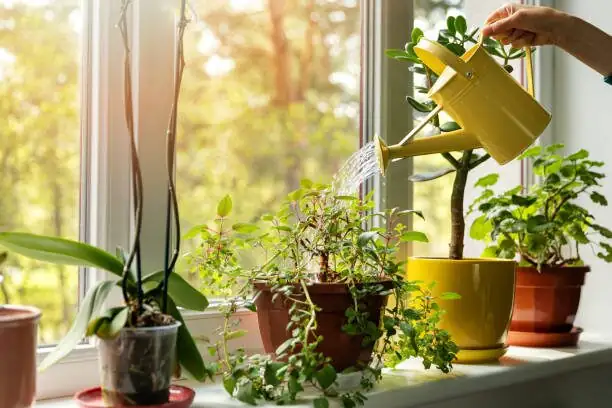
- Light
- Best: Bright, indirect light or gentle morning sun.
- Avoid: Harsh midday rays that stress leaves and cut bloom time short.
- Temperature
- Sweet spot: 15–21°C (59–70°F).
- Caution: Prolonged heat shortens flowering and overall lifespan.
- Water
- Keep soil evenly moist—never soggy, never bone-dry.
- Letting the root ball dry out can cause rapid flower drop.
- Ensure excess water drains freely; never let the pot sit in water.
- Humidity
- Appreciates moderate to high humidity, especially in heated rooms.
- A nearby humidifier, pebble tray, or clustering with other plants helps.
- Soil
- Use a light, fertile, well-draining potting mix that still holds even moisture.
- Feeding
- While blooming, feed every 2–3 weeks with a diluted, balanced liquid fertilizer.
- Grooming
- Deadhead spent flowers to keep the plant neat and extend the display.
- Pests and pitfalls
- Watch for aphids, spider mites, and fungus gnats indoors.
- Overwatering or poor drainage can invite root rot.
- Repotting and lifespan
- Often treated as a short-lived houseplant. Repot only if root-bound and you want to extend its run.
- Placement and hardiness
- Indoors: Bright rooms near east- or north-facing windows are ideal.
- Outdoors: Only in mild, frost-free climates and sheltered bright shade. Not frost tolerant.
A simple buying guide
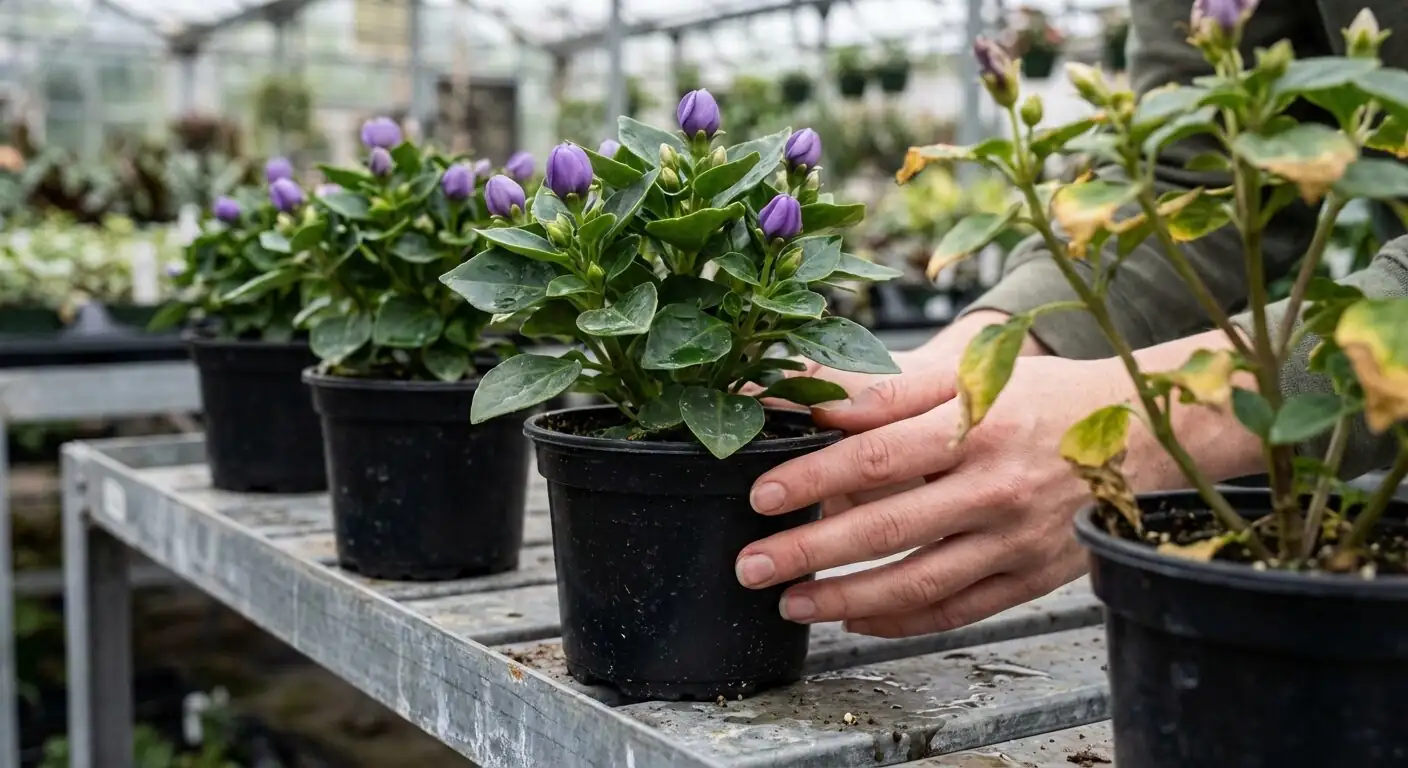
- Choose plants with firm, glossy leaves and many unopened buds—more weeks of bloom ahead.
- Skip any that look stretched, wilted, yellowing, or bone-dry.
A cool-season rhythm
- Late winter–spring: Peak bloom; keep cool, bright, evenly moist.
- Summer: Plants often fade in heat.
- Autumn–winter: Growers start new batches from seed for the next cool-season show.
Styling and gifting: small plant, big presence
- Pot palette: White or pale stone makes the purple-and-gold pop; matte charcoal reads modern and serene; a touch of brass in a saucer echoes those golden anthers.
- Vignette ideas: Pair with a simple candle, a linen-covered book, or a ceramic tea cup to set a hush in a reading nook.
- Gifting note: Hand it to a friend with a card that nods to its “borrowed” meanings—modesty and gentle devotion from Victorian violets, and today’s calm, refined beauty. It’s an elegant way to say “You matter to me in a quiet, steady way.”
FAQs
- Is Persian violet an annual or a perennial?
- Botanically a tender perennial, but most people enjoy it as a short-lived flowering houseplant and replace it after the main bloom.
- Why does it decline after flowering?
- Heat and dry air are the chief culprits. As temperatures climb, it’s hard to keep the plant vigorous or reblooming indoors.
- Can it be grown outdoors?
- Only in mild, frost-free conditions, and usually in bright shade or sheltered light. For most, it performs best indoors.
—
In the end, Exacum affine is a lesson in gentle power: a modest plant that borrows one culture’s language of faithful love, embraces another’s taste for calm, refined beauty, and then settles into your home with a quietly uplifting violet-and-gold glow. Place it where you’ll notice it often, care for it coolly and kindly, and let that small devotion transform the room.