

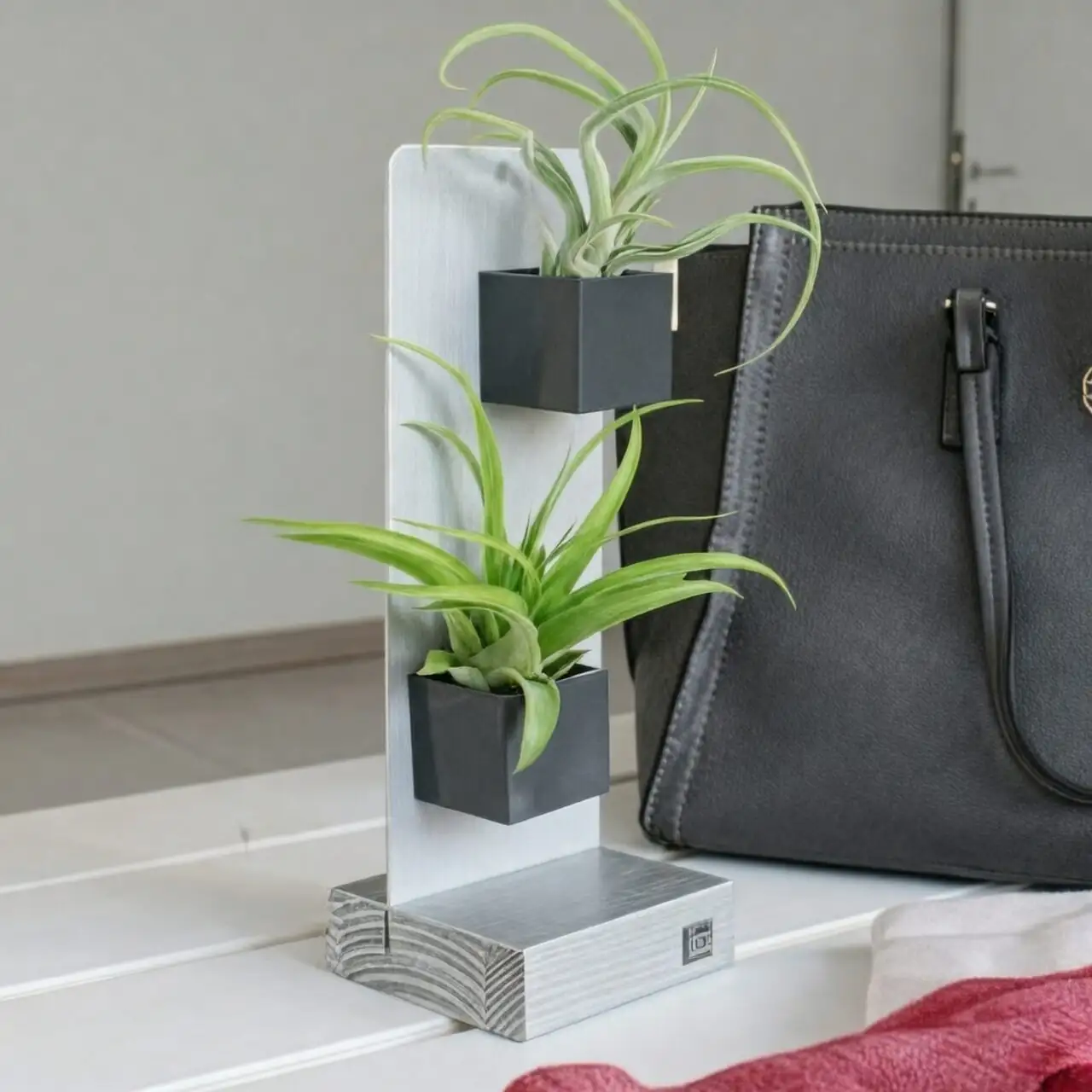
A narrow fountain of green that never asks for a pot—Tillandsia juncea seems to shrug off gravity, soil, and fuss. That breezy, soil‑free lifestyle didn’t just make it a darling of modern design; it also seeded a contemporary flower language where this air plant speaks fluently of independence and adaptability. From the whispered codes of Victorian floriography to today’s feng shui placements and gift tags, here’s how a plant that thrives on air alone came to symbolize self-reliance with a graceful sense of flow.
Meet Tillandsia juncea: The plant that lives by air
Native to Mexico and Central America, Tillandsia juncea is a clumping epiphyte—an organism that anchors to trees or rocks and drinks through its leaves. Silvery leaf scales (trichomes) act like tiny parachutes, catching moisture and nutrients from the air. The plant itself forms a tidy, fountain-shaped tuft of long, slender, pointed leaves and, over time, produces offsets (“pups”) that build into a fuller clump.
- Size and habit: Typically 15–30 cm (6–12 in) tall; clumps can spread 15–30 cm (6–12 in) wide
- The showstopper: A vivid pink, comet-like spike that can stay colorful for weeks, topped by small purple tubular flowers in late spring to summer (timing varies with conditions)
- Personality: Famously forgiving—miss a watering and it often bounces back once rehydrated, so long as it dries quickly afterward
No pot. No soil. Just a perch, some light, and a bit of air movement—and juncea turns that into a life well lived.
How soil-free living became a language
A quick look back: Floriography’s origins and limits
In the 19th century, floriography—the “language of flowers”—let people send coded messages through bouquets. These dictionaries mostly focused on cut flowers and a handful of potted classics. Air plants, meanwhile, were busy minding their business in tropical canopies, far from Victorian windowsills. That means there’s no single antique definition for Tillandsia juncea.
The modern translation: Independence and adaptability
As houseplant culture has woven old floriography into contemporary life, air plants have taken on meanings that match their nature:
- Independence: Juncea thrives without soil, using roots only to anchor. It’s the botanical equivalent of traveling light—self-contained, resourceful, and poised.
- Adaptability: Mounted on cork, tucked into a mesh, or set on a shelf, juncea adjusts to varied displays and rhythms of care, so long as airflow and drying are reliable.
- Creative freedom: The ability to live outside the pot invites imaginative arrangements—hanging, clustering, or perching—making it a symbol of originality and fresh thinking.
- Resilience: A pink bract holds color for weeks, purple flowers flare briefly, and then the plant invests in pups—continuity after a peak moment.
In other words, juncea’s “flower language” grew from its biology: an epiphyte that proves you can flourish with fewer ties and a smart use of what’s around you.
What the bloom says (and what happens after)
That vibrant pink spike announces maturity. The jewel-toned purple flowers that follow are quick but memorable, a bright punctuation mark before the plant redirects energy into pups. Symbolically:
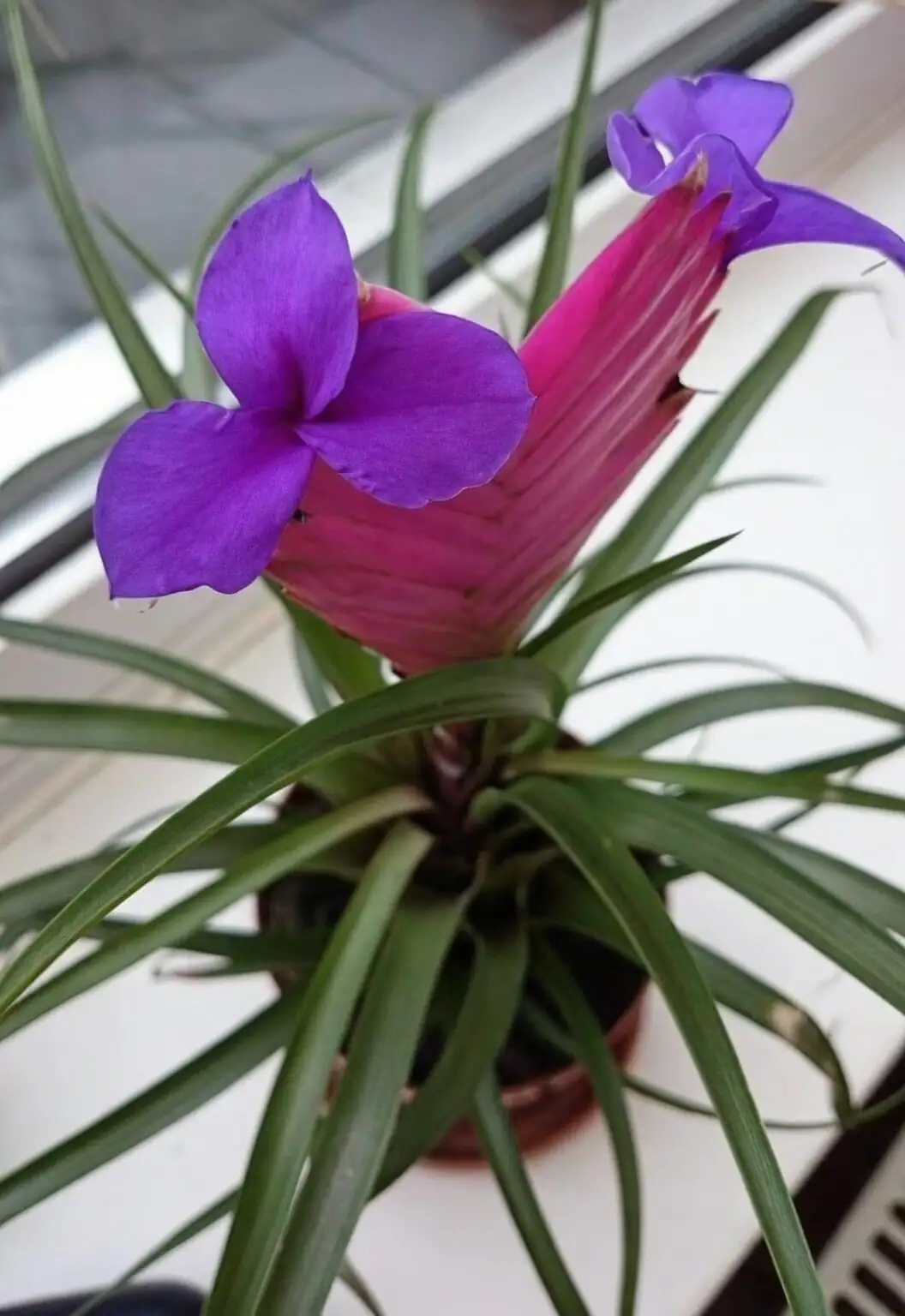
- The pink bract: resolve and visibility—stepping into your moment
- The purple flowers: creative bursts and milestones
- The pups: legacy through mentorship and collaboration
Independence here doesn’t mean isolation; it means standing strong while enabling new growth around you.
Feng shui with juncea: Placing independence where it flows
Air, light, and movement define both juncea’s care and its energy, making it an elegant fit for feng shui when placed thoughtfully.
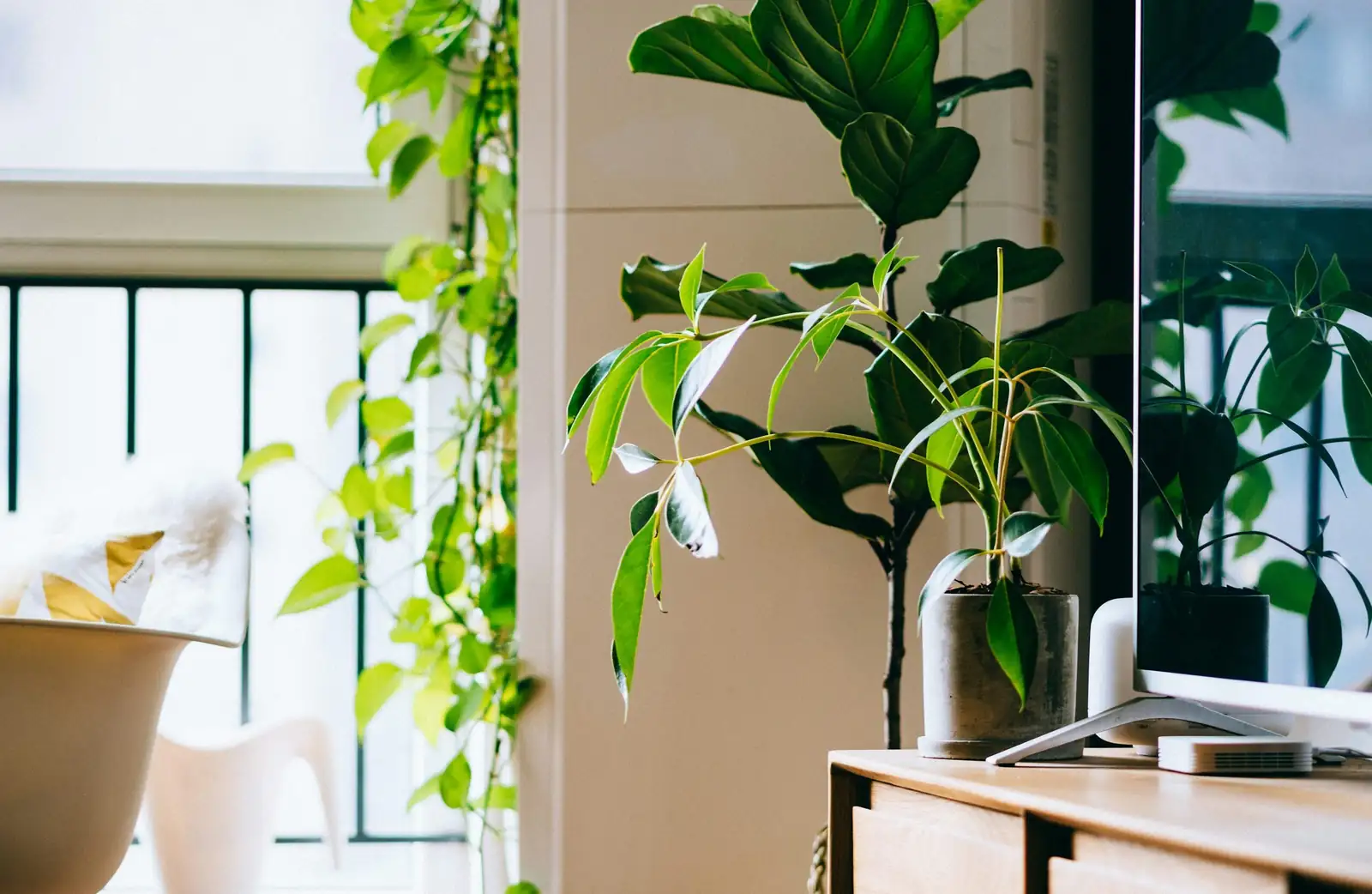
- Energy signature: Lightness, clarity, adaptability, and steady flow
- Best general placement: Near a bright window with gentle morning sun or bright, indirect light; ensure good airflow so it dries within a few hours after watering
- Bathrooms work if the light is strong; humidity can be a plus with adequate ventilation
Suggested Bagua-inspired placements (align with practical care):
- Career/Path (North): A bright desk shelf or wall mount in your workspace to encourage adaptability and momentum without clutter
- Knowledge/Self-Cultivation (Northeast): A reading nook by an east-facing window for steady focus and learning agility
- Helpful People/Travel (Northwest): An open entry shelf with good air movement to welcome opportunities and easy transitions
Styling ideas:
- Solo mount for self-reliance symbolism
- A trio of clumps for progress and creative flow
- Open frames or driftwood displays—never sealed containers
Avoid:
- Harsh midday sun without high humidity and excellent airflow
- Closed terrariums or stagnant corners where the base stays damp
Gifting meanings today
Tillandsia juncea shines as a present that carries a message without needing a vase or a green thumb.
Perfect occasions:
- Graduation, promotions, and new jobs: “May you adapt and thrive.”
- First apartments or small studios: “Live lightly—make space for possibility.”
- Recoveries, comebacks, and fresh starts: “Resilience suits you.”
- Team off-sites and creative kickoffs: “Think freely, build together.”
Message ideas for the gift tag:
- “Rooted in nothing but possibility.”
- “Airborne, adaptable, and absolutely you.”
- “Bloom, then begin again.” (for post-bloom clumps and pups)
Presentation tips:
- Mount on cork or clean, untreated wood; or nestle on a ceramic stand with airflow beneath
- Use soft ties or non-toxic adhesive sparingly—never smother the base
Keep the symbolism alive: Care that echoes the meaning
Juncea rewards simple, intentional routines that mirror its message of independence with ease.
Light and placement
- Bright, indirect light or gentle morning sun
- Near an open window or fan for steady airflow
- Outdoors in warm seasons only in bright shade with airflow, above 10°C/50°F
Watering
- Soak 15–30 minutes about 1–2 times per week in warm/dry conditions
- In cooler or darker periods, reduce to every 10–14 days
- After soaking, shake out excess water and dry fully within 2–4 hours (never let water sit in the base)
Humidity and temperature
- Moderate to high humidity (ideally 40–70%) plus strong airflow
- Prefers 18–30°C (64–86°F); protect from cold
Feeding
- Monthly in spring/summer with bromeliad/air-plant fertilizer at 1/4 strength (or a low-copper orchid fertilizer)
- Rinse with plain water occasionally to prevent mineral buildup
Growth and grooming
- After flowering, trim the fading spike; the plant continues via pups
- Remove only fully brown leaves; pull gently or trim
- Separate pups when they’re 1/3–1/2 the parent’s size, or keep them attached for a fuller clump
Common pitfalls and quick fixes
- Browning at the base? Often rot from staying wet too long; improve airflow, shorten soaks, and ensure rapid drying
- Stagnant displays? Move from closed vessels to open mounts or mesh holders
- Pests (mealybugs, scale)? Spot-treat with 70% isopropyl alcohol on a cotton swab, isolate, and boost airflow
Safety note
- Generally non-toxic to people and pets (not edible). Keep away from curious chewers—for the plant’s sake and to prevent mild stomach upset.
From canopy wisdom to modern meaning
Tillandsia juncea learned long ago to make a life above the forest floor—anchored, but not bound. In our homes, that becomes a fresh, relevant language: independence without heaviness, adaptability without stress, creativity without clutter. Place it where air moves and light is kind. Gift it to someone on the brink of a new chapter. Let its pink flare and purple notes remind you: bloom boldly, then build the future—pup by pup.