

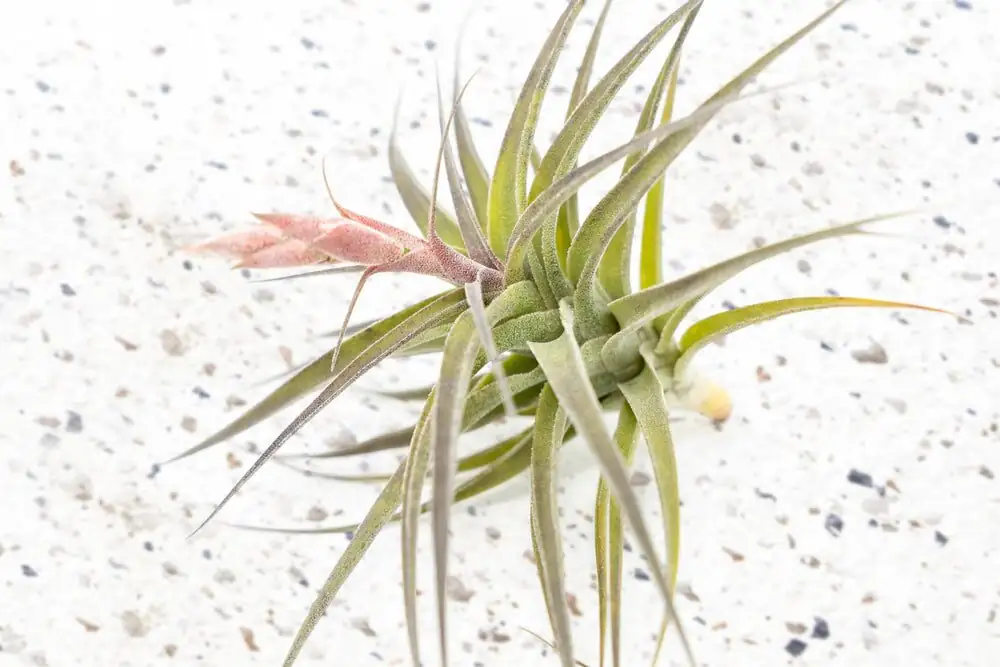
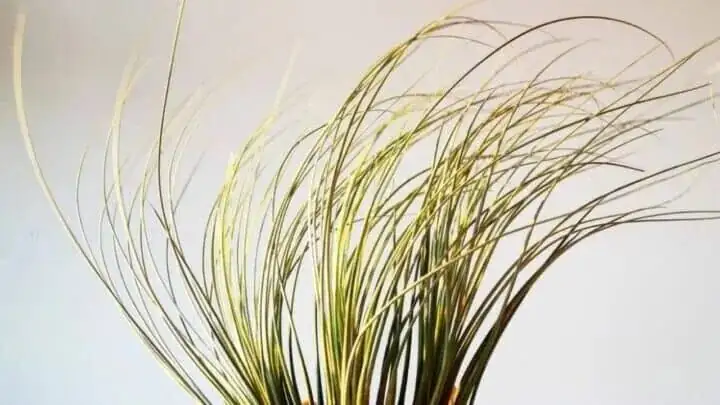
Imagine a green fountain that never needs a pot, sipping moisture from the air and throwing a pink comet of color when it blooms. That’s Tillandsia juncea—slender, spirited, and wonderfully forgiving. To keep this air plant thriving, think like a seasonal conductor: more soaks and gentle feeding in spring–summer, pared-back care in fall–winter, and strong airflow with safe temperatures above 10°C (50°F) all year long.
Meet Tillandsia juncea at a glance
- Origin: Native to Mexico and Central America
- Family/Genus: Bromeliaceae, Tillandsia
- Look: Dense, fountain-like clump of long, narrow, pointed green leaves
- Size: Typically 15–30 cm (6–12 in) tall; clumps spread to 15–30 cm (6–12 in)
- Flowers: Vivid pink spike with small purple tubular blooms (late spring to summer)
- Habit: Clumping epiphyte that produces offsets (“pups”) around the base
- Personality: Easygoing and resilient—bounces back fast if it dries quickly after watering
Light and placement
- Best light: Bright, indirect light to gentle morning sun
- Avoid: Harsh midday sun unless humidity is higher and airflow is excellent (think bright shade with a breeze)
- Great spots: Near a bright window with moving air; bathrooms can work if light is strong
- Outdoor summers: Bright shade with airflow; bring inside before nights drop near 10°C (50°F)
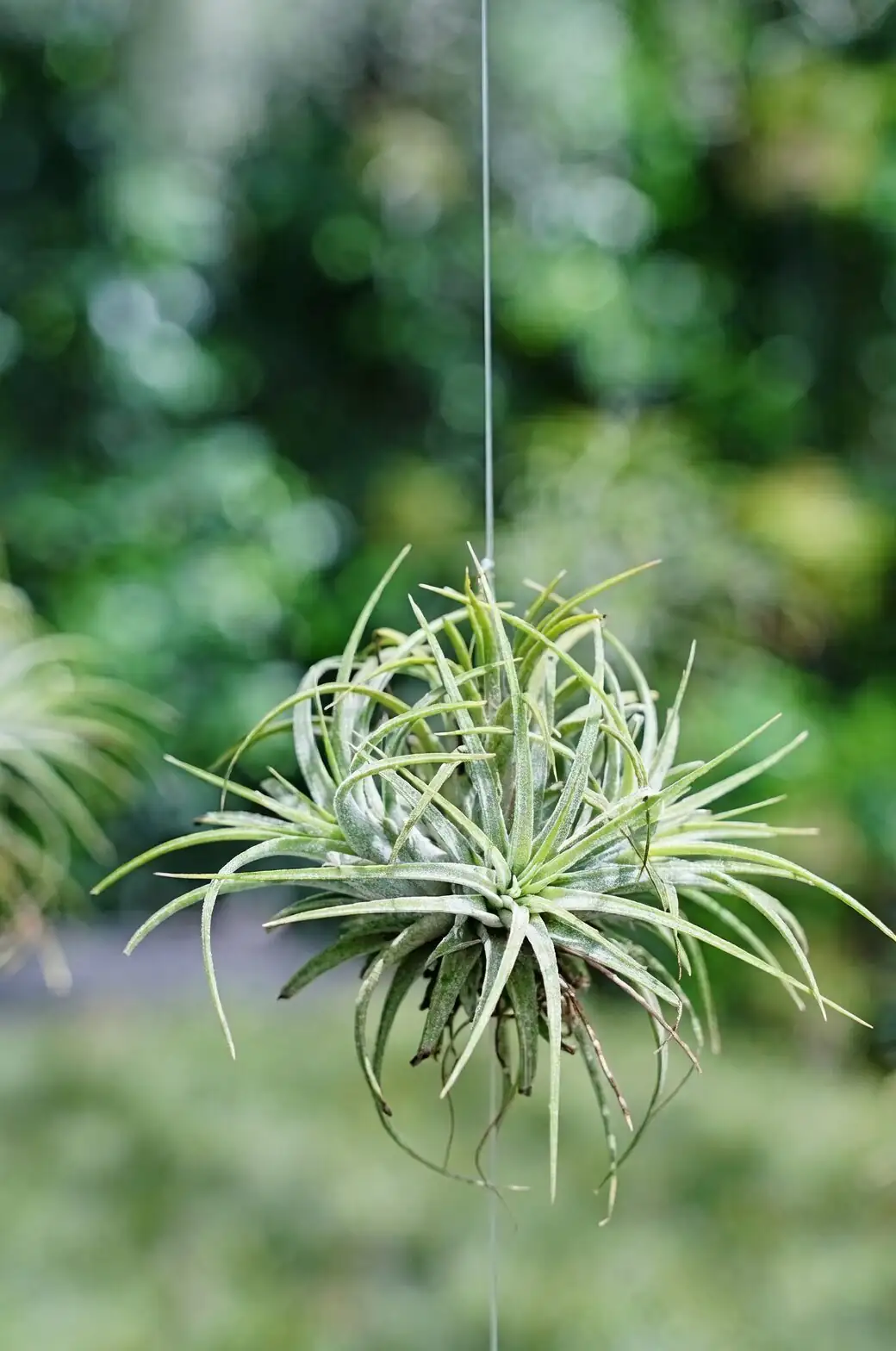
Airflow and humidity: the secret sauce
- Target humidity: Moderate to high (around 40–70%), always paired with strong airflow
- Why it matters: Quick drying prevents rot—aim for the plant to dry fully within 2–4 hours after watering (no longer than 4)
- Tools: Open displays, ceiling or clip-on fans, a cracked window; avoid sealed terrariums
The four-season care planner
Think of this as your year-round rhythm for a healthy, clumping Juncea.
Spring: Wake and stretch
- Light: Increase brightness (gentle morning sun is excellent); avoid midday scorch
- Water: Soak 15–30 minutes about 1–2 times per week, depending on warmth and dryness
- Feed: Once monthly at 1/4 strength with a bromeliad/air-plant fertilizer (or low-copper orchid formula)
- Airflow: Keep it strong so the plant dries within 2–4 hours
Summer: Growth on cruise control
- Light: Bright, indirect to dappled light; outdoors, choose bright shade with a steady breeze
- Water: Warm/dry spells call for 1–2 soaks per week; in heatwaves, a brief in-between mist can help—but never skip full drying
- Feed: Continue monthly at 1/4 strength; occasionally rinse with plain water to prevent mineral buildup
- Watchpoints: Protect from harsh midday sun; never let water sit at the base
Fall: Ease off, don’t coast
- Light: Days shorten—maximize brightness indoors
- Water: Scale back to about weekly, then shift toward every 10–14 days as temps cool and light wanes
- Feed: Taper off; by late fall, pause fertilizing
- Temperature: Bring indoors before nights approach 10°C (50°F)
Winter: Bright, dry, and safe
- Light: As bright as possible without midday scorch
- Water: About every 10–14 days (adjust to your conditions); always water in the morning so it dries the same day
- Feed: Skip fertilizer in winter
- Safety: Maintain strong airflow and keep temperatures above 10°C (50°F) at all times
Watering, step by step
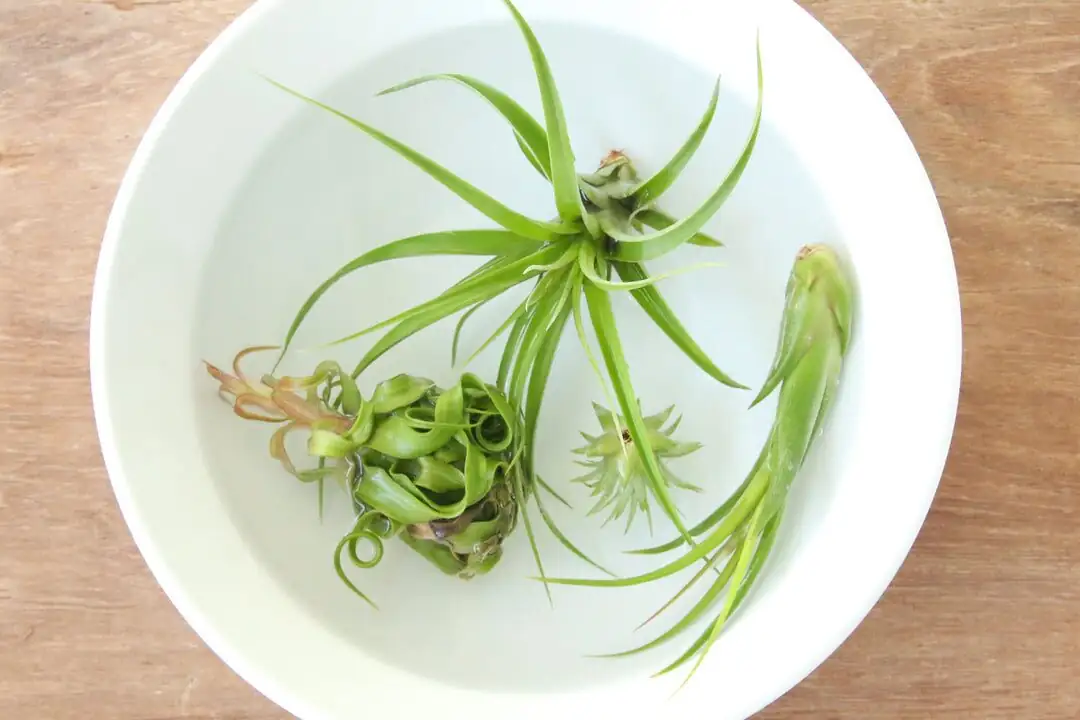
- Soak method (preferred): Submerge for 15–30 minutes in clean water.
- Shake and drain: Gently shake out excess, then set upside down or on its side so no water pools in the base.
- Dry time: Ensure complete drying within 2–4 hours with good airflow.
- Water quality: Use clean water (rainwater or filtered is great). If your tap water is very hard, switch to rain or filtered. Rinse with plain water occasionally to reduce mineral buildup.
- Never: Leave water sitting in the base or tuck the plant somewhere airless after watering.
Signs to read:
- Thirsty: Leaves curl inwards or feel papery; color looks dull—add a soak and improve humidity/airflow.
- Overwatered/slow-drying: Base darkening, mushy feel, or a sour smell—trim any rot, increase airflow, and lengthen intervals between soaks.
Feeding, simply done
- When: Monthly in spring and summer only
- What: Bromeliad/air-plant fertilizer at 1/4 strength (or a low-copper orchid fertilizer)
- Tip: Rinse with plain water occasionally to prevent salt buildup
Mounting and display ideas (no soil needed)
- Options: Cork bark, driftwood, cholla wood, mesh baskets, or an open bowl with decorative gravel
- Key rule: Keep the base airy and never constantly wet
- Refresh: As the clump expands, remount onto a larger piece or renew ties/adhesive so nothing constricts the base
- Terrariums: Use only open designs; sealed containers trap humidity and stall drying
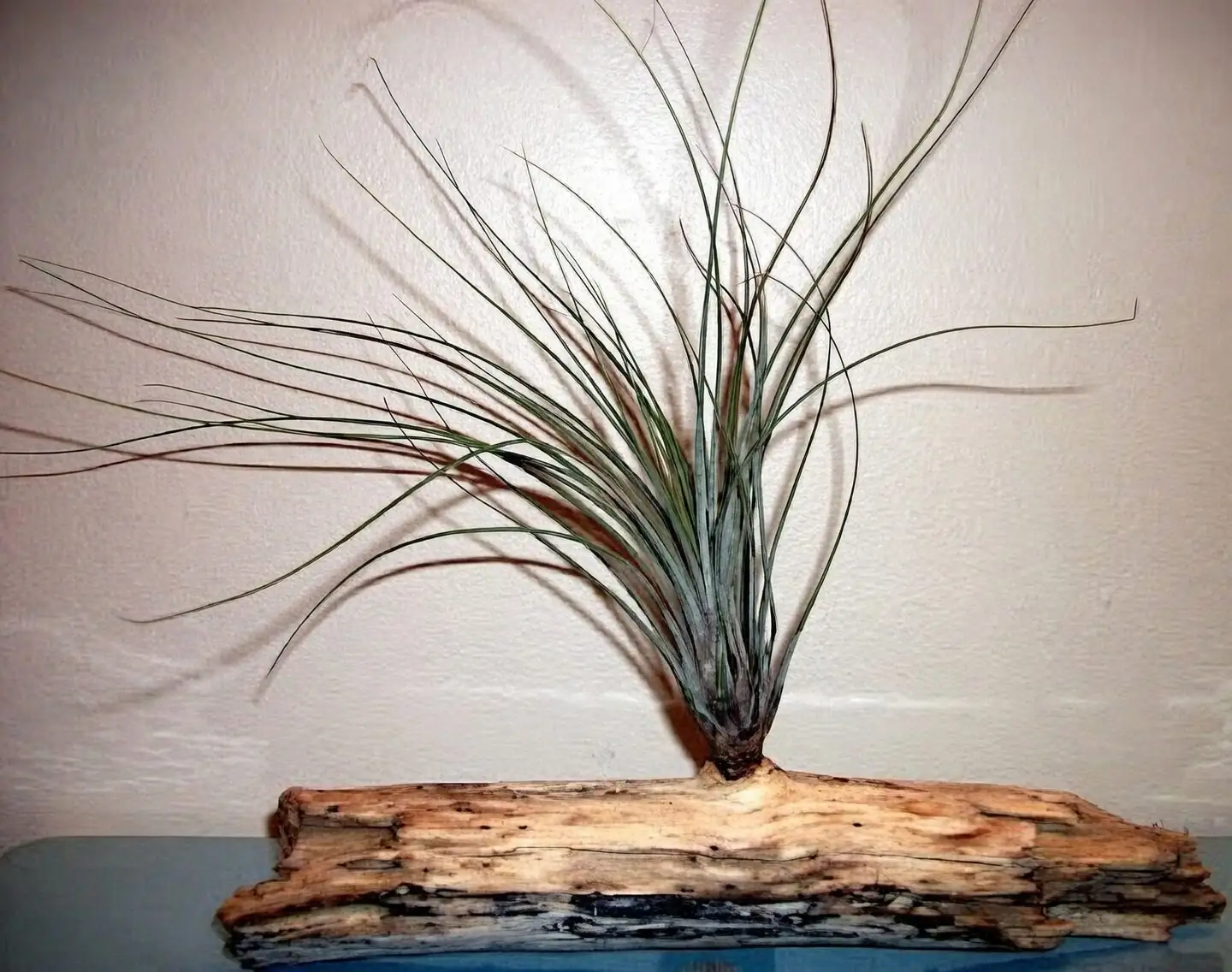
Bloom, pups, and pruning
- The show: A bright pink spike can stay colorful for weeks; small purple tubes open near the tip
- Afterflowering: The blooming rosette slows, then produces pups that carry the torch
- Pups: Separate when each is about 1/3–1/2 the size of the parent, or leave attached for a dramatic, fountain-like colony
- Pruning: Gently remove fully brown, dead leaves. Trim the flower spike once it fades
Temperature and hardiness
- Comfort zone: 18–30°C (64–86°F)
- Hard stop: Keep above 10°C (50°F); not frost-tolerant (USDA Zone 10–11)
- Pro tip: Cold + wet is a bad combo—if it’s cool, water less and make airflow even stronger
Common pitfalls and quick fixes
- Browning at the base: Usually rot from staying wet too long or poor airflow—water in the morning, shake out thoroughly, and dry faster
- Pale/bleached leaves: Too much sun—move to bright, indirect light
- Limp, darkening leaves: Overwatering or slow drying—lengthen intervals, boost airflow, and trim any rot
- Pests: Mealybugs or scale—dab with 70% isopropyl alcohol on cotton swabs, isolate the plant, and improve airflow/drying speed
Safety
- Non-toxic to people and pets (not edible). Keep out of reach of curious chewers to prevent mild tummy upsets and leaf damage
Buying smart
- Choose: Firm, springy leaves and a clean, solid base
- Avoid: Blackened or mushy centers (classic rot), heavy stuck-on debris
- Don’t fret: A light silvery cast is normal and healthy—those are trichomes (leaf scales)
Symbolism and story
- Meaning: Often associated with independence and resilience—an elegant survivor that thrives with minimal resources
- Why it fits: As an epiphyte, Tillandsia juncea anchors to trees or rocks and absorbs moisture and nutrients through its trichomes. Its “soil-free” lifestyle has become a design icon and a living metaphor for adaptability
Fun little facts
- The soft, silvery “dust” on the leaves are trichomes—tiny scales that help the plant capture moisture and nutrients from the air
- Even after the purple flowers fade, the bright pink spike can hold its color for weeks
Your year-round checklist
- Light: Bright, indirect; gentle morning sun welcome
- Airflow: Strong, always
- Water: Soak 15–30 minutes; dry fully in 2–4 hours
- Seasonality: Increase soaks and monthly feeding in spring–summer; scale back water and pause feeding in fall–winter
- Temperature: Keep safely above 10°C (50°F)
- Space: No soil; open, airy displays only
Follow this seasonal rhythm, and your Tillandsia juncea will reward you with resilient growth, jewel-toned blooms, and a gracefully expanding fountain of narrow leaves—an effortless breath of nature, all year long.