

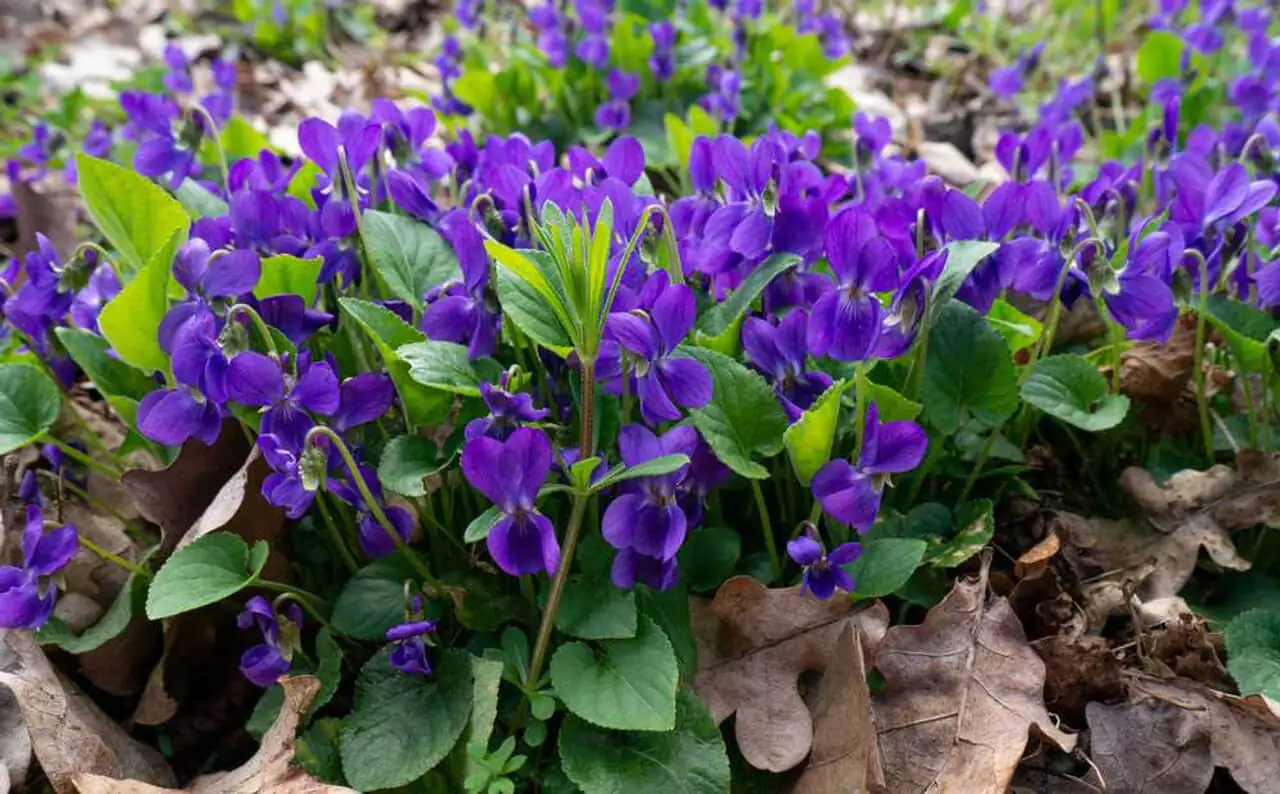
Sweet violet (Viola odorata) is the woodland charmer that perfumes early spring, then quietly carpets shade with heart-shaped leaves. When conditions slip—stuffy air, soggy crowns, splashy watering—it lets you know with spots, mildew, or a parade of slugs. Here’s a quick, practical handbook to get your violets back to their fragrant, trouble-free selves—fast.
First, set the stage: the “happy violet” checklist
- Light: Partial to full shade, ideally dappled woodland light. Avoid harsh, hot direct sun.
- Temperature: Cool-loving, happiest around 60–70°F (15–20°C); very cold hardy.
- Soil: Fertile, humus-rich, and well-draining; pH 6.0–7.0.
- Moisture: Evenly moist, never waterlogged. Think spring forest floor—not swamp, not desert.
- Spacing: Give mats room to breathe; divide crowded clumps in spring or autumn.
Tip: Water at the soil line or bottom-water in containers. Keeping leaves dry dramatically cuts down on mildew and leaf spots.
Fast airflow fixes (your #1 mildew and leaf-spot defense)
Good airflow is the sweet violet’s best friend. Still, damp air is an open invitation to powdery mildew and leaf spots.
Outdoor plants
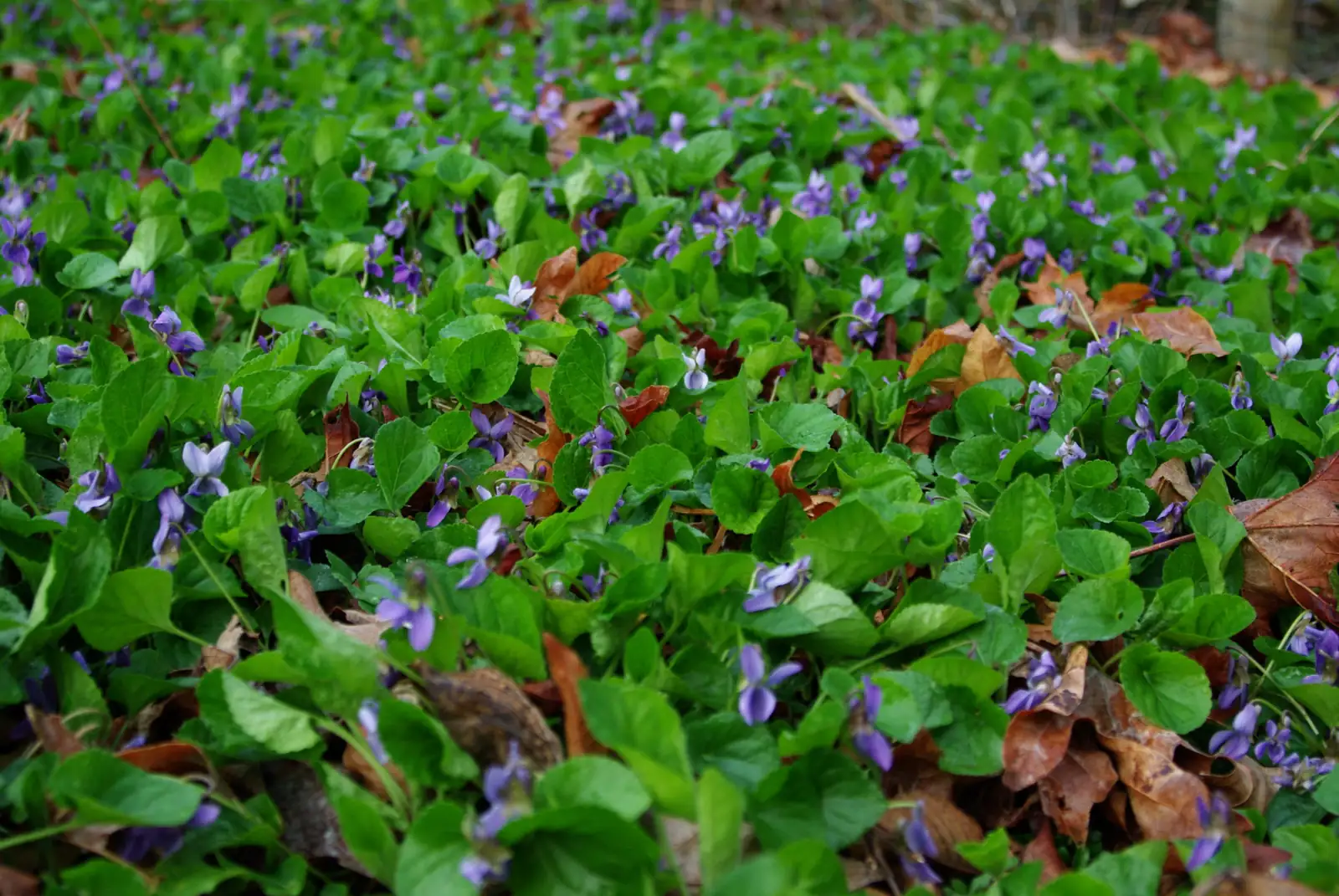
- Thin and tidy: Deadhead and snip off tatty, overlapping foliage. In autumn, trim old leaves and thin dense mats to open the canopy.
- Space smartly: Let runners fill in, but don’t let patches choke themselves. Divide clumps when they crowd.
- Site selection: Dappled shade with gentle through-breezes (under high-branched shrubs or open trees is perfect).
- Elevate containers: Use pot feet so air moves under and around the pot.
- Mulch wisely: A light, fine mulch (leaf mold, shredded bark) prevents soil splash without trapping too much moisture at the crown.
Indoors or sheltered porches
- Circulation: A small, low-setting fan across the space (not blasting the foliage) reduces humidity pockets.
- Morning light, dry leaves: Water early, then let leaves stay dry all day.
Bottom-watering that actually works
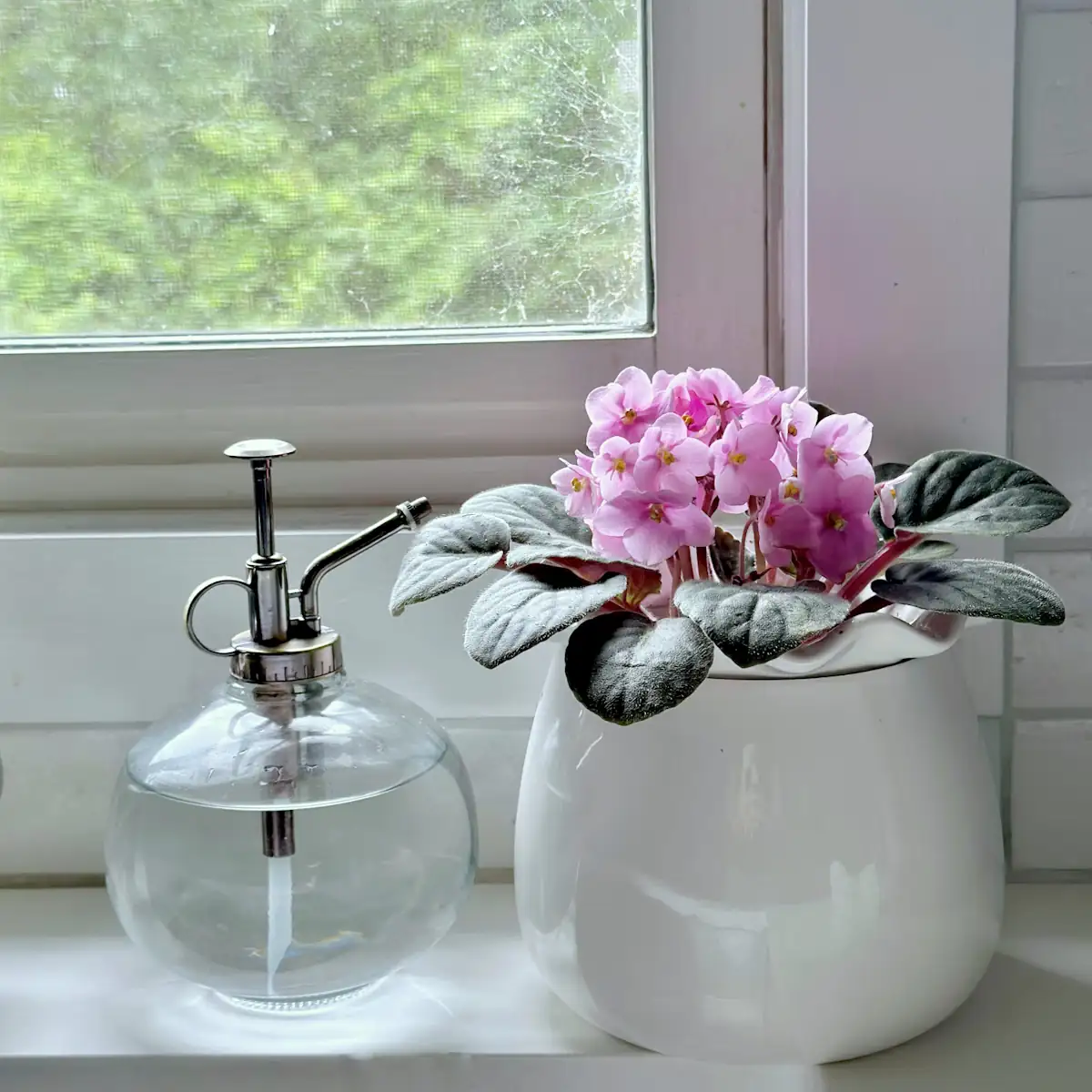
Keeping foliage dry = fewer fungal issues. Here’s the quick method:
In containers
- The soak: Place pot in a tray with 1–2 inches (2.5–5 cm) of water for 10–20 minutes.
- The signal: When the surface feels evenly moist, lift out. Let it drain thoroughly.
- The rhythm: Water again when the top 0.5 inch (1–1.5 cm) is just dry to the touch.
In the ground
- Target the root zone with a watering wand or drip. Avoid overhead sprinkling.
- Water in the morning so surfaces dry quickly.
- Add a light mulch to stop disease-laden splash.
Leaf-spot or mildew? A quick ID cheat sheet
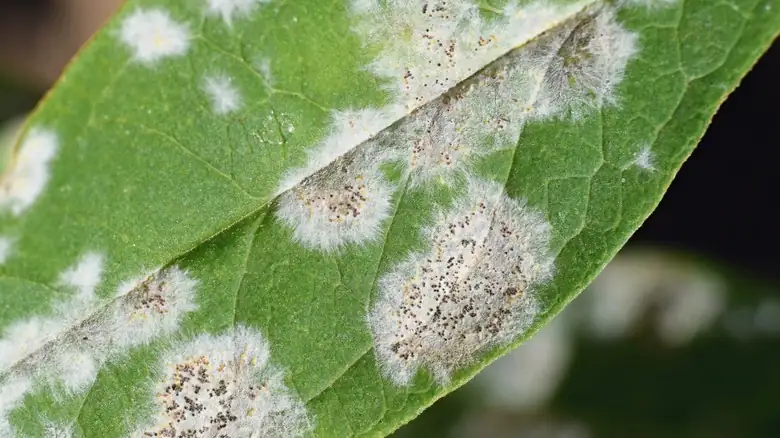
Violets can show a few classic problems when airflow is poor or leaves stay damp.
- Powdery mildew
- Looks like: White, talc-like film on upper leaf surfaces; leaves may curl or yellow.
- Fast action: Remove the worst leaves; improve airflow; keep watering off foliage.
- Gentle controls: See “Mildew fixes” below.
- Common leaf spots (Cercospora, Alternaria, others)
- Looks like: Small tan to brown or translucent spots, often with darker or purplish edges. Spots may merge into larger patches of dead tissue.
- Fast action: Pick off affected leaves promptly; stop overhead watering; mulch to prevent splash-back.
- If severe: Use a labeled garden fungicide appropriate for ornamental leaf spots or rotate to a gentle option (below).
- Anthracnose-like lesions
- Looks like: Pale yellow pinprick spots that darken with distinct margins; centers turn tan with possible rings; petals may spot, too.
- Fast action: Remove and bin badly affected plants or leaves; keep foliage dry; avoid crowding.
- If it persists: Consider a labeled broad-spectrum foliar fungicide for ornamentals; follow the label exactly.
Note: If plants are stunted, yellowing, and collapse in heat with blackened roots, suspect root issues and improve drainage immediately. Replant in fresh, well-draining mix and avoid overwatering.
Mildew fixes that are gentle on violets
Start with sanitation and airflow. Then, if you need a spray, try the least-harsh options first.
- Potassium bicarbonate spray (very effective and gentle): Use a ready-to-use product labeled for ornamentals; it both stops and erases light mildew.
- Baking soda solution (home-style): 1 teaspoon baking soda in 1 quart (1 liter) of water + a few drops of insecticidal soap to help it spread. Test-spray one leaf, wait 24 hours, then treat weekly as needed.
- Horticultural oil (lightweight): Smothers surface mildew and spores. Apply in cool, shaded conditions and never on heat-stressed plants.
- Labeled biologicals (e.g., Bacillus-based fungicides): Useful preventatively; follow the label.
Important cautions:
- Never mix oil and sulfur products, and avoid spraying during hot, bright parts of the day.
- Always test-spray a small section first—violet leaves are delicate.
Aphids: fast, soft control with insecticidal soap or neem
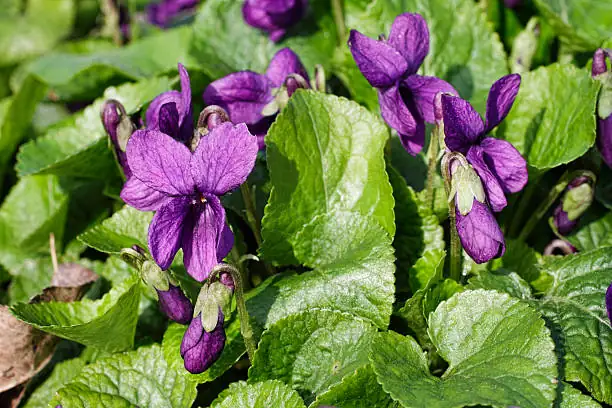
Aphids love tender violet growth and flower stalks—and spread trouble if ignored.
- First response (no chemicals): Blast colonies off with a sharp stream of water in the morning; repeat every few days.
- Insecticidal soap
- Use a ready-to-use, plant-safe formulation.
- Thoroughly wet both sides of leaves and flower stems—contact is key.
- Apply in the cool of morning or evening; repeat every 5–7 days until clear.
- Neem oil (clarified hydrophobic extract)
- Smothers soft-bodied pests and disrupts feeding.
- Spray coverage must be complete; avoid high heat and bright sun immediately after spraying.
- Bonus allies: Lady beetles, lacewings, and hoverfly larvae will happily clean up aphids if you let them.
Tip: Don’t use household dish soaps—they can scorch foliage. Stick to labeled insecticidal soap.
Smart, pet-safe slug and snail control
Slugs and snails are the night-shift nibblers of sweet violets. Combine several tactics for best results.
- Change the habitat
- Water in the morning, not evening—drier nights = fewer slugs.
- Lift pots on feet; clear deep mulch right around crowns.
- Set “decoy shelters” (upturned pots, boards) and hand-pick at dusk with a flashlight.
- Block and deter
- Copper tape or bands around containers create a mild shock barrier.
- Wool pellets form a scratchy, moisture-wicking ring that deters slugs when expanded.
- Trap and reduce
- Beer traps: Sink a shallow cup level with the soil and refresh frequently.
- Iron phosphate baits: Scatter sparingly per label in the evening; safe around pets and wildlife when used as directed.
- Avoid
- Metaldehyde baits are highly toxic to pets and wildlife—skip them where animals roam.
Preventing splash-borne disease: tiny tweaks, big payoff
- Bottom-water in pots and water at the base in beds.
- Keep a light mulch “splash mat” under foliage.
- Clean up fallen leaves and spent blooms.
- Disinfect snips between plants when removing diseased tissue.
A seasonal mini-calendar for sweet, healthy violets
- Spring (March–May): Peak bloom. Keep evenly moist, feed lightly, deadhead, and watch for aphids.
- Summer (June–August): Provide shade and cool roots; plants may go semi-dormant in heat—water sparingly but don’t let them bone-dry.
- Autumn (September–November): Prime time to divide crowded clumps, thin foliage, and set airflow right. Some plants rebloom.
- Winter (December–February): Top growth may slow or die back; mulch lightly in exposed, frigid sites.
Edible and safe—with a small caveat
- Edible parts: Flowers and young leaves are edible (mild, vitamin-rich). Lovely candied, fresh in salads, or infused in syrups.
- Avoid: Don’t eat the roots—they can cause nausea.
- If you spray: Always follow the label’s pre-harvest interval before picking blooms or leaves.
The quiet poetry of violets (flower language, thoughtfully)
Violets have long symbolized modesty, faithfulness, remembrance, and pure love—ideas that blossomed in Greek myths, medieval lore, and the Victorian “language of flowers,” when bouquets carried coded messages. Sweet violet’s heady perfume adds to that aura of devotion. Fun twist: the scent can seem to “vanish” after the first sniff because beta-ionone momentarily numbs smell receptors—so the flower that speaks of faithfulness also teaches patience. Breathe, wait a minute, and the fragrance returns.
—
Fast recap
- Keep air moving and leaves dry: thin, divide, bottom-water.
- Spot ID: white dust = mildew; dark-edged spots = leaf spots; act early.
- Gentle treatments first: potassium bicarbonate, baking soda solution, light oils.
- Aphids: insecticidal soap or neem, with thorough coverage.
- Slugs/snails: habitat tweaks, copper, iron phosphate baits, and evening hand-picks.
Do these, and Viola odorata will reward you with that classic, romantic perfume and a trouble-light carpet of green each spring.


