

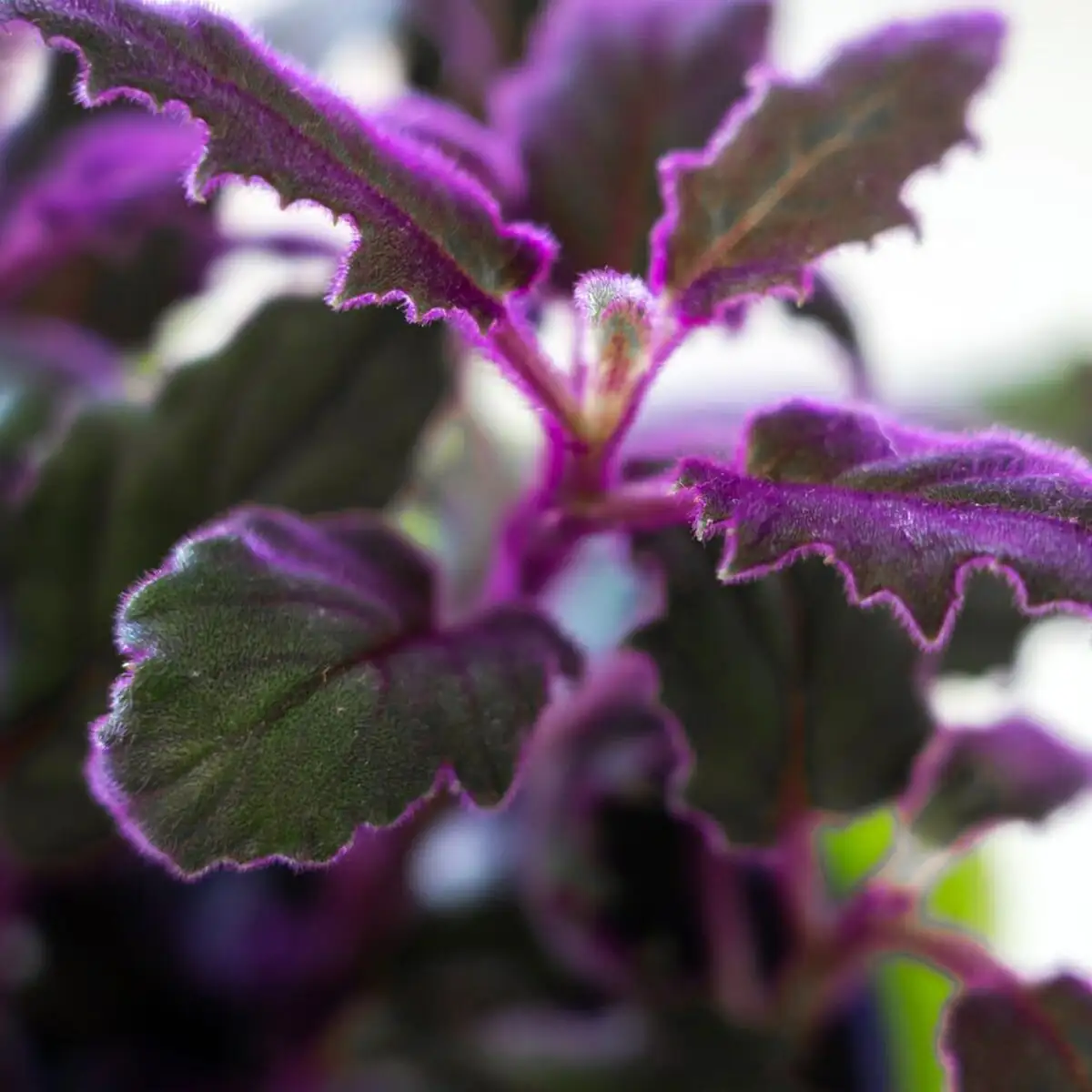
If a disco ball and a fern had a baby, it might look like Gynura aurantiaca. Better known as purple passion plant or purple velvet plant, this houseplant wears a cloak of plush, iridescent fuzz that flashes neon in bright light, then mysteriously dulls in shade. And just when you’re basking in the glow, it throws a curveball: small yellow‑orange daisylike blooms with a funky scent many growers would rather not invite to the party. Here’s the fun, science‑lite story behind that glow, that fade, and those polarizing flowers—plus how to keep the velvet at full shimmer.
Meet Gynura aurantiaca (Purple Passion Plant)
- Family: Asteraceae (the daisy family)
- Origin: Indonesia (especially Java)
- Habit: Compact at first, then semi‑upright to trailing—born for pots and hanging baskets
- Nicknames: Purple Passion, Purple Velvet Plant, Velvet Plant
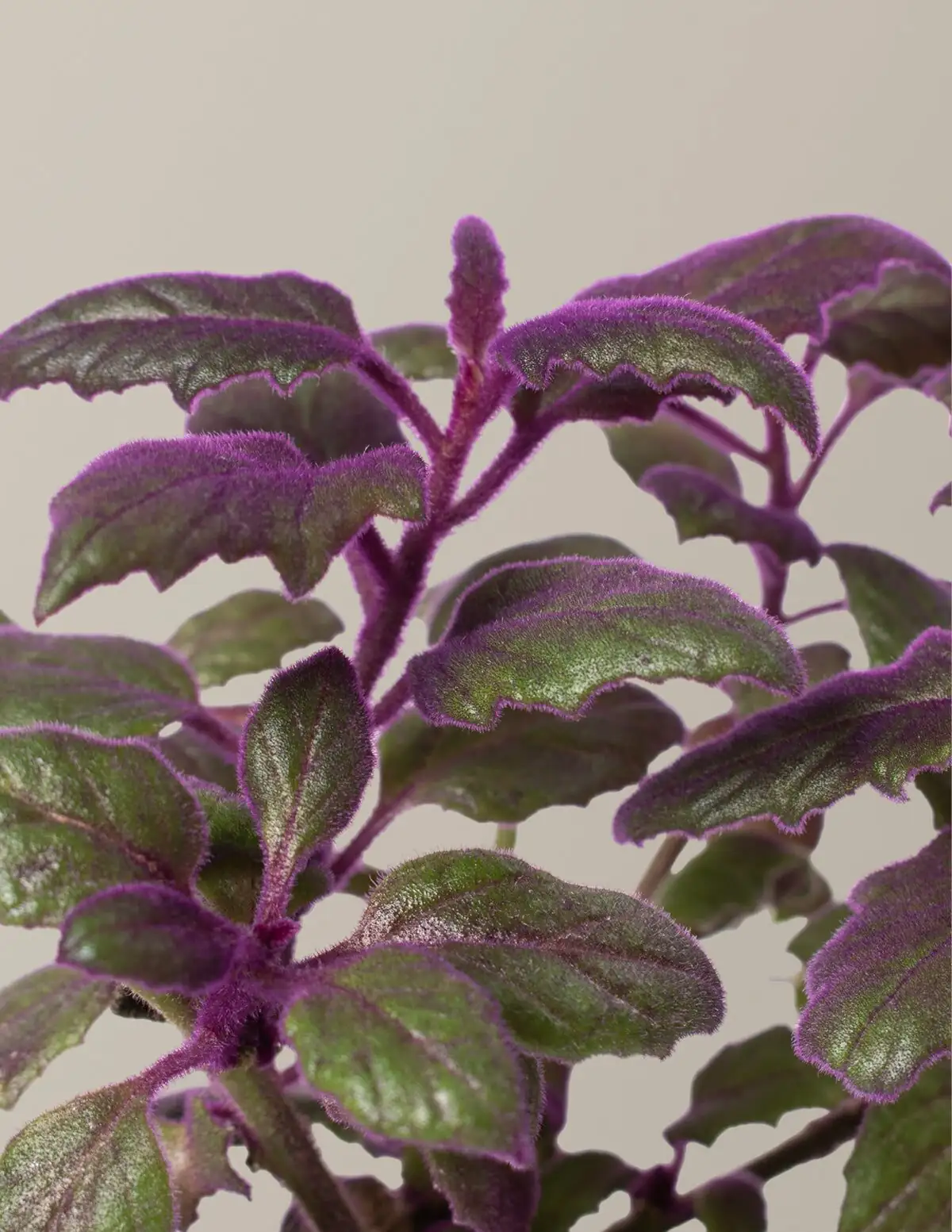
- Look: Deep green leaves wrapped in dense, soft purple hairs that create a velvety, metallic sheen; stems trail gracefully
Typical indoor size is around 20 × 20 cm (8 × 8 in), often planted three young starts per pot for extra fullness. It may bloom in cool seasons with small yellow to orange daisy-like flowers—but many growers pinch them off (more on that below).
Why This Plant Glows: The Purple “Fuzz” Explained
Trichomes: The tiny hairs you can see and feel
Those soft purple hairs are trichomes—microscopic outgrowths that blanket the leaves and stems. In purple passion plant, they’re unusually dense and pigmented, which:
- Catch and scatter light like tiny fiber‑optic threads, upping the “neon velvet” effect in bright conditions.
- Shade the leaf surface, helping prevent scorch (handy for a plant from bright tropical skies filtered through forest canopies).
Inside many of these hairs are purple pigments (anthocyanins). They absorb parts of the light spectrum and bounce the rest back through that fuzzy canopy, creating the trademark electric purple that looks almost metallic in strong, indirect light.
Why the color fades in low light
When light is scarce, the plant rebalances its budget:
- It invests more in green chlorophyll (the workhorse of photosynthesis) and less in purple pigments.
- New leaves may carry fewer or shorter hairs, and the overall purple looks duller or greener.
- Stems stretch toward the light (legginess), spacing out those showy leaves.
How to bring back the glow:
- Shift to bright, indirect light—an east or west window, or a south window filtered by a sheer curtain.
- Pinch back leggy tips to encourage bushy, cascading growth.
- Be patient: new growth colors up best; older leaves may stay muted.
Keep the velvet plush: don’t get it wet
Water clings to the hairs, causing spots, dull patches, and even rot. The golden rule:
- Water at the soil line, not over the foliage.
- Skip misting; raise humidity with a pebble tray or humidifier and good airflow instead.
The Flowers: Cute, stinky, and totally optional
Purple passion’s blooms are small, yellow to yellow‑orange, and daisy-like. Indoors, they often appear in late fall to winter. Here’s the twist:
- The scent can be unpleasant—think musty or odd, a strategy many wild daisies use to lure their preferred pollinators.
- Because the flowers aren’t nearly as decorative as the leaves (and can smell), plenty of indoor growers simply pinch off the buds. Bonus: it redirects energy to foliage and helps keep the plant shapely.
How to pinch:
- Use clean fingers or snips to remove buds as they form.
- While you’re at it, tip‑prune stems to promote more branching and a fuller, trailing silhouette.
Care That Keeps the Glow
Light
- Best: Bright, indirect light to light shade.
- Great spots: East or west window; near a bright south window behind a sheer.
- Avoid: Harsh midday sun (can scorch and dull the hairs) and deep shade (fades color and causes legginess).
Watering
- Spring–fall: Keep the potting mix evenly, lightly moist—water when the surface just begins to dry.
- Winter: Reduce; keep barely moist with bright light and warmth.
- Always: Water at the soil line; never mist or shower the leaves.
Humidity
- Aim for moderate, around 40–60%.
- Pebble trays, grouping plants, or a humidifier work well—paired with airflow. Avoid wetting the foliage.
Temperature
- Sweet spot: About 13–27°C (55–81°F); many aim for 15–24°C (59–75°F).
- Absolutely avoid chills: Below ~10°C (50°F) can cause yellowed edges and scorched-looking patches.
Soil & Repotting
- Mix: Loose, fertile, well‑draining houseplant mix with added perlite; a touch of compost or leaf mold boosts vigor.
- Repot: In spring. For top appearance, do it yearly; otherwise every 2–3 years or sooner if root‑bound.
- Display tip: Plant 3 rooted cuttings together in a 12–15 cm (4.7–5.9 in) pot for instant fullness; larger displays fit 15–20 cm (6–8 in) pots.
Feeding
- During active growth (spring–fall):
- Either monthly at normal strength OR every 2 weeks at half strength.
- Go easy on nitrogen (prevents weak, leggy growth).
- If you follow labels, a slightly higher‑potassium “bloom” formula can be used cautiously—don’t overdo it.
Pruning & Shaping
- Pinch tips regularly (a good moment is when shoots reach about 20 cm / 8 in) to keep it bushy and cascading.
- Remove yellowing leaves anytime.
- Many pinch off flower buds to avoid the scent and maintain a leaf‑first display.
Propagation (ridiculously easy)
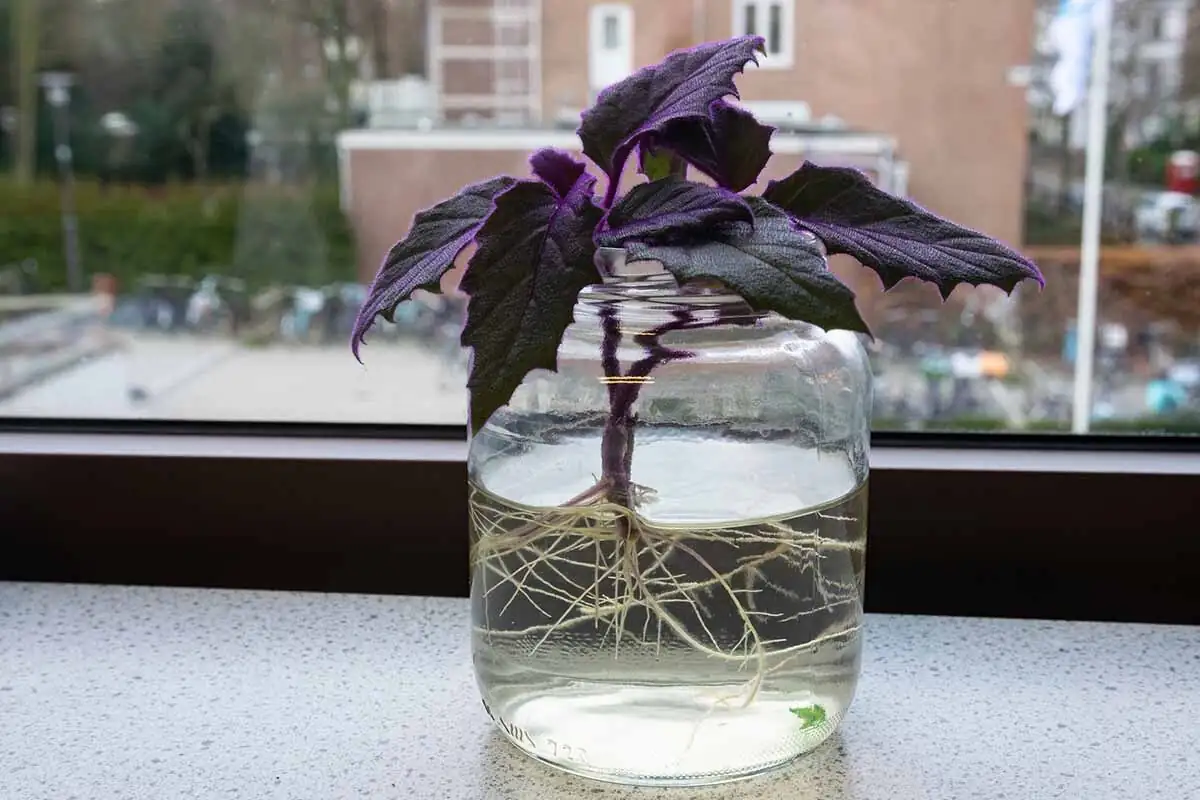
- Take 7–10 cm (3–4 in) soft tip cuttings with 4–5 leaves; strip the lower leaves.
- Root in water or a moist, airy mix at ~20–25°C (68–77°F) in bright, indirect light.
- Rooting often takes around 2 weeks.
- In humid air, stems may sprout adventitious roots at nodes—clip and pot those sections directly.
- Water‑prop tip: Once water‑rooted cuttings have ~10 cm (4 in) of roots, you can add a very dilute nutrient solution; switch back to plain water and change it frequently during hot spells.
Placement Ideas
- Hanging baskets or shelf edges where stems can spill elegantly.
- Bright windowsills with filtered light.
- Use pebble trays for humidity and always water at the soil line to keep that velvet pristine.
Quick Troubleshooting
- Color fading/greener leaves: Light is too low; move to brighter, indirect light. New growth should regain richer purple.
- Dull, spotted patches: Foliage got wet. Improve watering technique and airflow; keep leaves dry.
- Rusty pustules or blotches in humid, stagnant air: Improve ventilation, keep foliage dry, and remove affected parts.
- Pests (spider mites, aphids, mealybugs, whiteflies): Catch early; isolate the plant and treat with insecticidal soap or horticultural oil. Rinse tools and keep monitoring.
Safety Notes
Not considered highly toxic, but nibbling can cause mild stomach upset, and the sap/fuzzy hairs can irritate sensitive skin. Keep out of reach of pets and children; wash hands if you’re prone to irritation.
Symbolism and Fun Facts
- Symbolism: Often linked with bold individuality and vibrant energy—fitting for a plant that glows purple under bright light. This isn’t an old‑world “flower language” tradition so much as modern sentiment inspired by its electric look.
- Fun facts:
- That neon‑purple look comes mostly from dense, light‑catching hairs—not just pigment in the leaf blade.
- In humid air, nodes may sprout tiny adventitious roots, making it nearly self‑propagating.
- Many treat it as a renewable houseplant: when it gets leggy after 2–3 years, take cuttings and start fresh.
- Below about 10°C (50°F), chilling injury quickly shows up as damaged edges and patchy spotting.
Seasonal Care Snapshot
- Spring: Repot, refresh soil, start new plants from cuttings, resume regular feeding.
- Spring–autumn: Keep lightly moist, fertilize on schedule, pinch tips for fullness, keep leaves dry.
- Winter: Bright, indirect light; keep warm (above 10°C / 50°F); reduce watering. Buds may appear—pinch them if you’re not into the scent.
When you give purple passion plant steady brightness, gentle moisture, and dry, untouched foliage, its velvet turns up the volume. Think of it as stage lighting for your shelf: the brighter (but indirect) the spotlight, the richer the purple encore.