

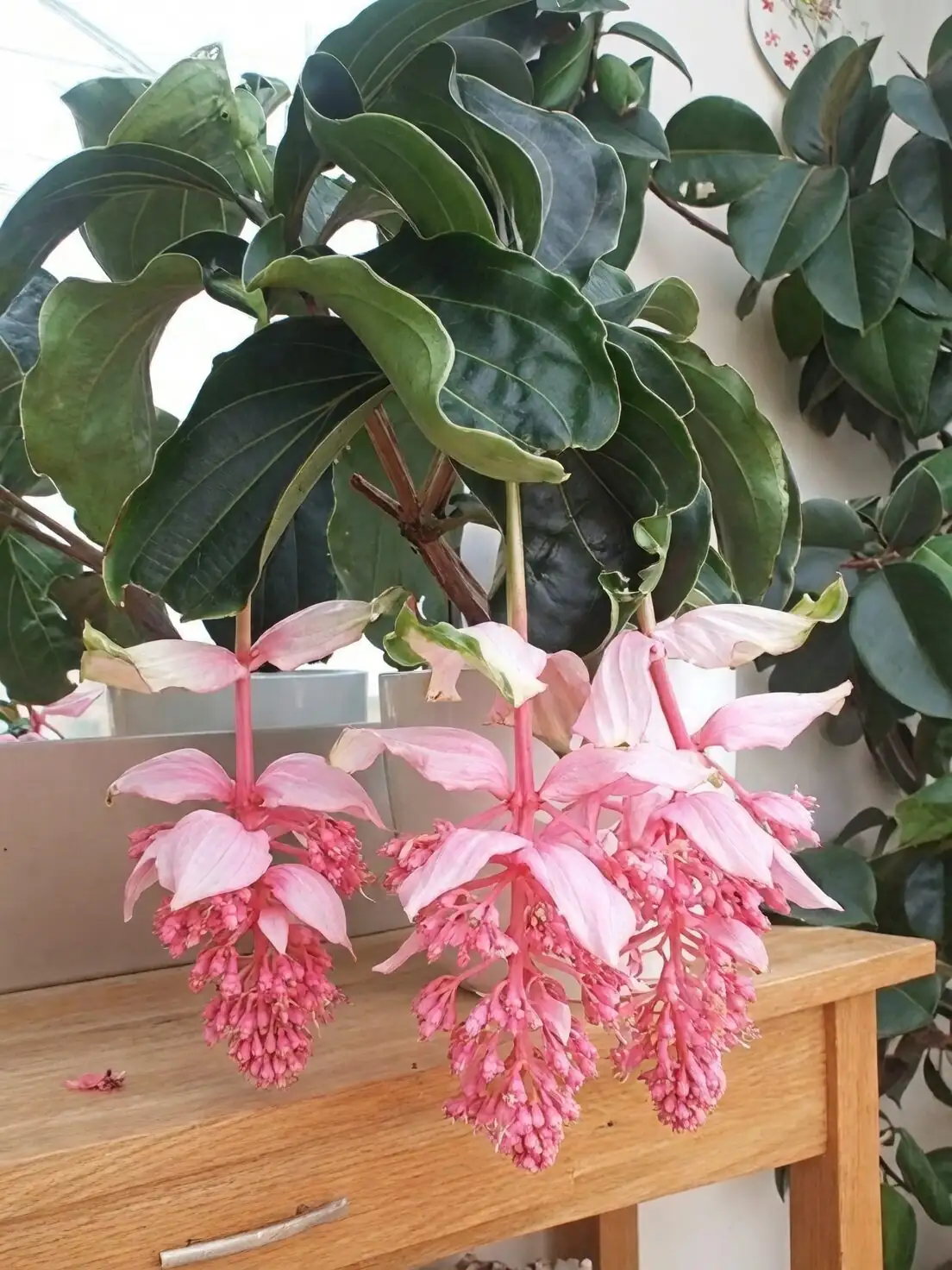
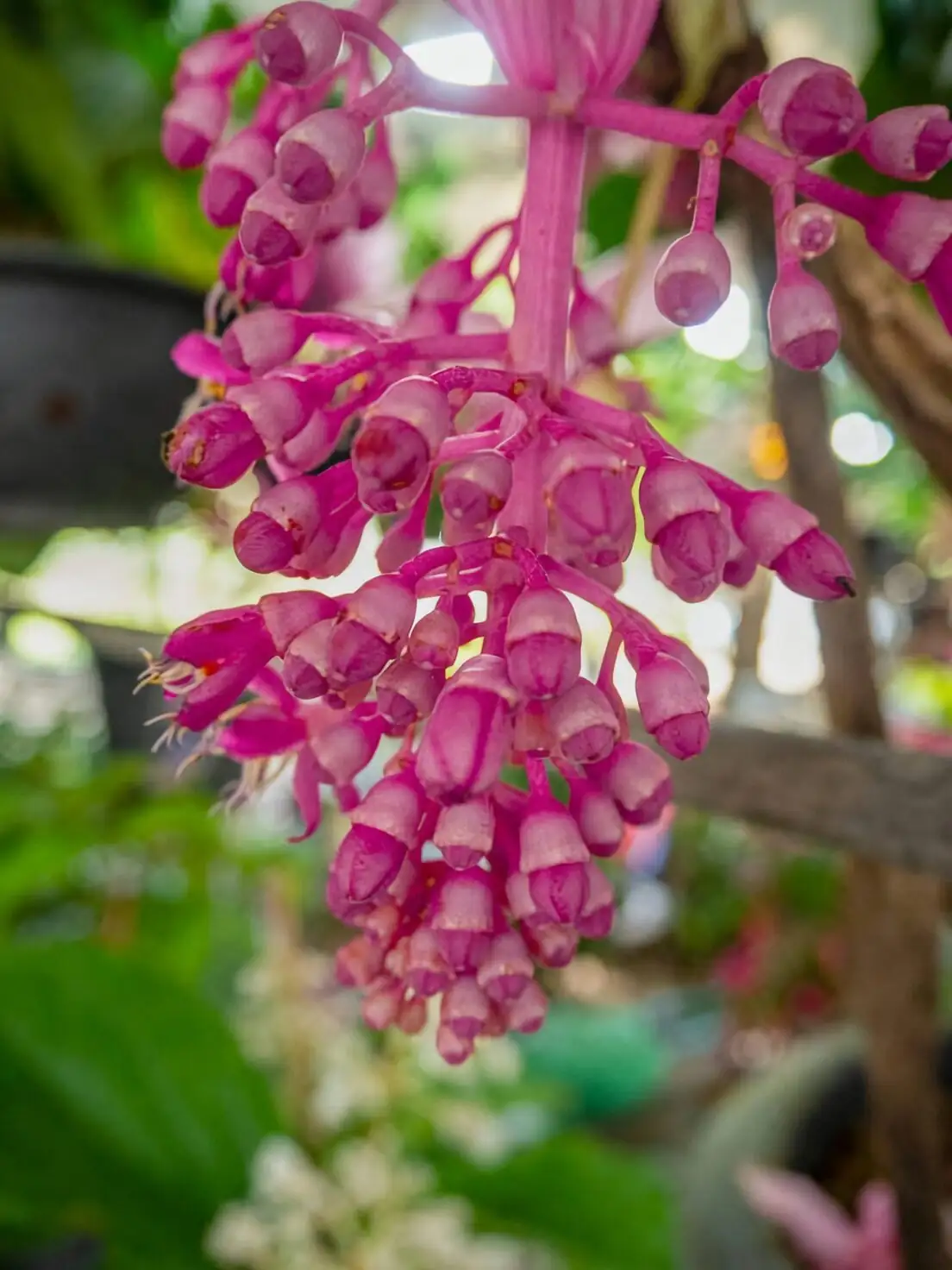
Set a pedestal for a showstopper: Rose grape (Medinilla magnifica) is all pink chandeliers and glossy architecture, happiest in bright filtered light with lush, steady humidity. The magic trick in conservatories and bright-shade rooms is pairing it with plants that like the same moist, warm air—while keeping the air moving and the vignette visually layered, not jammed. Here’s how to design companions and microclimates that make Medinilla sing without crowding out its performance.
Know your star: quick profile for smart pairing
- Light: Bright, filtered/indirect; an east window or a south window with a sheer is excellent. Avoid harsh midday sun.
- Temperature: Warm and stable—ideally 22–28°C (72–82°F); keep above ~16°C (61°F).
- Humidity: Medium-high to high—aim for 50–70% minimum; 70–80% is ideal for strong bud set and flower retention.
- Water: Evenly moist but never soggy; bottom-water and drain well, especially in bloom. Avoid wetting the flowers.
- Root zone: Airy, rich, free-draining mix (think fine bark + perlite/charcoal, or a lightened humus-rich mix).
- Display: Elevate so the heavy, pendant clusters can drape naturally; gentle support helps during peak bloom.
- Seasonality: Main bloom late spring through summer indoors; prune back flowered shoots by about half after flowering.
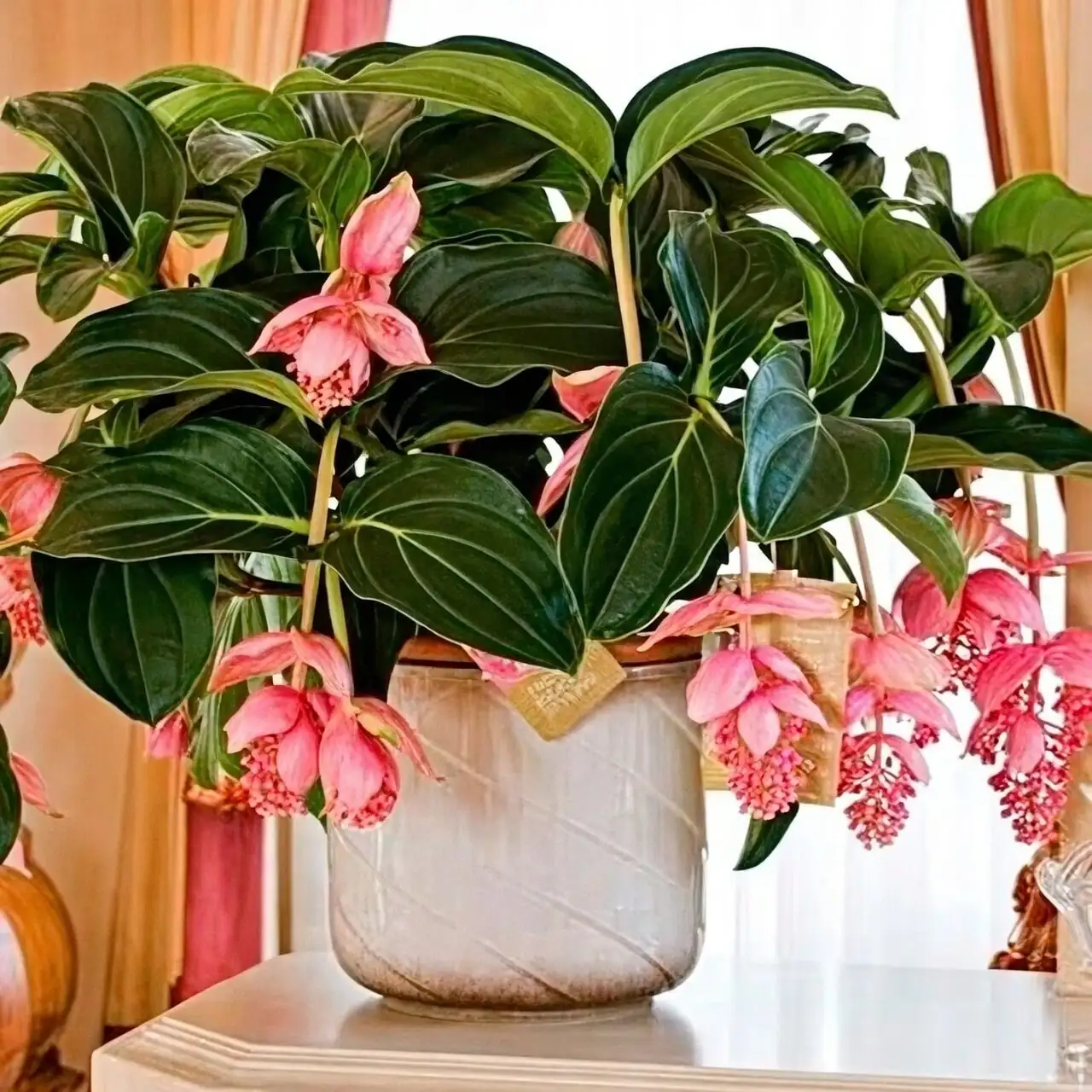
These cues tell you which plant partners will truly “get along.”
Design principles: humidity, airflow, layering
- Build an RH island, not a rainforest. Group humidity-lovers to reach 60–75% RH (70–80% when buds form), but keep foliage spaced so leaves don’t touch. A humidifier plus pebble trays beats heavy misting—especially since Medinilla’s flowers dislike getting wet.
- Keep air moving, gently. Stagnant, hot air plus high humidity can trigger bud or flower drop. Use a slow, oscillating fan that moves air around, not directly at, the blooms.
- Stage the drape. Leave a 20–30 cm (8–12 in) “fall zone” below the pot edge so those chandelier clusters hang cleanly.
- Layer the canopy. Think three tiers—light-screening canopy, mid-story statement leaves, and low mounding/pendant accents—with negative space preserved between each.
- Sync watering rhythms. Choose companions that like evenly moist, well-drained media and steady warmth; skip arid-lovers in this zone to reduce care conflicts.
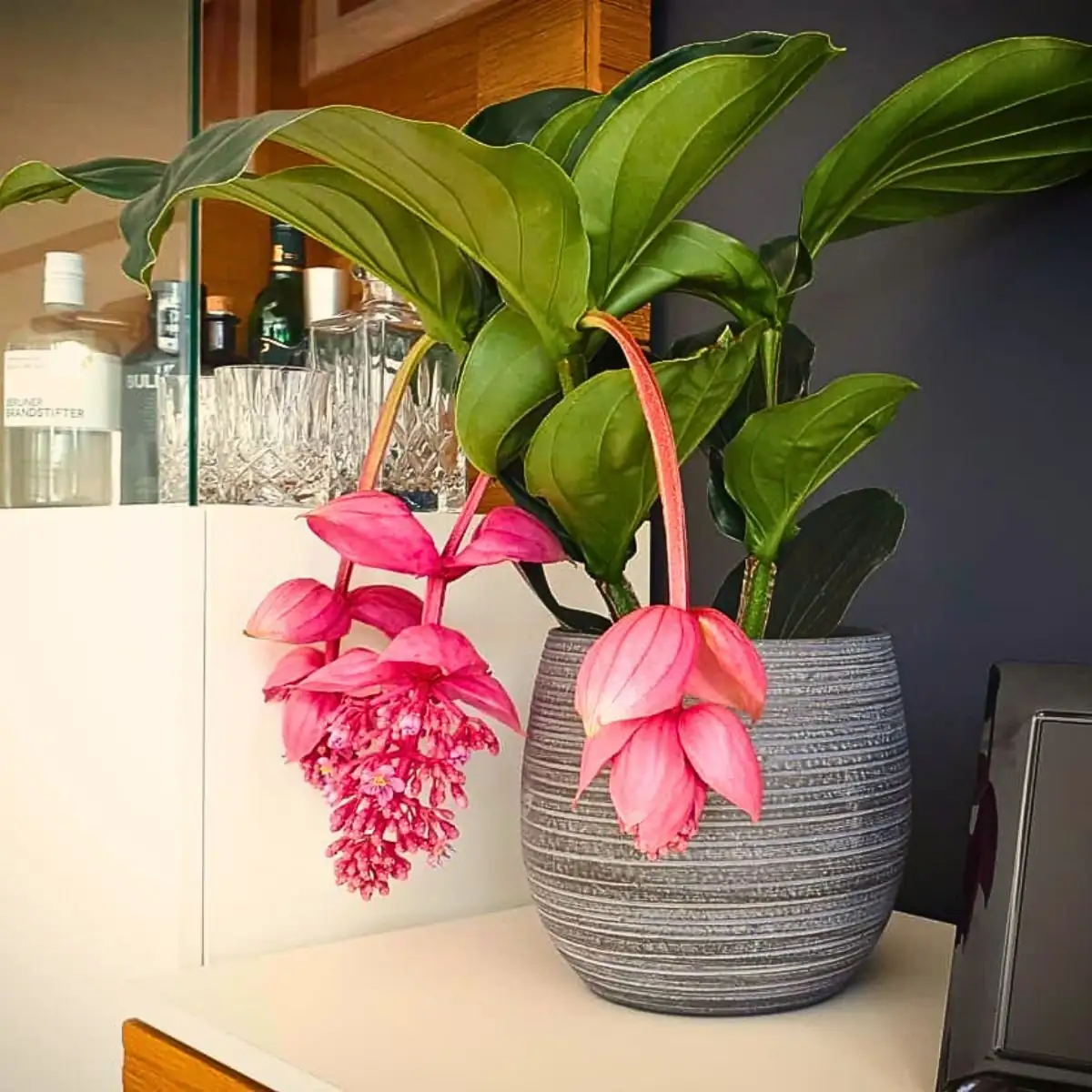
Companion shortlist (that actually share Medinilla’s preferences)
Soft canopy: create bright shade and a breeze
- Parlour palm (Chamaedorea elegans): Compact, tolerant, and naturally dappled—perfect for bright shade and 50–70% RH.
- Kentia palm (Howea forsteriana) or Bamboo palm (Chamaedorea seifrizii): Taller backdrop to diffuse light without blasting the Medinilla.
- Staghorn fern (Platycerium bifurcatum), wall-mounted: Loves humidity and airflow; keeps floor space clear.
Design note: Place canopy plants slightly upwind so gently filtered air reaches Medinilla. Avoid dense, immovable hedges that trap heat.
Mid-story texture: lush leaves that echo Medinilla’s drama
- Anthurium crystallinum/clarinervium (velvety, veined): High humidity, bright filtered light, evenly moist mix.
- Calathea/Goeppertia orbifolia: Broad, silver-banded leaves; appreciates 60%+ RH and stable warmth.
- Peace lily (Spathiphyllum): Deep green mounds and white spathes that harmonize with pink bracts; enjoys moist, free-draining soil.
Epiphyte allies and pendants (space-savers with similar air needs)
- Phalaenopsis orchids: White or blush blooms under Medinilla’s pinks; thrive in bright filtered light and 50–70% RH. Keep spent bloom spikes tidy to avoid tangles.
- Lipstick plant (Aeschynanthus radicans): Cascading, glossy leaves; likes humidity and even moisture.
- Tillandsia (air plants), especially T. usneoides (Spanish moss): Hang nearby to add softness and boost local humidity—just ensure good airflow.
Bromeliads with poise
- Guzmania and Vriesea: Colorful rosettes for the lower tier. Water in the central cup; avoid splashing Medinilla’s bracts.
Skip or place elsewhere: cacti/succulents (too dry), sun-hungry crotons, or sprawling Monsteras that can overshadow airflow and light.
Vignette recipes that resist overcrowding
1) East-window “pink chandelier” pedestal
- Anchor: Medinilla on a 60–80 cm (24–32 in) stand in a tall, well-drained planter; leave a clear drape zone.
- Canopy: A slender Parlour palm offset behind to cast gentle, dappled light.
- Mid-story: One Anthurium crystallinum (left) + one Calathea orbifolia (right) for contrasted veining and leaf sheen.
- Accent: A lipstick plant on a low stool across from the Medinilla’s drape, trailing away from traffic.
- Infrastructure: Pebble trays beneath groupings; an ultrasonic humidifier aimed to diffuse through the palm fronds; a low-speed fan set to skim above bloom height.
Why it works: Strong vertical rhythm, clear negative space under the Medinilla, and matched humidity without leaf-on-leaf congestion.
2) Conservatory corner “epiphyte stage”
- Anchor: Medinilla in a deep, free-draining mix (orchid-style bark + perlite/charcoal), pot lifted on discreet risers for airflow.
- Wall: A staghorn fern plaque and a grid of Tillandsia to free floor area and keep air moving vertically.
- Companions: Two Phalaenopsis orchids on a low bench beneath the Medinilla’s canopy; one Guzmania to one side as a color echo.
- Microclimate: 65–75% RH baseline with a humidity controller; morning window crack for a fresh-air pulse, then close and let the fan maintain circulation.
Why it works: Epiphyte-inspired structure respects airflow and aligns watering styles; orchids add bloom without visual heaviness.
3) Bright-shade shelfscape (small-space solution)
- Middle-upper shelf: Medinilla centered, with a 20–25 cm (8–10 in) ring of open space for flower drop and drape.
- Flanks: Compact Peace lilies or small Anthuriums in matte planters.
- Hanging: A short-string Tillandsia cluster from the top shelf; keep 10–15 cm (4–6 in) air gap from Medinilla’s bracts.
- Climate: Pebble tray spanning the shelf depth; mini fan at the end, set to the gentlest oscillation.
Why it works: Layered heights without plant crowding; easy to service and prune after flowering.
Airflow and humidity: the winning setup
- Targets: Hold 50–70% RH most days; nudge toward 70–80% as buds form and open.
- Fan finesse: Gentle, continuous movement prevents hot, stuffy pockets that cause bud or flower drop. Aim air to pass near, not at, the bracts.
- Water smarts: Bottom-water Medinilla with lukewarm rain or distilled water, drain thoroughly, and never leave the pot standing in water. Avoid wetting flowers.
- Heat management: Sheer-curtain any midday spike; bright east exposure is easiest. Stable warmth is more important than brief sunbursts.
Layering without clutter: visual rules of thumb
- 60/30/10 balance: 60% foliage mass in the back (canopy), 30% mid-story statements, 10% low/pendant accents.
- Two veined stars max: Medinilla already carries bold veination; pair with one other strong-veined species (e.g., Anthurium) and keep the rest calmer to avoid visual noise.
- Negative space is a design element: Leave sightlines under the Medinilla and a clear “air lane” around the pedestal for airflow and service.
Care choreography across companions
- Prune and prop: After flowering, remove spent clusters and cut back flowered shoots by about half; add discreet ties to support any arching stems still heavy with foliage.
- Repot rhythm: Every ~2 years in spring into an airy, fertile, free-draining mix; minimal root disturbance. Deep containers (30–40 cm / 12–16 in) suit the root run.
- Hygiene: Dust large leaves (yours and theirs) to keep pores breathing; inspect undersides weekly for spider mites, scale, mealybugs, or whiteflies. Early, gentle treatments (insecticidal soap or horticultural oil) plus improved airflow are your best defense.
- Winter shift: Move closer to the brightest window, keep warm (above ~16°C / 61°F), and water less—slightly on the dry side—until new flower stems initiate.
Color and mood palettes that flatter pink bracts
- Classic serenity: White Phalaenopsis, deep-green Peace lilies, and a single silver-banded Calathea—crisp, gallery-like focus on Medinilla’s pink cascades.
- Tropical glamour: Velvet-leaf Anthuriums + a single neon bromeliad echo the bract tones without competing for space.
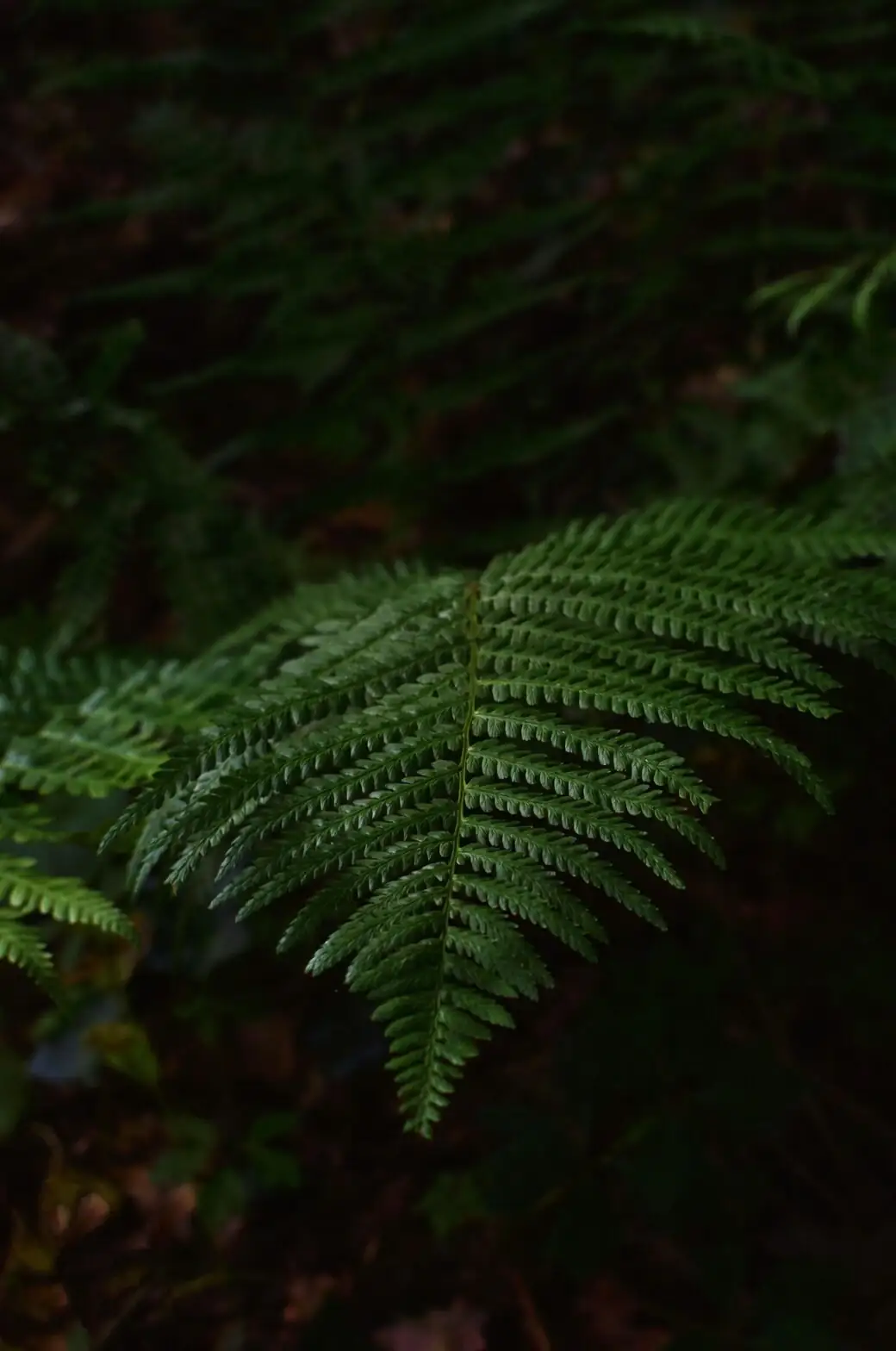
- Soft botanical: Fern textures (Asplenium nidus, Microsorum ‘Crocodyllus’) with pale ceramic planters let Medinilla’s bracts read as jewelry.
Safety and practicalities
- Pet/child note: Not widely documented as toxic, but chewing any ornamental may upset stomachs—display out of reach.
- Staging tip: Use a wheeled caddy for the pedestal planter; it makes bottom-watering and post-bloom pruning easy without grazing those pendant clusters.
Symbolism and “flower language”
Rose grape is often associated with tropical elegance, abundance, and high-style glamour—very much a “statement plant” gift. Any so-called flower language around it is contemporary rather than rooted in old folklore; much of the mystique comes from its architectural leaves and chandelier-like bracts. You may see it sold as “Philippine Orchid”—a trade nickname nodding to its orchid-like display, not its botany.
Quick do/don’t for companioned Medinilla displays
- Do
- Elevate the pot so blooms can cascade freely.
- Keep humidity high and air gently moving.
- Pair with plants that like bright, filtered light and evenly moist, airy mixes.
- Leave 20–30 cm (8–12 in) of open air under the rim for bloom drape.
- Don’t
- Pack foliage tightly; stagnant, hot pockets lead to bud/flower drop.
- Splash water on the bracts or let the pot sit in water.
- Park sun-thirsty or desert plants beside your humidity island.
- Allow sudden temperature swings or cold drafts near the display.
Curate your conservatory like a forest edge—luminous, humid, and breezy—and your Medinilla magnifica will reward you with cascading pink theaters from late spring through summer, without the chaos of overcrowding.