
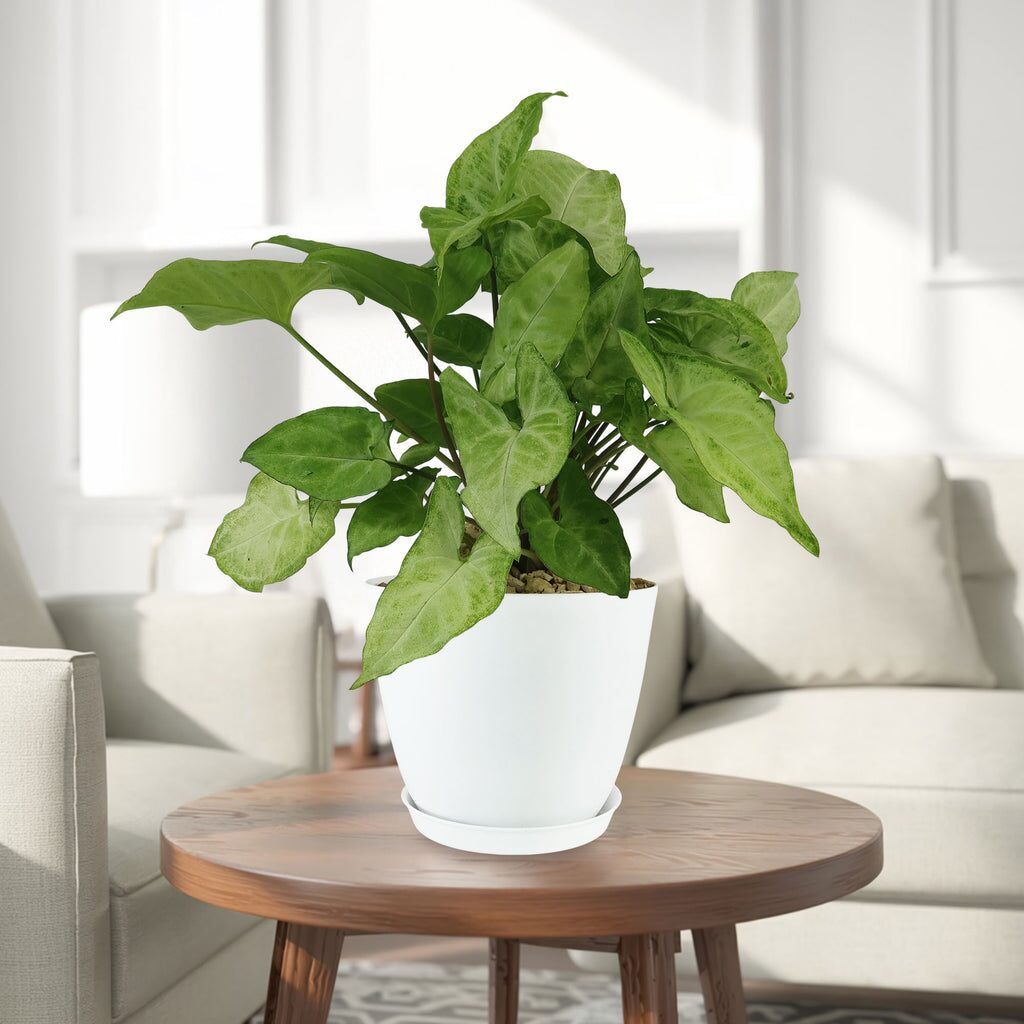
If you love a plant that can switch roles as easily as a great accent chair, meet Syngonium podophyllum—the Arrowhead Vine. This shapeshifter starts as a tidy tuft of arrow-shaped leaves, then happily trails, climbs, or stays compact depending on how you style it. Think of it as living décor you can edit: a cascading curtain, a sculptural column, or a plush tabletop mound.
Meet Syngonium podophyllum at a glance
- An easygoing tropical aroid from the Americas (Mexico to Bolivia and the West Indies), long adored indoors for its clean, glossy “arrowhead” leaves.
- Grows fast and adapts: keep it pinched at 15–20 cm tall for a neat mound, or let it mature to around 90 × 60 cm as it climbs or trails.
- Foliage comes in solid greens and creamy-green variegations; veining often pops. As it ages, leaves typically become more lobed—part of its charm.
- Light: bright, indirect is ideal; it tolerates partial shade. Avoid harsh direct sun.
- Humidity lover that thrives in kitchens and bathrooms.
- Toxic if chewed (calcium oxalate); sap may irritate. Style high or out of reach if you have pets or kids.
Choose your silhouette: cascade, column, or mound
1) Hanging cascades (soft movement from shelves and rails)
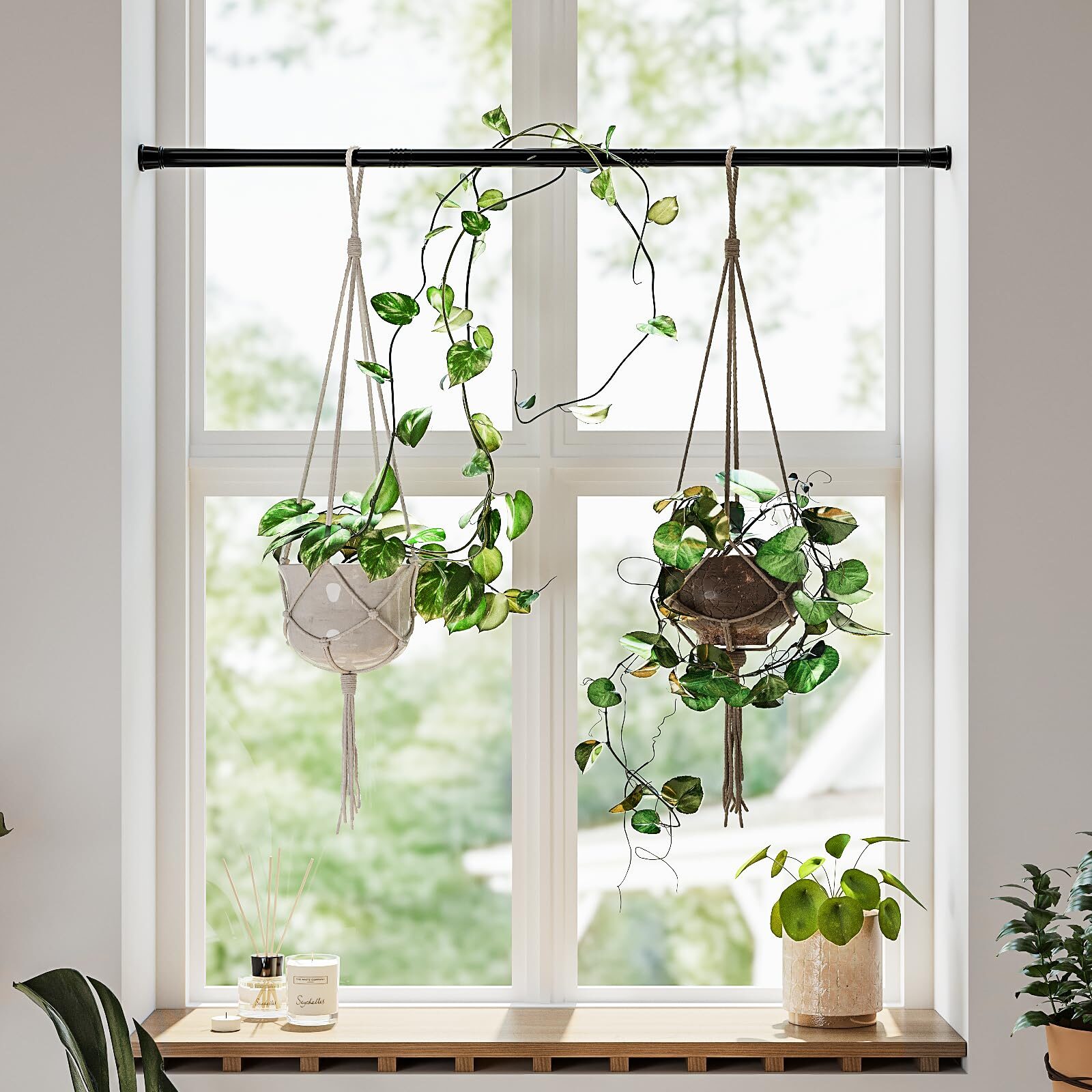
- Best for: high shelves, shower windows with filtered light, kitchen rails, stair landings.
- Pot size: 15–18 cm hanging basket for a full, draping look; start smaller (12–15 cm) for a lighter curtain.
- Setup
- Place near an east window, bright north window, or set back from a sunny south/west exposure with a sheer.
- Use a loose aroid mix (peat/coco + perlite/bark). Ensure excellent drainage; never let it sit in a saucer of water.
- Care notes
- Water when the top layer dries in spring–autumn (often weekly); lighten up in winter (around every 2 weeks).
- Snip back longer strands to keep the cascade balanced and encourage branching.
- Style tips
- Pair creamy variegated forms with matte black or white planters for crisp contrast.
- In a minimal kitchen, let soft green varieties trail from a simple rail shelf to add quiet texture without visual noise.
2) Tidy moss‑pole columns (a vertical, architectural accent)
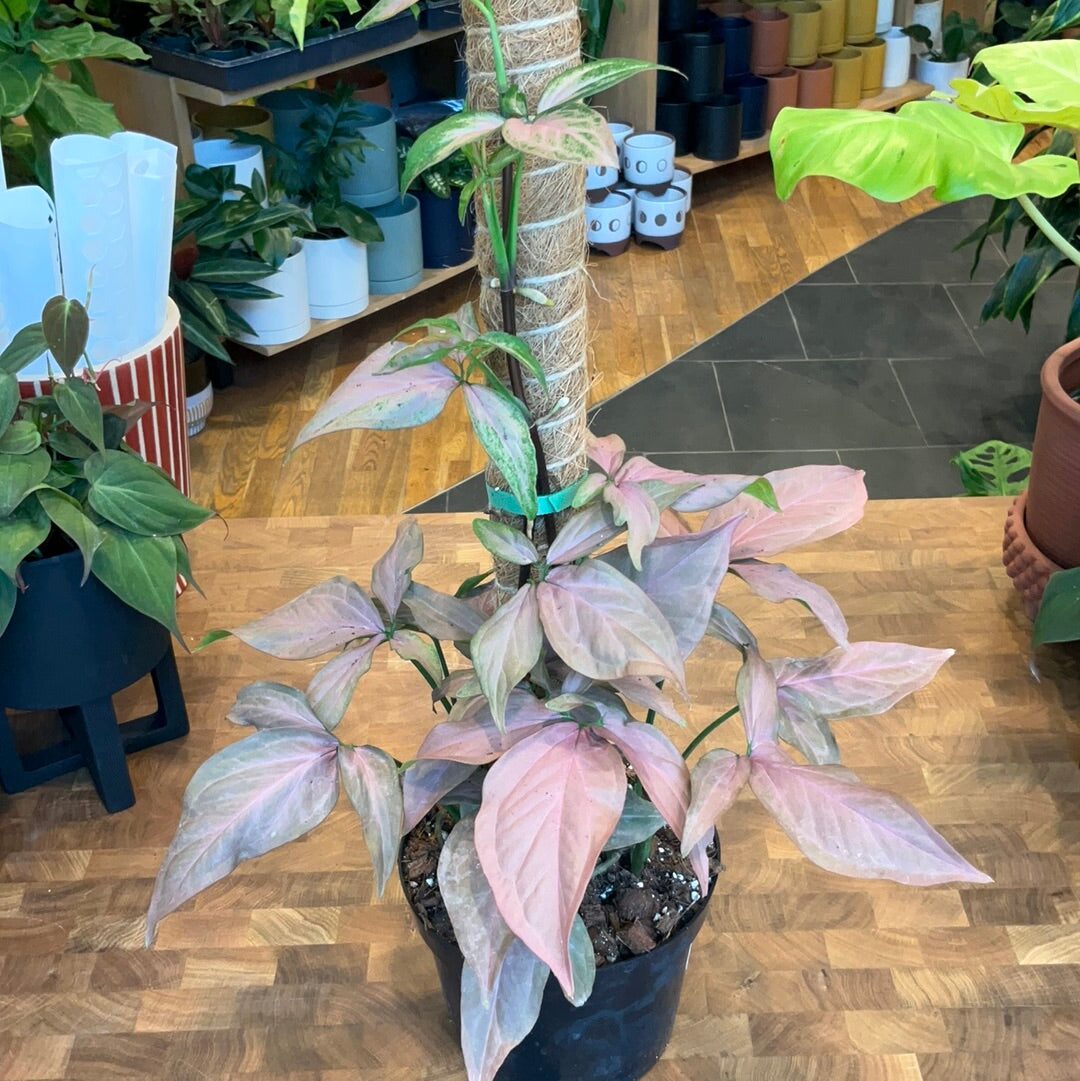
- Best for: tight corners, flanking a mirror, or making a modern vignette on a console.
- Pot size: 15–20 cm for stability; choose a heavier vessel to counterbalance the pole.
- Setup
- Insert a moss or coir pole; tie vines loosely at nodes so aerial roots meet the support.
- Bright, indirect light keeps internodes short and leaves crisp. Variegated forms especially benefit from brighter (filtered) spots.
- Care notes
- Evenly moist soil, never soggy. Moderate to high humidity yields larger, tidier leaves.
- Pinch lightly to encourage a fuller column; a spring cut-back refreshes leggy stems.
- Style tips
- A column reads like sculpture—try a tall cylindrical pot in terrazzo or satin ceramic.
- Mirror the pole’s vertical line with wall art or a floor lamp for a composed look.
3) Pinched tabletop mounds (the chic “little cushion” for desks)
- Best for: worktops, bedside tables, coffee tables, and grouped plant trays.
- Pot size: 10–12 cm to keep it petite; upsize to 13–15 cm for a plusher dome.
- Setup
- Pinch tips once the mound reaches 15–20 cm to trigger branching.
- Place near an east window or bright north exposure; a sheer-filtered south/west window works if set back.
- Care notes
- Water lightly and evenly; let the top of the mix dry slightly between drinks.
- Rotate weekly so the mound stays symmetrical.
- Style tips
- Footed ceramics and soft neutrals emphasize the plant’s fresh, glossy texture.
- Cluster with a small vase of water‑rooted cuttings for a layered, botanical still life.
Where it shines at home
- Bathrooms and kitchens: naturally humid rooms where syngonium looks instantly at ease.
- Living rooms and offices: near bright windows with filtered light—think side tables and shelves.
- Frost‑free outdoor nooks (Zones ~10–12): shaded, humid corners such as courtyards or near walls—bring the jungle vibe outside.
Foliage tones and décor pairings
Match the leaf to your palette like you’d choose fabric swatches:
- Cream‑variegated on green: graphic and airy. Perfect with monochrome or Scandinavian interiors, pale woods, and matte finishes.
- Solid green: calming, versatile. Balances busier rooms, patterned rugs, or maximalist walls; sings in warm walnut or oak planters.
- Silver‑veined or softly mottled forms: cool sophistication. Pair with brushed metal, smoked glass, or slate accents.
- Want color moments? Many syngoniums trend into lime or blush in select cultivars—great pops against charcoal or navy backdrops.
- Vessel matters: matte white for minimalists, textured stoneware for organic modern, or woven baskets for a relaxed, tropical note.
Care that keeps the look crisp
- Light
- Bright, indirect is best; tolerates partial shade. Avoid harsh direct sun to prevent scorch.
- Variegated plants need brighter indirect light to hold their pattern.
- Watering
- Spring–autumn: water when the top layer dries (often weekly). Aim for evenly moist, never waterlogged.
- Winter: reduce (often every 2 weeks), especially in cooler rooms. Empty cachepots/saucers after watering.
- Temperature and humidity
- Thrives around 15–23°C; tolerates ~15–29°C. Keep above ~12°C to avoid chilling; damage likely below ~5°C.
- Loves moderate to high humidity—great in bathrooms/kitchens; otherwise, use a humidifier, pebble tray, or morning mist.
- Soil and pots
- Use a loose, airy aroid mix (peat/coco + perlite/bark; a pinch of compost is optional).
- Typical pots: 10–15 cm for small plants, 15–20 cm for fuller specimens; hanging baskets 15–18 cm.
- Feeding
- During main growth (spring–summer, often May–August): a balanced liquid fertilizer (e.g., 20‑20‑20) at half strength every 2 weeks.
- Pause or reduce in winter; avoid excess nitrogen to prevent weak, leggy growth.
- Pruning and shaping
- Pinch to branch; trim leggy stems in spring. A harder cut every 2–3 years rejuvenates older plants.
- Repotting
- Repot in spring when rootbound or refresh the top 2–3 cm of mix annually if you like the current size.
- Propagation
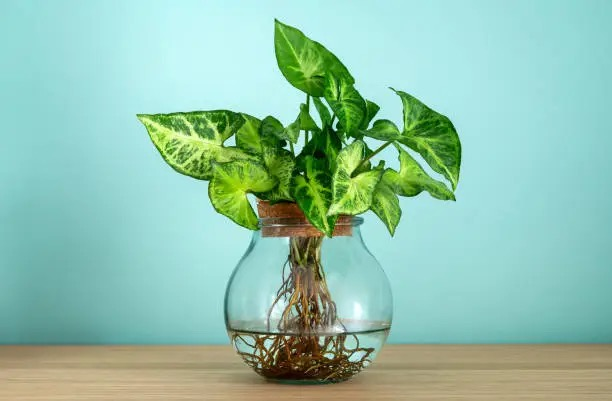
- Snip 2–3‑node cuttings from late spring to autumn; root in water or a moist mix. With warmth, roots form in about 10–15 days.
- Stems with aerial roots can go straight into mix—instant head start.
Troubleshooting by look
- Yellowing and leaf drop: often low light, overwatering/poor drainage, or temperature stress. Brighten light, improve drainage, keep warm, and check roots if the pot stays wet.
- Crispy edges/smaller, rougher leaves: usually prolonged dryness or low humidity. Water more consistently and boost humidity.
- Scorch or bleaching: too much direct sun—diffuse with a sheer or move back.
- Leggy, stretched growth: not enough light or overfeeding nitrogen. Increase bright, indirect light and prune; feed modestly.
- Pests: spider mites (dry air), mealybugs, scale, whiteflies, aphids. Wipe leaves, raise humidity, and treat early with insecticidal soap or horticultural oil.
- Diseases: leaf spot or gray mold with wet foliage/poor airflow. Remove affected leaves, improve ventilation, and avoid late‑day misting.
Safety and placement
- All parts are toxic if chewed; sap can irritate skin/eyes. Keep away from pets and children, and wear gloves if sensitive.
- For pet‑friendly styling, choose high shelves, hanging displays, or pole columns in tall planters.
A note on blooms and symbolism
- Indoors, blooms are uncommon and modest: a pale spathe around a spadix. This plant is all about the foliage performance.
- Symbolism
- Often linked with growth, adaptability, and fresh beginnings—fitting for a plant that changes leaf shape as it matures and roots readily from cuttings.
- These meanings are modern, home‑plant traditions rather than ancient lore—think of it as a “good luck” nod for new homes or new starts.
Quick size and pot cheat sheet
- Tabletop mound: 10–12 cm pot; pinch at 15–20 cm tall for a plush cushion.
- Full, bushy centerpiece: 15–20 cm pot; rotate and trim for symmetry.
- Hanging basket: 15–18 cm; let vines spill and snip to shape.
- Mature allowance: up to ~90 × 60 cm if you let it trail or climb.
Design bonus: Syngonium also roots and grows in water—pop a few cuttings in a glass cylinder on a shelf for a clean, modern vignette while your main plant keeps doing its thing.