


If winter makes your garden feel like a closed book, Galanthus nivalis—our plucky, white‑winged “first sentence of spring”—opens it again. These little bells thrive when you harness shade, slope, and soil moisture to your advantage. With smart siting and a few canny cultivar choices, you can coax confident snowdrop displays even in marginal, warming climates.
The right place: under deciduous canopies and on north-facing slopes
Why the deciduous canopy is snowdrop heaven
- Bright spring light, then summer shade: Under leafless trees in late winter, snowdrops bask in sun just when they need it most. As canopies leaf out, cooling shade protects bulbs during their summer dormancy.
- Leaf litter equals woodland loam: Allow last year’s leaves to crumble in place. They feed the soil, steady moisture, and mimic the humus-rich, well-drained woodland conditions snowdrops adore.
- Temperature buffering: Overhead shade moderates surface soil temperatures, preserving flower buds through erratic spring warm spells.
Pro tip: Aim for dappled light through March, then medium shade through summer. South-facing, heat-reflective spots (e.g., near light-colored walls) can rush dormancy and curb flowering in warm zones.
North-facing slopes: nature’s built-in climate control
- Cooler soils and slower thaws: North slopes linger in chill, extending the bulbs’ “cold-hours” and steadying freeze–thaw cycles that can heave bulbs.
- Reliable drainage: Gravity helps keep water moving. That’s essential for a plant that loves moisture in growth but balks at waterlogging.
- Later, longer show: In mild zones, north aspects often delay emergence just enough to keep flowers pristine through early warm snaps.
Place drifts where you’ll actually see them—beside a walkway, under a deciduous hedge you pass daily, or along the shadiest edge of a front lawn (where mowing can be delayed).
Soil moisture management: moist in growth, never boggy
Snowdrops want a woodland rhythm: evenly moist in active growth, then on the drier side once leaves yellow.
Build the right soil
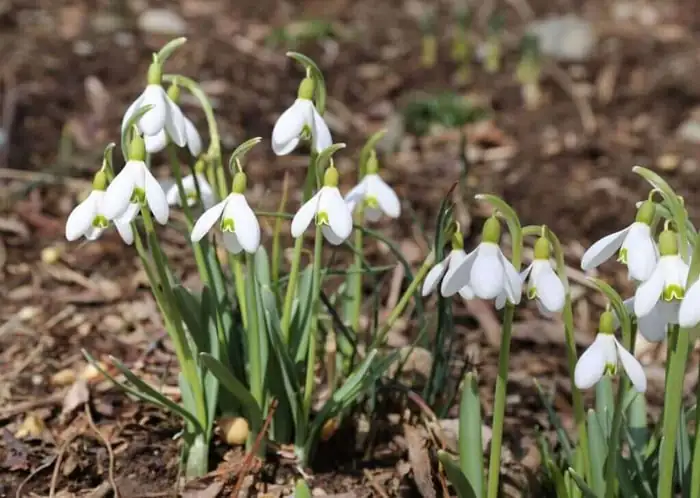
- Texture: Loamy, humus-rich, and free-draining. Blend in leaf mold or compost across the whole bed, not just the hole.
- Drainage tune-up:
- Heavy clay: Open the profile with coarse grit or fine gravel and extra organic matter; consider a subtly raised bed.
- Very sandy soils: Increase water-holding with generous leaf mold/compost.
- pH: They’re very happy in neutral to alkaline soils and often thrive in limestone conditions.
Simple drainage check: After a soaking rain, water shouldn’t sit more than a few hours. Persistent puddles? Raise the planting zone or improve structure before planting.
Watering through the seasons
- Late fall to early spring: Keep soil lightly, consistently moist, especially if winter is dry. Rooting and bud formation happen early.
- After bloom: Maintain modest moisture until foliage yellows naturally; this is when bulbs recharge.
- Summer dormancy: Go easy. Avoid soggy conditions and redirect automatic irrigation if needed.
Mulch with an airy 2–3 cm layer of leaf mold after flowering. Keep mulch off bulb “necks” to prevent rot.
Coaxing blooms in marginal climates
Think USDA Zone 7b–8a, coastal or urban heat islands, or places with unreliable winter chill. You can still get a good show:
Microclimate moves
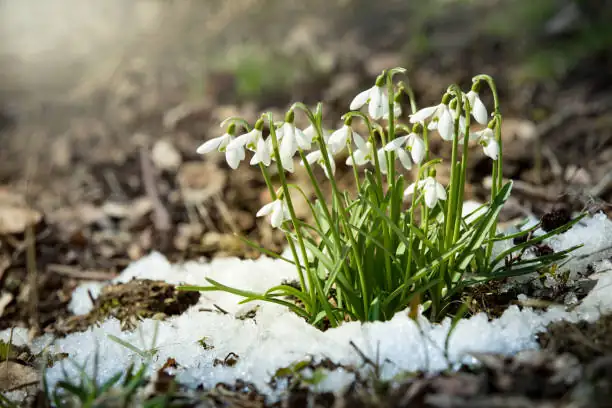
- Seek the coolest niche:
- North-facing slopes or the north side of a hedge/fence.
- Beneath deciduous shrubs that leaf out early enough to cool soils by late spring.
- Away from heat sinks like south-facing masonry.
- Keep winter–spring moisture steady but swift-draining. In warm winters, a soaker hose set on low during dry spells can help sustain growth without saturating the soil.
- Plant “in the green” for best establishment: Freshly lifted clumps right after flowering settle faster and flower more reliably next year than dry bulbs.
- Space for air and light: Thin crowded drifts right after bloom; replant divisions immediately to maintain vigor and reduce fungal setbacks in warm, damp springs.
- Cool the surface: A top-dress of pale grit around clumps can reflect heat and dry quickly after rain, keeping the necks of bulbs happy.
If winters are consistently too mild for G. nivalis to perform, trial the closely related giant snowdrop (Galanthus elwesii) or the glossy-leaved G. woronowii, which often manage better in warm regions. In truly warm gardens, the lookalike summer snowflake (Leucojum aestivum) can fill the “white-in-early-season” niche.
Cultivars that earn their keep
Within G. nivalis, choose vigorous, garden-proven selections and mix bloom times for a longer season.
- For presence and perfume:
- ‘S. Arnott’ — Tall, notably scented, and robust; excellent for naturalized drifts you can smell before you see.
- For grace and visibility:
- ‘Magnet’ — Flowers dangle on extra-long pedicels, dancing above foliage and reading well from a distance.
- For a fuller look:
- ‘Flore Pleno’ — A double snowdrop with layered inner segments; showy and often long-lasting in cool springs.
- For green-tipped intrigue:
- ‘Viridapice’ — Distinct green markings on the outer segments; a subtle collector’s flourish that still naturalizes.
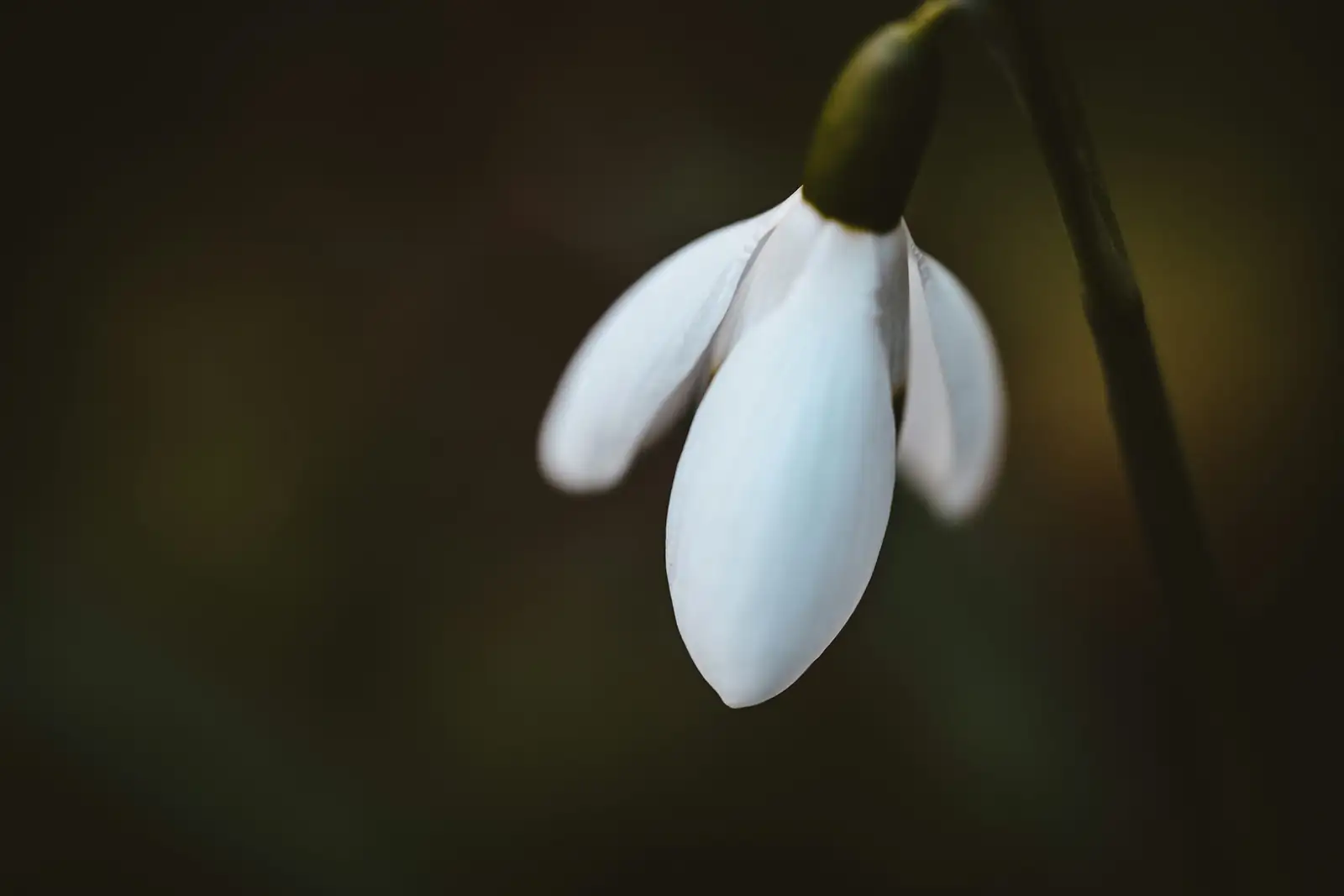
Tip: When pushing the warm edge of hardiness, start with a handful of cultivars and observe which clumps bulk up and flower best over 2–3 seasons. Keep propagating your winners.
Planting and care, made simple
Timing and method
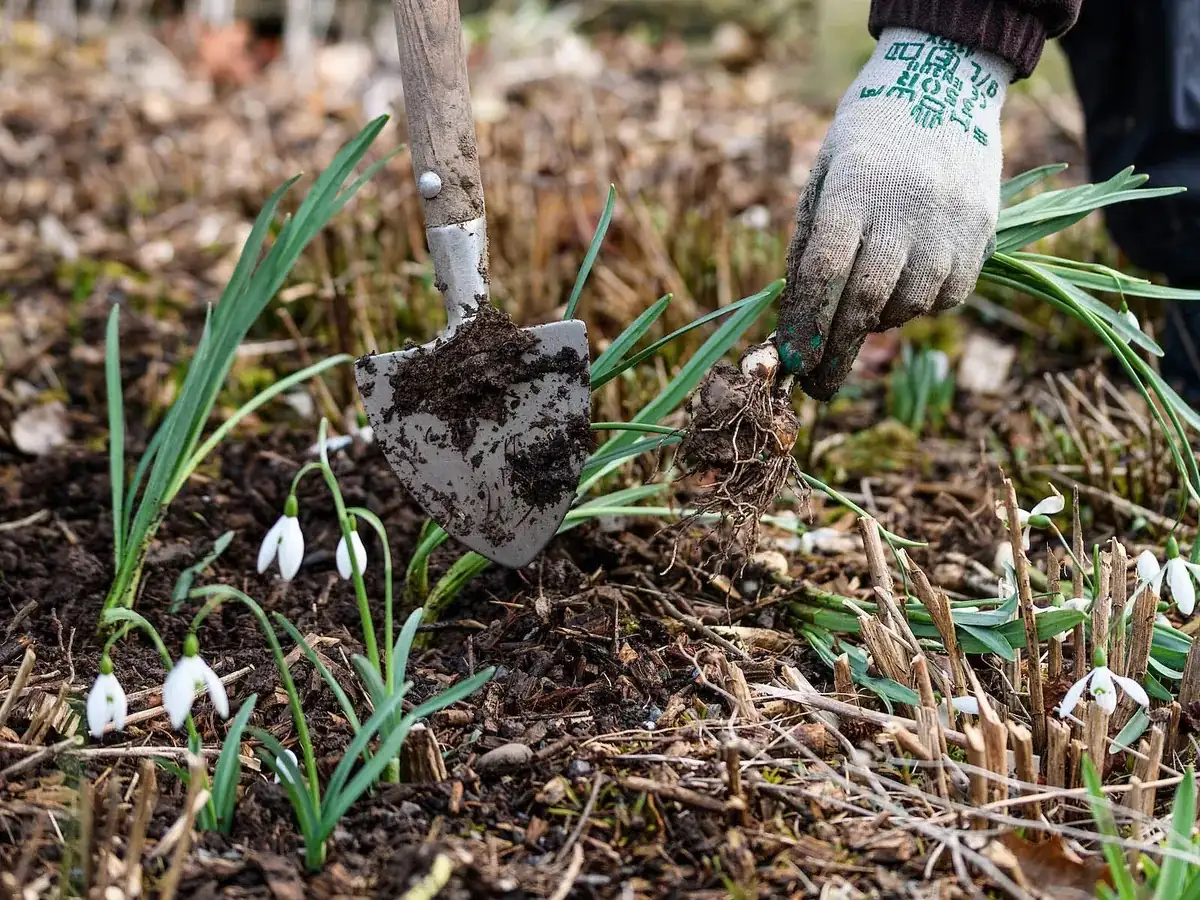
- Best bet: Plant “in the green” immediately after flowering (late winter to early spring). Keep roots intact and replant at the same depth.
- Dry bulbs: Plant in fall (October–November) as soon as they arrive; they dehydrate easily in storage.
Depth, spacing, and siting
- Depth: About 7–8 cm (3 in) for dry bulbs; match original depth when planting in the green.
- Spacing: 5–8 cm (2–3 in) apart for quick carpets; loosen this for more natural, scattered drifts.
- Light: Full sun in late winter/early spring, then part shade. Ideal beneath deciduous trees/shrubs.
Feeding and grooming
- Fertility: Light touch only. A gentle bulb feed or balanced, low-dose fertilizer at emergence or right after flowering is plenty.
- Foliage: Let leaves die back naturally; early cutting robs next year’s bloom.
- Division: Split and replant congested clumps right after flowering every few years.
Great places to use them
- Woodland gardens and under hedges
- Along paths and in rock gardens where flowers are easily admired
- Lawns (delay mowing six weeks after bloom)
- Containers with sharply drained, humus-rich mixes in cool climates
Troubleshooting blooms
- Few or no flowers?
- Insufficient winter chill or a site that warms too fast in spring
- Bulbs dried out before planting
- Planted too shallow or too deep (aim ~3 in for dry bulbs)
- Overcrowding; divide after bloom
- Water stress: too dry in late fall–spring, or waterlogged at any time
- Pests and problems: Generally trouble-free and resistant to deer and rabbits. Squirrels may dig (use grit mulch), and good drainage wards off most diseases.
Safety, ethics, and wildlife notes
- Toxicity: All parts are poisonous to humans and pets if ingested (alkaloids such as lycorine). Handle sensibly and keep away from children and animals.
- Early pollinator resource: Flowers are a lifeline for bees on the first warm days of the year.
- Buy responsibly: The Galanthus genus is CITES Appendix II listed; purchase nursery-propagated plants from reputable sources, never wild‑dug.
Quick seasonal rhythm
- Fall: Plant dry bulbs promptly; ensure drainage is sharp.
- Winter to early spring: Enjoy blooms; keep soil evenly moist.
- Right after bloom: Divide “in the green,” replant immediately; apply a light feed; top-dress with leaf mold.
- Summer: Dormant—keep on the dry side and shaded.
Flower language and deeper meaning
Snowdrops carry the quiet power of renewal. Their “language” of hope and consolation grew from centuries of watching green spears pierce frozen ground and white bells nod above snow. In Christian lore they were linked to purity and the promise that winter’s sorrow will end. Victorian superstition sometimes branded a solitary snowdrop as unlucky indoors, yet whole drifts were seen as comfort—an apt paradox for a plant that thrives on contrast: bright flowers in bleak weather, cool roots beneath warming skies. Plant them where you’ll see them on the gray days, and they’ll return the favor with resolve and light.
—
Essential profile at a glance:
- Botanical name: Galanthus nivalis (Amaryllidaceae)
- Height: Typically 7–15 cm (3–6 in)
- Bloom: Late winter to early spring
- Site: Full late-winter sun to part shade; happiest under deciduous canopies
- Soil: Humus-rich, well-drained, often alkaline
- Hardiness: USDA Zones 3–7 (with careful siting/cultivars, sometimes into Zone 8)
- Habit: Perennial bulb; clumps over time; naturalizes gracefully
Choose the coolest nook, keep the spring soil evenly moist, and let the leaves do their job. With those simple rules—and a canny cultivar or two—snowdrops will write spring’s opening lines for you, year after year.


