
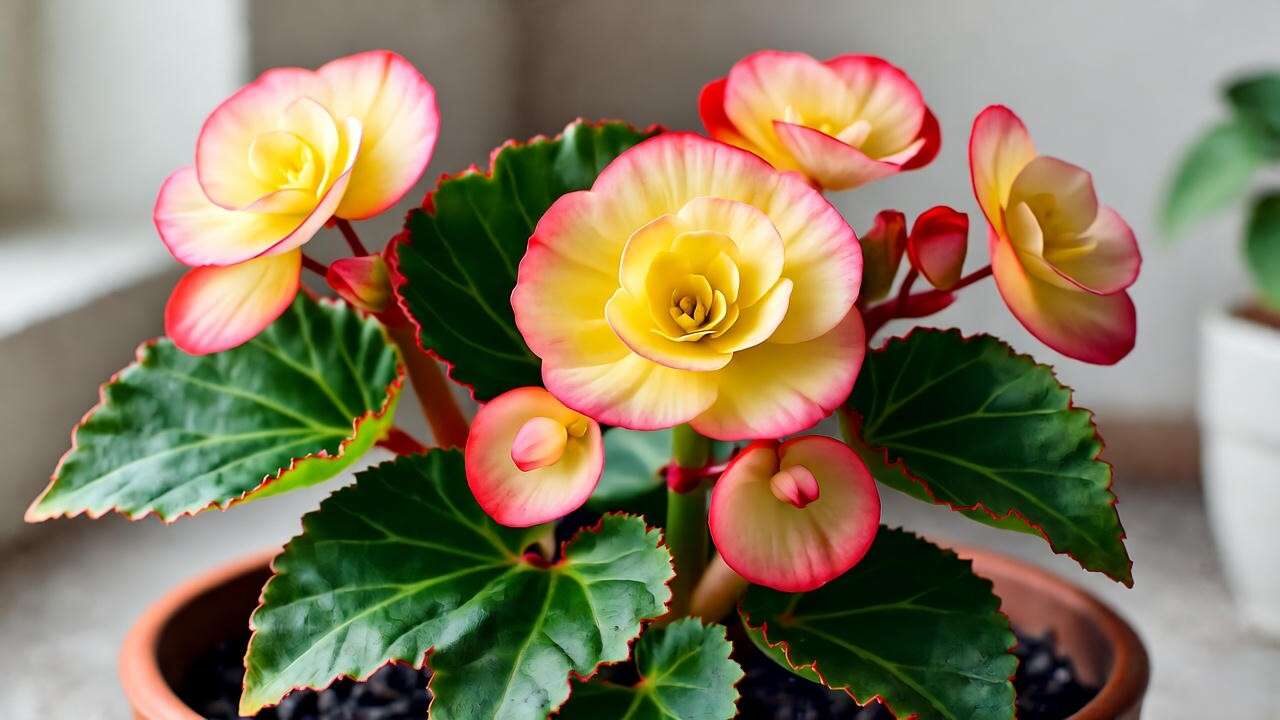
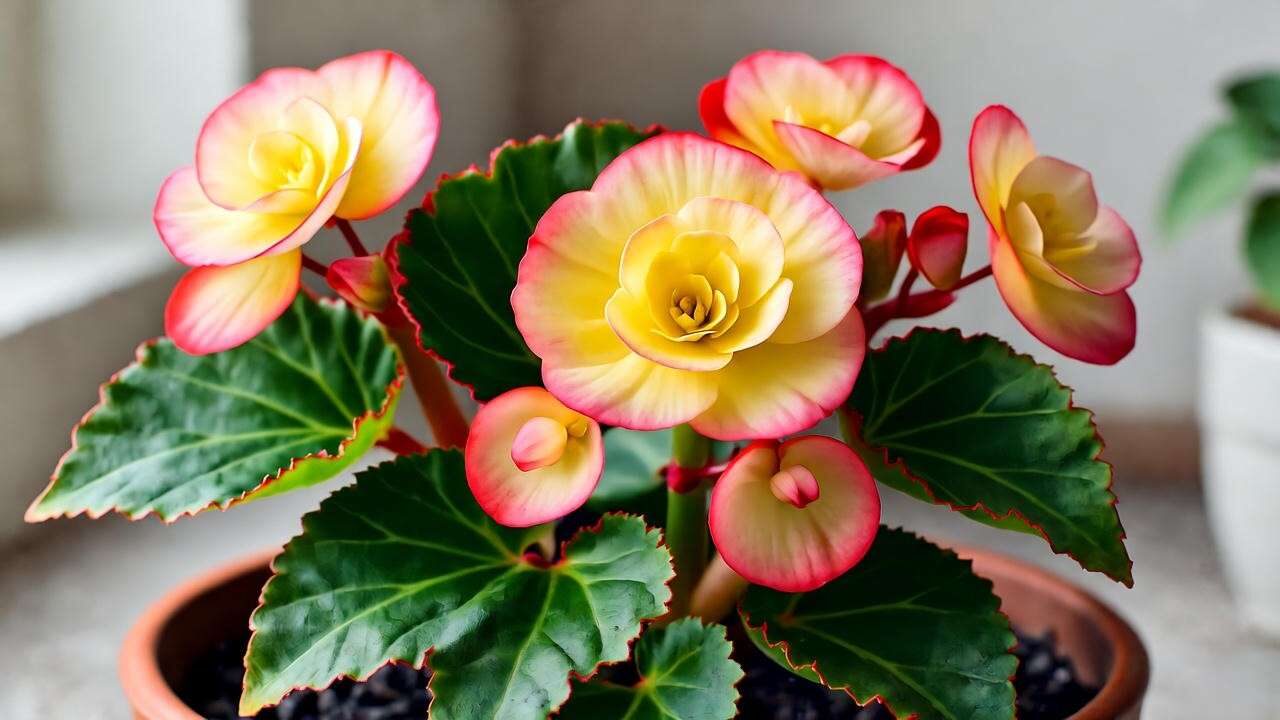
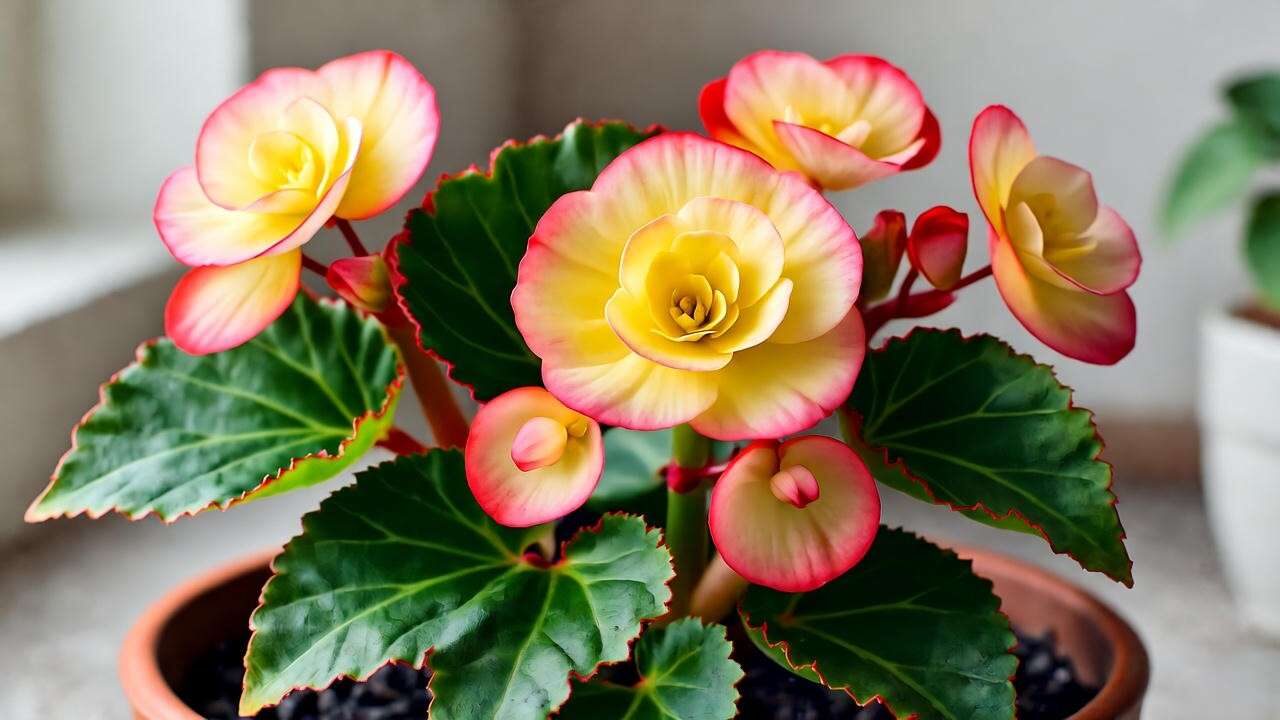
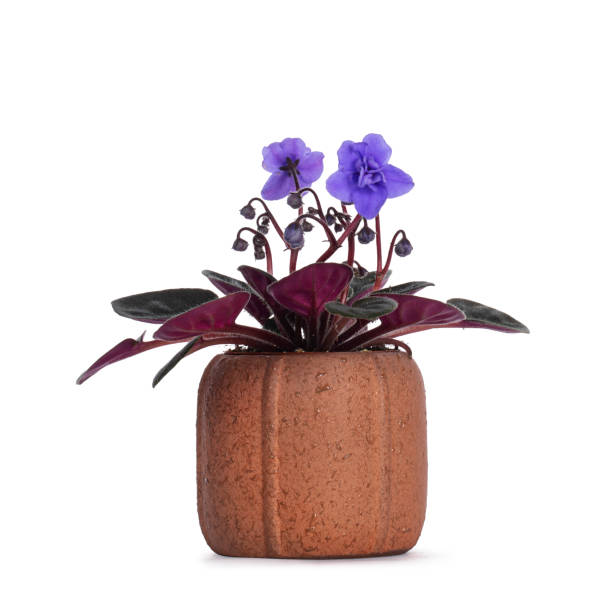
Meet the Rieger Begonia you’ve been seeing everywhere: Begonia × hiemalis (Elatior Group). Compact, wildly floriferous, and bred purely for pot perfection, this cool‑season charmer turns dull days into a parade of rosey, tea‑rose‑style blooms. Ready for snackable tips that keep it flowering and fresh for months? Let’s dig in.
H2: Quick ID: the pot-plant superstar
- Names you’ll see: Rieger Begonia, Elatior Begonia, Hiemalis Begonia; sometimes sold as “Begonia elatior.”
- True identity: Begonia × hiemalis (Elatior Group), a man‑made hybrid bred for indoor bloom power.
- Habit and size: Tender, compact, upright‑to‑mounding, typically 20–40 cm tall and wide (8–16 in).
- Leaves: Narrow‑ovate to lancey, tidy deep green mound.
- Flowers: Big clusters, single to double, in saturated reds, pinks, oranges, yellows, and whites.
- Roots: Fibrous—not tuberous. That one detail changes how you water, prune, and keep it going.
H2: Fibrous, not tuberous: why that matters
- No storage tuber: Unlike tuberous begonias, Riegers don’t “go dormant and bounce back” from a fat tuber. Post‑bloom care is everything.
- After the big show: Deadhead and lightly cut back flowering stems to push fresh basal shoots. Without this, stems can weaken and the plant may decline.
- Pot choice: Avoid oversized pots that stay wet; fibrous roots love airy, quick‑draining mixes.
H2: The nonstop bloom playbook (7 tiny habits, huge payoff)
1) Bright, filtered light
- East window? Chef’s kiss. South is fine with a sheer curtain. Harsh midday sun can scorch; too little light means leggy stems and fewer, duller blooms.
2) Keep it cool‑cozy
- Sweet spot: 15–20°C (59–68°F). Keep above 10–12°C (50–54°F). Prolonged heat above 32°C (90°F) = wilting and bud drop.
3) Even moisture (never soggy)
- Water thoroughly, then let the top of the mix dry slightly. Don’t park water in the saucer. Inconsistent moisture and dry air = crispy tips and bud drop.
4) Airflow, not a wind tunnel
- Gentle ventilation helps prevent powdery mildew and Botrytis. Skip misting late in the day and avoid dripping water on leaves.
5) Feed smart
- Every 2 weeks in active growth with a balanced liquid fertilizer. When buds form, add 1–2 light feedings of a bloom formula (e.g., 15‑15‑30). Pause during severe heat stress.
6) Deadhead on repeat
- Snip faded blooms promptly to reroute energy into new buds. After a main flush, trim back older flowering stems, leaving about 4–5 nodes.
7) Pinch to shape
- About 2 weeks after potting, pinch tips to encourage branching. Those pinched bits? Perfect cutting material.
H2: Cool rooms = richer color and longer bloom
- The science‑ish snack: Cooler, bright conditions help pigments stay vivid and slow petal aging. At gentle room‑cool temps (around 16–20°C), buds set more steadily, colors stay saturated, and the show stretches longer. Heat speeds fading and triggers bud drop; chilly drafts cause yellowing and leaf drop—so aim for cool‑cozy, not cold.
H2: Watering made easy (and leaf‑spot drama‑free)
- How often?
- New arrival: often about once per week until you learn your home’s dry‑down.
- Active growth: roughly 2–3 times per week.
- Winter flowering: often about twice per week.
- Always adjust to your light, pot size, and temperature.
- Technique tips
- Top‑water thoroughly, then drain well—or bottom‑water for ~10 minutes, then drain. Keep foliage dry to cut disease risk.
H2: Light: the right dose for stacks of buds
- Best choice: bright indirect light for much of the day. In winter, give the brightest filtered window you have.
- Watch the plant:
- Leggy, pale leaves? Too little light.
- Scorched or crisping edges? Too much direct sun or heat.
H2: Soil, potting, and repotting
- Mix: Rich yet airy and slightly acidic. Think peat/leaf‑mold or compost base + perlite or coarse sand for quick drainage and oxygen around roots.
- Pots: Drainage holes are non‑negotiable. Common sizes: 12–15 cm (4.7–5.9 in); hanging baskets 15–18 cm (5.9–7.1 in).
- Repot: After flowering or when roots fill the pot; refresh with a lively, well‑draining blend. Don’t “upsize” too far at once.
H2: Propagation snacks: seeds like dust, cuttings like candy
H3: Dust-fine seeds (seriously tiny—think 65,000 per gram)
- When to sow: Autumn through spring.
- How:
- Fill a sterile, fine‑textured seed tray with moist, airy mix.
- Surface‑sow—do not cover. They need light to germinate.
- Ideal germination: 16–18°C (61–64°F) with gentle humidity and bright shade.
- Timeline: Sprouts in ~1–2 weeks; flowering in roughly 5–6 months.
- Pro tip: Use a toothpick dipped in water to “dot” seeds where you want them.
H3: Cuttings (fast, satisfying, and true to type)
- Take healthy, non‑flowering tip or stem cuttings; leaf‑with‑petiole can work too.
- Root in a free‑draining medium in bright shade with light warmth and soft humidity.
- Expect roots in about 3 weeks under good conditions.
H2: The compact care calendar
- Spring–early summer: Bright filtered light; even moisture (often 2–3× weekly); feed every 2 weeks; pinch for branching.
- Bud/flower season (late autumn to spring indoors): Keep temps around 16°C+ (61°F+), deadhead often, give 1–2 bloom‑boost feeds, avoid drafts.
- Hot spells: Shield from heat (>32°C/90°F), improve airflow, keep evenly moist; pause feeding if stressed.
- Winter baseline: Keep above 10–12°C (50–54°F) and give the brightest indirect light available.
H2: Placement ideas
- Indoors: Bright windowsill, desk near a luminous window, or a hanging basket that catches soft light.
- Outdoors: Only in mild weather, frost‑free conditions (roughly USDA 10–11), sheltered bright shade with airflow. Never frost.
H2: Troubleshooting quick bites
- Bud drop: Heat spikes, drafts, water swings, or very dry air. Stabilize temps, boost gentle humidity, water evenly.
- Leggy growth: Insufficient light—move to a brighter filtered spot; pinch to reshape.
- Brown, crispy tips: Usually underwatering or dry air. Water thoroughly and maintain steady moisture.
- Flowers fading fast: Too warm or too dim. Aim for brighter filtered light and cooler room temps.
H2: Pests, diseases, and prevention
- Usual suspects: Powdery mildew, Botrytis (gray mold), leaf spots—favored by still, humid, leaf‑wet conditions. Also watch for spider mites and aphids.
- Defense:
- Keep foliage dry, especially late in the day.
- Improve airflow and promptly remove spent blooms and affected parts.
- Avoid heavy nitrogen feeding.
- Treat early with insecticidal soap or horticultural oil if pests appear; repeat as labeled.
H2: Safety note
- Begonias can be toxic if eaten, causing mouth irritation and stomach upset in people and pets. Keep out of reach—especially for curious chewers.
H2: Meaning and gifting
- Symbolism: Often tied to gentle affection and tender sentiments—perfect for winter holidays and New Year when they naturally shine indoors.
- A quick reality check: “Flower language” traditions are mostly modern cultural overlays rather than ancient, fixed meanings. Still, gifting a Rieger begonia in midwinter reads as optimism, warmth, and steady care during the year’s coolest days.
H2: Fun facts to share
- Purely horticultural: These hybrids were created by breeders for compact form and big bloom counts—no wild species looks exactly like this.
- Cool-season star: They’re legendary for brightening short days with color from winter through spring.
- Seed trivia: The seeds are so fine they’re surface‑sown—blink and you’ll miss them.
- Double duty: Many cultivars look neat and upright in a pot yet trail beautifully from hanging baskets.
H2: Your quick-start checklist
- Light: Bright, filtered; avoid harsh midday sun.
- Temp: 15–20°C best; protect from 32°C.
- Water: Evenly moist; drain well; no wet feet.
- Feed: Every 2 weeks; add a couple of bloom‑boosts at bud time.
- Groom: Deadhead, then light cutback after a main flush; pinch for branching.
- Propagate: Surface‑sow dust‑fine seeds at 16–18°C or root tip cuttings in bright shade.
- Soil: Rich, airy, slightly acidic mix with perlite/sand for drainage.
Follow this bite-sized routine and your Begonia × hiemalis won’t just bloom—it’ll put on a marathon. Cool room, bright window, tidy snips, and even moisture: that’s the secret sauce to a Rieger that never seems to stop.