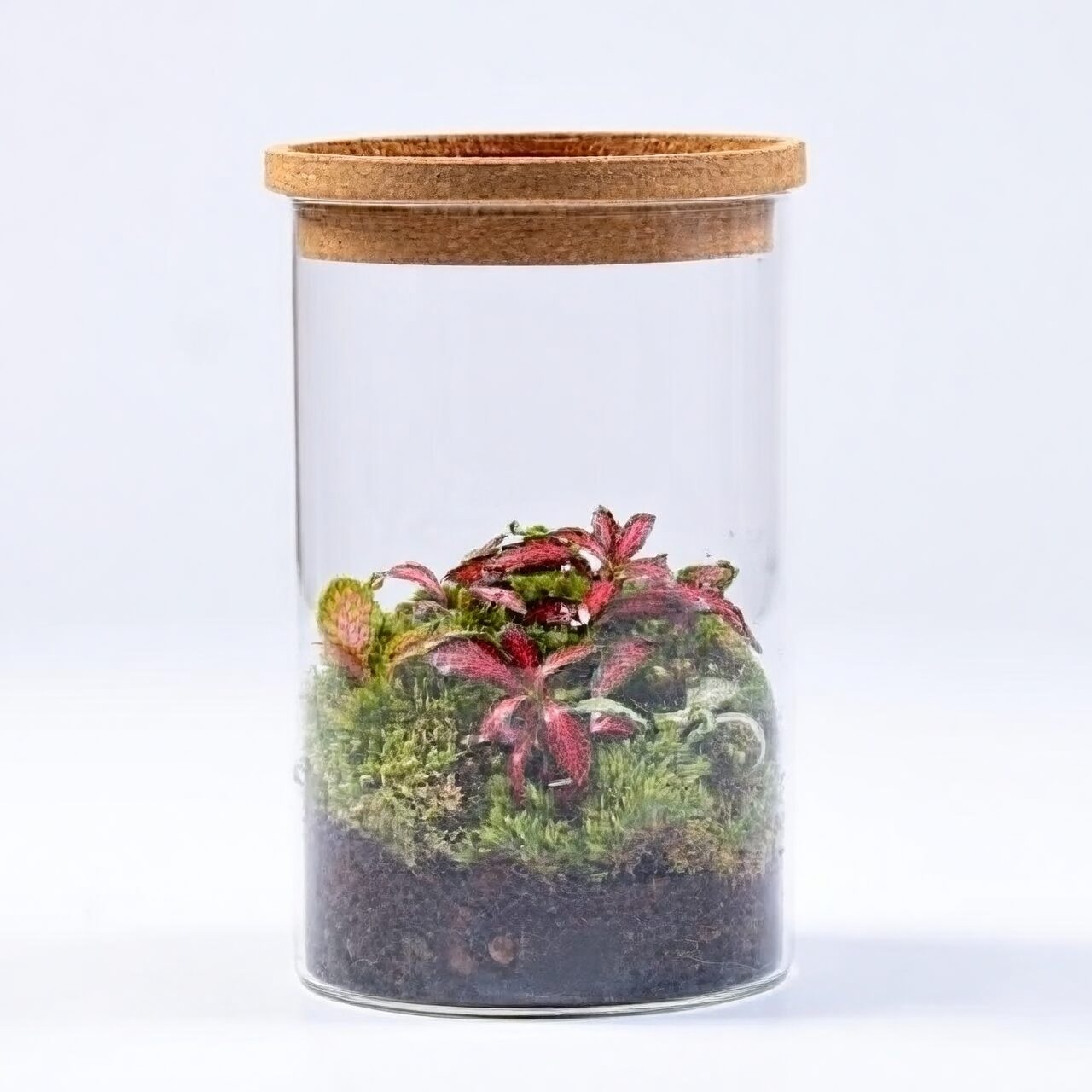
Imagine a miniature rainforest where Fittonia verschaffeltii (the nerve plant) is the star: soft, net-veined leaves glowing under bright, filtered light, edges of the scene softened by moss and tiny companions that love humidity as much as Fittonia does—but never steal the show. That’s the art of pairing plants in small enclosures. The best co-stars share moisture and warmth, grow with restraint, keep shallow, polite roots, and won’t bulldoze your nerve plant’s creeping stems.
Below, you’ll find a curator’s guide to humidity-loving companions—mosses, small ferns, peperomias, and select selaginellas—that thrive alongside Fittonia without crowding it out.
First, know your lead: Fittonia’s needs and growth style
Fittonia verschaffeltii is a low, creeping understory plant from Peru’s tropical rainforests. It:
- Thrives in bright, indirect light to partial shade; avoid harsh direct sun.
- Loves warmth at 18–25°C (64–77°F), and should be kept above 16°C (61°F).
- Prefers high humidity (50–70%+), making terrariums, pebble trays, or humid rooms ideal.
- Wants a rich, humus-heavy, well-drained mix kept evenly moist (never bone-dry or soggy).
- Creeps and roots at the nodes, forming dense mats—easy to pinch and thicken, easy to propagate.
- Is grown for foliage; flowers are modest and not the main attraction.
Companion implications:
- Choose plants that are small, humidity-happy, and shade-tolerant.
- Favor shallow or surface-hugging roots and clumping habits over aggressive runners.
- Opt for moderate or slow growers that are easy to trim in a tight space.
Companion principles for small enclosures
- Growth rate and final size: Slow-to-moderate, naturally compact plants are safest.
- Root behavior: Shallow rhizoids/fibrous roots or tidy clumps; avoid thugs with invasive rhizomes.
- Light and moisture compatibility: Low to medium light tolerance with high humidity needs.
- Maintenance friendliness: Plants that accept pinching, trimming, and light pruning without sulking.
- Hardscape boundaries help: Use stones/wood to edge carpets and keep everyone in lane.
Mosses: the gentle green “mulch” that flatters Fittonia
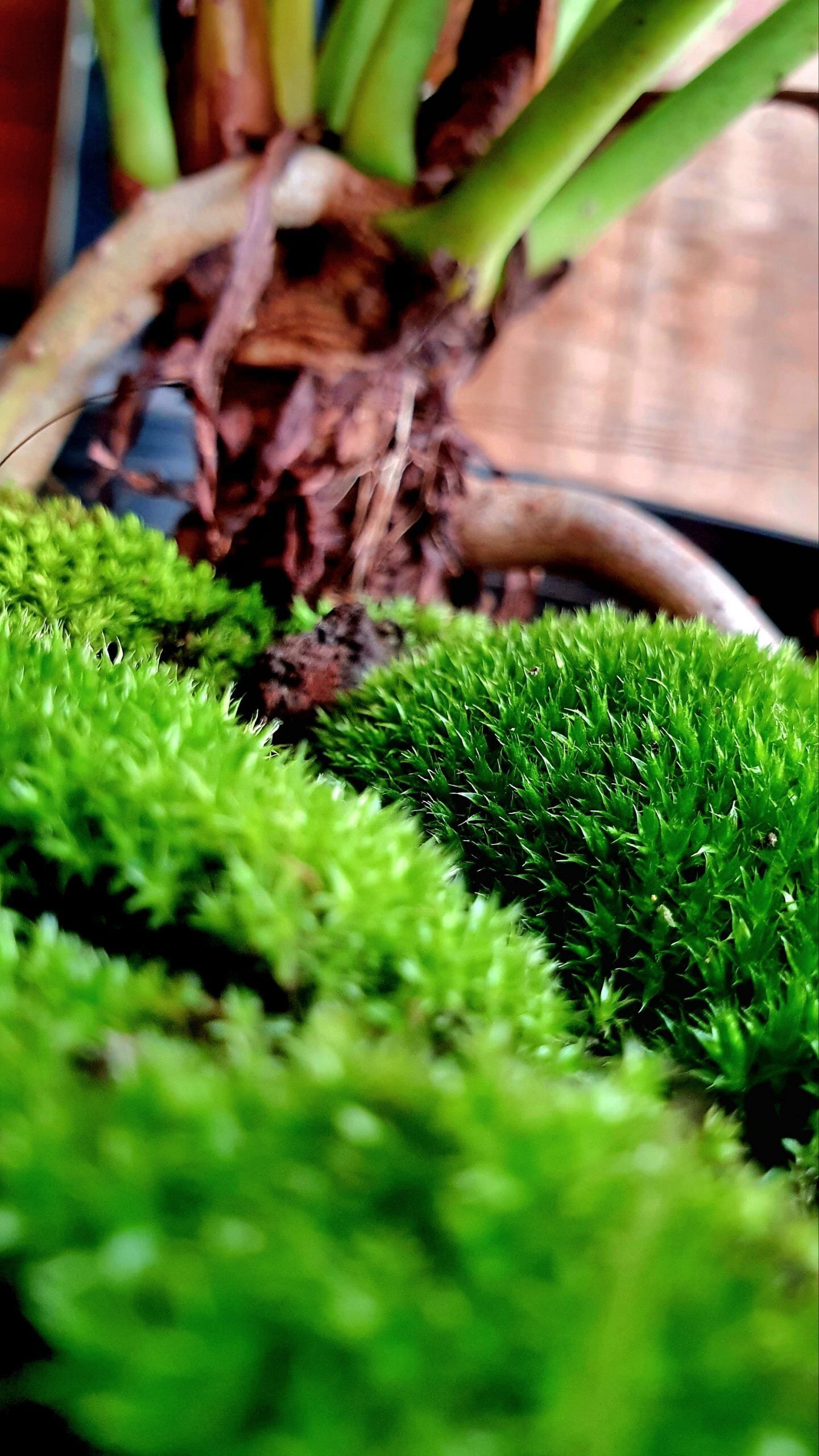
Moss is your humidity buffer, soil shade, and carpet all in one. Mosses have rhizoids (not true roots) and sit on or just in the substrate—perfect for small enclosures with Fittonia’s shallow, creeping stems.
Recommended moss styles
- Leucobryum glaucum (pincushion moss)
- Why it pairs: Forms slow-growing bun-like mounds; neat, architectural, and non-invasive.
- Behavior: Shallow anchoring; easily lifted, divided, or nudged back if it wanders.
- Hypnum (sheet moss)
- Why it pairs: Creates a low, soft “forest floor” that reduces evaporation without smothering.
- Behavior: Moderate spread; trim edges like a lawn border.
- Dicranum (mood moss)
- Why it pairs: Velvety hummocks that frame Fittonia foliage; graceful, slow-to-moderate growth.
- Behavior: Easy to spot-trim; won’t deep-root or displace.
- Thuidium (fern moss)
- Why it pairs: Lace-like fronds echo fern textures; elegant but not domineering.
- Behavior: Slightly quicker spread than cushion moss; prune to keep paths open.
Moss placement tips
- Keep a few millimeters of breathing room around Fittonia stems so moisture doesn’t cling to leaves overnight.
- Build “moss islands” on stone/wood to limit creep and create visual depth.
- Mist the air, not the leaves directly at night.
Small ferns with good manners
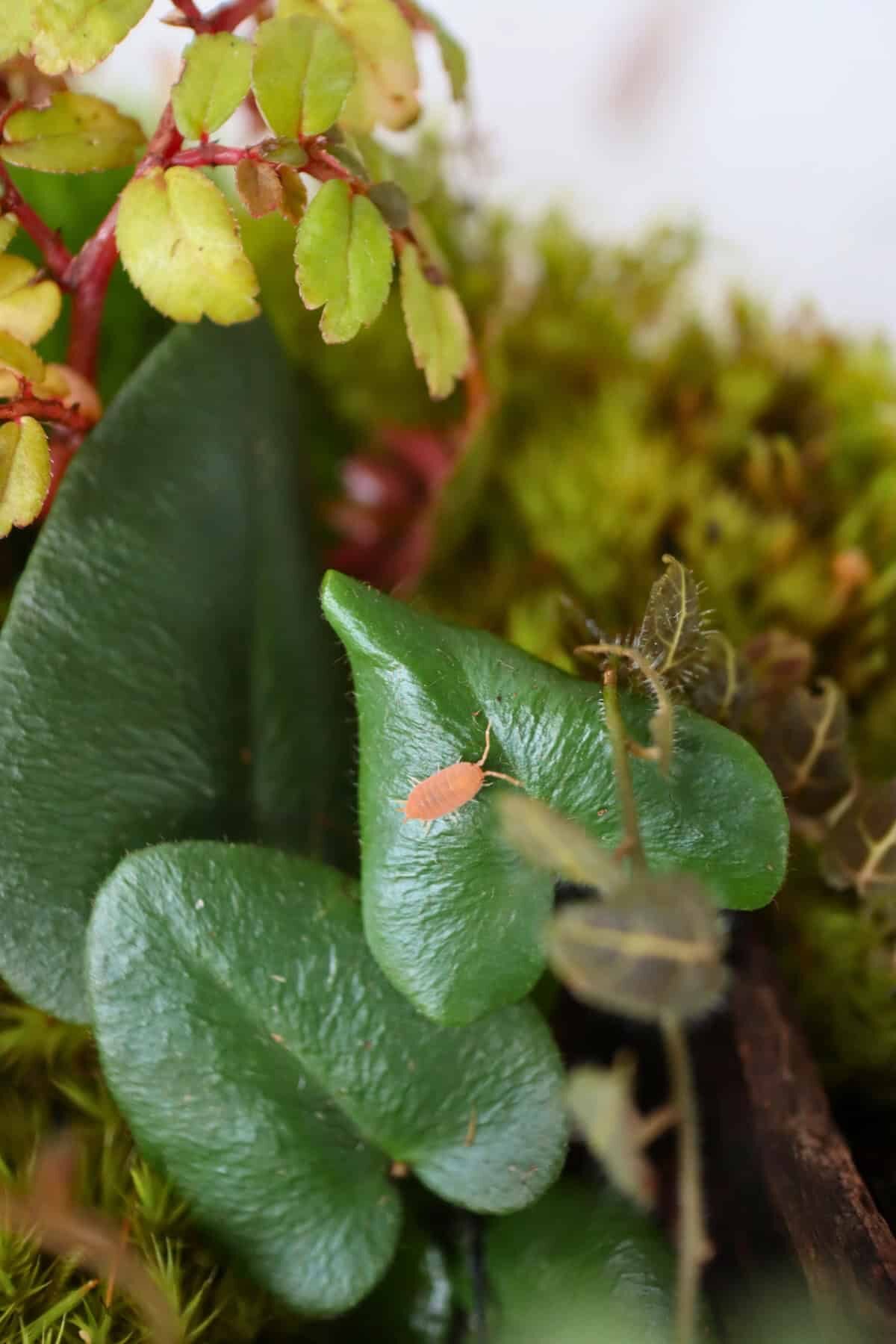
Ferns love the same warmth and humidity as Fittonia, but not all are small-space compatible. Choose compact, clumping types over rampant runners.
Excellent picks for tight spaces
- Hemionitis arifolia (heart fern)
- Habit: Slow, tidy clump; heart-shaped leaves on wiry petioles.
- Roots: Shallow; respectful of neighbors.
- Why it works: Adds vertical punctuation without overpowering.
- Pellaea rotundifolia (button fern)
- Habit: Compact to moderate; forms tidy tufts of coin-like leaflets.
- Roots: Fibrous, non-invasive.
- Why it works: Textural contrast with controlled spread; prune older fronds to keep it petite.
- Davallia fejeensis (rabbit’s foot fern), small pieces
- Habit: Creeping surface rhizomes (the “feet”); easy to position over rock/wood.
- Roots: Mostly superficial; simple to redirect.
- Why it works: Sculptural rhizomes elevate greenery off the substrate, saving floor space.
Use with caution (often too big or fast in small jars)
- Nephrolepis exaltata (Boston fern) grows quickly and can swamp a micro-scape.
- Large Asplenium forms (bird’s nest fern) outgrow small enclosures fast; juvenile plants can work only in medium builds with pruning.
Peperomia: polite, shallow-rooted roommates
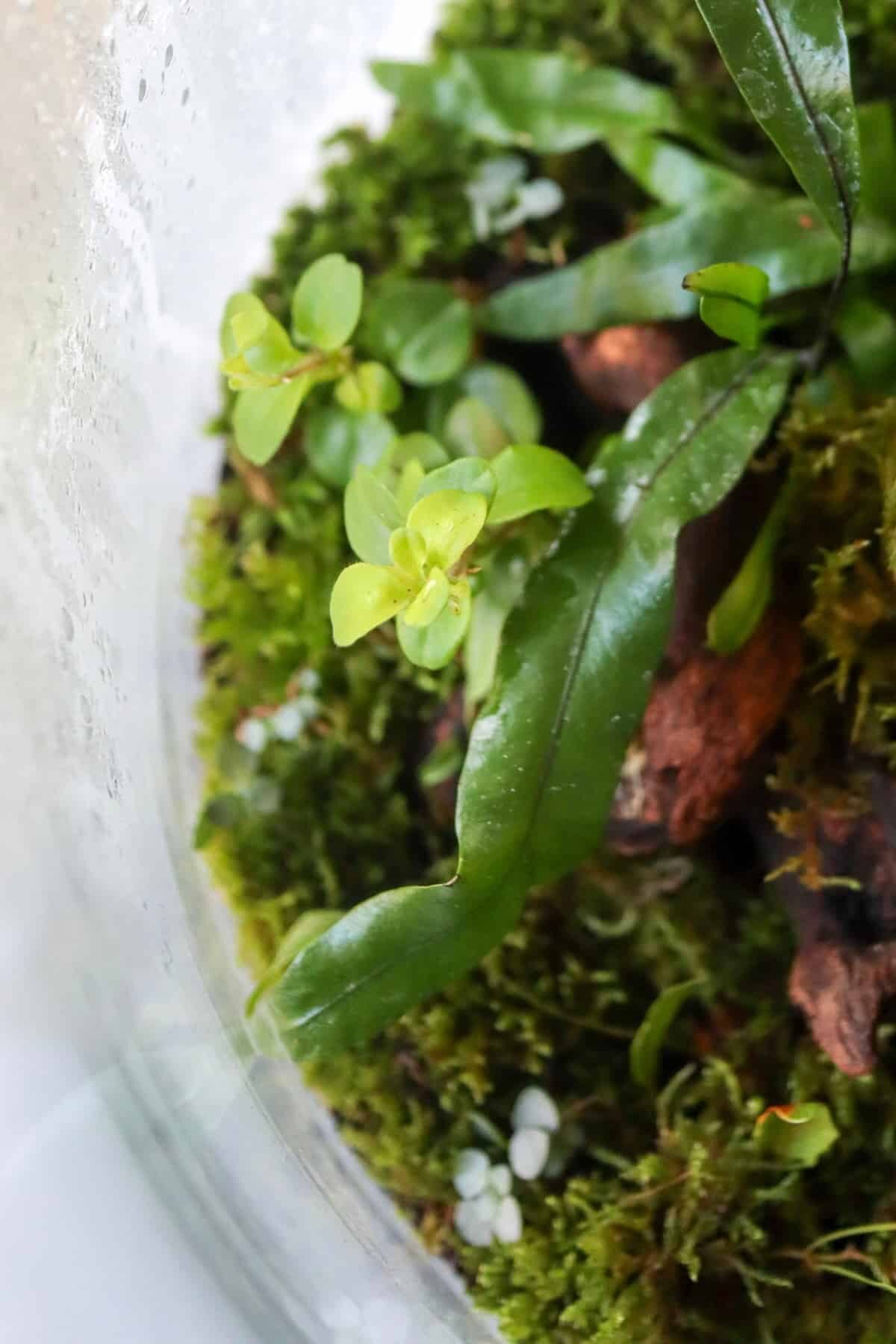
Peperomias are textbook terrarium partners: compact, humidity-friendly, and generally shallow-rooted. Many varieties grow slowly enough to coexist with Fittonia for years.
Top choices
- Peperomia prostrata (string of turtles)
- Habit: Micro-leaved trailer, famously slow.
- Roots: Fine, shallow; easy to lift and re-pin.
- Why it works: Adds jewelry-like detail without hogging light or space.
- Peperomia rotundifolia (trailing jade)
- Habit: Dainty chains of round leaves; moderate if happy but still easy to pinch.
- Roots: Shallow; friendly spreader.
- Why it works: Cushions edges and cascades without shading Fittonia mats.
- Peperomia ‘Pepperspot’ (string of coins)
- Habit: Small, glossy coins on red stems; moderate growth.
- Roots: Delicate and surface-hugging.
- Why it works: A touch of sheen and movement, still compact.
- Compact clumping types (e.g., P. caperata minis)
- Habit: Small rosettes; upright, minimal footprint.
- Caution: Keep leaves dry to prevent spotting in very tight, closed jars.
Peperomia care sync
- Enjoys bright, indirect light like Fittonia.
- Appreciates consistently moist—but not waterlogged—substrate; water at the root zone.
- Light, infrequent feeding in spring/summer; terrariums need only diluted, occasional fertilizer.
Selaginella: living carpet—choose dwarf and compact forms
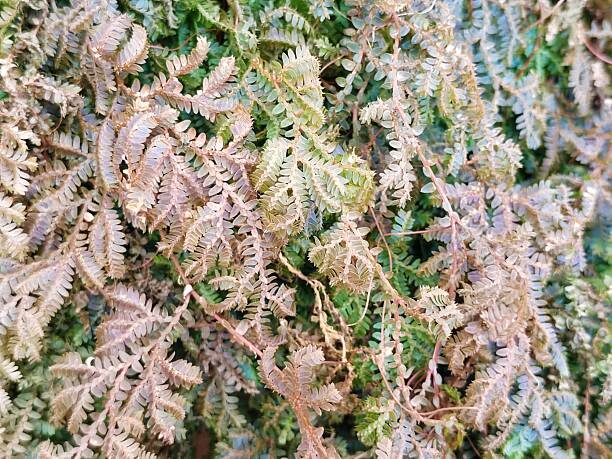
Selaginella (spikemoss) looks and behaves like a ferny carpet, adores humidity, and loves the same soft light as Fittonia. Some forms can be assertive; pick compact cultivars and set boundaries.
Best behaved
- Selaginella kraussiana ‘Brownii’
- Habit: Dense, bun-forming cushions; among the most compact spikemosses.
- Why it works: Grows slowly into rounded mounds that don’t rush Fittonia.
- Selaginella uncinata (peacock spikemoss)
- Habit: Iridescent mats; moderate speed.
- Why it works: Dazzling accent if corralled by rock/wood borders.
- Selaginella apoda (meadow spikemoss)
- Habit: Budget-friendly, moderate spreader.
- Why it works: Works in medium enclosures; trim edges routinely to keep Fittonia lanes open.
Containment tricks
- Plant Selaginella on a raised “island” (stone/wood) with a thin substrate cap.
- Use hardscape edges as root barriers.
- Maintain a light gradient—slightly brighter edges for Fittonia, softer shade pockets for spikemoss.
Smart exclusions: beautiful but bossy
These look great at first but can outpace or overwhelm Fittonia in small builds.
- Ficus pumila (creeping fig): A glass-climbing sprinter that roots at every node—will smother neighbors.
- Soleirolia soleirolii (baby’s tears): Rapid carpeting; can overrun a micro-terrarium in weeks.
- Fast, large ferns (e.g., Boston fern) and vigorous vines in general.
- Thirst-mismatched plants (succulents, arid species) for closed or high-humidity setups.
Three layout recipes (scaled for harmony)
- Tiny jar (10–15 cm tall)
- 1 small Fittonia cutting, 1–2 pincushion moss mounds, a fingertip sprig of Peperomia prostrata.
- Keep lids vented a crack at first; wipe condensation; water sparingly but consistently.
- Desktop cube (20–30 cm)
- A trio of Fittonia (different vein colors), Selaginella kraussiana ‘Brownii’ islands, a heart fern clump, and a ribbon of sheet moss.
- Hardscape “S” path to divide territories and keep pruning simple.
- Humid shelf terrarium (open or loosely lidded)
- Fittonia mat at mid-plane, Peperomia rotundifolia trailing over a rock, peacock spikemoss in the back corner for color shift, mood moss hummocks at the front edge.
Care sync so everyone thrives
- Light: Bright, filtered light or a sheer-curtained window. Avoid hot, direct sun that scorches thin Fittonia leaves.
- Temperature: Keep warmth steady at 18–25°C (64–77°F); avoid drafts and keep above 16°C (61°F) in winter.
- Humidity: Aim for 50–70%+; terrariums, pebble trays, or humidifiers work wonders. Mist the air rather than soaking leaves, especially at night.
- Watering: Keep the mix evenly moist during active growth—never bone dry, never swampy. Terrariums need surprisingly little water once established; add drops, not glugs.
- Soil: Use a rich, humus-heavy, well-drained blend (peat/leaf mold + perlite or coarse sand). In closed builds, include a thin drainage layer and charcoal for freshness.
- Feeding: In spring–summer, a lightly diluted balanced fertilizer about every 2 weeks for Fittonia is plenty; go easy in terrariums to avoid algae and salt buildup.
- Pruning: Pinch Fittonia tips to keep it bushy, trim moss edges like a garden path, and lightly neaten peperomias and ferns. Replant Fittonia cuttings to fill gaps.
- Health: Good hygiene and airflow prevent rot. If pests appear (scale, spider mites, aphids), rinse foliage, then use insecticidal soap or horticultural oil sparingly; improve humidity/air exchange to deter mites.
Quick companion shortlist (won’t crowd Fittonia)
- Mosses: Leucobryum glaucum (pincushion), Hypnum (sheet), Dicranum (mood), Thuidium (fern moss)
- Ferns: Hemionitis arifolia (heart fern), Pellaea rotundifolia (button fern), small Davallia pieces
- Peperomia: prostrata, rotundifolia, ‘Pepperspot’, compact caperata types
- Selaginella: kraussiana ‘Brownii’ (dwarf), uncinata (with barriers), apoda (for larger builds, routinely trimmed)
A note on symbolism (and why it resonates in design)
Nerve plant is sometimes linked with Virgo and associated with rationality and wisdom—fitting for leaves etched with living “maps” of veins. Flower language like this is a cultural layer, not a botanical law, but it’s a lovely lens for composition: pair Fittonia with orderly carpets of moss and well-mannered companions, and you get a scene that feels thoughtful, calm, and intelligently arranged—an elegant rainforest vignette scaled to your shelf.
Fittonia may be delicate to the touch, but with companions that share its love of warmth and humidity—and that respect its space—it becomes the lush, enduring heart of a perfectly balanced micro-jungle.