

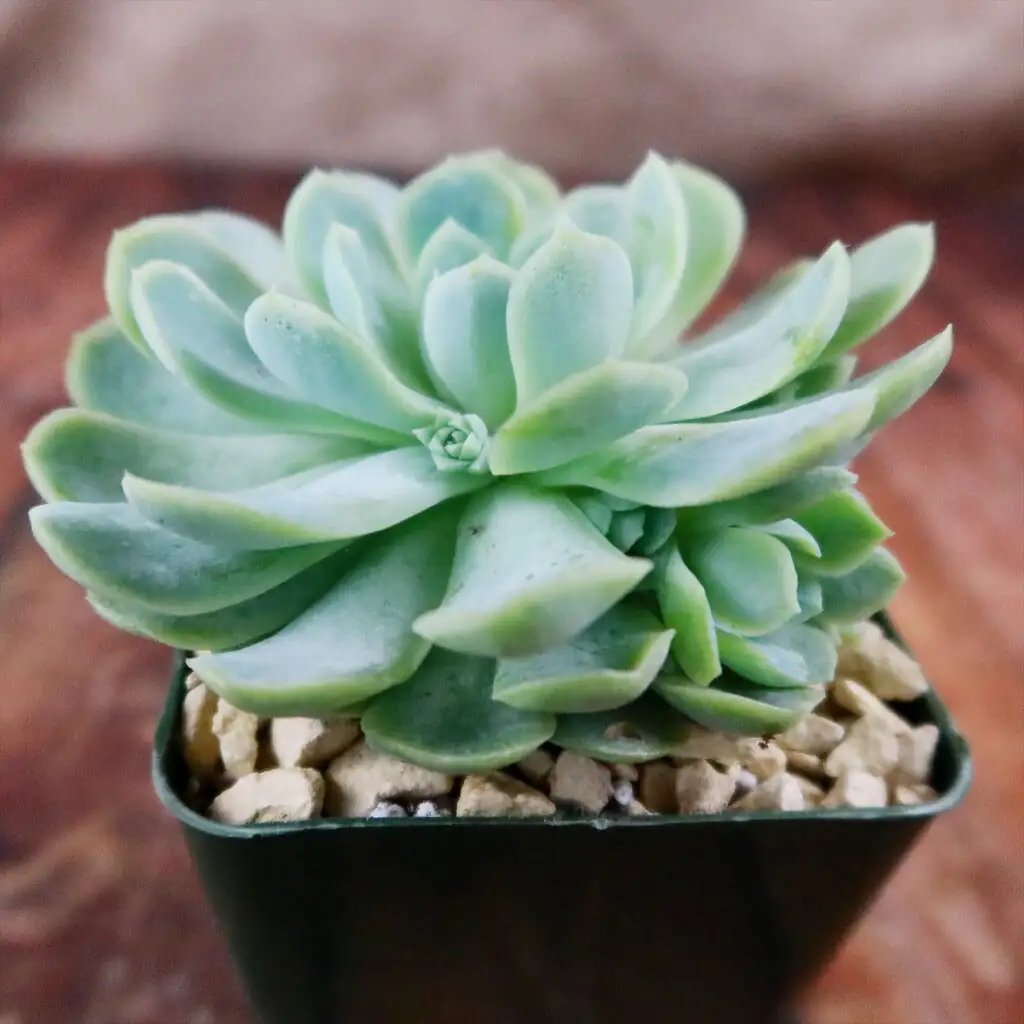
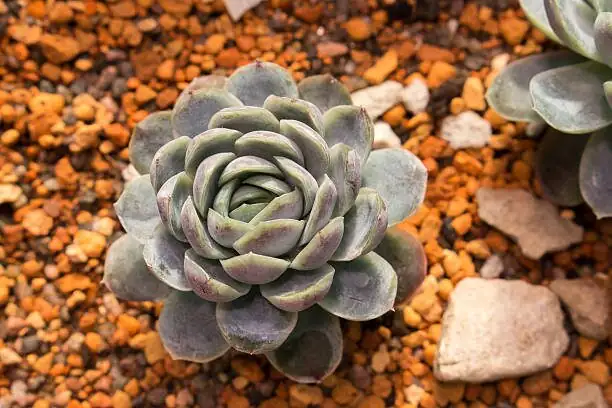
Echeveria elegans, the Mexican snowball, looks its best when the rosette stays tight, symmetrical, and a little frosty from that natural wax (farina). Light is the lever that makes all of that happen. This is your upbeat, practical blueprint to train your plant for sun, choose the right window, and dial in grow lights—keeping it compact without a hint of scorch.
The compact-rosette formula (in one glance)
- Aim for 4–6+ hours of direct sun, or an equivalent under strong grow lights.
- In very hot climates, give light afternoon shade and avoid long blasts of harsh midday sun.
- Keep strong airflow and dry leaves; never wipe the farina (it’s the plant’s sunscreen).
- Water only after the mix dries fully—light and watering work as a team.
Light fundamentals for Mexican snowball
- What it loves: Bright light to full sun. This is a semi‑arid Mexican native—sun is the sculptor that keeps the rosette tight.
- What it hates: Long periods of dimness (it stretches) and unacclimated, punishing midday sun (it scorches).
- Temperature sweet spot: About 18–25°C (64–77°F) for steady, compact growth. Protect from frost; keep above roughly 5–10°C (41–50°F) in winter.
Window-by-window: choose your best stage light
Think of windows as different “sun flavors.” Pick one and fine‑tune.
South-facing
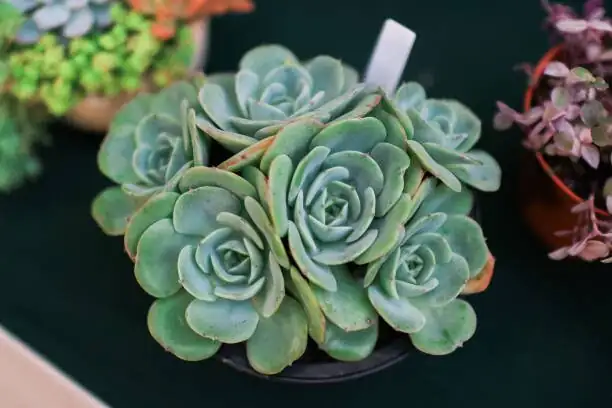
- Best all-around in most homes for compact growth.
- Spring/fall/winter: Park it right on the sill for strong, direct light.
- Peak summer or very hot zones: Pull it 20–60 cm (8–24 in) back from the glass or hang a sheer curtain from about 11 a.m.–3 p.m. to prevent scorch.
East-facing
- Gentle morning sun = compact growth with a lower risk of burns.
- Place close to the glass to maximize those hours. Great everyday choice.
West-facing
- Hotter afternoon rays. Excellent in cooler months; in summer, soften with a sheer or set it slightly back from the window to avoid leaf burn.
- Watch for rapid heat build-up at the sill.
North-facing
- Usually too dim on its own. Pair with a grow light or plan for seasonal outdoor time.
Pro tip: Use a phone light-meter app to sanity check brightness.
- Direct sun by a bright window often reads 40,000–60,000+ lux.
- Bright shade indoors might hover around 5,000–10,000 lux (rarely enough alone).
- If you can’t give several hours of 20,000+ lux daily, add a grow light.
Sun-training: how to harden without scorch
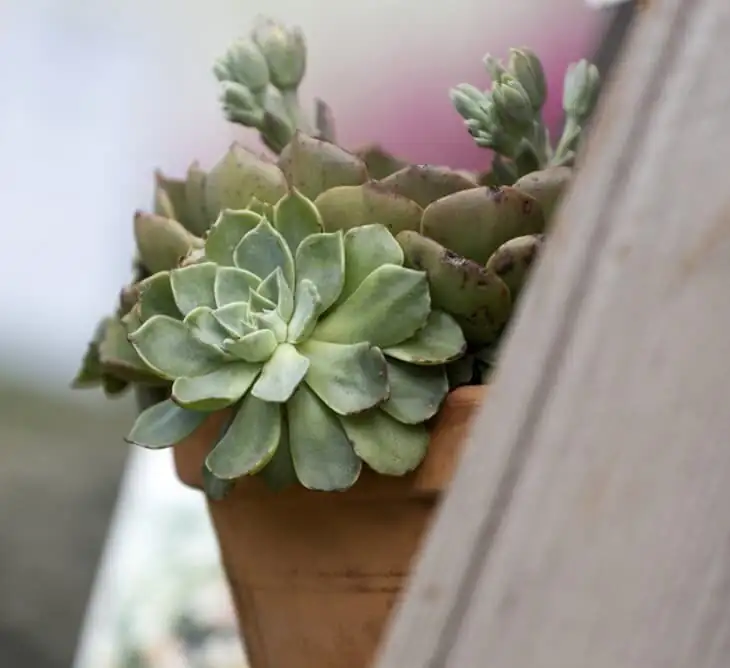
Whether it’s new from a shop or moving from winter dimness to spring sun, go step by step.
- Days 1–3: Bright indirect light only, or behind a sheer curtain all day.
- Days 4–7: Add 30–60 minutes of direct morning sun. Keep the soil on the dry side.
- Days 8–14: Increase direct sun by 30–60 minutes every couple of days. Rotate the pot a quarter turn weekly for even growth.
- After 2 weeks: You’re usually safe at several hours of direct sun. In very hot regions, keep that light afternoon shade.
Signs to watch:
- Early stress (OK): Slight paling or a faint blush. Pause increases for a few days.
- Scorch (bad): Tan/brown crispy patches on the sun-side leaves. Back up, add sheer, and resume more slowly once stable.
Never rub the farina—those powdery coats are your plant’s built-in sunscreen.
Grow lights: compact, not crispy
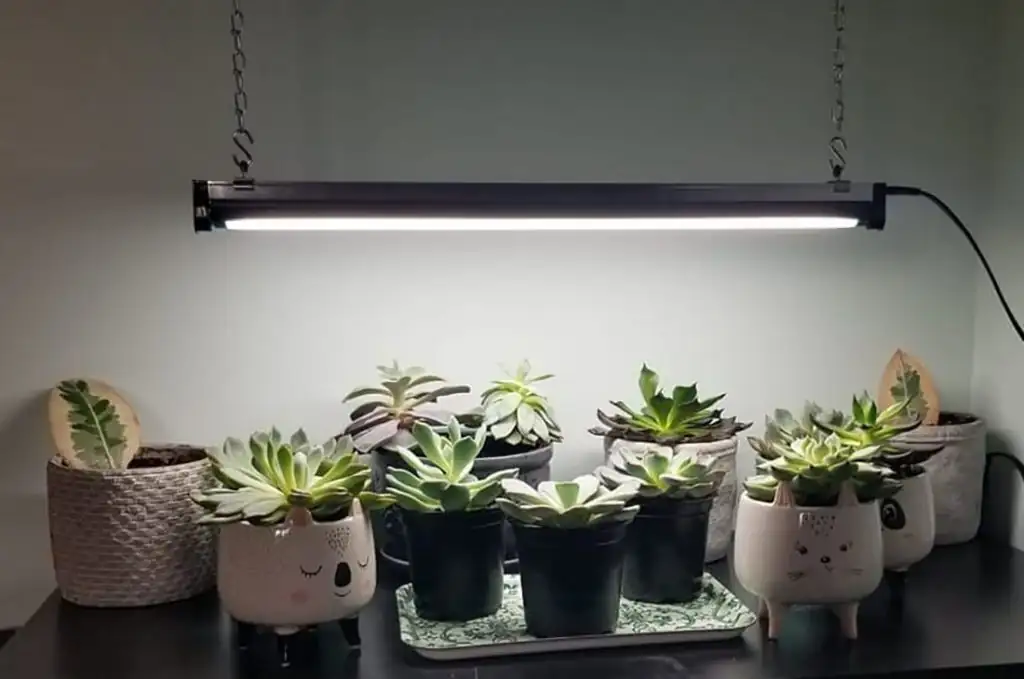
If windows can’t deliver, LEDs can. Keep it simple and consistent.
What to use
- Full-spectrum or 4000–6500K white LED bars/panels. They’re bright, efficient, and easy on the eyes.
- A small rosette does great under a 20–40W LED bar or a modest panel.
Distance and duration (start here, then tweak)
- 20–30W LED: 15–25 cm (6–10 in) above the rosette.
- 30–60W LED: 20–35 cm (8–14 in) above the rosette.
- Photoperiod: 12–14 hours daily on a timer for reliable compact growth.
How to dial it in without a PAR meter:
- If the rosette starts to open and stretch in 2–3 weeks, lower the light a few cm or extend the photoperiod by 1–2 hours.
- If leaf edges feel hot or you see pale patches, raise the light 5–8 cm or shorten the photoperiod by 1–2 hours.
- Keep airflow moving (a small fan on low) and leaves dry.
Seasonal swaps that keep it tight
- Spring: Daylight jumps—sun-train gradually. Repot if needed and resume light feeding. Rotate weekly.
- Summer: In very hot climates, protect from long, scorching midday sun and heavy rain; morning sun + airy shade is perfect. Water only when the mix is bone-dry.
- Autumn: Sun angles mellow—great time to nudge it closer to West/South windows. Propagation thrives now.
- Winter: Go for maximum brightness (South window + grow light, if needed). Keep much drier and above 5–10°C (41–50°F).
Troubleshooting the rosette shape (fast fixes)
- Stretching/open rosette:
- Move to brighter light with several hours of direct sun or lower the grow light slightly.
- Rotate weekly. Water only after full dry-down to avoid soft, light-starved growth.
- If it’s very leggy, behead and reroot the top in gritty mix; the base often sprouts new offsets.
- Scorch/burn:
- Rough tan/brown patches on the sun-facing leaves mean the light jump was too fast or too hot.
- Add sheer, increase distance, or shift to earlier sun hours. Leave damaged leaves until new growth replaces them.
- Pale color, no bloom stalks:
- Boost light hours or intensity. Echeveria elegans often pushes flowers in late spring to early summer when light is strong and the rosette is happy.
Light and water: a duo you can’t split
Bright light drives faster drying. That’s good—succulents like the full-dry cycle.
- Water thoroughly, then let the mix dry completely before the next drink.
- Typical rhythm:
- Spring–Summer: every 7–14 days (varies with heat, pot, and airflow).
- Autumn: about every 2–3 weeks if still growing.
- Winter: every 3–5+ weeks indoors, sometimes just once or twice all winter if kept cool.
- Always keep water out of the rosette and use a fast-draining, gritty succulent mix in a pot with drainage.
Airflow beats humidity (for tight growth and clean leaves)
- Dry air and strong airflow help prevent rot and pests—especially important under high light.
- If extreme heat forces a bit of humidity, mist the air near the plant, not the rosette itself.
A quick note on the plant itself
- Native to semi‑arid Mexico, Echeveria elegans forms compact, powdery blue‑green rosettes and gradually clumps with offsets.
- It’s frost tender (USDA Zone 9–11 with shelter). Cold plus wet is risky—keep it bright, warm, and well-drained.
- Those bell-shaped, pink-to-yellow flowers on slender stalks are a spring-to-summer bonus when your light is on point.
Compactness checklist
- 4–6+ hours of direct sun or 12–14 hours under a bright LED.
- Sun-train any big light jump over 1–2 weeks.
- East or South window is your easiest win; West needs summer softening; North needs a grow light.
- Keep leaves dry, don’t touch the farina, and keep the mix gritty and fast-draining.
- Rotate, ventilate, and water only after a full dry-down.
Follow this blueprint and your Mexican snowball stays what it’s meant to be: a tidy, sculptural, camera-ready “stone rose” that looks like you’ve grown it on a sunlit cliff in Hidalgo—without a single scorched leaf.