

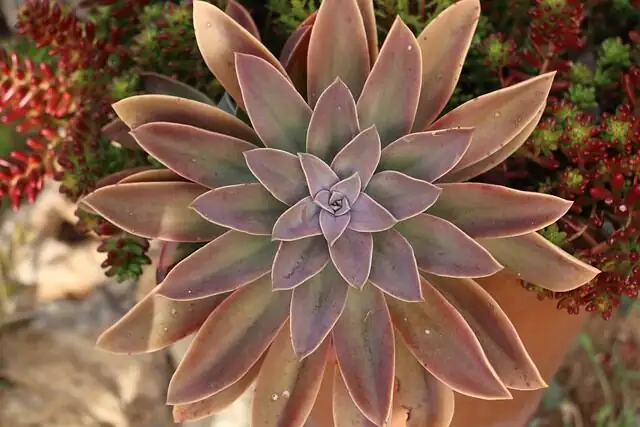
If your Mexican Snowball (Echeveria elegans) starts stretching like a sleepy cat, it’s not being “dramatic”—it’s pleading for more light. This petite, powder-blue rosette from Mexico stays compact, sculptural, and photo-ready when you dial in light correctly. Here’s your practical lighting playbook—safe sun acclimation, when to give afternoon shade, grow-light PPFD targets and hours, plus fail-safe windowsill compass tricks—to keep that rosette tight and elegant, not lanky.
What “enough light” looks like (and the early warnings)
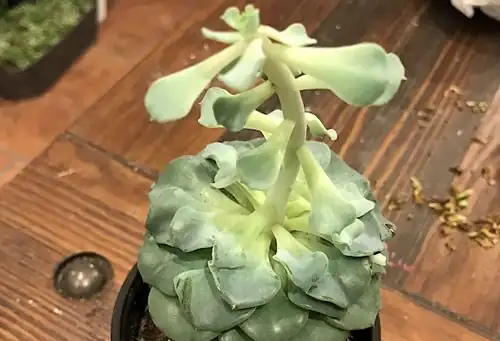
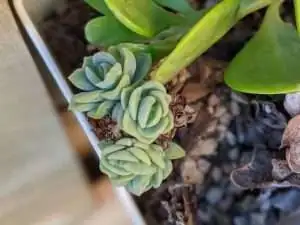
A happy Echeveria elegans is a dense, symmetrical rosette with leaves stacked like porcelain spoons—no visible stem. In bright light to full sun (about 4–6+ hours of direct sun), it colors beautifully and stays compact. Too little light and you’ll see:
- The rosette opening flatter and wider
- Gaps between leaves; a visible neck forming
- Sideways “leaning” toward the window
- Aerial roots along the stem (a survival attempt to re-root closer to the light)
In very hot climates, add light afternoon shade and avoid prolonged, scorching midday sun—the farina (that soft, chalky wax) is a great sunscreen, but not a force field. When days grow short in autumn and winter, move the plant to the brightest possible spot; a sunny south or east window is ideal. Under lights, keep the top close enough to get strong intensity without overheating.
Safe sun acclimation: a 10–14 day ramp-up
New plant? Just moved it indoors all winter? Don’t toss it straight into blistering sun. Acclimation preserves the farina and prevents sunburn.
- Days 1–3: Bright shade or an east window with sheer curtain. 1 hour of direct morning sun.
- Days 4–6: 2–3 hours of direct morning sun; remove the curtain after noon only if temperatures are mild.
- Days 7–10: 3–5 hours of direct sun. If outdoors, give dappled shade after noon.
- Days 11–14: Full target exposure for your climate: 4–6+ hours total sun, with afternoon shade in hot regions.
Pro tips:
- Add an extra day at each step if you see pale, bleached patches or crispy margins.
- Keep the rosette dry during acclimation; water in the morning at the soil line only.
- Handle by the pot or the stem base; don’t wipe the farina—it’s protective.
When to add afternoon shade (the “2–3 PM rule”)
Mexican Snowball loves sun, but in heat waves or high-UV regions, move it out of harsh mid–late afternoon sun. Add 30–40% shade cloth, a sheer curtain, or shift the plant after lunch if:
- Ambient temps exceed 30–32°C (86–90°F), especially with low airflow
- UV index is 8+ and leaves feel hot to the touch
- Farina becomes patchy or you see bleached “ghost” spots on upper leaves
- Leaf tips crisp or the rosette clamps tightly and stays clenched even in the morning
- The potting mix bakes dry within a single day repeatedly (risking root stress)
Morning sun + bright afternoon shade is often the sweet spot in very hot summers. East-facing setups shine here; west windows often need a sheer in summer from 2–3 PM onward.
Windowsill compass tricks for compact growth
Think like the sun. A few tiny tweaks will lock in that tight rosette.
- Map your light with a phone compass:
- Northern Hemisphere: south windows give the longest direct sun; east is gentle morning light; west is short but intense late-day sun; north is usually too dim except in very bright summers.
- Southern Hemisphere: invert the above (north = best sun).
- The paper-shadow test: at midday on a clear day, hold a white card where the plant sits. A crisp, dark shadow = high intensity; a faint blur = low light. Move the plant closer to the glass or to a sunnier window if the shadow is pale.
- Seasonal shuffle: in winter, slide the pot right up to the glass and clear any screens. In summer, pull back a few inches or add a sheer during the harshest hours.
- Rotate a quarter-turn weekly to prevent leaning. If you see a directional stretch in just a few days, your spot is borderline—upgrade the exposure.
- Light bounce hacks: place whiteboard, pale walls, or a foil-lined tray opposite the window to reflect extra light onto the lower leaves.
- Glass matters: window glass can shave a chunk off intensity. What looks bright to you may be “meh” to a sun-loving echeveria. Track changes in the rosette, not just your eyes.
The grow-light game plan (PPFD, hours, and setup)
If winter is gray or your windows are shy, grow lights keep Mexican Snowball compact and colorful.
- Intensity (PPFD at the rosette):
- Acclimation/low: 100–150 µmol·m⁻²·s⁻¹
- Compact maintenance: 200–300 µmol·m⁻²·s⁻¹
- Extra pop and color: 250–400 µmol·m⁻²·s⁻¹ (best when temps are a comfy 18–27°C / 64–77°F)
- Hours:
- 12–14 hours/day is a reliable, year-round “bright daylength” for echeverias indoors.
- Keep nights dark; plants need rest, too.
- DLI (for the curious): 200–300 PPFD for 12–14 hours delivers roughly 8.6–15 mol·m⁻²·day⁻¹—great for compact rosettes without heat stress.
- Measuring without a fancy meter:
- A phone lux app + a white paper diffuser gets you in the ballpark. Roughly, 1,000 lux ≈ 15–20 PPFD for broad-spectrum white LEDs.
- Aim for ~15,000–25,000 lux at the rosette for compact growth under LED bars or panels.
- Distance guidelines (start here, then measure/adjust):
- 30–40 W LED bar/panel: 20–35 cm (8–14 in) above the rosette.
- 80–120 W panel: 30–45 cm (12–18 in).
- Spectrum:
- Full-spectrum white works beautifully. You don’t need purple blurple lights; balanced white supports both tight growth and natural color.
- Airflow and heat:
- Even LEDs add some warmth. Keep air moving, and don’t let the leaf surface get hot. Warm-and-dry is fine; hot-and-still is not.
Indoors vs. outdoors: place like a pro
- Indoors
- Best windows: south or east. West can work with a sheer in summer afternoons.
- Pull the plant right to the glass in winter; back off slightly in summer if leaves heat up.
- Pair bright windows with a supplemental LED for winter.
- Outdoors (frost-free seasons)
- Aim for 4–6+ hours of sun, with dappled afternoon shade in hot regions.
- Avoid prolonged, scorching midday sun during heat spikes; shelter from heavy, extended rain.
- A bright balcony or patio with moving air is perfect.
Visual checkpoints: too little vs. too much light
- Too little light
- Elongated internodes (gaps between leaves)
- Flatter rosette, visible stem, aerial roots
- Color dulls; plant leans
- Too much light/heat
- Bleached patches, crispy edges, rosette clenched through morning
- Farina appears spotty where lightly burned
- Potting mix desiccates overnight repeatedly
Make changes gradually—either step up light or add shade—and reassess in 7–10 days.
Rescue plan for a stretched plant
- Upgrade the light first. Move to stronger sun or hit the PPFD targets above.
- Rotate weekly and water only when the gritty mix is fully dry.
- If it’s already very leggy: behead and reroot the rosette in spring. Let cuts callus, then root in a fast-draining mix; offsets (pups) can be separated once rooted. The base often sprouts new rosettes.
Timing, temperature, and bloom nudge
- Ideal growth temps: ~15–27°C (59–81°F), with a sweet spot near 18–25°C (64–77°F).
- Protect from frost; cold + wet is the dangerous combo.
- With strong light and good spring conditions, Echeveria elegans often sends up slender stalks of pink-to-yellow bells in late spring to summer.
Quick-start lighting recipes
- Bright windowsill only (temperate climate)
- South window: full-time placement; rotate weekly. Add a sheer 2–3 PM if summer is intense.
- East window: perfect for safe morning sun; move closer to glass in winter.
- Grow light + window combo (small apartment)
- East window + LED at 200–300 PPFD for 12–14 h/day. Position LED 20–30 cm above the rosette. Keep a fan on low.
- Hot-climate balcony
- Morning sun until noon; dappled or sheer shade after 2 PM. Increase sun in spring and autumn; ease off during peak summer heat.
A note on beauty and meaning
Mexican Snowball is often associated with resilience and enduring love—the kind that keeps its form through dry spells and bright days alike. That’s not just poetry: its protective farina and tight geometry are a living lesson in quiet strength. Keep the light right, and you’ll see that story etched into every compact leaf.
Lightning-round FAQ (light edition)
- Why is my rosette opening up?
- It’s light-starved. Move it to a brighter spot with several hours of sun or meet the PPFD/hours above. Rotate weekly.
- Do I need to wipe the leaves to let in more light?
- No. The powdery farina is protective—don’t rub it off. It helps the plant handle sun and drought.
- How much sun is “too much”?
- In very hot climates, prolonged, scorching midday sun. If leaves bleach or feel hot, add afternoon shade.
- Can I fix winter stretch indoors?
- Yes—use a grow light at 200–300 PPFD for 12–14 hours/day until spring returns.
The bottom line: Echeveria elegans thrives on abundant, well-managed light. Give it 4–6+ hours of sun (with smart afternoon shade in heat), or hit the grow-light marks above. Use your compass, watch the rosette’s silhouette, and make small, steady adjustments. Do that, and your “snowball” will stay perfectly round.