

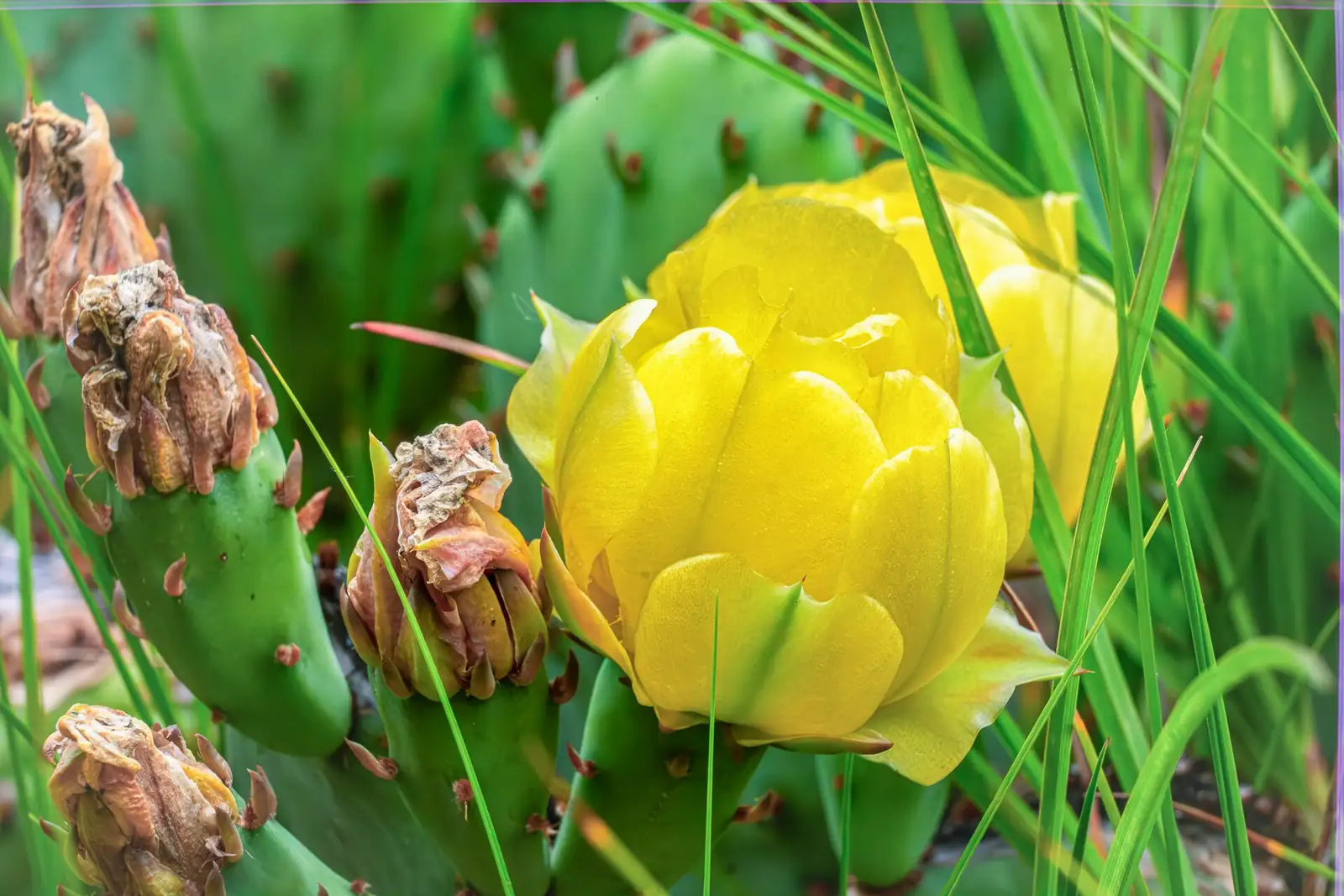
Some flowers whisper. Cactus flowers make you lean in. They burst from armored stems—silky, vivid, and often fleeting—like courage showing its face for a moment in a hard world. That tension between tenderness and toughness is exactly why the cactus earned a place in the language of flowers as a symbol of resilience, protection, and steadfast love.
Meet the plant behind the poetry: Opuntia dillenii
Opuntia dillenii (Ker Gawl.) Haw.—a prickly pear in the cactus family—is a classic emblem of this paradox. Its flat, paddle-like green stems hoard water and do the photosynthesis, while true leaves have evolved into spines. In bright light, it can reward you with showy, bowl-shaped blooms in sunlit colors, even though each flower might last only a day. Native to the Americas with Mexico and Central America as major centers of diversity, cacti like Opuntia dillenii are desert artists of survival: slow-growing, heat-loving, and remarkably drought-tolerant.
How survival became flower language (huayu)
Why does “resilience” cling so naturally to cactus symbolism? The plant’s body tells the story.
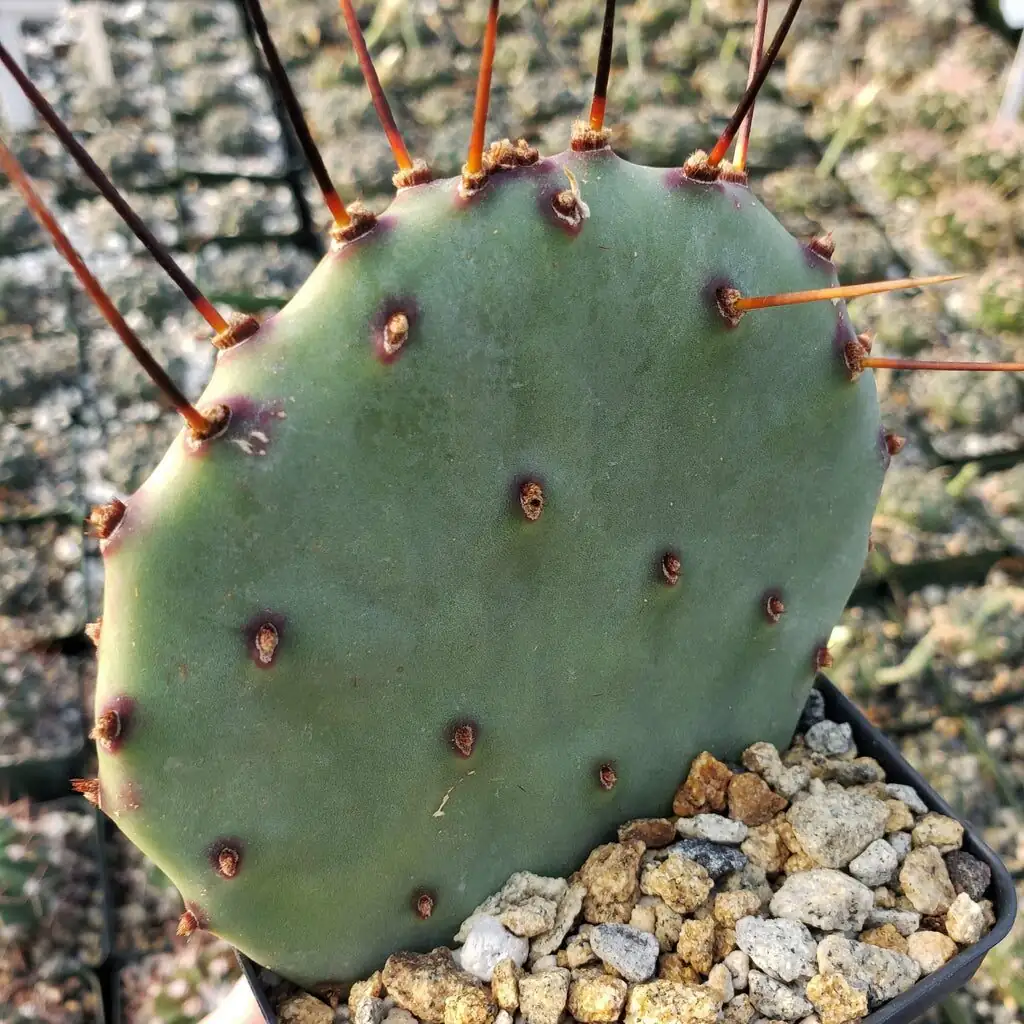
- Water in the walls: Thick, fleshy stems store precious moisture through drought, embodying endurance when resources are scarce.
- Spines as a shield: Modified leaves reduce water loss and deter animals—nature’s way of saying “protect what matters.”
- A bloom against the odds: Large, silky flowers open suddenly, often briefly, reminding us that beauty can be brief yet brilliant—proof of life persisting.
From these survival strategies, people read universal meanings: resilience in adversity, protective strength, and a quiet constancy—the steadfast love that endures even when it isn’t soft or showy.
From floriography to huayu to hanakotoba
- Victorian floriography popularized the idea that plants speak in symbols, pairing species with messages you could “send” in bouquets.
- As flower-language books and magazines traveled and were adapted, East Asian guides absorbed and refashioned these meanings. In modern Chinese-speaking contexts, huayu (花语) often lists cacti for:
- Resilience and endurance
- Protection and boundaries (thanks to spines)
- Steadfast, undemonstrative love
- In Japanese hanakotoba, cactus symbolism can expand: alongside strength and protection, some guides link a blooming cactus with attraction or even lust—proof that living traditions can layer new meanings on old roots.
The throughline across cultures? A plant that survives the harshest places becomes a metaphor for the kind of love and character that doesn’t wither when the weather turns.
A myth on a flag: the Aztec eagle and the cactus
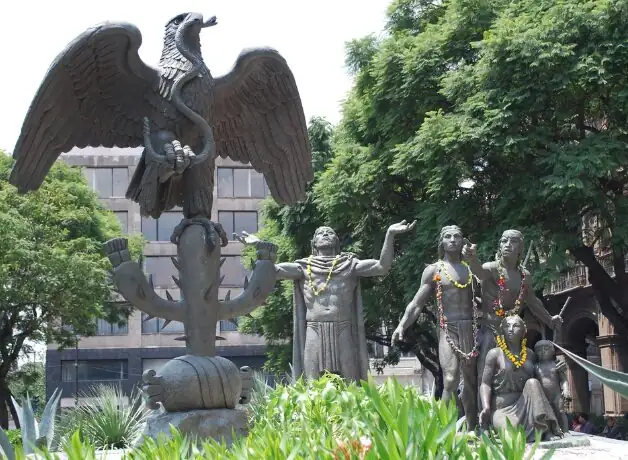
Long before flower-language handbooks, cacti were anchors for story and identity in the Americas. One famous Aztec legend tells of an eagle alighting on a cactus—a prophetic sign that led to the founding of Tenochtitlan (today’s Mexico City). That image still centers Mexico’s national flag. Beyond myth, people have relied on cacti for centuries: as ornament, as habitat for wildlife, as hosts for cochineal insects used to make brilliant red dye, and—among some Opuntia species—as sources of edible pads (nopales) and fruits.
What you’re really saying when you gift a cactus
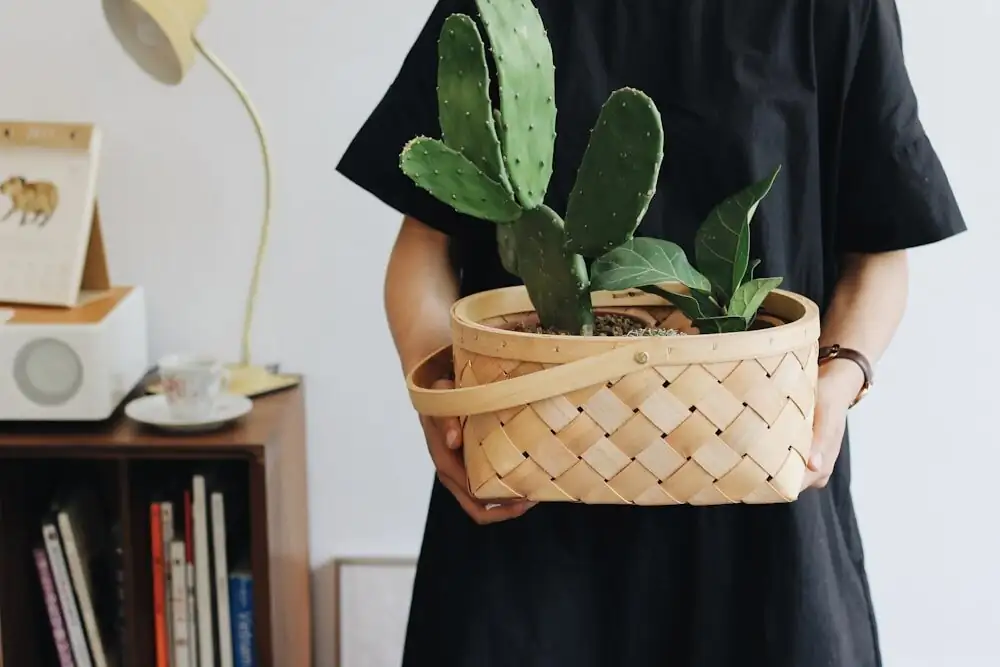
Cacti make meaningful, modern gifts precisely because their symbolism feels earned, not decorative.
- You’re strong: A thoughtful token for someone navigating challenges—a reminder that endurance can be beautiful.
- I’ve got your back: Spines telegraph protection. As a housewarming gift, a cactus can signal “this home is guarded.”
- Love that lasts: Not flashy romance, but committed care—a plant that asks little and endures much.
Tip: Include a note explaining its “language”—resilience, protection, steadfast love—so your message lands with heart.
Feng shui placement for protective energy
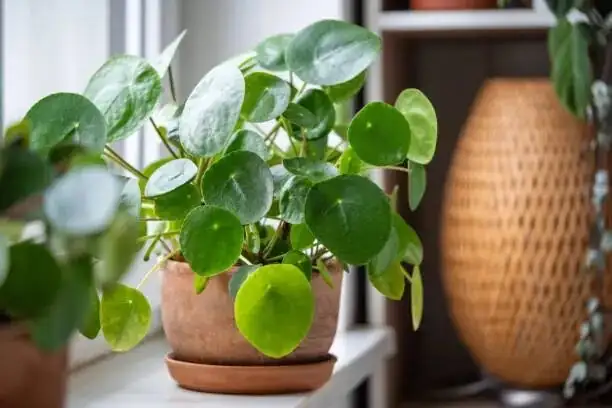
In feng shui traditions, spiky plants are potent movers of energy. Cacti are often used thoughtfully—placed to shield, not to bristle at the heart of a room.
- Best spots for a protective “shield”:
- A bright windowsill or near an entry, where it can symbolically deter negative energy from crossing the threshold.
- A sunny office window to “guard” your focus and bounce away distractions.
- Avoid placing it where people gather to relax (e.g., right beside the sofa or bed). The sharp form is considered agitating there—and practically, spines and traffic don’t mix.
- Practical and energetic harmony:
- Aim for 4–6+ hours of direct sun so the plant thrives while it “stands guard.”
- Give it air circulation and a stable perch to prevent bumps and snags.
Think of it as a small green sentry posted at the periphery—watchful, sunlit, respectfully out of the way.
Why cactus meanings resonate now
We live in an age that prizes soft ease but craves real strength. The cactus flips the script: its beauty is disciplined, its tenderness protected. It wastes nothing. It sets boundaries and then, almost miraculously, opens a flower. That’s not just a plant—it’s a philosophy.
Quick care for Opuntia dillenii (and kin)
- Light: Bright, direct sun is best—at least 4–6 hours daily. Too little light leads to stretching and poor flowering.
- Water: Soak thoroughly, then let the soil dry completely before watering again. Less in winter; never let it sit wet.
- Soil: Fast-draining cactus mix—gritty, airy, and never waterlogged.
- Temperature: Prefers 20–30°C (68–86°F); protect from frost and keep above about 5°C (41°F).
- Feeding: Light feeding in spring–summer, then taper off in fall; no fertilizer in winter rest.
- Safety: Non-toxic but prickly. Place out of high-traffic zones and away from curious hands and paws.
A living emblem: resilience, protection, love that endures
Opuntia dillenii carries the cactus story in full: a body that survives deserts, a shield of spines that guards what’s essential, and a flower that appears like a secret kept for the right moment. In huayu and beyond, its message is clear. Be resilient. Set good boundaries. And when it’s safe, bloom—brightly, even briefly—so the world remembers what you protect.