

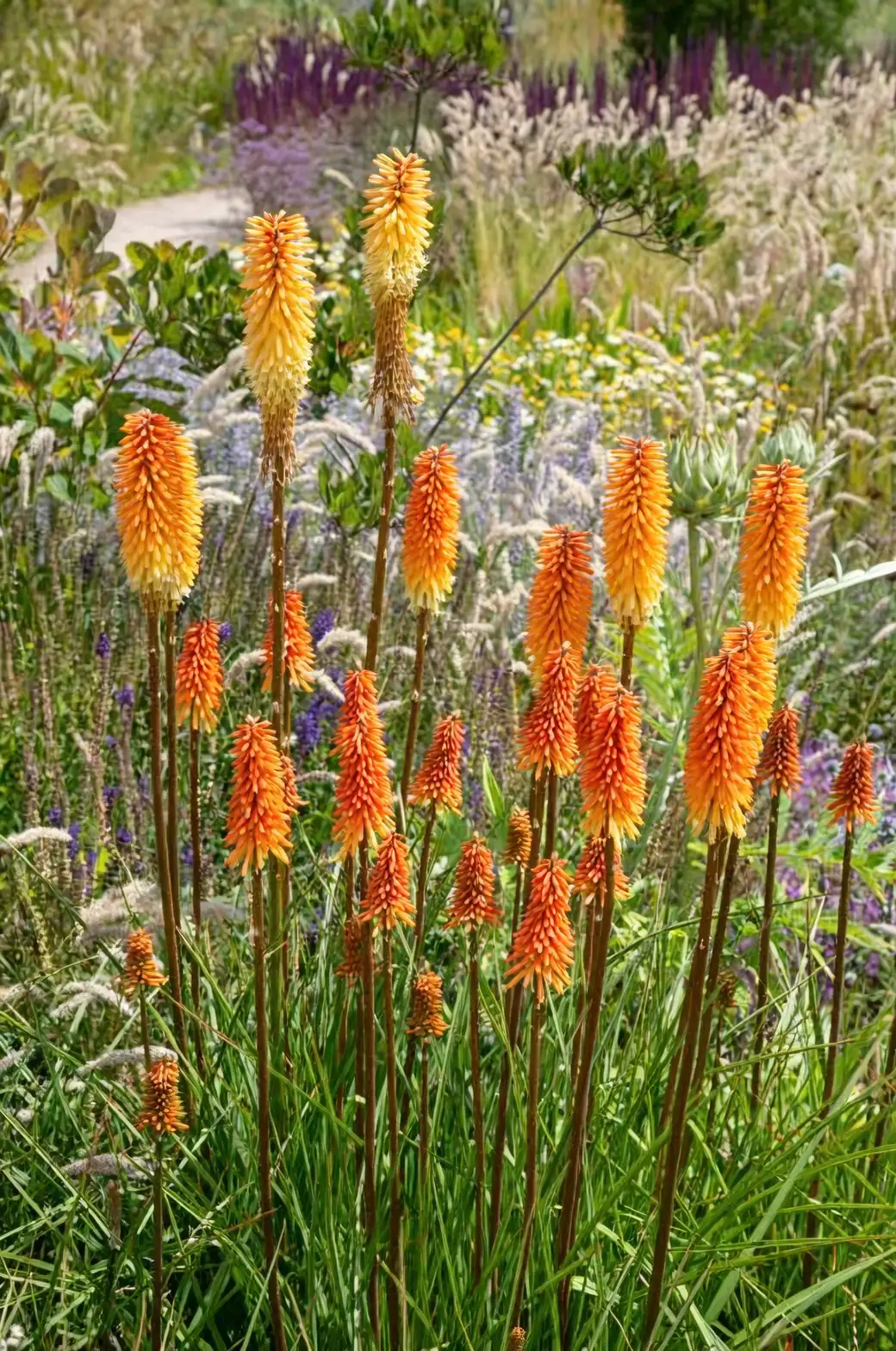
Think of Red Hot Poker (Kniphofia uvaria) as a reliable torchbearer for your garden’s long season—fiery spires, evergreen or semi-evergreen clumps, and pollinator traffic from summer into fall. To keep those torches blazing in USDA Zones 5–9, follow this concise, season-by-season checklist that focuses on what matters most: spring prep and division, summer deadheading and water cues, fall cutbacks, and winter crown protection.
Your Annual Red Hot Poker Checklist (Zones 5–9)
Spring: Wake-up and Divide
- Clear the stage:
- In late winter to early spring, cut back old, winter-worn leaves before new growth pushes. In colder zones, this is your main clean-up time.
- Feed lightly, don’t overdo:
- Top-dress the root zone with compost. If growth was weak last year, apply a balanced, slow-release fertilizer once—avoid heavy nitrogen, which fuels leaves over flowers.
- Reset crowded clumps (key to rebloom):
- Divide every few years in early spring if flowering is down, the center looks bare, or clumps surpass their space.
- How-to:
1) Lift the clump with a sharp spade or fork.
2) Split into sturdy pieces, each with a healthy crown and attached roots.
3) Replant promptly in well-drained soil; keep the crown shallow—generally no deeper than about 3 in (7.5 cm). In heavy soils, setting slightly high improves drainage.
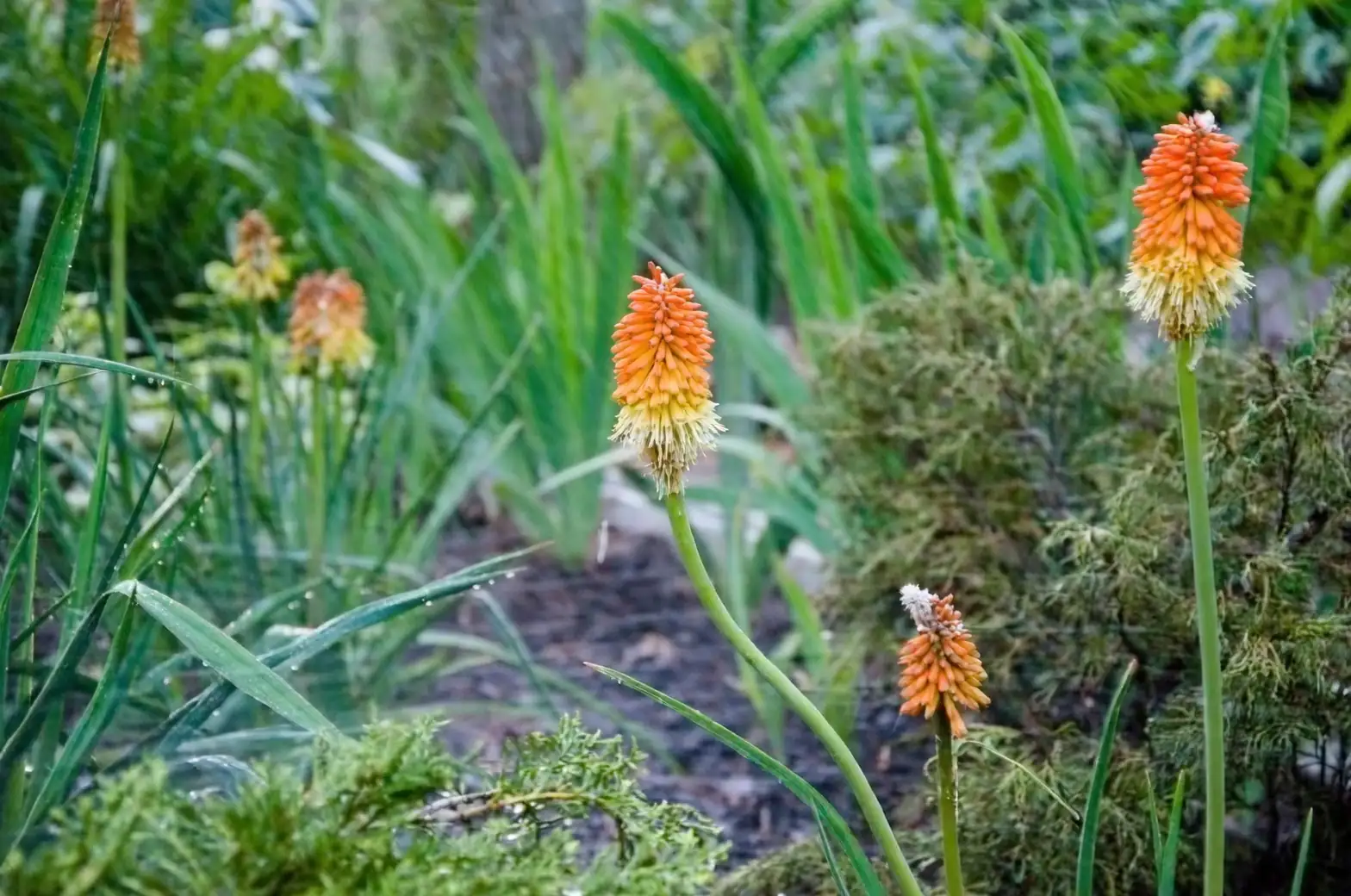
- Water to establish:
- Target about 1 inch (2.5 cm) of water per week (rain + irrigation) as growth ramps up. Container plants dry faster—check often.
- Sun check:
- Choose full sun (6–8+ hours). In very hot regions, a touch of afternoon shade helps reduce stress.
Zone notes
- Zones 5–6: Prioritize spring division (over fall). Prepare to protect crowns next winter (see Winter checklist).
- Zones 7–8: Spring or post-bloom fall division both work.
- Zone 9: Spring division is easiest; avoid replanting into hot, dry soil later.
Summer: Flower Power—Deadhead and Water Wisely
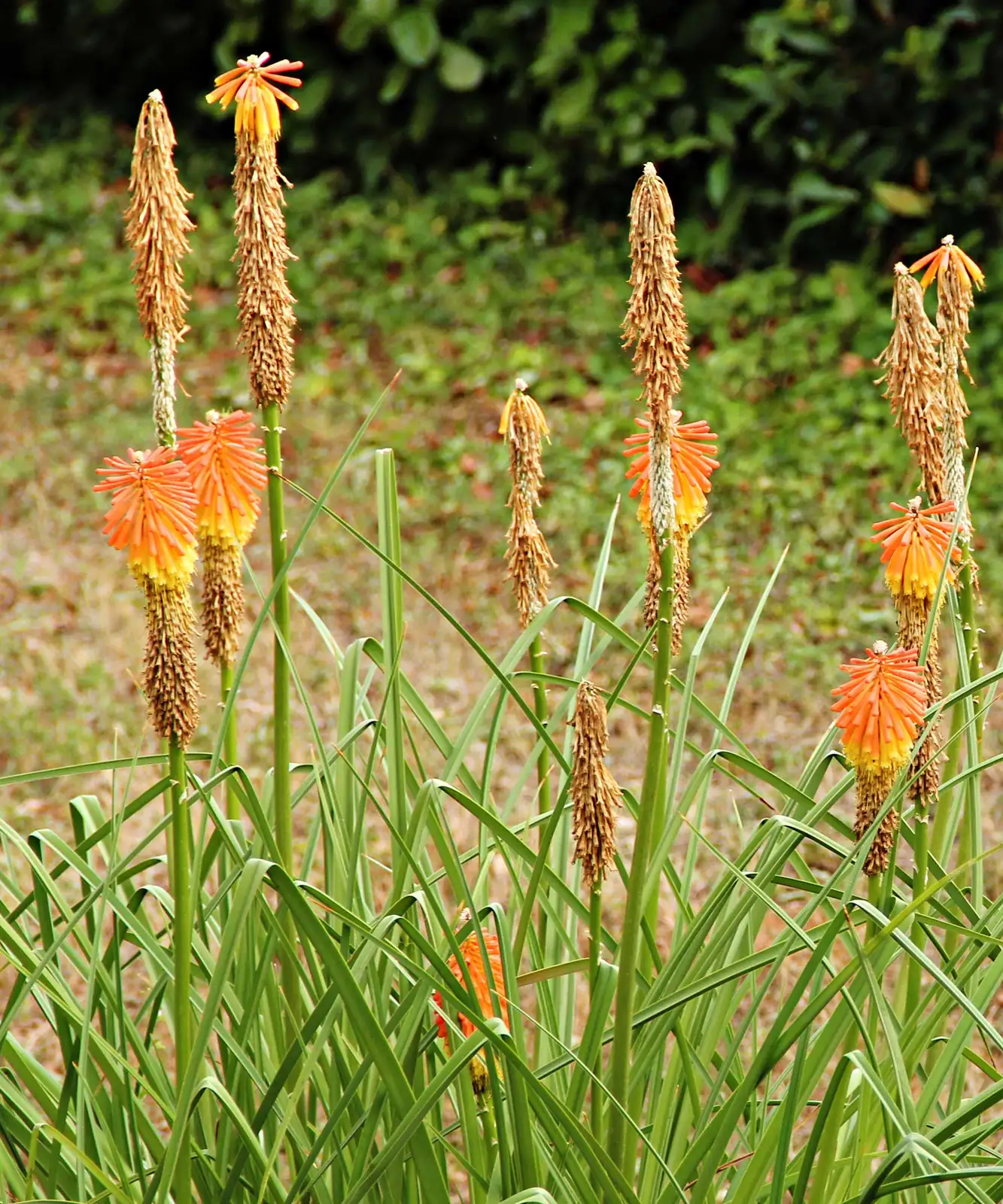
- Keep the torches coming:
- Deadhead spent flower spikes down at their base. Many varieties send repeat blooms with steady care.
- Water cues (aim for consistent, not soggy):
- Maintain roughly 1 inch/week during active growth; increase modestly in heat waves.
- Signs to water: the top 1–2 inches of soil are dry, new spikes stall, or leaves lose spring.
- Avoid constantly wet crowns; never let plants sit in waterlogged soil or saucers.
- Airflow and hygiene:
- Provide space for breezes; remove ratty leaves as needed. Good airflow + sharp drainage = fewer disease issues.
- Watchlist:
- Pests: thrips, aphids (especially on fresh growth), slugs/snails. Spot-treat early.
- Stress check: drooping that persists into evening, pale new growth, or stalled spikes can signal water or nutrient imbalance.
- Sun and sizzle:
- Full sun fuels bloom. In blazing climates, light afternoon shade prevents scorch without sacrificing spikes.
- Mulch with care:
- A thin, airy mulch moderates soil moisture—but keep material away from the crown.
Zone notes
- Zones 5–6: In dry spells, water a bit more consistently to support long-bloom performance.
- Zones 7–9: Afternoon shade in extreme heat reduces stress and extends the show.
Fall: Tidy, Time Divisions (Mild Climates), and Slow the Tap
- Post-bloom cleanup:
- Remove spent flower spikes. Lightly groom foliage; resist shearing clumps in colder regions.
- Smart moisture taper:
- Reduce watering as days cool and growth slows; keep soil draining freely before winter.
- Division window (mild zones):
- In Zones 7–9, you can divide after flowering; replant crowns shallow and water in. Allow several weeks to root before consistent cold.
- Feeding pause:
- Skip fertilizer now—let plants harden before winter.
Zone notes
- Zones 5–6: Do not cut all foliage down. Leave leaves to help insulate the crown for winter; main cutback happens in early spring.
- Zones 7–9: You can tidy more assertively, but still keep crowns open and dry.
Winter: Protect the Crown, Not Smother It
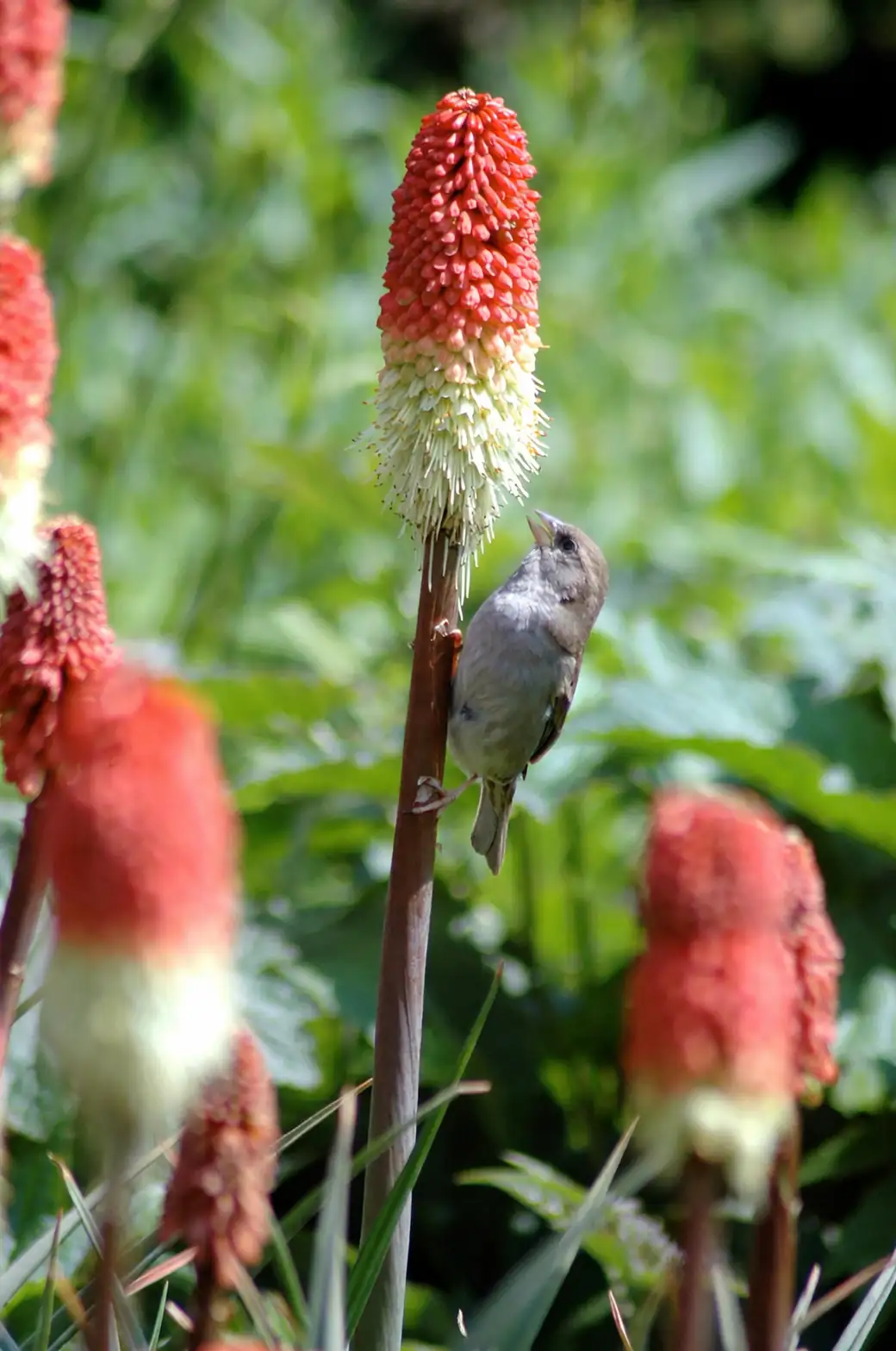
- The golden rule: dry, not drenched.
- Wet, frozen crowns are the primary winter killer. Ensure fast drainage and keep mulch airy.
- Simple, effective shielding:
- In cold zones, gently tie foliage into a loose “ponytail” to shed water away from the crown.
- Mulch with dry materials (straw, pine needles, or leaves) around—rather than on top of—a buried crown. Keep it breathable.
- Hands off, mostly:
- Avoid heavy cutbacks in cold zones until spring; foliage buffers freeze–thaw cycles.
- Container care:
- Move pots to a protected spot (under eaves or against a south/west wall). Check occasionally—moist, not wet.
Zone notes
- Zones 5–6: Provide the most protection—tie foliage, mulch with dry, loose material, and ensure drainage. Survival improves markedly with crown dryness and insulation.
- Zones 7–8: A tie-up and a light dry mulch usually suffice.
- Zone 9: Minimal protection needed; focus on keeping crowns from sitting wet during cool, rainy stretches.
Quick Care Specs at a Glance
- Botanical name: Kniphofia uvaria (aka Poker Plant, Torch Lily, Tritoma)
- Family: Asphodelaceae; origin: eastern and southern Africa, especially South Africa
- Habit and size: Upright, clump-forming perennial with robust rhizomes; typically 2–6 ft tall, 1–3 ft wide (dwarf forms 18–24 in tall)
- Flowers: Dense, tubular blooms on tall spikes; color gradients from red, orange, apricot, peach, yellow, chartreuse, to cream; June–October (variety and climate dependent)
- Sun: Full sun best; in very hot regions, light afternoon shade helps
- Soil: Well-drained, moderately rich; pH ~6.0–7.5
- Watering: About 1 inch/week in growth; tolerates short dry spells once established; never soggy
- Feeding: Minimal—compost and, if needed, a balanced slow-release in spring
- Propagation: Divide clumps in early spring or fall after flowering (mild zones); keep crowns shallow (≤3 in deep)
- Pruning: Deadhead spent spikes; in cold zones, leave foliage over winter and cut back in early spring
- Hardiness: USDA Zones 5–9; winter crown protection boosts survival in colder zones
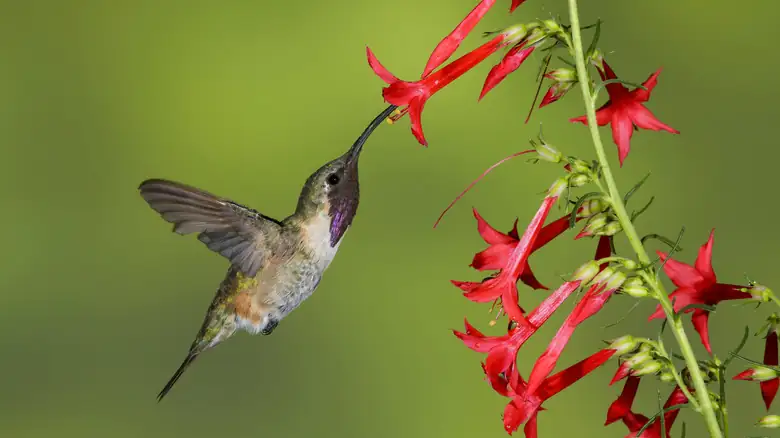
- Wildlife: Hummingbird, bee, and butterfly magnet; also a good cut flower (harvest as lower florets open; 5–7 days in a vase)
- Safety: Generally non-toxic to people and pets
Troubleshooting Fast
- Not blooming?
- Check sun (6–8+ hours), drainage, and feeding—too much nitrogen = leaves, not flowers.
- Divide if the clump is crowded or has a bare center.
- Ensure crowns aren’t buried too deep; keep them shallow.
- Young, seed-grown plants may simply need another season.
- Foliage collapse or crown mush?
- Likely rot from poor drainage or overwatering—improve runoff, reduce irrigation, and keep crown dry.
- Pests on new growth or flowers?
- Thrips/aphids: rinse or spot-treat early. Slugs/snails: hand-pick or use barriers.
Design and placement quick wins
- Plant where drainage is naturally sharp: sunny borders, mixed beds, slopes, and coastal sites.
- Pair with companions that like similar conditions and won’t crowd the crown—think airy grasses or drought-tolerant perennials that let those torches shine.
A quick note on symbolism
Red Hot Poker’s “torch” bloom has long suggested passion, strength, and the confidence to stand out. In some folklore, its fiery spires are linked to protection—flashes of color said to ward off negativity. These meanings are cultural rather than botanical, but they fit the plant’s visual drama: a living flare signaling vitality in the garden.
If you follow this rhythm—divide when crowded, deadhead promptly, water steadily but never soggy, and shield the crown from winter wet—your Kniphofia uvaria will keep striking matches of color from early summer well into fall, year after year.


