

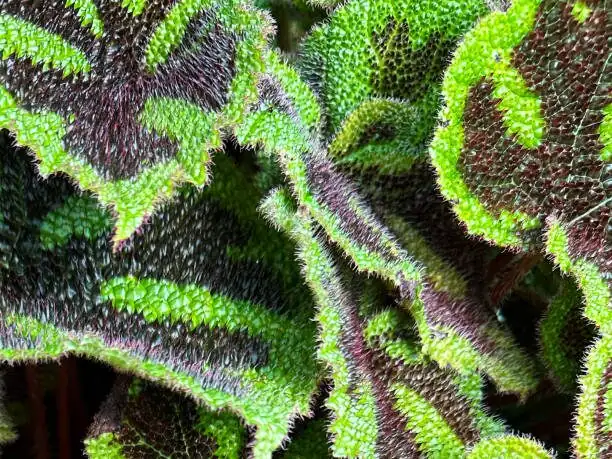
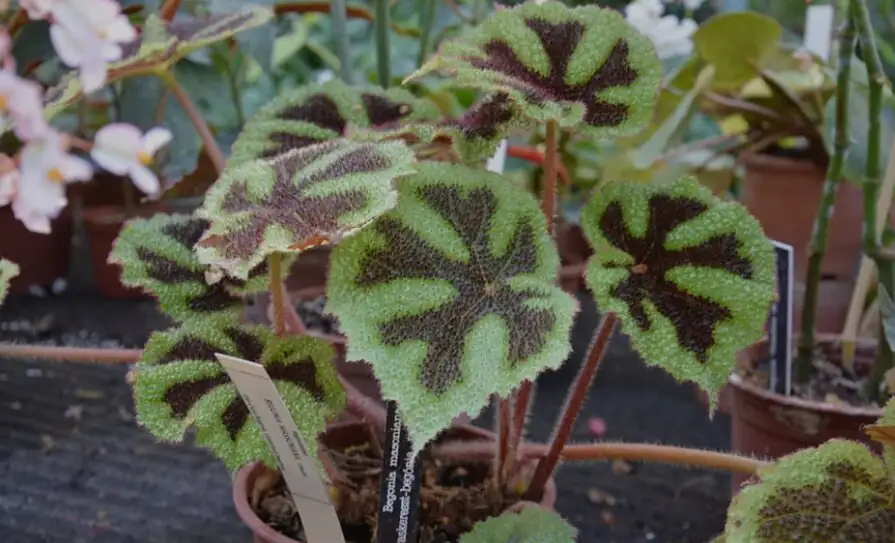
Touch one: that leaf really is like sandpaper. Stare a second: there’s a dark, chocolatey cross stamped on a neon-green heart. Iron Cross Begonia (Begonia masoniana) is a plant you can’t just glance at—you end up inspecting it like a micro-landscape. This is a geek’s plant, because the drama you see is pure optics and anatomy: pigments filtering wavelengths, cells shaping light paths, and a bullate (blistered) surface turning ordinary photons into high-contrast theater under indoor LEDs.
Meet the plant behind the pattern
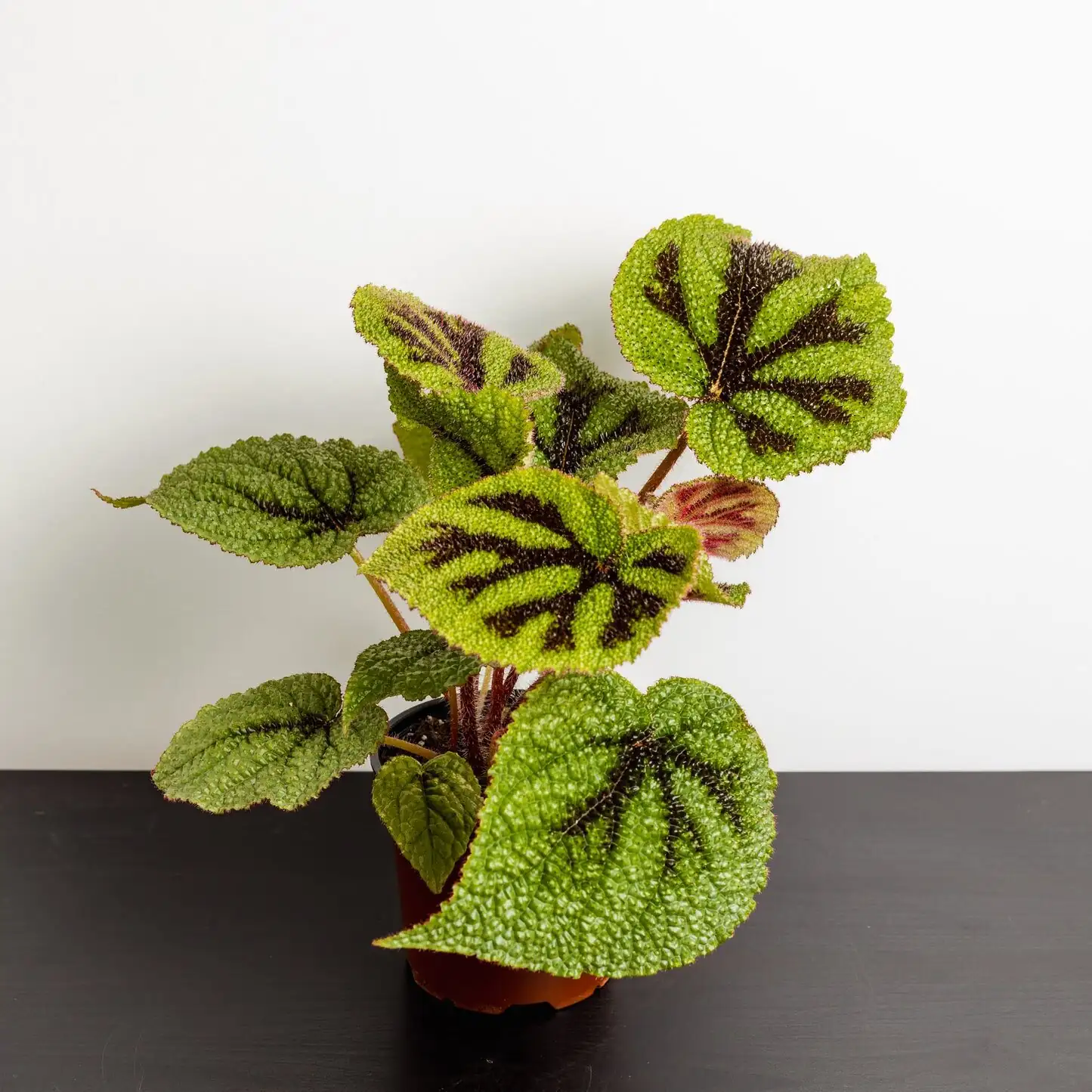
- Identity check
- Scientific name: Begonia masoniana
- Family: Begoniaceae
- Common names: Iron Cross Begonia; also sold as Mason’s Begonia and Brazilian Begonia
- Origin: Southern China to Vietnam (now widely grown worldwide as a foliage ornamental)
- Habit and size
- Rhizomatous, clump-forming perennial that spreads more sideways than tall
- Typically 30–45 cm (12–18 in) tall and wide in a pot
- What you see
- Leaves: Heart-shaped, bright green, with a bold wine-red to brownish cross-like marking; surface is robustly rough and textured—famously “sandpaper-like”
- Flowers: Small, pale pink to whitish sprays; pleasant, but the foliage is the star
The science of the “iron cross”: why the dark stamp looks so dramatic indoors
Think of the leaf as a layered optical device. Contrast comes from where light is absorbed, reflected, and scattered—and Begonia masoniana stacks the deck in four ways.
1) Pigment zoning: anthocyanins vs. chlorophyll
- The dark cross is packed with anthocyanins—water-soluble pigments stored in vacuoles near the top layers of the leaf. Anthocyanins absorb much of the green-blue portion of the spectrum; when they pile up above or alongside chlorophyll, they act like a neutral density filter, deepening shadows and muting green reflectance.
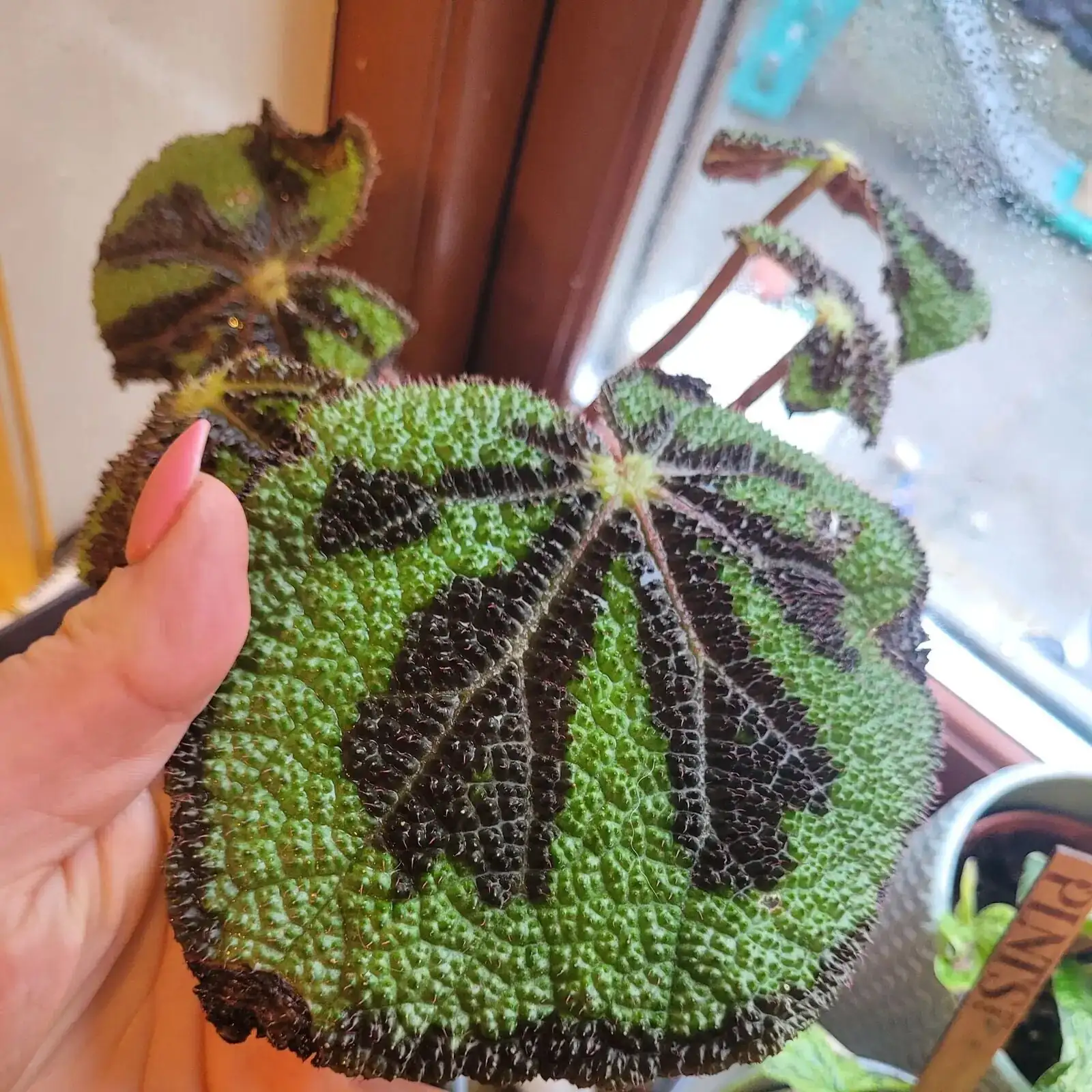
- Color chemistry tweak: anthocyanins can look wine-red, mahogany, or near-black depending on concentration, vacuolar pH, co-pigments, and metal complexation. In the Iron Cross, heavy loading pushes the hue toward brown-black from the top, but when backlit the same area often glows garnet red because transmitted light reveals the red channel the top view hides.
- Myth-buster: the “iron” in Iron Cross is a visual metaphor, not a sign of iron deposits making the color.
2) Leaf micro-topography: bullation and hairs shape light
- The leaf is bullate—think a field of tiny domes and craters. This microrelief breaks up specular highlights and increases diffuse (Lambertian) reflection in the green zones, making them look brighter from multiple angles.
- In the pigmented cross, a slightly different combo of bullation, denser short hairs, and higher pigment density reduces glint and traps light, so the region appears matte and darker. The border of the cross often looks fuzzy because the transition from high- to lower-anthocyanin cells is gradual and draped across a puckered surface—no hard edges for light to catch.
3) Venation-guided patterning
- The cross aligns with major vein axes. Veins don’t just carry water; they’re developmental signposts. Gene networks that switch on anthocyanin biosynthesis (MYB–bHLH–WD40 complexes in many plants) often map onto vein-proximal gradients. The result: a centrally anchored, vein-aligned cross that stays “centered” as leaves expand.
4) Indoor light geometry and spectra
- Under bright, indirect indoor light—especially LED setups rich in blue and green—the anthocyanin-heavy regions look nearly black because they preferentially soak up the same wavelengths those fixtures pump out.
- Backlighting trick: put the plant where morning light or a bright window backlights the leaf. The cross glows red, revealing the anthocyanins’ transmissive side. This is why some growers swear the plant “lights up” in sunshine yet still looks velvety dark from the front.
Keeping the cross crisp: light, warmth, water, and air
- Light
- Best: bright, indirect light; medium light is tolerated, but contrast softens.
- Avoid harsh direct sun that can scorch or fade the green. An east or bright north window, or a spot set back from a strong south/west exposure, works well.
- Collector hack: to showcase the red-glow effect, stage a leaf so it can be gently backlit for part of the day without full-on beams.
- Temperature and humidity
- Temperature sweet spot: 18–27°C (64–81°F). Keep away from cold drafts; avoid dips below 13°C (55°F).
- Humidity: 50–70% is ideal. Use a humidifier, pebble tray (pot not sitting in water), or cluster plants—balanced with airflow to prevent mildew.
- Watering and soil
- Water when the top 2–3 cm (about 1 in) of mix feels dry. Then drench and drain thoroughly—never leave the pot standing in water.
- Substrate: loose, airy, fast-draining. A peat/coco base amended with perlite and a bit of fine bark fits the rhizome’s need for oxygen.
- Seasonal tweak: water less in winter, but keep the plant warm.
- Feeding and growth
- Feed in spring through early autumn with a balanced fertilizer at 1/4–1/2 strength every 2–4 weeks. Reduce or stop in winter.
- Growth is compact and clump-forming; trim yellowing or damaged leaves at the base to keep it tidy.
- Airflow matters
- The same humidity that keeps edges from crisping can also invite powdery mildew if the air is stagnant. Aim for gentle circulation and avoid routinely wetting leaves late in the day.
How environment changes the pattern
- Too little light: cross softens and overall leaf looks dull; growth stretches.
- Too much direct sun: green bleaches and margins may crisp; the cross can look blotchy instead of inky.
- Too-cool + too-wet: rhizome rot risk rises; leaves can wilt and drop even though the mix is wet.
Tactile design: why the “sandpaper” feel?
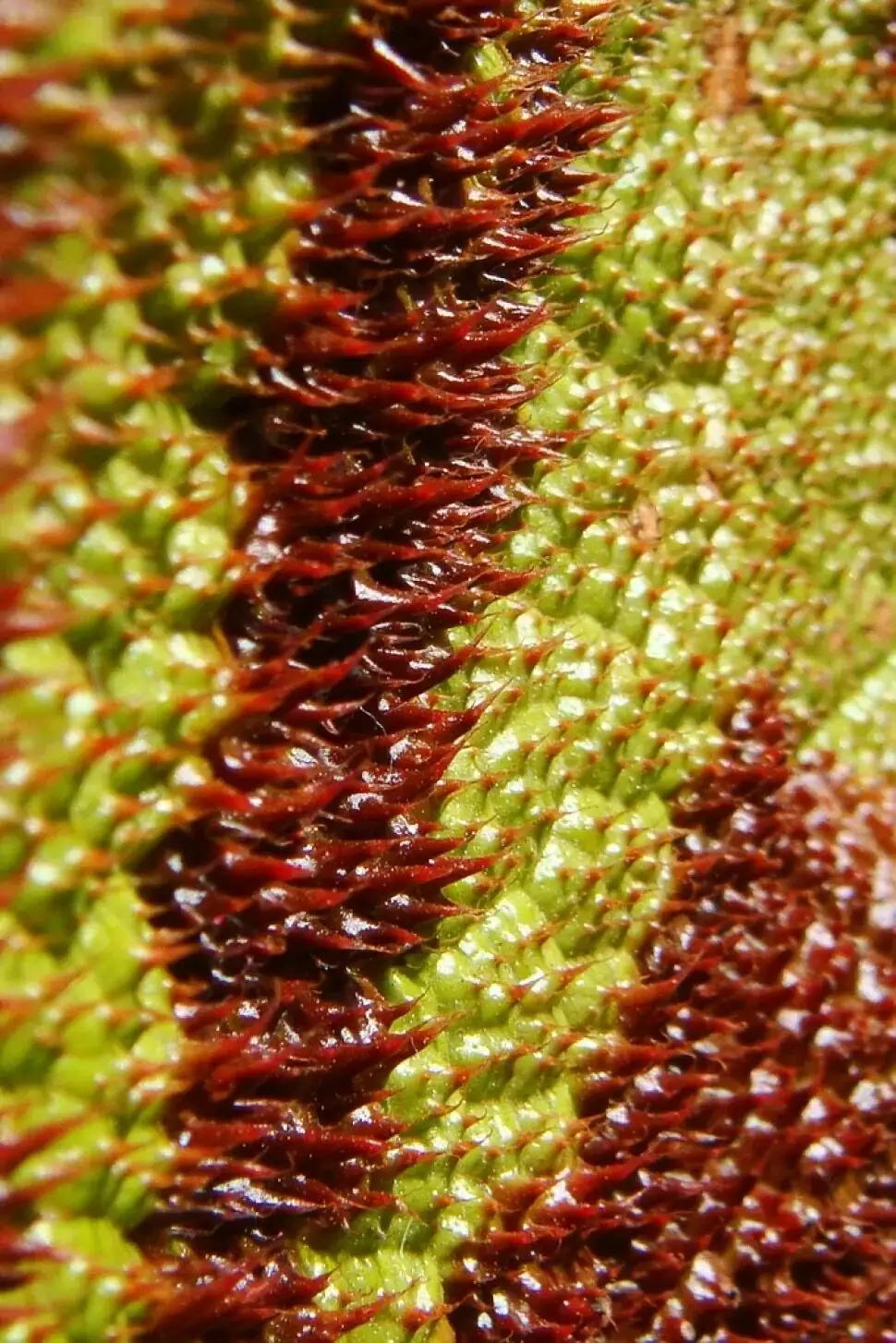
- The upper surface bristles with short, stiff hairs over a bumpy, bullate lamina. Those hairs reduce water films, deter herbivores, and scatter light; combined with the puckering, they give the leaf its rugged, sandpapery grip.
- Functionally, this roughness also maintains contrast by cutting glare on the green zones while helping the cross stay visually matte.
Placement ideas that flatter the foliage
- Near an east or north window for bright, indirect light and gentle morning backlighting.
- A warm, bright bathroom with decent airflow can be a humidity win.
- On a shelf set a bit back from a strong south/west window, with a sheer curtain diffusing rays.
Troubleshooting quick hits
- Brown, crispy edges? Usually low humidity, underwatering, or hot direct sun. Increase ambient humidity to 50–70%, water when the top 2–3 cm dries, and shift to bright indirect light.
- Leaves dropping or base going mushy? Most often overwatering and/or cold stress. Let the mix dry a bit more between waterings, ensure excellent drainage, and keep above 13°C (55°F).
- Powdery mildew or leaf spots? Improve airflow, avoid wetting foliage late, and treat early with insecticidal soap or horticultural oil if pests are involved.
Pests and health
- Usual suspects: spider mites, mealybugs, thrips, and fungus gnats. Inspect leaf undersides and creases around the rhizome. Treat early with insecticidal soap or horticultural oil; repeat as needed.
- Toxicity: contains insoluble calcium oxalates; toxic to pets if chewed (mouth irritation, drooling, discomfort). Keep out of reach of pets and small children.
Propagation, repotting, and the rhizome’s logic
- Propagation
- Rhizome division: slice a firm, healthy rhizome piece with a node; pot shallowly in a warm, lightly moist, airy mix.
- Leaf cuttings: sections or whole leaves root well in warm (21–24°C / 70–75°F), humid conditions with high but not stagnant humidity.
- Repotting
- Every 1–2 years in spring, or when the rhizome crowds the rim. Shallow, wider pots suit its spreading habit better than deep ones.
Buying guide (what good foliage “reads” like)
- Choose plants with firm rhizomes and crisp, well-colored leaves.
- Avoid mushy stems, blackened leaf bases, or widespread spotting.
Calendar for success
- Spring–summer: ramp up bright indirect light, water regularly, and feed lightly.
- Autumn: taper fertilizer; allow slightly more drying between waterings.
- Winter: keep warm, reduce watering, avoid soggy mix and cold drafts.
For collectors: forms and staging
- Compact selections such as Begonia masoniana ‘Rock’ keep the iron-cross pattern and bullate texture on a smaller footprint, great for shelves and tight spaces.
- Larger, more expansive forms (often sold as “Mountain”) emphasize the sculptural bullation and glow strikingly when gently backlit.
- Terrarium-style displays can work if you preserve airflow; stagnant, saturated enclosures invite fungal issues.
Why the cross is perfect for a geek’s shelf
- It’s a live demo of plant optics: pigments attenuate light; puckered microrelief sculpts reflectance; vein-guided development prints a stable pattern that changes with viewing angle and light direction. Set it near a window, then walk around it at different times of day—you’ll watch the chemistry and anatomy rewrite the leaf’s contrast in real time.
Symbolism and “flower language”
- Iron Cross Begonia is often linked with individuality and the appreciation of unique beauty. Its leaf literally carries a one-of-a-kind emblem, and no two crosses are identical—an apt metaphor for standing out without shouting. As with most modern “flower language,” this is a cultural gloss rather than a historical code, but it captures why people gift and collect this plant: it’s a small badge of personal style that thrives on close attention.
Fast reference
- Light: bright, indirect; avoid harsh direct sun
- Water: when top 2–3 cm of mix is dry; drench and drain
- Temperature: 18–27°C; avoid <13°C
- Humidity: 50–70% with airflow
- Soil: loose, airy, fast-draining; shallow pot preferred
- Care level: moderate; steady moisture + warmth + humidity + ventilation
Once you start seeing Begonia masoniana as a layered optical device on a rhizome, the leaf stops being just pretty. It becomes a tiny lab—one that rewards careful lighting, smart staging, and the occasional tactile “whoa” when you remember just how gritty that green really feels.