

Think of succulent pest control like a tight, stylish heist film. The stakes are high (your plants), the villains hide in shadows (leaf axils, under pot rims, inside roots), and success depends on clean intel, crisp moves, and the discipline to run the whole plan until the credits roll. Here’s your cinematic IPM game plan—scouting, quarantining, precise contact treatments, smart systemics, and airflow habits that make infestations rare.
Meet the stars: Succulents and their usual suspects
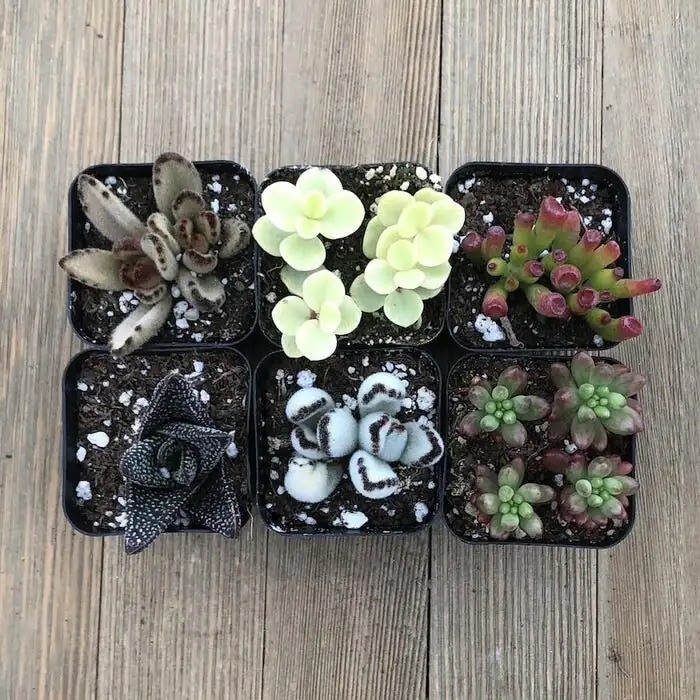
Succulent Plants are a wildly diverse “lifestyle” rather than a single lineage: water-storing wonders spread across families like Crassulaceae, Cactaceae, Euphorbiaceae, Asphodelaceae, Asparagaceae, and more. They bank water in leaves, stems, or roots; many use CAM photosynthesis, opening stomata at night to conserve moisture. Expect rosettes, beads, spires, and trailing strands that shift from greens and silvers to reds and purples in strong light or cool nights.
Common antagonists:
- Mealybugs: cottony, sap‑sucking clusters that tuck into joints and roots, leaving sticky honeydew and sometimes sooty mold.
- Scale insects: dome‑like, helmeted sap‑feeders that cling to stems and leaf undersides.
- The sleeper threat: root rot—by far the most common serious issue—when water sits around roots in slow, soggy soil.
Your mission is integrated pest management (IPM): prevent first, detect early, act precisely, and keep conditions so healthy that pests rarely gain a foothold.
Scene 1: Scout like a pro (finding trouble before it finds you)
- Schedule quick, regular inspections: weekly in warm seasons or indoors year‑round, biweekly when growth slows.
- Use a flashlight and a hand lens. Check leaf axils, under leaves, tight rosettes, spines/areoles on cacti, flower stalk joins, and the crown.
- Don’t forget the pot: peek under the rim, into drainage holes, and along the soil surface for cottony tufts (root mealybug clues).
- Look for signals: sticky leaves/pots (honeydew), sooty mold, stunted or distorted growth, unexplained yellowing.
- High‑risk plants to monitor closely: densely leafed rosettes (Echeveria, Graptopetalum), soft‑stem Crassula and Aeonium, and any plant recently stressed by repotting, low light, or overwatering.
Scene 2: Quarantine protocol (contain the scene)
- Isolate on first suspicion. Move the plant away from your collection.
- Quarantine all new arrivals for at least two weeks. Inspect on day 1, day 7, and day 14.
- If you must handle other plants, do the suspect last. Clean hands/tools afterward.
Scene 3: Contact combat—alcohol swabs vs. insecticidal soap
Both are IPM staples, but each shines in different moments. Use them like complementary tools, not either/or.
Isopropyl alcohol (around 70% or less) swabs/spritz
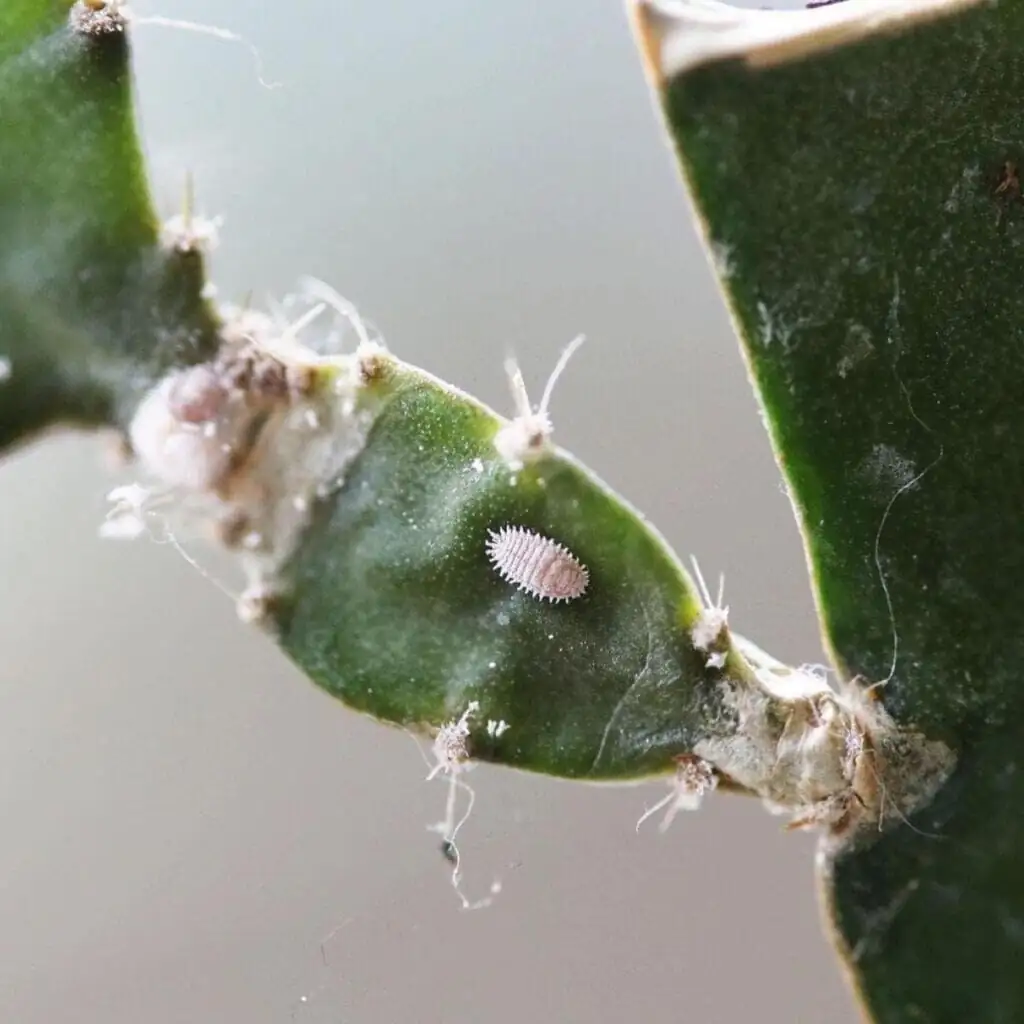
- Best for: visible mealybugs and small scale patches; surgical spot‑removal in nooks.
- How to use:
- Dab individual bugs with a cotton swab soaked in isopropyl alcohol. They’ll desiccate on contact.
- For light coverage, mist into crevices—test a small patch first.
- Advantages:
- Instant knockdown on contact.
- Precise—great for tight rosettes and low‑number finds.
- Watch‑outs:
- Some glaucous, farina‑coated leaves (e.g., many Echeveria) can spot or lose their protective bloom. Always patch‑test.
- Avoid treating in hot, direct sun; treat in the cool of day and provide airflow.
Insecticidal soap (labeled for houseplants/succulents)
- Best for: repeated sprays to catch waves of crawlers (young, less waxy life stages).
- How to use:
- Thoroughly wet undersides of leaves, stems, and joints. Repeat every 7–10 days until no new pests are seen for at least 3–4 weeks.
- Advantages:
- Excellent against soft‑bodied nymphs that adults constantly replace.
- Watch‑outs:
- Can etch or mar the waxy bloom on some species; always spot‑test.
- Don’t spray in blazing sun or during heat spikes; ensure good airflow until dry.
Pro tip: Alternate precise alcohol spot‑kills with broader soap sprays. Clean leaves and nearby surfaces of honeydew between rounds—this reduces sooty mold and removes the buffet that often invites ants.
What about oils and neem?
- Light horticultural oils or neem can smother soft pests, but succulents are sensitive.
- If you use them:
- Spot‑test, apply in cooler temps, and keep plants out of direct sun until fully dry.
- Avoid on farina‑heavy, blue‑glaucous species and any plant recently water‑stressed.
Scene 4: The imposters—common scale look‑alikes on succulents
Before you declare war, confirm the enemy.
- Farina (epicuticular wax): a uniform, powdery “frost” on leaves (Echeveria, Dudleya). Doesn’t clump into cotton and wipes evenly, not stringy.
- Areoles and natural hairs on cacti: fixed in place, often symmetrically spaced.
- Hard water deposits: chalky crust on stems or soil—dissolves with a dab of vinegar, never moves.
- Dried latex (Euphorbia): white streaks where tissue was nicked; static, not cottony.
- Cochineal on Opuntia: looks like mealy; crush and it bleeds vivid carmine red—yep, that’s a scale insect you should treat.
- Edema/corking: blistery or tan, rough patches from past stress—doesn’t smear or crawl.
- Perlite flecks or soil grit splashed on leaves: brush off cleanly; no honeydew.
If it smears pinkish, strings into cotton, or moves between checks, you’re not dealing with harmless bloom.
Scene 5: Root mealybugs—when the enemy goes underground
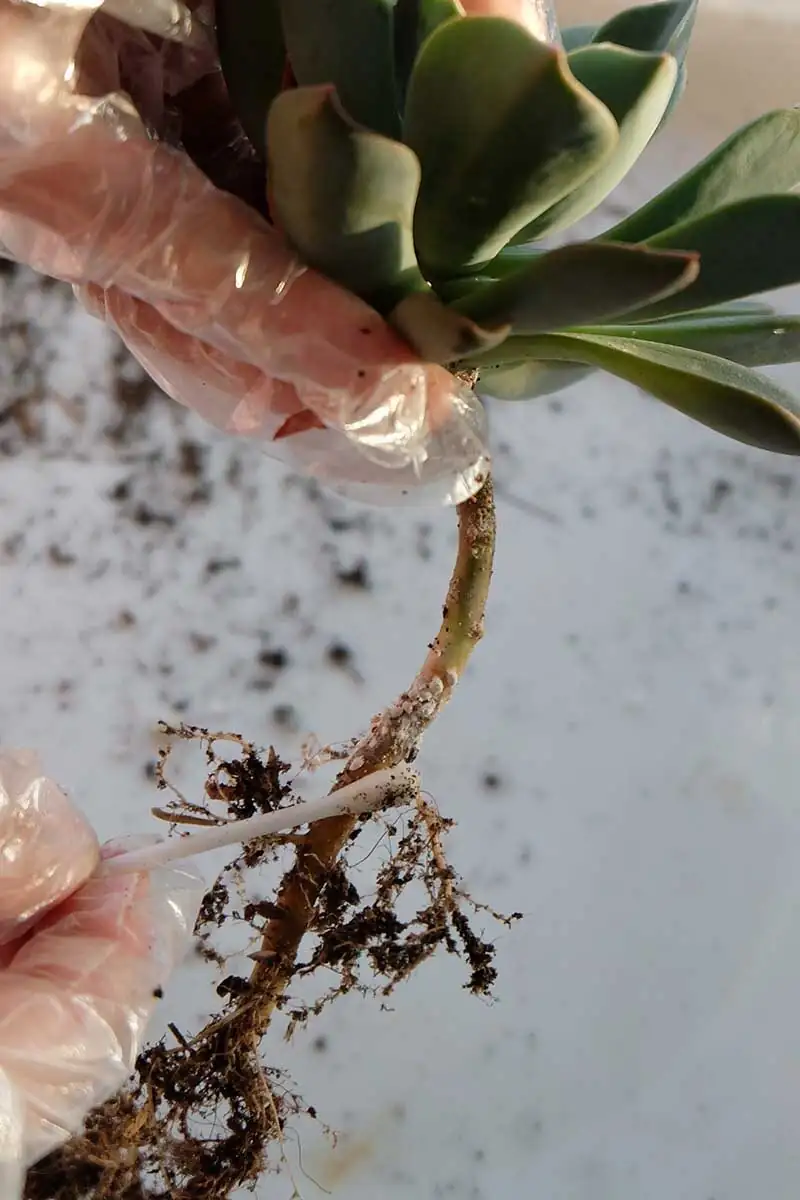
Clues: declining vigor despite reasonable care, white fluff at drainage holes, cottony threads on roots during repot.
- Response:
- Unpot and gently wash roots.
- Trim any black, mushy roots (rot) and let healthy roots air‑dry briefly.
- Swab remaining visible mealybugs with isopropyl alcohol.
- Repot into fresh, fast‑draining, gritty mix and a clean pot.
- Keep isolated and rescout weekly.
Scene 6: Systemic options—reserve power, used thoughtfully
For stubborn infestations that keep rebounding, a systemic can push the plot to resolution—used with care.
- What they do: Move through plant tissues to target sap‑feeders (mealybugs, scale). Often applied as a labeled soil drench or granules.
- Where they fit: Indoor plants (no pollinators), severe or persistent infestations, or large, hard‑to‑spray collections.
- Cautions:
- Avoid use on edible succulents (e.g., culinary Opuntia, Aloe used topically/ingested).
- Refrain when plants are in bloom or outdoors where pollinators visit.
- Follow all label directions and local regulations exactly.
- Expectation setting: Systemics take time (days to weeks) and work best paired with contact cleanup of visible clusters.
Biocontrol note (greenhouses/outdoors): Mealybug destroyer beetles (Cryptolaemus) and parasitic wasps can help in larger setups. Skip oils/soaps that could harm them if you’ve released beneficials.
Scene 7: The long game—break the life cycle
Many mealybugs and scale hatch in waves. One-and-done rarely works.
- Run treatments on a schedule: every 7–10 days for at least 3–4 weeks after the last sighting. Stubborn cases may need longer.
- Target all hideouts each round: leaf axils, stem creases, under rims, drainage holes, soil surface.
- Remove honeydew and sooty mold each time—clean leaves, pots, shelves.
- Control ants outdoors; they protect and farm sap‑feeders.
- Recheck recently treated neighbors—migration is common.
Scene 8: Airflow habits that make infestations rare
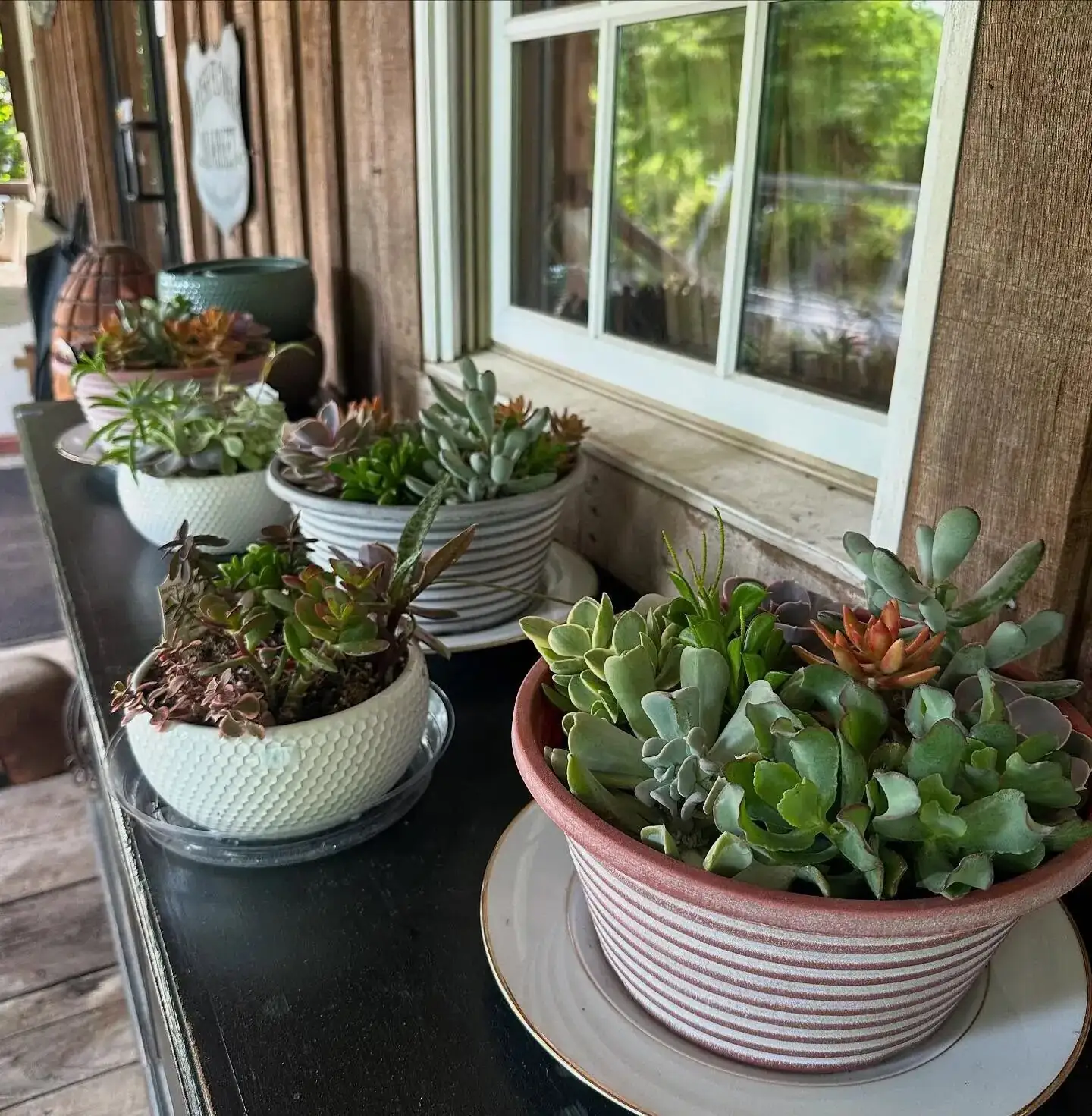
Build a set where pests hate to live.
- Light and spacing:
- Aim for bright light—about 4–6 hours daily—with gradual acclimation to full sun to prevent sunburn.
- Give plants breathing room; don’t crowd rosettes or line pots rim‑to‑rim.
- Air movement:
- Use a gentle fan indoors or open windows for cross‑breeze.
- Rotate plants so still pockets don’t form in dense shelves.
- Water wisely:
- Use the soak‑and‑dry method; let soil dry completely before rewatering.
- Favor fast‑draining, gritty mixes (e.g., 60–80% pumice/perlite/rock with a modest organic fraction).
- Protect from persistently damp, stagnant air—prime conditions for rot and pests.
- Nutrition and hygiene:
- Feed lightly during active growth; avoid lush, overly soft growth that attracts pests.
- Groom spent leaves and debris where pests hide.
- Sterilize shears; clean trays and pot exteriors regularly.
- Intake controls:
- Quarantine new plants two weeks, minimum.
- Inspect gifted cuttings outdoors; bag and bin pesty trimmings—don’t compost indoors.
Care quick‑cuts that support IPM
- Sunlight: Bright is best; many succulents enjoy direct sun with acclimation. Shade‑tolerant types (e.g., some Haworthia) suit lower‑light spots.
- Temperature: Happy around 15–27°C (59–81°F). Protect from frost; ease up on harsh midday sun during extreme heat and boost airflow above 35°C (95°F).
- Humidity: Low is your friend; average household levels are fine.
- Watering: Thorough soak, then dry down fully. More in active growth (often spring/fall), far less in winter. When unsure, wait.
- Repotting: Up one pot size at a time; keep dry for a few days post‑repot.
- Pruning/propagation: Trim in spring; let cuttings callus before rooting.
Safety on set
- Many Euphorbia bleed irritating milky latex—wear gloves and protect eyes.
- Keep alcohol, soaps, and any pesticides away from children and pets; ventilate during treatments.
- Toxicity varies by species. If you can’t ID a plant, assume it may irritate and place accordingly.
Symbolism, with a wink
People often cast succulents as emblems of resilience and steady fortune—fitting for plants that stash water and thrive under tough conditions. Like most “flower language,” these meanings grew from cultural storytelling rather than botany, but they resonate: patience, resourcefulness, and quiet strength.
Rapid‑response checklist (print this)
- Confirm the pest (not farina or mineral residue).
- Isolate the plant.
- Spot‑kill with 70% isopropyl alcohol on visible clusters.
- Follow with insecticidal soap sprays every 7–10 days, hitting all hideouts.
- Clean honeydew and nearby surfaces; manage ants outdoors.
- For root mealybugs: bare‑root, wash, alcohol‑swab, repot in clean gritty mix.
- Consider a labeled systemic only for severe, non‑edible, non‑blooming, indoor cases.
- Maintain bright light, airflow, and soak‑and‑dry watering to keep the sequel from happening.
Roll credits: smart scouting, precise contact work, disciplined follow‑through, and breezy, bright growing conditions. That’s how you win the succulent IPM game—stylishly and for good.