
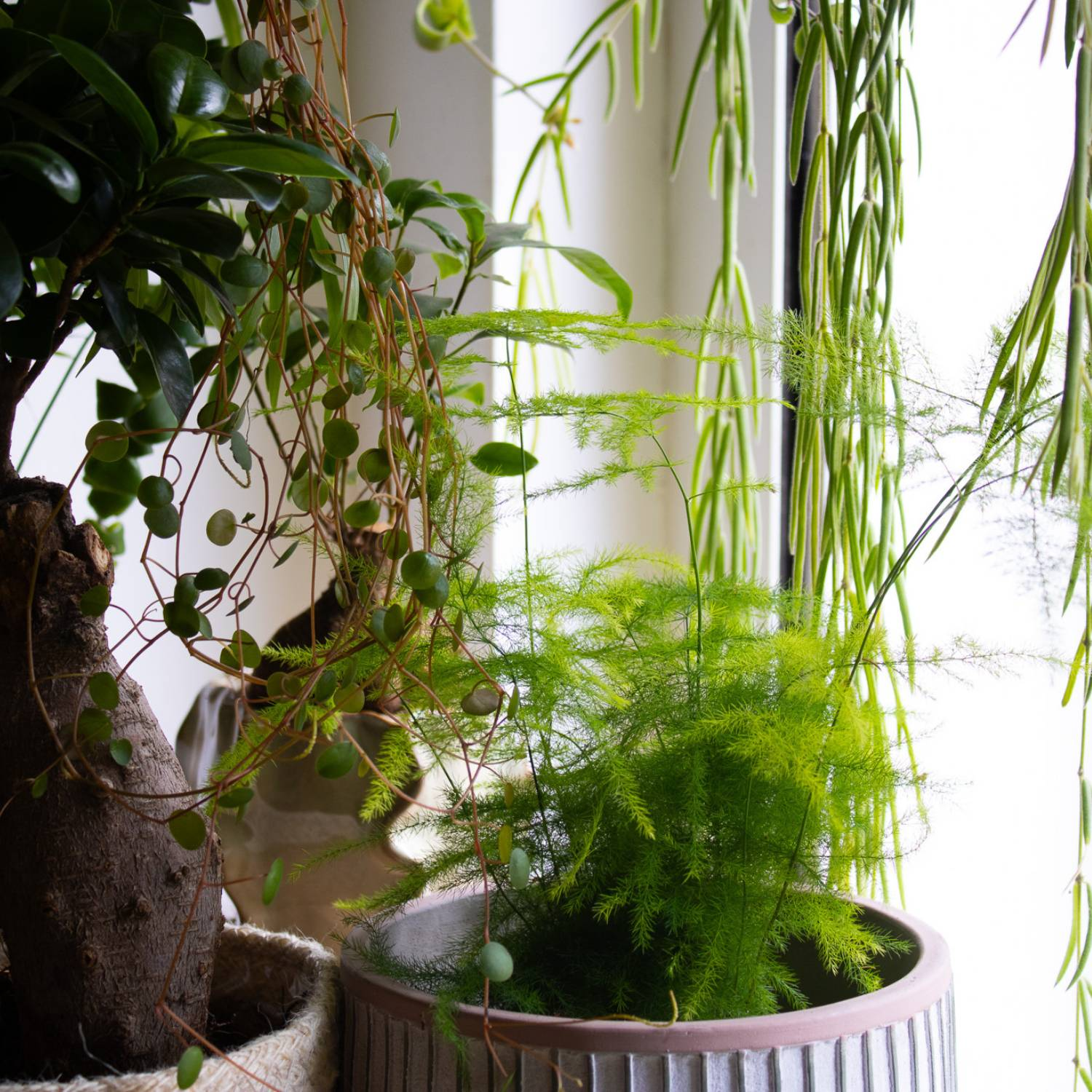
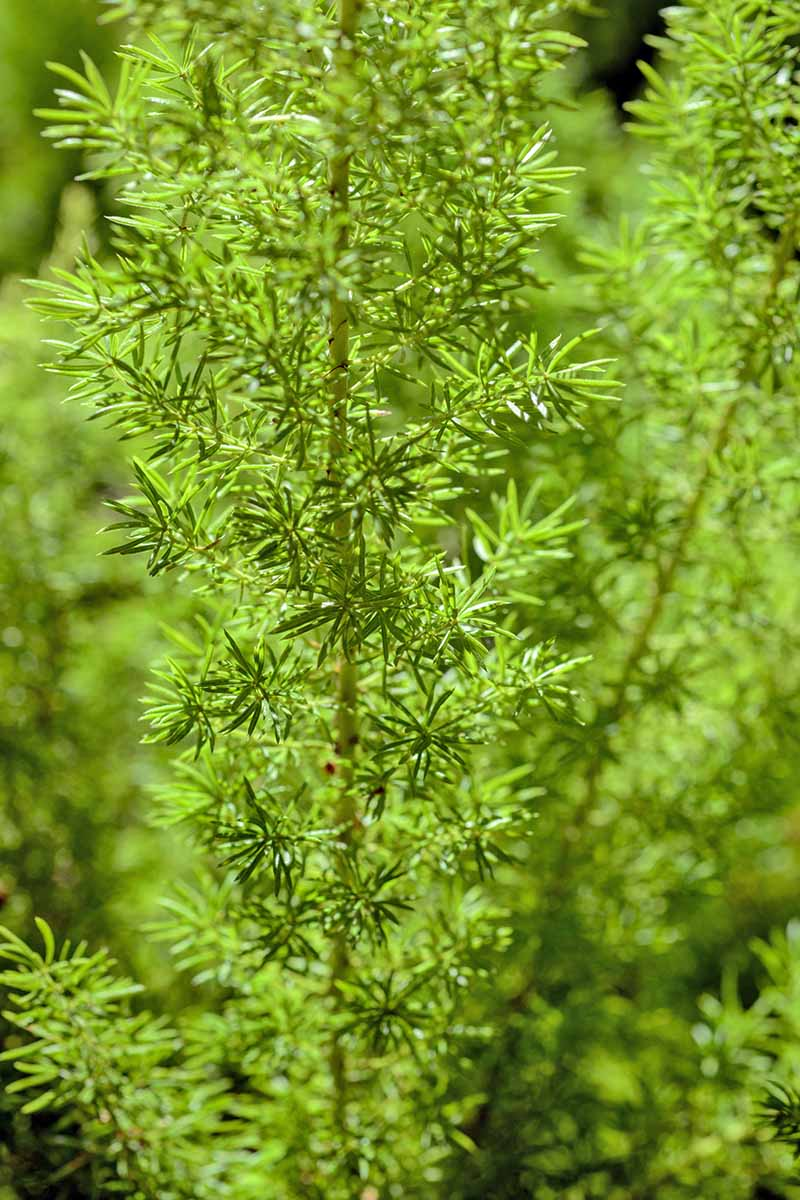
Think of Asparagus setaceus (Kunth) Jessop—often called Asparagus Fern—as a plant that loves a dewy morning but hates a damp, stuffy room. Its feathery “fronds” (actually cladodes—fine, leaf‑like stems) stay plush when the air is pleasantly moist and moving. The trick is hitting that sweet spot: enough humidity to prevent crispy tips, plus enough airflow to keep mold at bay.
Here’s your practical, mold-smart playbook.
Meet your airy companion (and what it really wants)
- Not a true fern: It’s in the Asparagaceae family; those soft “needles” are cladodes, not leaves.
- Light: Bright, indirect light or light shade. Harsh midday sun can scorch and yellow the foliage.
- Temperature: Comfortable around 15–25°C (59–77°F).
- Humidity sweet spot: Moderate to high, with ~50%+ being ideal. Many homes can aim for 50–60%—lush for the plant, still comfortable for people.
Why humidity matters here: The plant’s filament-fine cladodes expose a lot of surface area. Dry air wicks moisture fast (hello crispy tips), while still, saturated air lingers on the foliage and invites Botrytis and leaf spots. Balance is everything.
The humidity sweet spot (and danger zones)
- Aim for: 50–60% RH, paired with gentle airflow.
- Tolerable dips: Mid‑40% RH for short spells, if you water evenly and bump airflow.
- Risk zone: Stagnant >65–70% RH, especially in cool rooms or cramped corners, where wet foliage lingers and mold thrives.
Tip: A small digital hygrometer placed near (not on) the plant lets you “see” the air and adjust before problems start.
Mold-smart humidity strategies that actually work
1) Airflow is your best friend
- Give it space: Keep at least a hand’s breadth between plants so fronds don’t mat together.
- Use a gentle fan: A small, oscillating fan on low 6–12 hours a day keeps microclimates from getting stale. Aim air to pass by, not blast, the plant.
- Train and thin: Guide stems onto a small trellis or hoop to open the center. Prune yellow, dead, or overly long stems at the base—especially in spring. More light reaches the heart; less congestion = faster drying = fewer leaf spots.
- Placement matters: Avoid right in front of AC/heater vents (too harsh), but do welcome cross-ventilation from open doors/windows in mild weather.
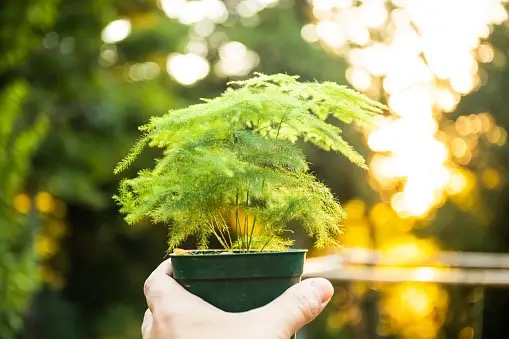
2) Humidify without the haze
- Humidifier hygiene: Place 60–180 cm (2–6 ft) away so mist disperses and doesn’t bead on the cladodes. Clean weekly; use distilled or filtered water to prevent mineral dust.
- Pebble tray, the clean way: Keep water below the pot’s base. Rinse and refresh weekly; scrub off biofilm. A spoonful of aquarium charcoal helps keep the tray fresher.
- Grouping with gaps: Cluster humidity-loving plants, but keep space between them for airflow. Think “community,” not “crowded subway car.”
- Smart rooms: A bright bathroom with a window is ideal—built-in humidity plus ventilation.
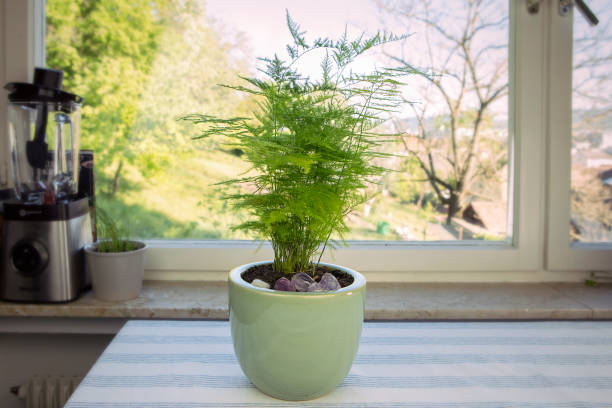
3) Misting: timing, technique, and when to skip
- When to mist: Only during hot, dry spells—and do it lightly, in the early morning. You want thin droplets that disappear within an hour, not beads that linger all day.
- When to skip: Evenings, cool rooms, and dark days (foliage stays wet too long). Avoid midday full sun on wet fronds to prevent scorch.
- Technique: Use a fine mister. Hold it high so droplets drift down; stop while foliage still looks “fresh,” not dripping. Good airflow afterward is key.
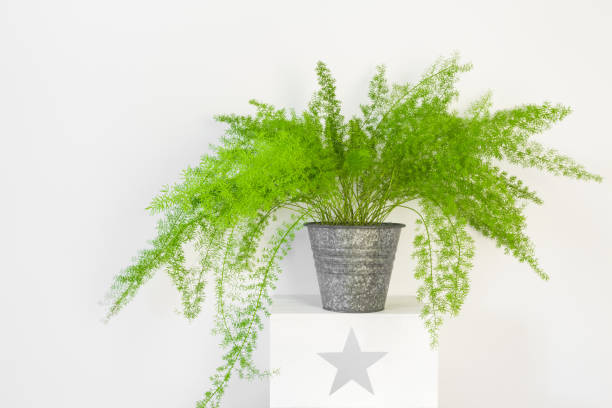
4) Remember: soil moisture and air humidity are dance partners
- Watering rhythm: Keep the mix evenly moist but never soggy. Let the top 2–3 cm (0.8–1.2 in) dry slightly between waterings. Never leave water in the saucer.
- Mix and pot: A loose, well-draining base (quality potting mix + compost/leaf mold or coco coir + perlite/coarse sand). Drainage holes are non-negotiable.
- Why it matters: Overly wet soil plus high humidity equals low oxygen and fungus party. Good drainage and measured watering support healthy humidity without rot.
Reading the room: is your air too dry or too damp?
Signs it’s too dry
- Brown, crispy tips and edges on the feathery sprays.
- Spider mites appear (fine webbing, stippled fronds), especially in hot, dry rooms.
- Soil pulls from the pot’s edges; new shoots slow or stall.
- The plant looks “frizzled” despite proper light.
What to do:
- Raise RH to ~50–60%, run a gentle fan, and water more evenly. A morning mist during heat waves can help—paired with airflow.
Signs it’s too damp or stagnant
- A musty smell near the pot; persistent condensation on nearby windows or decor.
- Fuzzy gray mold (Botrytis) on spent or touching fronds; dark or tan leaf spots where sprays stay matted.
- Algae on soil surface, a boom in fungus gnats.
- Yellowing, soft collapse alongside a persistently wet mix (overwatering risk).
What to do:
- Increase airflow immediately; prune out affected bits; let the top of the soil dry slightly.
- Clean the pebble tray; space the plant away from neighbors; reduce or pause misting.
- If RH is >65–70% for long stretches, a dehumidifier or stronger ventilation helps.
Signs you’ve nailed it
- Fresh, bright green, feathery growth.
- Sprays keep their softness without frazzled tips.
- You’re barely thinking about pests or leaf spots.
Seasonal rhythm: tweak the balance
- Winter (dry heat): Heaters parch the air. Move away from vents, run a humidifier to ~50–60%, and keep airflow gentle. Light morning misting only when bright.
- Summer (heat + humidity): In muggy climates, lean on airflow more than added humidity. If rooms feel sticky and still, ventilate, thin growth, and skip misting.
- Outdoor warm months: Bright shade (avoid harsh sun and windy, drying spots). Morning dew dries better outside—still, avoid crowding and ensure good air movement.
A simple 7‑day routine to keep humidity high and mold low
- Daily
- Check your hygrometer. If RH 65% and still, open a window or run a fan.
- Quick visual: Are fronds touching and matted? Gently fluff or reposition.
- 2–3 times/week
- In dry spells, a light morning mist—only if the room is bright and airy.
- Weekly
- Rinse the pebble tray and top up with clean water (keep water below the pot’s base).
- Wipe the pot rim and nearby surfaces to prevent condensation build-up.
- Inspect for mites (dry air flag) and leaf spots (stagnant air flag); act early.
- Monthly
- Deep clean the humidifier; refresh the plant’s position for space and light.
- Light pruning of yellow or congested stems to improve internal airflow.
Humidity FAQs for Asparagus setaceus
Do I need to mist every day?
No. Think “strategic spritzing.” Aim for room RH around 50–60% with a humidifier, pebble tray, or grouping, then mist lightly only during hot, dry spells—and always in the morning with airflow.
Can it live in a terrarium?
Yes—in larger or open terrariums where it has room and air movement. Cramped, stagnant setups encourage mold and leaf blight.
Is a dehumidifier ever helpful?
Definitely. If your space sits above ~65–70% RH and feels still, modest dehumidification plus a gentle fan is a mold‑prevention dream team.
How close should a humidifier be?
About 60–180 cm (2–6 ft) away so you humidify the room rather than soak the plant. Avoid visible beading on the cladodes.
What if tips are brown but the soil is moist?
Likely low humidity or irregular watering. Keep the mix evenly moist (not wet), raise RH to ~50–60%, and boost airflow.
Quick safety and placement notes
- Place in bright, filtered light—an east window or a few feet back from a south/west window with sheers is ideal.
- Keep above 4–5°C (39–41°F).
- Berries (if produced) ripen dark purple‑black and are mildly toxic if ingested. Keep away from pets and children.
A brief note on symbolism
Asparagus Fern is often gifted as a token of enduring love and steady affection. It’s fitting: this plant flourishes with consistent, balanced care—neither parched nor smothered. Like any “flower language,” the sentiment is cultural rather than botanical, but it nicely echoes the real secret to success here: a gentle, sustained equilibrium of moisture and movement.
Bottom line: For Asparagus setaceus, humidity works only when air moves. Keep it at roughly 50–60% RH, schedule misting for bright mornings, and let a soft breeze thread through those lacey sprays. Do that, and mold won’t get a foothold—your plant will simply stay cloud-soft and gloriously green.