

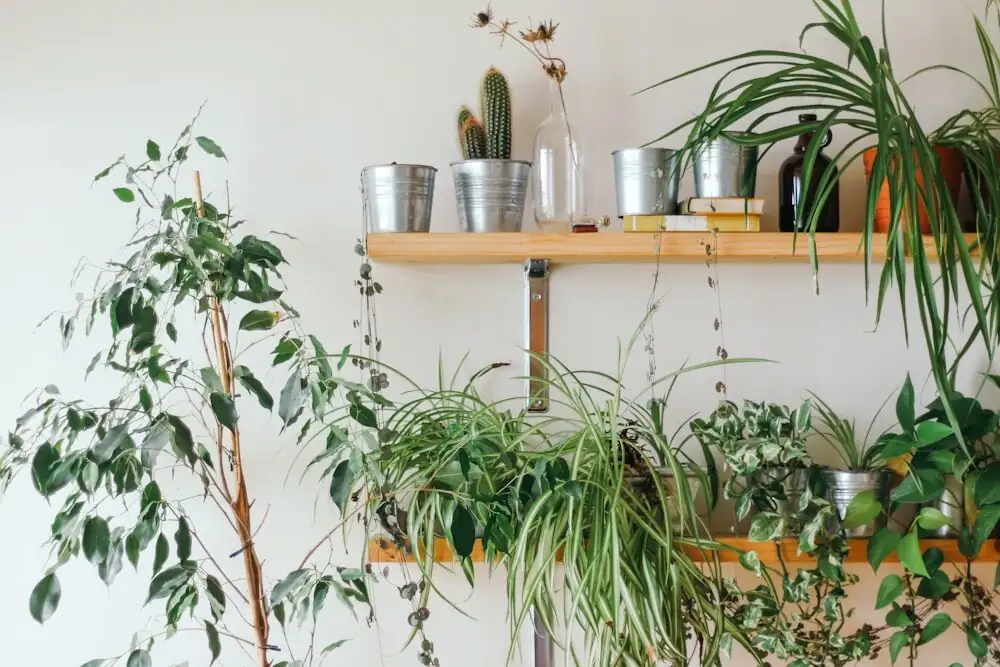
If you’ve ever been serenaded by the soft rustle of a weeping fig in a quiet room, you know Ficus benjamina doesn’t need flowers to make a statement. Its grace lives in the green: an evergreen canopy of glossy leaves that arc and cascade like a living fountain. And that, intriguingly, is exactly why the classic “language of flowers” rarely applies here.
The “flower language” you won’t see: hidden blossoms, hidden meanings
Victorian floriography and East Asian “flower language” (花语) both hinge on visible blooms—their color, scent, and form. But Ficus benjamina doesn’t put on a petal show. Instead of open flowers, it forms fig-type fruits called syconia, tiny blooms tucked safely inside. To the eye, there’s no typical blossom to interpret, no rose-red declaration or lily-white whisper.
- What you see: evergreen leaves and elegant, weeping branches.
- What you don’t: the miniature floral world hidden within the developing fig (syconium).
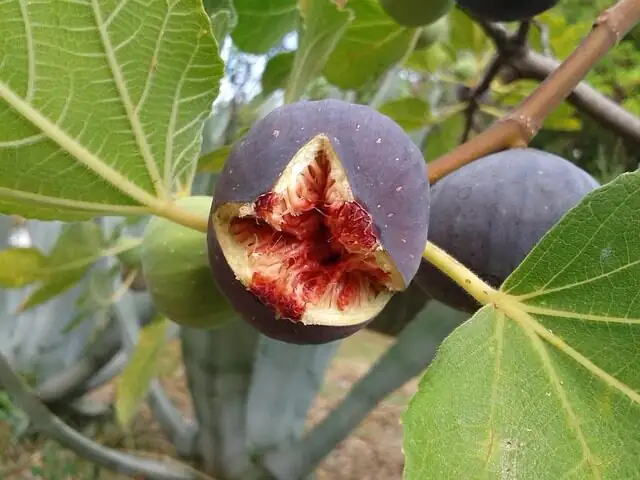
Because its reproductive parts stay out of sight, traditional bloom-based symbolism never really developed for the species. So how did this plant end up so full of meaning in modern interiors? We learned to read its leaves.
The modern read: evergreen resilience and quiet steadiness
Kept warm with steady light and even moisture, the weeping fig grows with poised, reliable vigor. When conditions swing—a cold draft, a bone-dry pot, a sudden move—it “speaks” by dropping leaves. In other words, its symbolism is written in behavior:
- Evergreen stamina: constant foliage suggests continuity, longevity, and steady growth.
- Grace under pruning: it accepts shaping—bonsai-like forms, braided trunks, sculpted silhouettes—embodying adaptability with structure.
- A calming green presence: the canopy softens hard lines and brings visual composure to rooms and workspaces.
Together, these qualities have come to represent resilience and a grounded kind of prosperity—the kind built by consistency rather than spectacle.
Feng shui and the Wood element: growth, health, and prosperity
In feng shui, Ficus benjamina resonates strongly with the Wood element—think upright vitality, new beginnings, and family well-being. Its arching, upward-leaning habit and dense, lively canopy align with growth-oriented qi.
- Element: Wood
- Associations: stability, health, and prosperity; harmonizing energy and steady progress
- Directional emphasis often used in practice: East (health, family) and Southeast (wealth, prosperity)
Where and how to place it for this effect
- Favor bright, filtered light near an east-facing window for a synergy of good light and Wood energy.
- Southeast corners of living rooms or offices are popular for prosperity themes.
- Choose natural finishes: green or warm-brown pots, and wood or rattan stands that echo the Wood element.
- Keep pathways open—let the plant soften corners without blocking movement of people or energy.
Note: Feng shui thrives on vitality. A healthy, well-tended plant is essential to the symbolism you’re inviting in.
Meet the plant behind the meaning
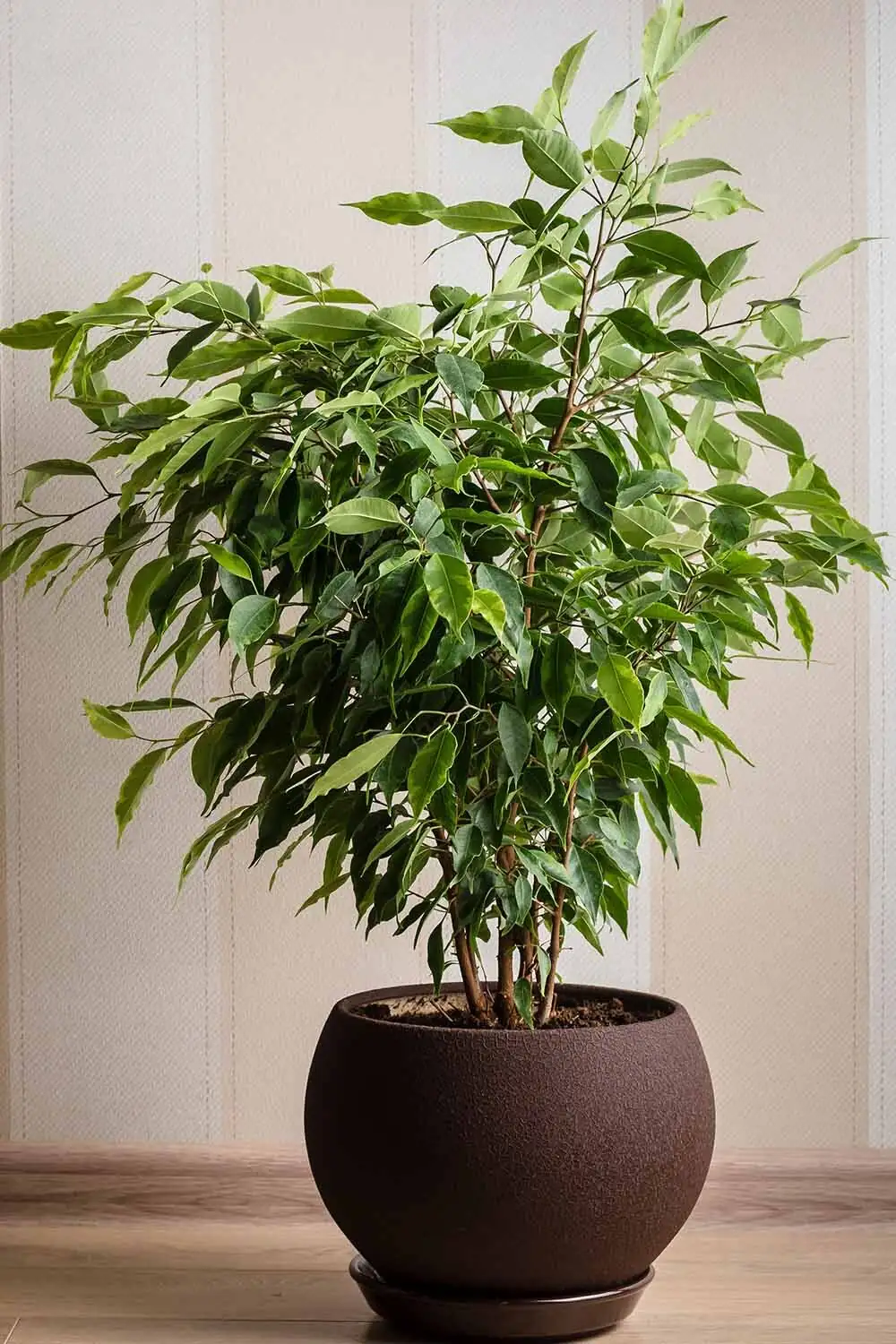
- Names: Weeping Fig, Benjamin Fig, Ficus Tree; scientific name Ficus benjamina; Chinese name 榕树
- Family: Moraceae (fig family)
- Native range: tropical and subtropical Asia and northern Australia; widely cultivated across China, India, and Southeast Asia (including Malaysia)
- Habit: evergreen, upright-to-arching, naturally weeping; easily shaped by pruning and training
- Indoors vs. outdoors: a substantial tree in the tropics outdoors; indoors it’s a compact, sculptural houseplant, often in 12–20 cm (4.7–7.9 in) pots; large specimens commonly in ~30 cm (11.8 in) pots
- Flowers/fruit: no showy blooms—tiny flowers are hidden inside fig-like syconia
Care that supports the symbolism
Healthy plants project the very qualities they symbolize. Give yours the conditions that let it shine.
Light and placement
- Best: bright light with some filtering; tolerates medium indoor light
- Summer: a sheltered balcony or patio with bright, filtered light
- Winter: indoors, away from cold drafts and harsh conditions
Temperature and humidity
- Ideal: 20–25°C (68–77°F); can handle >30°C (86°F) if watering is adjusted
- Avoid: below 5°C (41°F); indoors, sustained temps below 10°C (50°F) commonly cause yellowing and slow growth
- Winter comfort: a steady 13–16°C (55–61°F) with 60–70% humidity
- Humidity: moderate to high preferred; mist or use a humidifier in dry rooms
Watering
- Growing season: keep slightly moist; water thoroughly and let excess drain. In summer, this often means every 2–3 days (adjust for light, pot size, and heat).
- Winter: reduce to roughly once every 10 days; continue misting if air is dry.
- Caution: drought triggers leaf drop; waterlogging can suffocate roots. Never leave the pot standing in water.
Soil and feeding
- Soil: loose, well-aerated, free-draining mix (houseplant soil with coarse sand or perlite)
- Feeding: about every 10 days in the growing season with a balanced houseplant fertilizer; reduce or pause in autumn–winter
Pruning, shaping, and repotting
- Prune during strong growth to maintain form and encourage bushiness.
- Train into bonsai-style or sculpted shapes for a refined, architectural look.
- Repot: smaller plants each spring (15–20 cm/5.9–7.9 in pots); larger plants about every 2 years.
Propagation
- Stem cuttings (late spring–early summer): 10–12 cm (3.9–4.7 in) mature tips; root in a sandy medium—often ~4 weeks.
- Air-layering (May–July): remove a bark ring ~1.5 cm (0.6 in) wide, wrap with moist leaf mold and plastic; roots in ~2–3 weeks, pot after ~4 weeks.
When the fig “talks”: common hiccups and fixes
- Sudden leaf drop: check for drought, low humidity, cold drafts, insufficient light, or abrupt changes.
- Yellowing and stalled growth: often linked to sustained temperatures below 10°C (50°F).
- Blackened shoot tips: typically from the mix drying too far.
- Spider mites (especially in dry air): increase humidity; treat with insecticidal soap, horticultural oil, or a suitable miticide.
- Leaf spot: improve airflow; treat early with a copper-based fungicide or broad-spectrum option; avoid chronically wet foliage.
Think of leaf drop not as drama but as dialogue—a prompt to fine-tune light, warmth, and moisture.
Safety notes
- The milky sap (latex) can irritate skin and eyes; wear gloves when pruning.
- Toxic to cats and dogs if chewed or ingested (drooling, vomiting, irritation). Keep out of reach of pets and small children.
Styling ideas that echo its meaning
- Pair with wood tones and woven textures to amplify the Wood element’s warmth and stability.
- Use one confident specimen as a “green anchor” in a living room or studio—an easy focal point that reads calm and composed.
- Try a trio: tall sculpted specimen + mid-height bushier plant + a compact bonsai-style layer for depth and rhythm.
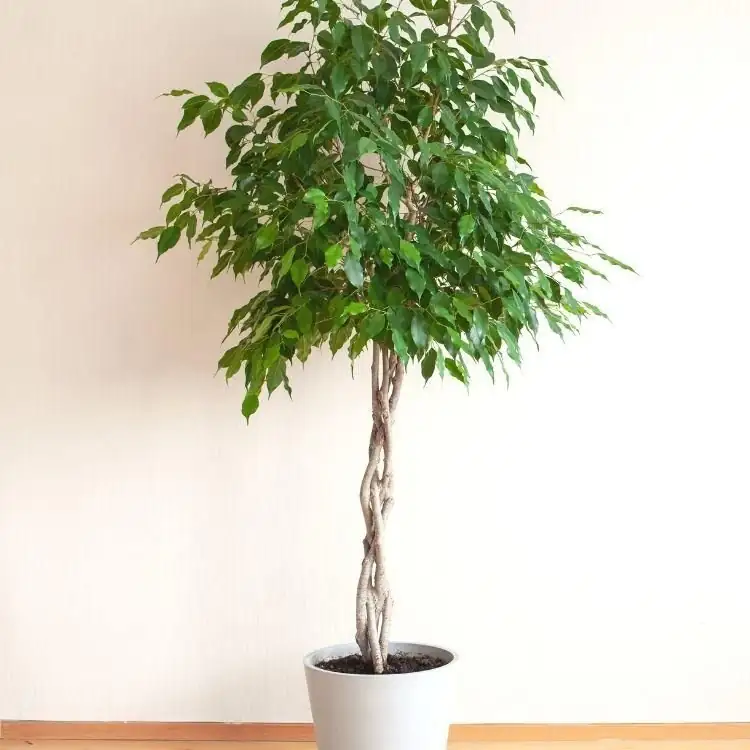
A quiet classic for East and Southeast Asian interiors—and beyond
Across Asia, ficus species are interwoven with landscape and culture, valued for shade, presence, and longevity. Today, Ficus benjamina carries that lineage indoors as a symbol of resilient growth and balanced prosperity. It may hide its flowers, but it doesn’t hide its message. Keep it warm, give it steady light and a sip before the soil runs dry, and it will return the favor with a canopy that looks—and feels—like stability made green.
In a world fond of flashy blooms, the weeping fig whispers a different kind of language. Not petals, but persistence. Not fragrance, but composure. And sometimes, that’s exactly the poetry a room needs.