

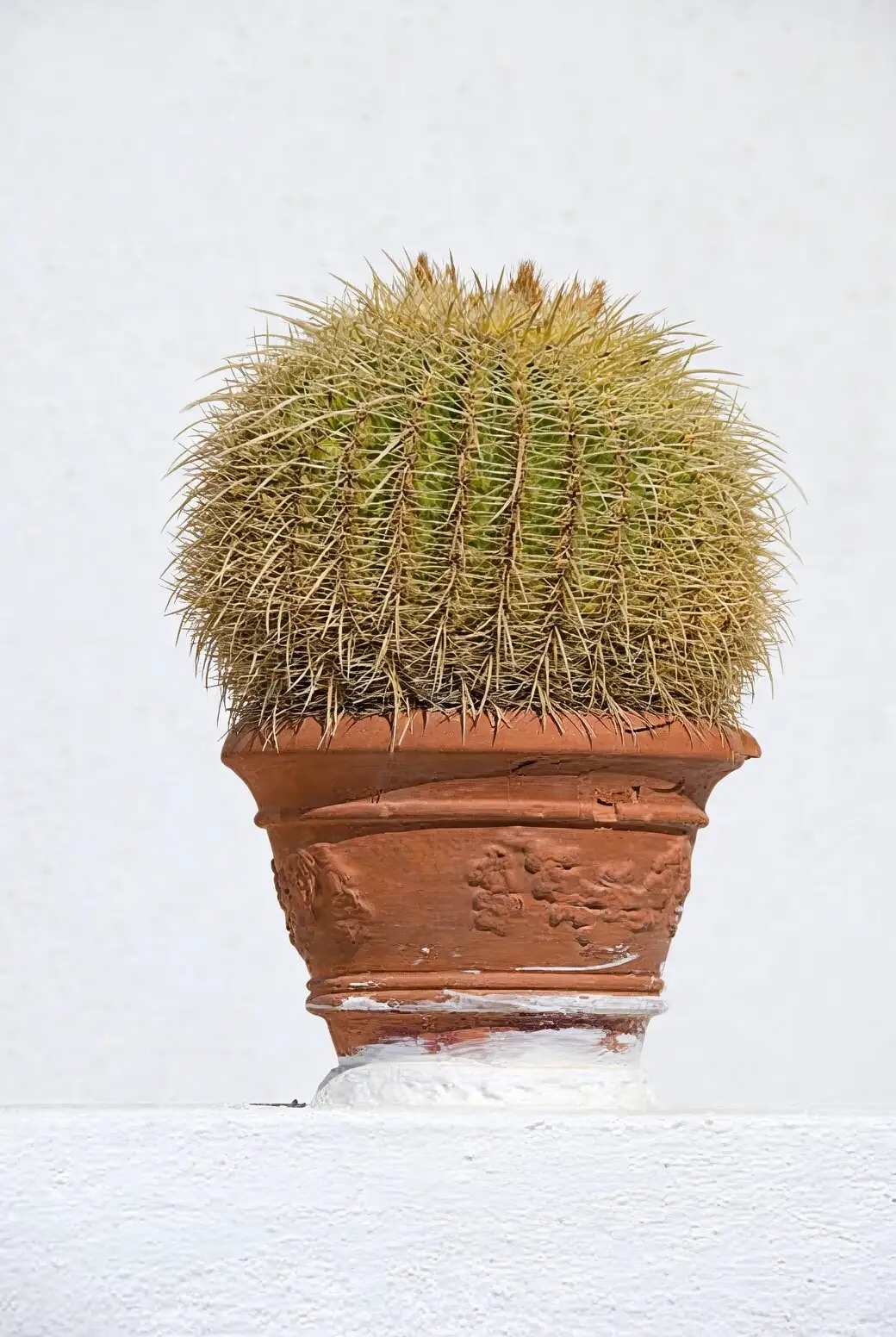
If you’ve ever wished your Golden Barrel Cactus would come with a “do this now” checklist, here it is. Echinocactus grusonii thrives on bright sun, quick drainage, and a dry-leaning routine—but the real magic is timing. Use this month-by-month plan to nail watering, feeding, repotting, sun acclimation, and winter dryness without guesswork.
Golden Barrel Cactus at a glance
- Light: Bright light to full sun. Indoors, a south- or east-facing window is ideal. Acclimate gradually to strong sun; brief, light shade during extreme midsummer heat behind glass avoids scorch.
- Temperature: Best growth 13–24°C (55–75°F). In winter, keep above about 8°C (46°F) and dry. Protect from frost.
- Soil: Very free-draining cactus mix (loam + leaf mold/compost heavily amended with coarse sand/grit). Avoid heavy, water-retentive mixes.
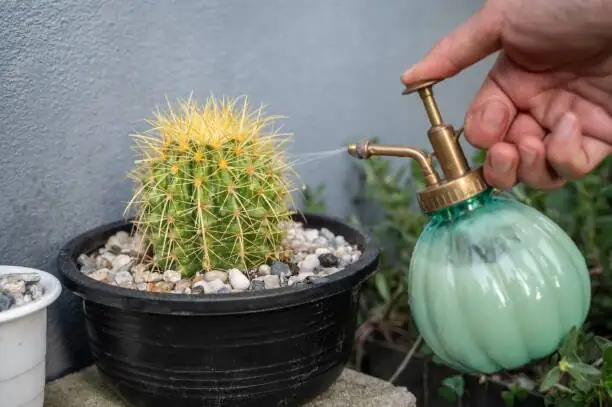
- Core rule for water: Only water thoroughly after the mix dries out well; never let the pot sit in water. Avoid pouring water into the crown/body.
Set up for success (quick prep)
- Pot: A drainage hole is nonnegotiable. Heavy pots help prevent tipping as the plant grows. Typical container sizes are 12–40 cm (4.7–15.7 in) diameter.
- Mix recipe: Loam-based soil + a little leaf mold/compost + a large portion of coarse sand/grit for fast flow-through.
- Tools: Long-spout watering can, chopstick (to probe dryness), gloves/tongs or folded newspaper (the spines are no joke), and a fan or open window for airflow.
- First placement: Bright, airy spot; acclimate to stronger sun over 10–14 days.
Your no-guesswork annual care calendar
January–February: Bright, cool, and almost completely dry
- Watering: Keep it dry. If your plant is kept cool and bright, don’t water at all.
- Feeding: None.
- Light: Maximize light (sunny window); rotate every 2–3 weeks for even growth.
- Temperature: Aim for 8–13°C (46–55°F) nights, still above frost. Ensure airflow.
- Checkup: Inspect for pests hiding in the woolly crown (mealybugs, scale).
March: Gentle wake-up
- Watering: Give the first thorough drink only when the mix is bone-dry; then wait for full drying again.
- Feeding: Start monthly feeding late in the month if growth resumes.
- Sun acclimation: Begin increasing direct sun by 60–90 minutes every few days.
- Repotting window opens: If rootbound or it’s been ~2 years, repot now. Keep the plant dry for several days afterward so cut roots can callus before the first watering.
April: Build momentum
- Watering: Typically every ~10–20 days indoors, but only after the mix dries.
- Feeding: Once this month (cactus fertilizer or a low-nitrogen formula such as 15-15-30 at half strength).
- Sun: Push for as much light as you can give; continue gentle acclimation if moving brighter.
- Airflow: Crack windows or run a fan to discourage rot.
May: Peak sun, careful ramp-up
- Watering: In warm, very bright conditions, frequency often increases—commonly every 7–14 days, but always with full dry-down.
- Feeding: Once.
- Sun: Full sun is great once acclimated; behind glass, give light midday shade if spines or skin look bleached.
- Advanced growers: May–July is prime time for grafting.
June: Active growth (and possible flowers on mature giants)
- Watering: Often weekly in warm, bright setups—only after full drying.
- Feeding: Once.
- Monitor: Check for spider mites in heat; ensure no standing water in saucers.
July: Hot and bright, but don’t scorch
- Watering: Similar to June; confirm dryness with a chopstick test if unsure.
- Feeding: Once.
- Sun: Maintain airflow; give brief midday shade behind glass if the crown pales.
August: Hold steady
- Watering: Similar cadence to July; never on a fixed calendar—dryness first.
- Feeding: Once.
- Grooming: Remove small offsets if you want to keep a perfect globe (root them after callusing).
September: Ease off
- Watering: Start stretching the interval as nights cool; aim for deeper dry periods.
- Feeding: Final feed of the year early in the month. Stop after this.
- Sun: Keep bright. Rotate to maintain symmetry.
October: Taper into rest
- Watering: Sparingly—only after the mix has stayed dry for a while.
- Feeding: None.
- Temperature: Cool nights are fine; protect from chills and damp.
November–December: Winter dryness
- Watering: Keep almost completely dry. If kept cool, stop watering entirely until spring returns.
- Feeding: None.
- Light: As bright as possible, with good ventilation.
- Safety: Keep above 8°C (46°F). Absolutely no waterlogging.
Note for warm, bright homes in winter: If your cactus is kept warm and actively growing indoors, you may need the occasional light watering after a full dry-down—but keep it very minimal. Cool + wet is the fast track to rot.
Sunlight acclimation playbook (avoid scorch, get golden spines)
- Week 1: Start with bright indirect light and 1 hour of gentle morning sun.
- Week 2: Add 60–90 minutes of direct sun every few days, watching for pale patches.
- Week 3–4: Work up to several hours of direct sun. Indoors behind glass, consider sheer curtains at midday in summer heat.
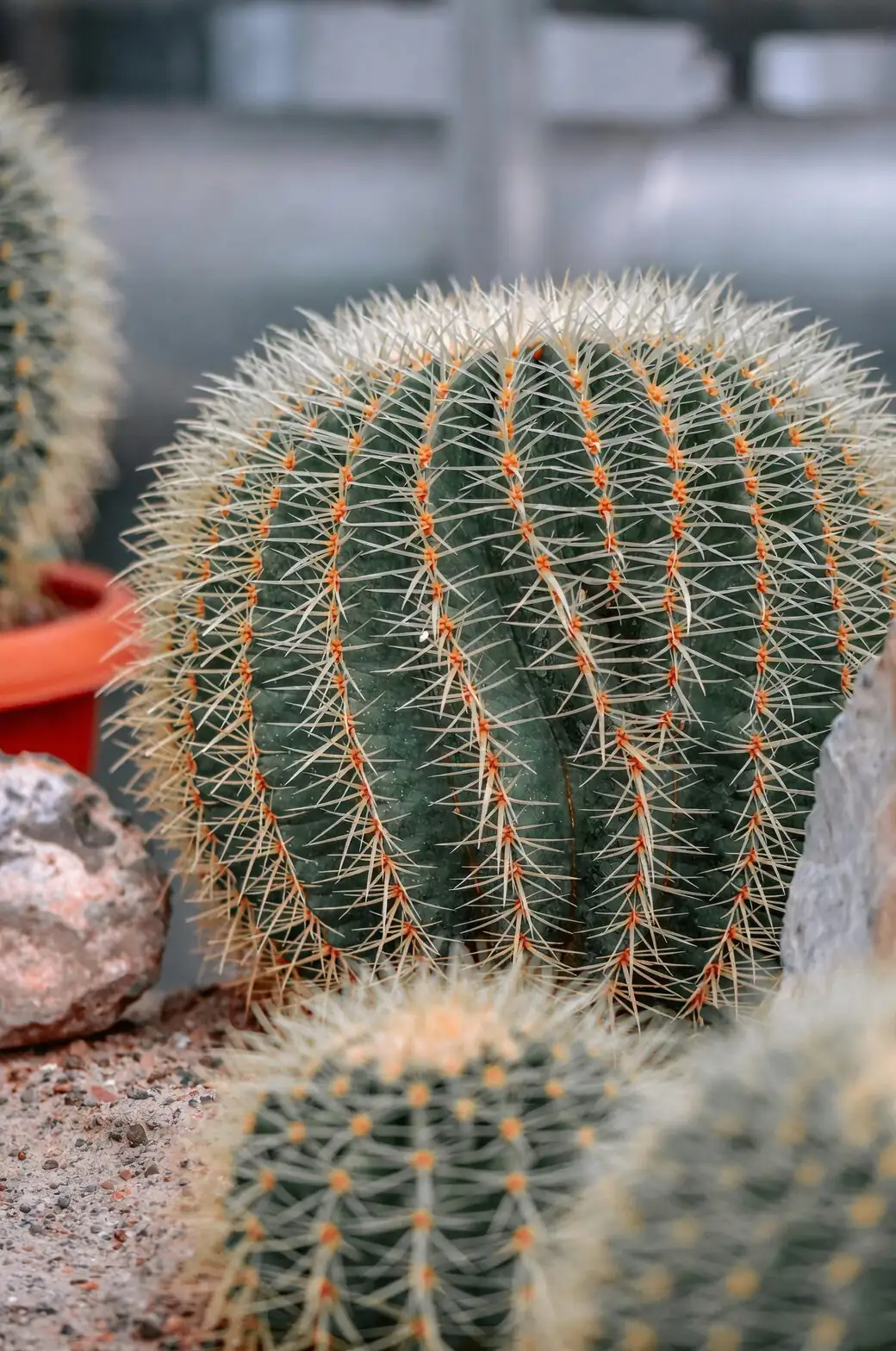
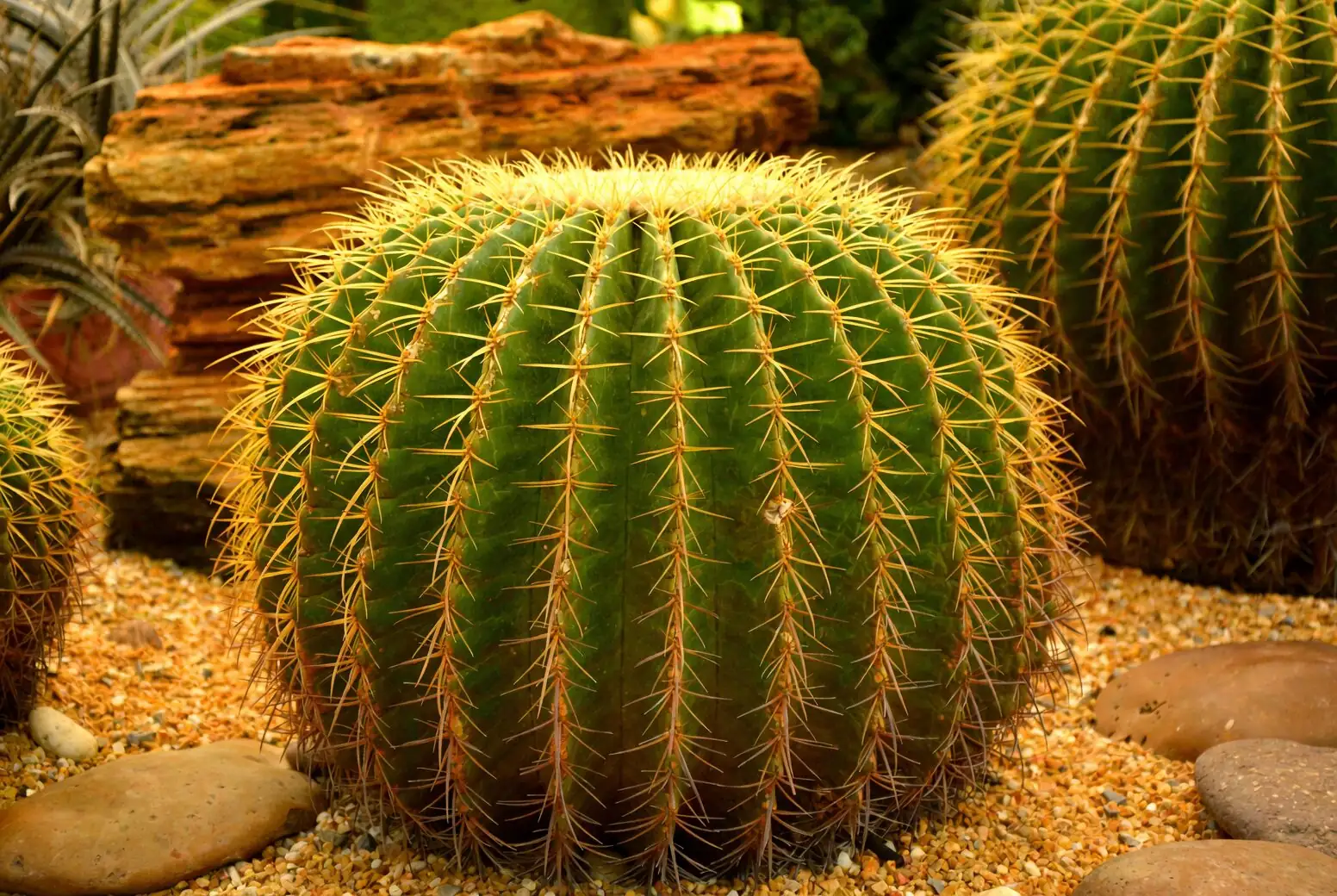
- Long-term: Strong light keeps spines richly golden; prolonged shade dulls color and can cause stretch.
Watering, dialed-in
- Always wait for full dry-down: Probe with a chopstick; if it comes out dry and clean, it’s time. Lift the pot—light weight means dry.
- Technique: Water thoroughly until excess drains; discard any water in the saucer. Never let the pot sit in water.
- Crown care: Keep water off the crown/body to reduce rot risk.
- Signal check:
- Overwater: Soft spots, a sour smell, yellowing/blackened tissue—keep it dry, improve airflow, consider a fungicide if rot appears.
- Underwater: Slight, shallow wrinkling; it plumps back up after the next proper watering.
Feeding: low and slow
- When: About once per month in spring and summer.
- What: Cactus formula or a low-nitrogen fertilizer (e.g., 15-15-30) at half strength.
- Skip: No fertilizer in autumn and winter.
Repotting and root care
- Timing: Every ~2 years in spring, or whenever roots crowd the pot.
- Pot size: Choose a pot just big enough for the root ball; heavy containers help prevent tipping.
- Aftercare: Trim damaged/overlong roots with clean tools, allow cuts to dry, then keep the plant dry for several days before the first post-repot watering.
- Offsets: Remove if crowding the main globe; let the cut callus, then root in a gritty mix in warm conditions.
Winter dryness and temperature essentials
- Target: Bright light, cool-to-moderate temperatures, and dry soil.
- Thresholds: Keep above 8°C (46°F). Best growth resumes 13–24°C (55–75°F).
- Ventilation: Essential in cool months to prevent fungal issues—dry air is fine.
- Outdoors: Only for warm, frost-free climates (roughly USDA Zone 10–11). Protect from cold, wet spells.
Common issues and quick fixes
- Dull or darkening spines: Usually insufficient light. Increase brightness gradually.
- Stretching (elongation): Not enough sun—move brighter, acclimate slowly.
- Sunburn: Pale, bleached patches after a sudden jump in light—pull back to filtered sun, then retry acclimation.
- Pests (spider mites, mealybugs, scale): Isolate, improve airflow, and treat with insecticidal soap or horticultural oil, following the label.
Safety note
- Not poisonous, but spines are sharp. Place out of reach of kids and pets; handle with thick gloves or tongs.
Symbolism: strength with a golden edge
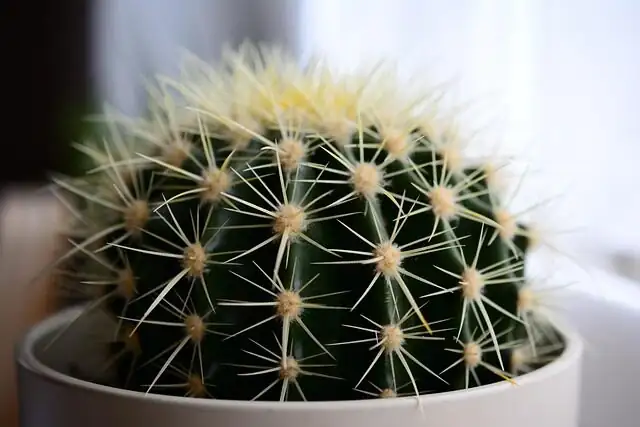
Golden Barrel Cactus is widely gifted as a symbol of resilience and protective strength—the geometry is calm, the spines say “stand firm.” In modern “flower language,” those golden spines echo endurance and quiet guardianship. While not rooted in ancient folklore, this contemporary meaning fits the plant’s life story: a slow-growing survivor that rewards patience with luminous symmetry and (in time) summer blooms.
Bonus: for the curious—hydroponic option (higher risk)
- It can be grown in water with great hygiene: wash off soil, stabilize the plant, keep about half the roots in water, and change water weekly in summer and monthly in winter.
- Rinse roots gently and add a small amount of nutrient solution during changes.
- Rot risk is higher without excellent aeration and cleanliness—soil culture is simpler for most growers.
With this calendar on your side—water only after a true dry-down, feed monthly in the warm bright months, repot in spring, ramp the sun with care, and keep winter dry—you’ll grow a Golden Barrel that lives up to its name: bright, bold, and beautifully resilient.