

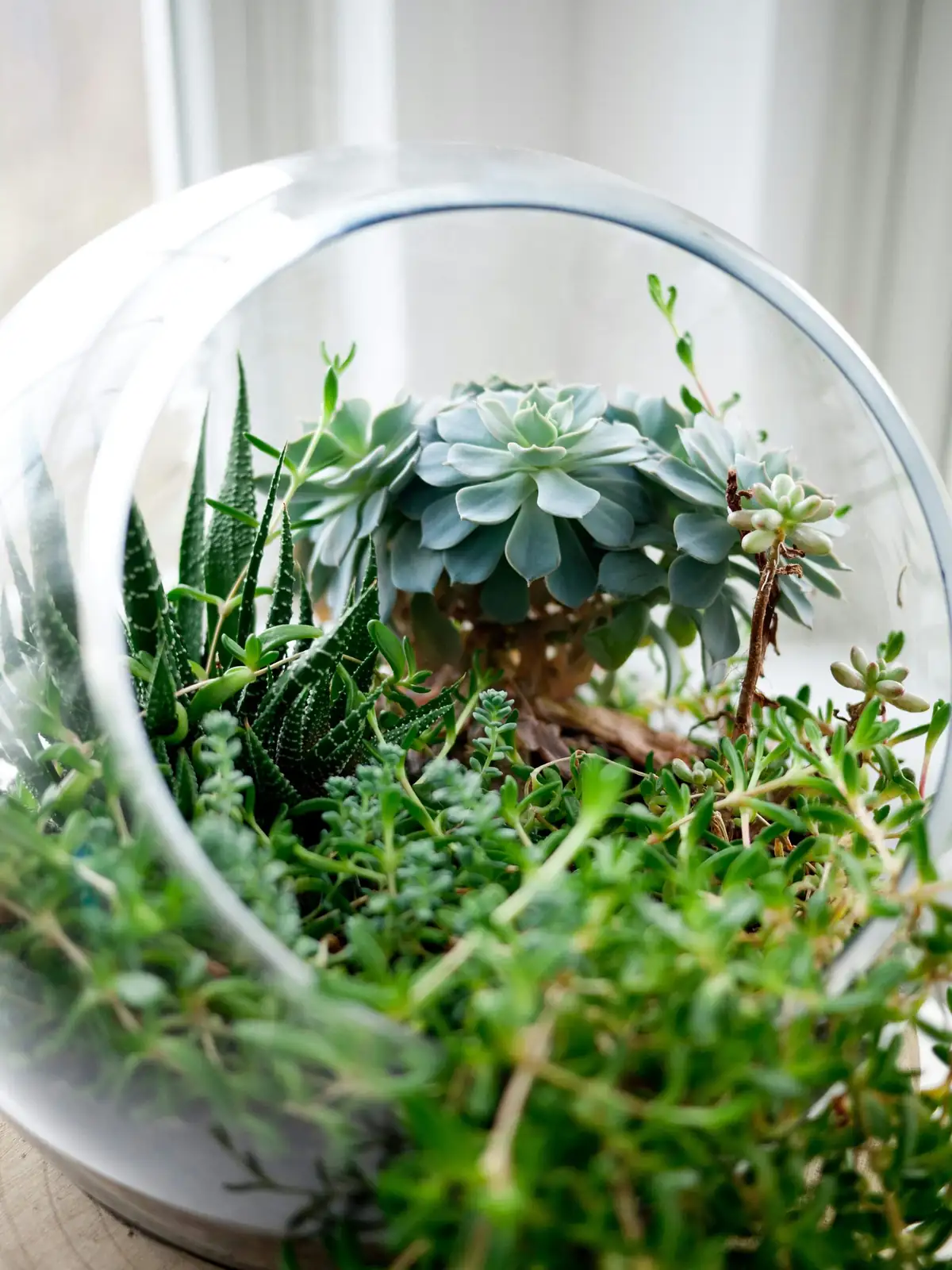
If you’ve ever tucked a Tillandsia juncea into a pretty jar, only to watch it melt into mush, you’ve met the paradox of air plants: they adore humidity, yet they absolutely must dry fast. The trick isn’t “more moisture,” it’s “moisture that moves.” Here’s why sealed glass is a slow-motion disaster—and how open glass, smart airflow, and a few mounting moves can turn your display into a thriving, long-lived fountain of narrow, green leaves and electric-pink blooms.
Meet Tillandsia juncea (aka the graceful rule-breaker)
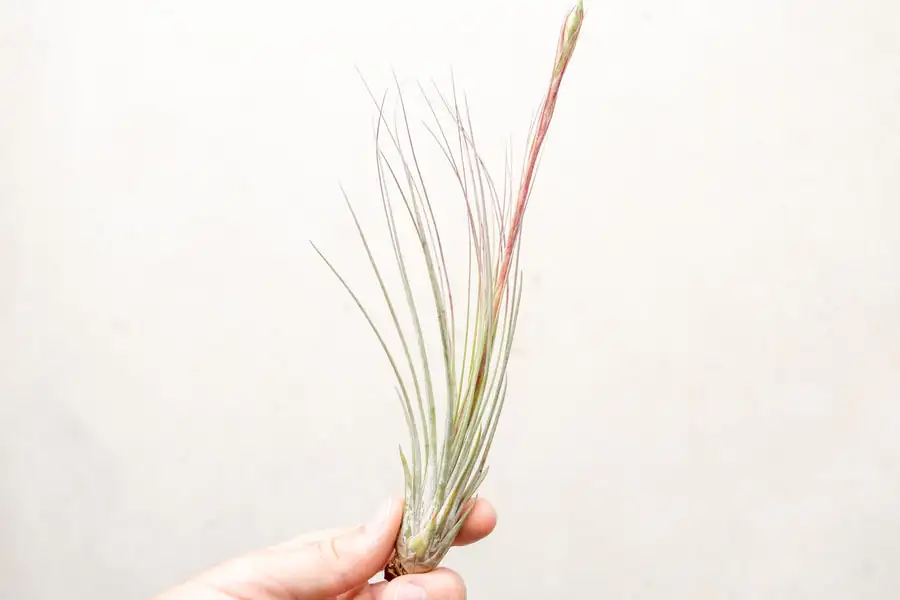
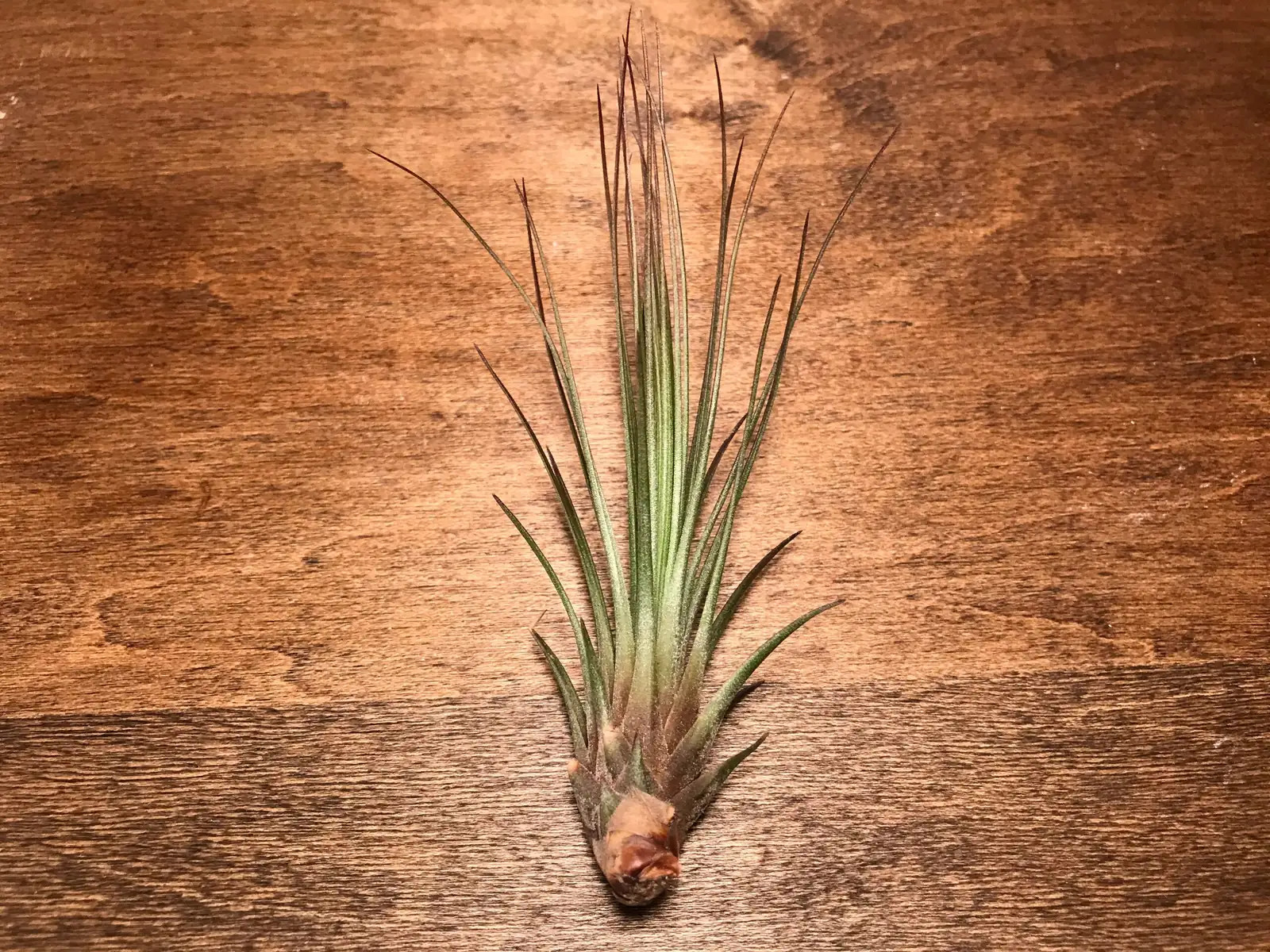
- What it looks like: A tidy, fountain-shaped tuft of long, slender, needle-like leaves that eventually forms a clump. Mature plants can reach 15–30 cm (6–12 in) tall and spread 15–30 cm wide over time.
- Why people love it: It’s famously forgiving, often bouncing back after a missed watering—provided it can dry quickly afterward.
- The showstopper: A vivid pink, comet-like spike that can hold color for weeks, with petite purple tubular flowers at the tip (typically late spring to summer, timing depends on conditions).
- Nature notes: An epiphyte from Mexico and Central America (Bromeliaceae). It anchors to trees or rocks, pulls water and nutrients through trichomes (those silvery “leaf scales”), and expects moving air around its leaves.
Why closed containers fail (and how rot sneaks in)
Think of a sealed terrarium as a steamy bathroom with no fan. After any moisture event—soaking, misting, even ambient condensation—the plant can’t exhale that dampness. For T. juncea, that’s fatal.
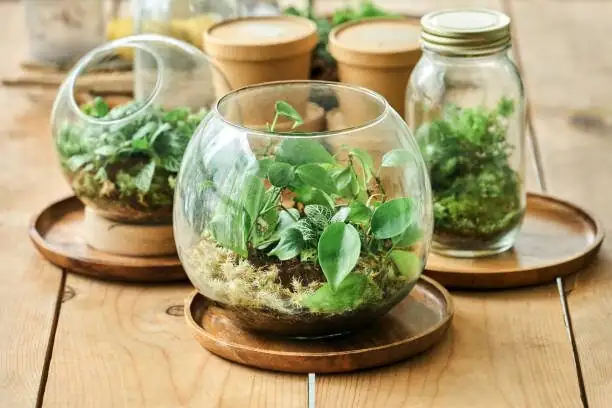
- The four-hour rule: After watering, juncea must dry fully within 2–4 hours (never longer than 4). Past that window, you invite fungi and rot—often starting at the base/crown.
- Condensation trap: Closed glass keeps evaporated water circling back onto leaves. Droplets trickle into the crown and base and sit there. That’s a rot signal.
- Low oxygen, low airflow: Epiphytes evolved with constant breeze. Stagnant air slows gas exchange, delays drying, and encourages pathogens.
- False comfort: “It looks humid!” is not the same as “it’s healthy.” If the base feels soft or smells swampy, it’s already too late.
Bottom line: Sealed terrariums + air plants = short-lived display.
How open glass can still work (beautifully)
Open glass can create a higher-humidity microclimate without suffocating the plant—if you design for airflow first.
Design principles: Build a wind path, not a water trap
- Go wide, not narrow: Choose vessels with big, open mouths or side cutouts. Think bowl, U-shaped vase, or geometric terrarium with generous openings.
- Elevate the plant: Keep juncea off any damp surface. Raise it on cork, driftwood, or a mesh riser. Air must flow under and around the base.
- Create air channels: Leave 1–2 finger-widths of clearance all around the leaves. Avoid cramming décor tight against the plant.
- Separate “wet” from “plant”: If you add decorative moss for looks/humidity, keep it visually close but physically off the plant and its base. Moss should never hug the crown.
- Drainage layer (optional but helpful): Pebbles, lava rock, or glass beads at the bottom can catch stray drips. The plant sits high and dry above it.
Placement: Team light + breeze
- Light: Bright, indirect light to gentle morning sun. Avoid harsh midday rays unless humidity is higher and airflow excellent.
- Airflow: Park the display near a vent, a ceiling fan on low, or a window with natural movement. A small, quiet desk fan angled across the room can do wonders.
Watering without suffocation
Juncea is easygoing about timing—but picky about drying speed.
- Soak smart: In warm/dry conditions, soak in clean water for 15–30 minutes about 1–2 times per week. In cooler or darker periods, reduce to about every 10–14 days.
- Always water outside the glass: Remove the plant to soak, then shake out excess water, tip it upside-down to clear the crown, and let it dry fully in moving air before returning it to the vessel.
- The drying checkpoint: Aim for completely dry within 2–4 hours. If it’s not dry by the 4-hour mark, your airflow is inadequate.
- Never let water sit in the base: That’s the fastest road to rot.
- Fertilizer: Feed lightly in spring and summer—use bromeliad/air-plant fertilizer at 1/4 strength (or a low-copper orchid fertilizer) about monthly. Rinse with plain water occasionally to prevent mineral buildup.
Mounting tricks that keep air moving
Think “anchored but breathing.”
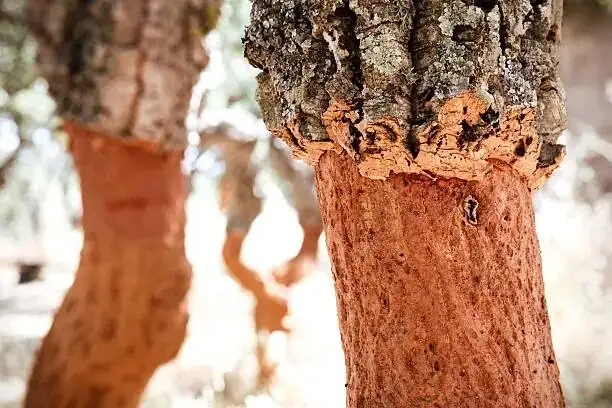
- Best mounts: Cork bark, hardwood driftwood, cholla, grapevine, or a mesh hanger. The goal is dry, airy, and non-wicking.
- How to attach:
- Tie with clear fishing line, soft jute, or stainless floral wire—snug but not choking.
- If using adhesive, a small dot of waterproof, non-toxic glue (e.g., aquarium-safe silicone or a tiny dab of low-temp glue) applied to the side of the base is fine. Do not smother the crown or seal the entire base.
- Orientation hack: Mount slightly tilted or sideways so any stray moisture drains away from the crown.
- Room to clump: Juncea produces offsets (“pups”) around the base. Leave space for a future fountain of foliage.
Humidity… without the headache
Humidity sweet spot: 40–70%, paired with strong airflow.
- Open-glass microclimate: Use a wide-mouthed vessel and let décor (dry moss, lichen) raise ambient humidity. Keep that material dry to the touch and away from the crown.
- Group effect: Displaying a few air plants together raises local humidity—still keep air channels around each plant.
- Bathroom bonus: Can work if the light is strong and there’s active airflow. Steam without a breeze is still a no.
Seasonal rhythm and comfort range
- Temperature: 18–30°C (64–86°F). Protect from cold; avoid sustained temps below ~10°C (50°F).
- Spring–summer: Increase light (avoid scorching), soak more often, keep strong airflow, feed monthly.
- Fall–winter: Water less frequently, maximize light, and be strict about rapid drying every time.
How to read the leaves (fast troubleshooting)
- Thirsty cues: Leaves curl inward or feel crisp. Remedy: Soak 20–30 minutes, then resume normal schedule.
- Overwetting/rot cues: Soft base, leaves shedding at the touch, brown/black at the crown, swampy smell. Remedy: Remove from display, trim dead tissue, improve airflow, let fully dry. If rot is advanced, salvage healthy pups if present.
- Pest notes: Mealybugs and scale can appear. Dab with 70% isopropyl alcohol on a cotton swab, isolate the plant, and improve airflow/drying speed.
Blooming, pups, and long-term display
- Bloom: Expect that bright pink spike with small purple tubes near the tip. Color can linger for weeks.
- After flowering: The blooming rosette slows, then produces pups at the base—your clump continues the show. You can separate pups at 1/3–1/2 the parent’s size, or leave them to form a larger, sculptural colony.
- Pruning: Remove only fully dead, brown leaves. Trim the spent spike once it fades.
Style ideas that stay healthy
- The “hover mount”: Suspend juncea within a wide glass dome that has no base plate—so it looks encased but actually has open air beneath and around it.
- The “wind tunnel”: Place a large, open terrarium near a gentle fan. Elevate the plant on cork, angle it slightly, and keep décor minimal around the base.
- The “dry oasis”: Pebble bed + cork island + juncea mounted sideways. A thin ring of decorative moss near the rim softens the look while keeping the crown clear.
Safety and hardiness
- Non-toxic to people and pets (not edible). Keep away from chewing pets to protect both plant and pet tummies.
- Outdoors only in mild climates (USDA 10–11) and bright shade with airflow. Bring inside before cool nights.
The deeper meaning: What juncea symbolizes (and why)
Flower language for modern houseplants isn’t Victorian dogma so much as lived metaphor. Juncea’s symbolism—independence, resilience, thriving with minimal resources—comes straight from its epiphytic lifestyle. It grows without soil, sips water from the air through trichomes, and rebounds quickly after a miss, as long as you give it what it truly needs: movement and light. In other words, it flourishes not by being coddled in a sealed bubble, but by having room to breathe.
Quick reference: Specs that save plants
- Light: Bright, indirect; gentle morning sun OK.
- Water: Soak 15–30 minutes; 1–2× weekly in warm/dry, every 10–14 days in cool/dim. Dry fully within 2–4 hours.
- Airflow: Strong and consistent—non-negotiable.
- Humidity: 40–70%, always paired with airflow.
- Mounting: Cork/wood/mesh; no wet bases; don’t smother the crown.
- Temperature: 18–30°C (64–86°F); keep above 10°C (50°F).
One last secret: Open glass works when it’s treated like a stage, not a snow globe. Give Tillandsia juncea air channels, fast drying, and bright, gentle light—and it will reward you with a graceful green fountain, a jewel-toned bloom, and a growing family of pups that proves your design is more than beautiful. It’s alive.