

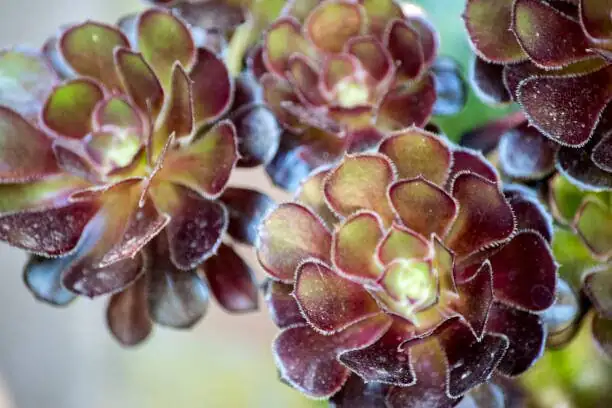
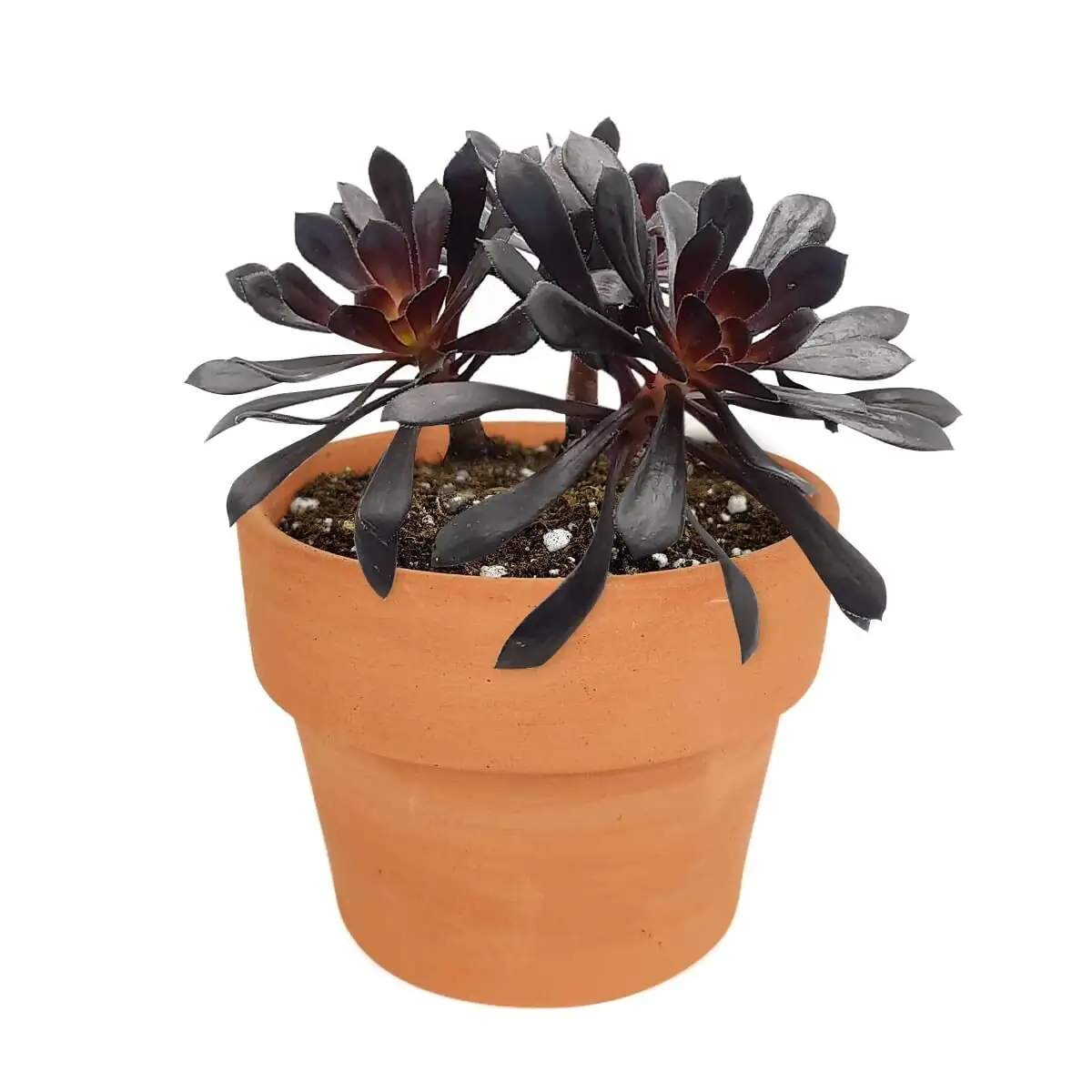
If a rose went to architecture school, it might come out looking like Aeonium arboreum ‘Zwartkop’. Its glossy, near-black rosettes perch on branching, woody stems like a sculptural bouquet frozen mid-bloom—no water-changing, no wilted petals, just velvet-dark whorls that catch the light and hold your gaze. No wonder modern Chinese succulent lovers call it 黑法师 (Black “Mage” or “Master”), and no wonder it’s become a living emblem for resilience and bold elegance in contemporary flower language, or huayu (花语).
Below, we’ll trace how a Victorian whisper-code about black roses evolved into today’s uplifting readings in Chinese succulent culture—and how to anchor those meanings through feng shui placement and thoughtful gift-giving.
From Victorian floriography to modern huayu
The Victorian “black rose”: coded messages in a moody hue
In the 19th century, floriography let people “speak” with stems. The so-called black rose—never truly black, but an inky convergence of deep reds and purples—signaled messages that ordinary conversation tiptoed around. Depending on context, it suggested:
- Mystery and sophistication
- Transformation, endings, and new beginnings
- Defiant individuality or farewell
That aura persists today. Viral stories about “true” black roses (think Halfeti, Türkiye) only amplify the mythos—yet, in reality, the hue is still an illusion of very dark reds and purples. Which puts ‘Zwartkop’ right in the spotlight: its rosettes are the perfect botanical echo of that Victorian fantasy, naturally achieving the near-black effect in strong light and cooler seasons.
How Chinese succulent culture reframes the message
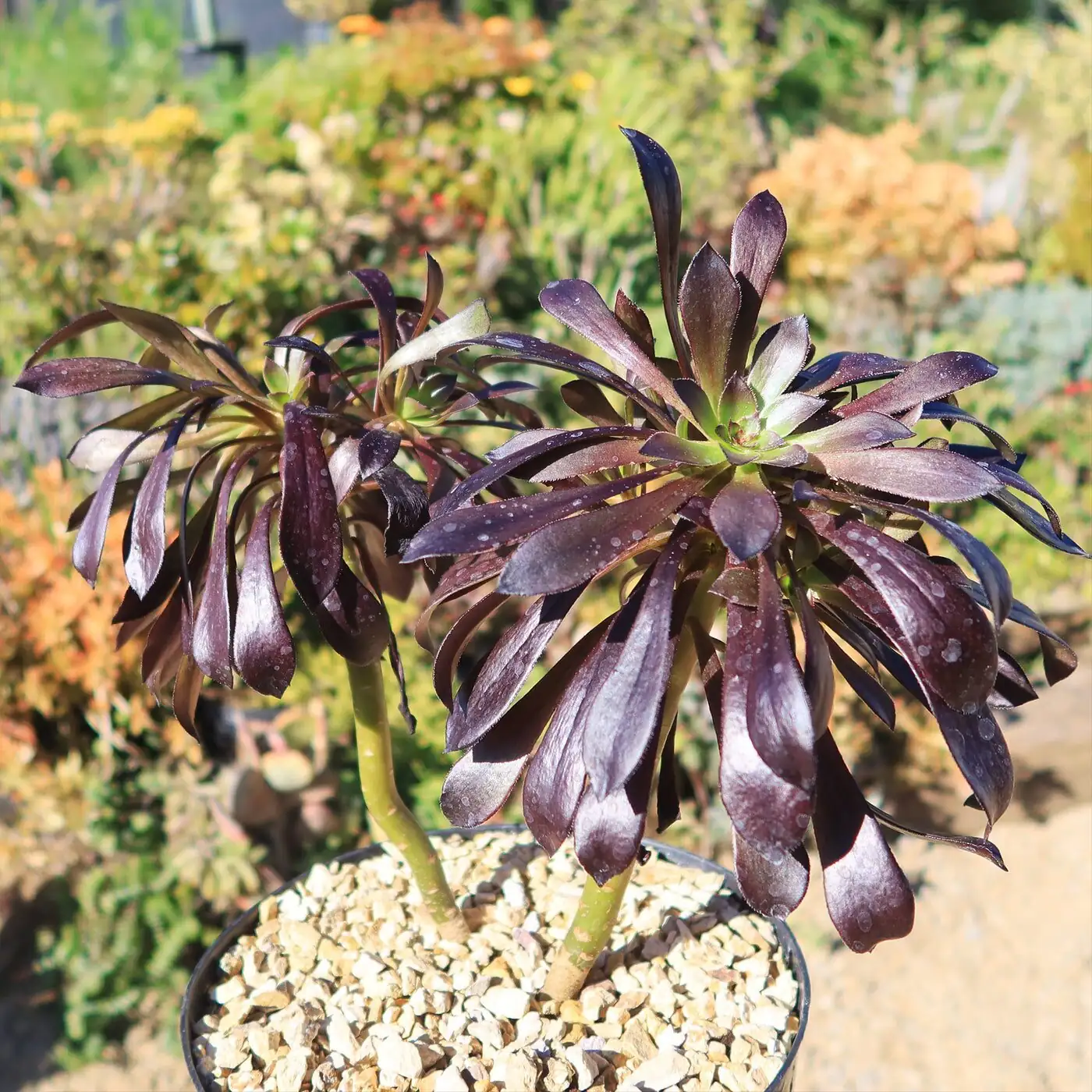
In China’s thriving succulent scene, 黑法师 (Black Rose Aeonium) became a style icon. The plant’s huayu shifted from Victorian melancholy toward admiration for:
- Resilience: drought-tolerant, steady under bright skies and low humidity
- Bold elegance: a sleek, modern presence that looks “dressed up” even in minimal spaces
In this reading, the plant isn’t about endings—it’s about carrying grace through challenging conditions, then returning with stronger color and form when the season suits.
Why ‘Zwartkop’ embodies resilience and bold elegance
- It looks most “black” under strong light and in the cooler months. Rather than fading, it deepens its tone when conditions get brisk and bright—like poise under pressure.
- It has a rhythm of rest and return. Many aeoniums surge from autumn to spring, then semi-rest in hot summers; ‘Zwartkop’ asks us to pace ourselves too.
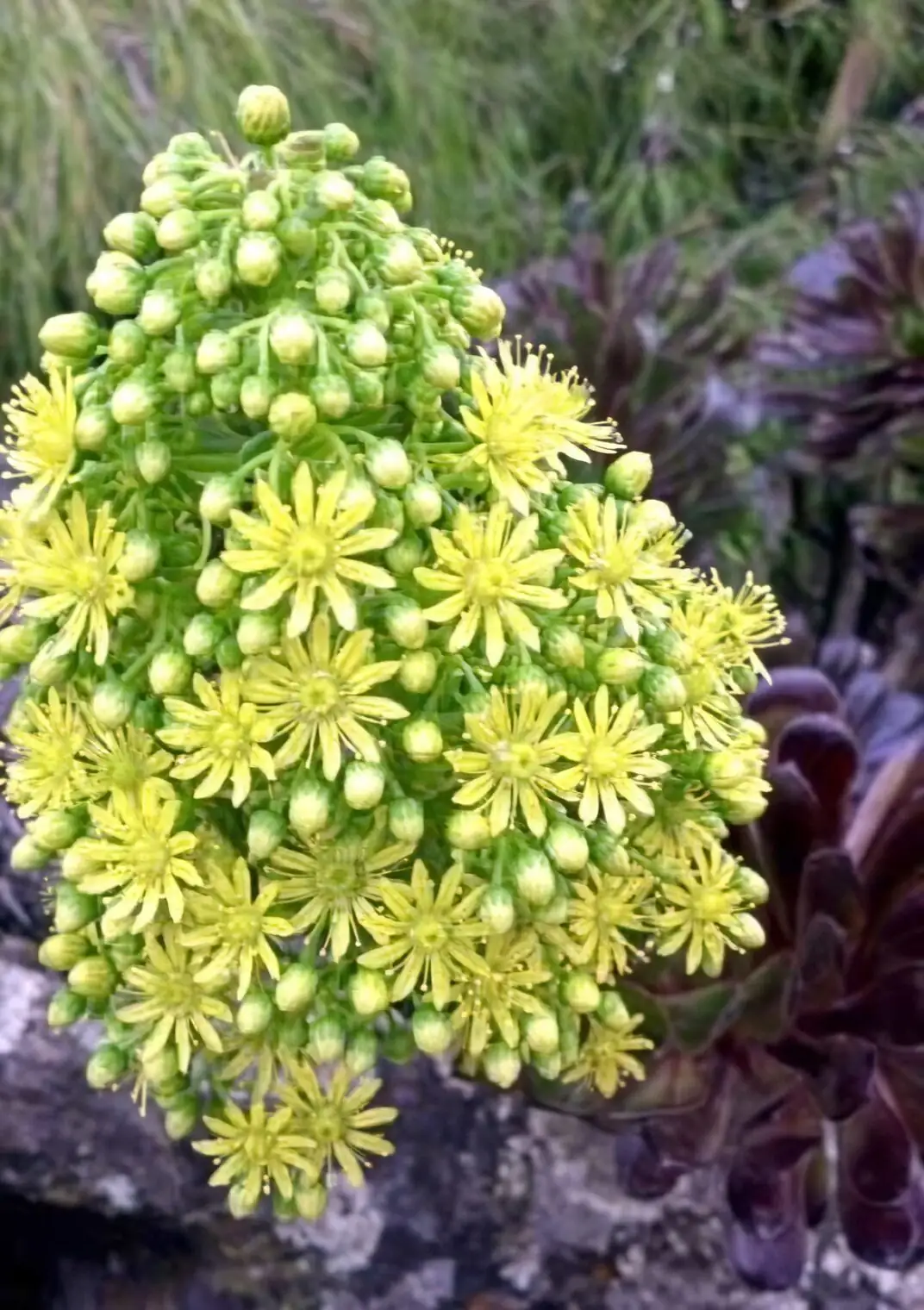
- It’s a comeback artist. Mature rosettes may send up starry yellow sprays in spring; that rosette then declines, but side rosettes keep the plant thriving—a living parable of renewal.
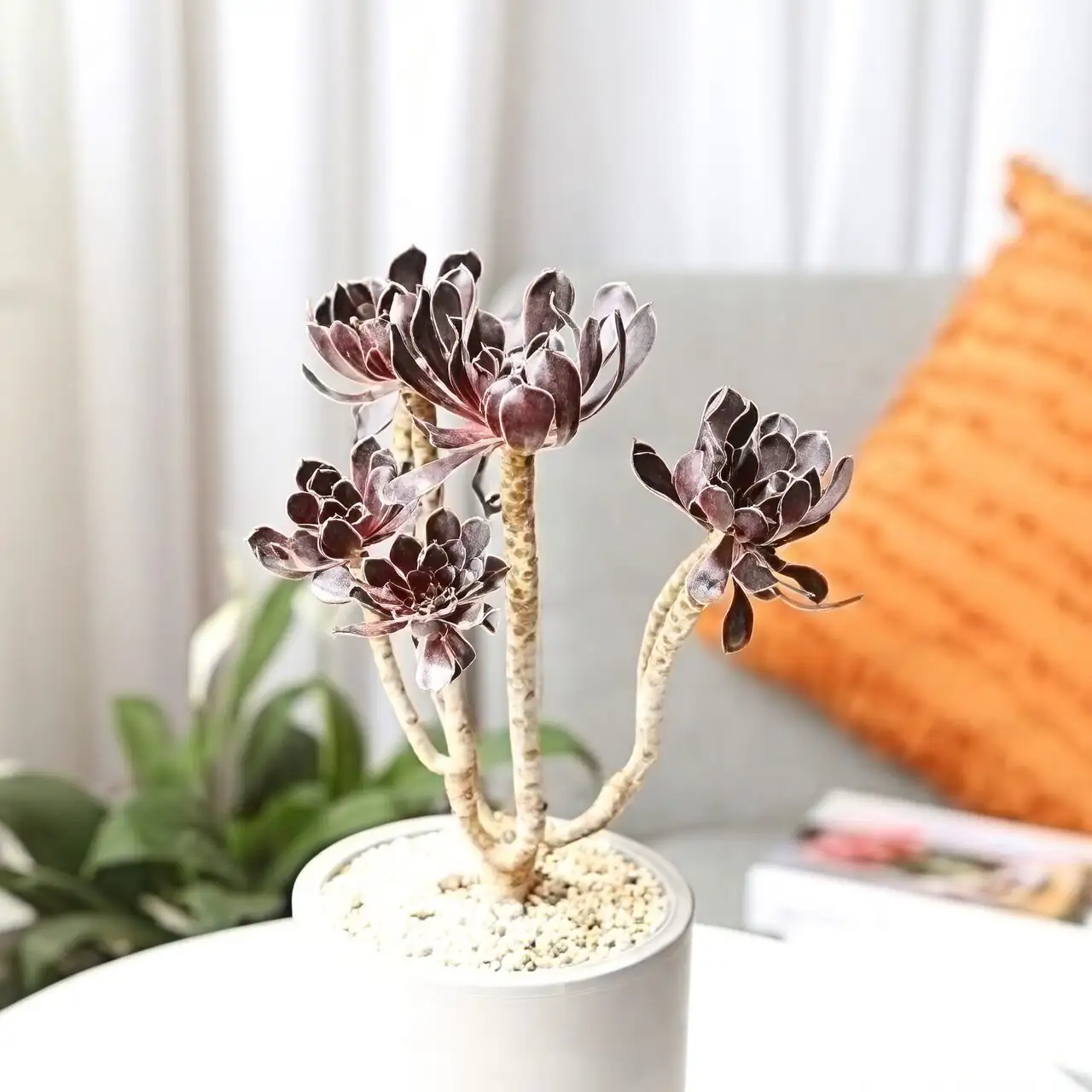
- It’s architectural and composed. Tight, spoon-shaped leaves form orderly rosettes that turn into a branching “tree” with age—minimalist drama that elevates a room without fuss.
Feng shui placement: where symbolism meets sunlight
Feng shui is as much feel as formula. Let the plant’s needs lead: ‘Zwartkop’ wants full sun to very bright light, with protection from harsh midday glare behind glass during heatwaves. Indoors, the brightest window wins.
With that in mind, try these placements to align qi with huayu:
- Southeast (Wealth and Growth)
- Why: Purple-burgundy tones and a living plant both resonate with growth and prosperity. The elegant rosettes suggest refined abundance.
- How: An east or southeast window with bright morning sun works beautifully. Use sheer curtains if midday rays scorch.
- South (Fame and Reputation)
- Why: Its near-black sheen and sculptural form create a striking focal point—excellent for visibility and personal brand.
- How: A sunny south window is ideal; pull the pot slightly back from intense midday glass or filter the light.
- North (Career and Life Path)
- Why: Dark hues often harmonize with Water element themes in feng shui; place as a quiet anchor for resilience through career transitions.
- How: North windows are often softer; supplement with strong grow lights to maintain that signature color and compact form.
- Studios and Home Offices
- Why: As a “decision anchor,” it embodies calm boldness—great for designers, founders, or anyone courting innovative clarity.
- How: Keep it near your brightest spot; a sunroom or bright balcony (with midday protection) is perfect.
- Places to avoid
- Dim bedrooms, cluttered corners, or closed terrariums. ‘Zwartkop’ wants airflow and lots of light; sealed glass and gloom dampen both color and qi.
Tip: Align symbolic actions with care. When you prune a spent, post-flower rosette, set an intention to release what no longer serves. When new offsets appear, welcome fresh opportunities.
Gift-giving: translating huayu into real-life moments
Because its “black rose” look reads modern rather than mournful, ‘Zwartkop’ makes a standout, meaningful gift. Try these pairings of occasion and message:
- Career milestones and launches
- Message: Resilience under pressure; bold vision.
- Presentation: A sleek pot in matte black, charcoal, or brushed brass; place a note: “May your path stay steady and your vision stay sharp.”
- Housewarmings and newlyweds
- Message: Elegant stability, refined abundance.
- Presentation: Pair with a pale stone or ceramic planter to balance light and dark; place near their brightest window.
- Graduation and new chapters
- Message: Transformation with style.
- Presentation: Add a small card: “From cool seasons come deep colors—may your growth be just as sure.”
- Recovery and encouragement
- Message: Quiet strength, paced healing.
- Presentation: Emphasize its seasonal rhythm—rest is part of thriving.
- Memorials or remembrance
- Message: Respectful dignity; the endurance of love.
- Presentation: Keep design minimal, with a calm, bright placement. Its steady form speaks softly and clearly.
Consider adding a bilingual line to honor huayu roots:
- 黑法师:不惧烈日,优雅自持 — “Black Rose Aeonium: unafraid of bright days, elegant and self-possessed.”
Care quick-start: keep the symbolism alive
- Light: Full sun to very bright light. Indoors, aim for the brightest window; color deepens in strong light and cooler seasons. In very hot weather behind glass, filter midday sun.
- Water: Water deeply, then drain. In active growth (often autumn through spring), water when the surface dries. In hot summer semi-dormancy, keep nearly dry—offer small sips only if rosettes wrinkle. In cool winter rooms, err dry to prevent rot.
- Temperature: Generally happy around 10–24°C (50–75°F); strong growth near 20–25°C (68–77°F). Keep frost-free; protect as temperatures approach 0°C (32°F). A practical minimum indoors is above ~6°C (43°F).
- Soil and pot: Fast-draining succulent mix with added grit/pumice. Always use drainage holes. Repot in spring every 2–3 years or when top-heavy.
- Growth rhythm: Often strongest from autumn to spring. Spring may bring clusters of tiny, star-shaped yellow flowers; the blooming rosette then declines while side rosettes carry on.
- Shaping and propagation: Remove dry lower leaves as needed. Prune leggy stems to encourage branching. Stem cuttings root readily once the cut calluses (often within 3–4 weeks).
- Pests: Watch for mealybugs, aphids (especially on flower stalks), whiteflies, and scale. Treat early with insecticidal soap or horticultural oil and improve airflow.
- Safety: Not known as highly toxic, but the sap can irritate sensitive skin. Keep away from pets and children; wash hands after pruning if you’re sensitive.
- Display note: It shines in open bowls and planters with good airflow; it’s not suited to sealed terrariums.
Origin and name notes
‘Zwartkop’ is a widely grown dark-leaved cultivar of Aeonium arboreum, a species native to the Canary Islands (Macaronesia). The cultivar name is Dutch for “black head,” an affectionate nod to its inky rosettes. While popular sources sometimes mention a broader Canary Islands–Morocco/Macaronesian association in horticultural chatter, the species’ native home rests firmly in the Canaries.
Bringing it all together
Victorian floriography lent the black rose its mystique; modern Chinese succulent culture recast that mood as resilient elegance. Aeonium ‘Zwartkop’ bridges both—sophisticated yet sturdy, dramatic yet easy to live with. Place it where light is generous and your goals are in sight. Gift it when you want to say, “Be brave, stay polished.” And each cool, bright season, watch it darken again—proof that style and strength can deepen with time.