

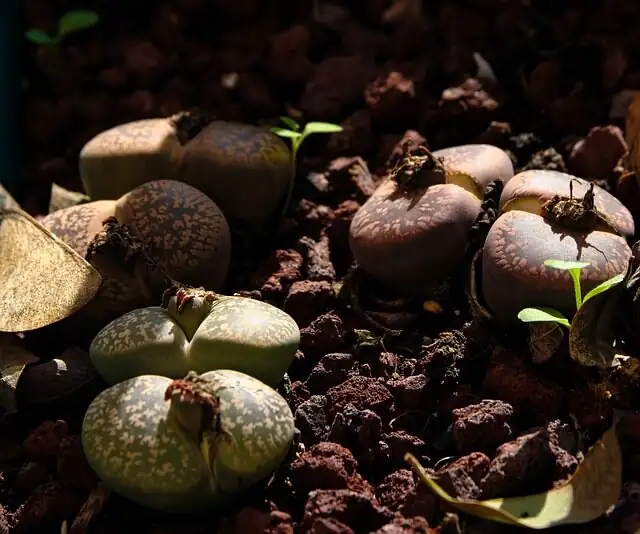
If you’ve ever “loved a Lithops to death,” you’re in good company. These pebble-mimicking succulents are rugged desert survivors—but they run on a rhythm that flips typical houseplant care upside down. Master their seasonal cycle (especially the no-water window during leaf replacement) and they become delightfully low-fuss, long-lived companions.
What you’re growing
- Botanical name: Lithops spp. (Aizoaceae)
- Also called: Living Stones, Stone Plant, Pebble Plant, Butt Plant
- Native range: Southern Africa (especially South Africa and Namibia)
- Look-for: Tiny two-leaf bodies, patterned “stone” tops with translucent windows, daisy-like blooms in late summer to autumn
- Size: Individual heads 1–4 cm across; slowly clumps over time
- Vibe: Bright light, fast drainage, minimal water, low humidity
The one golden rule
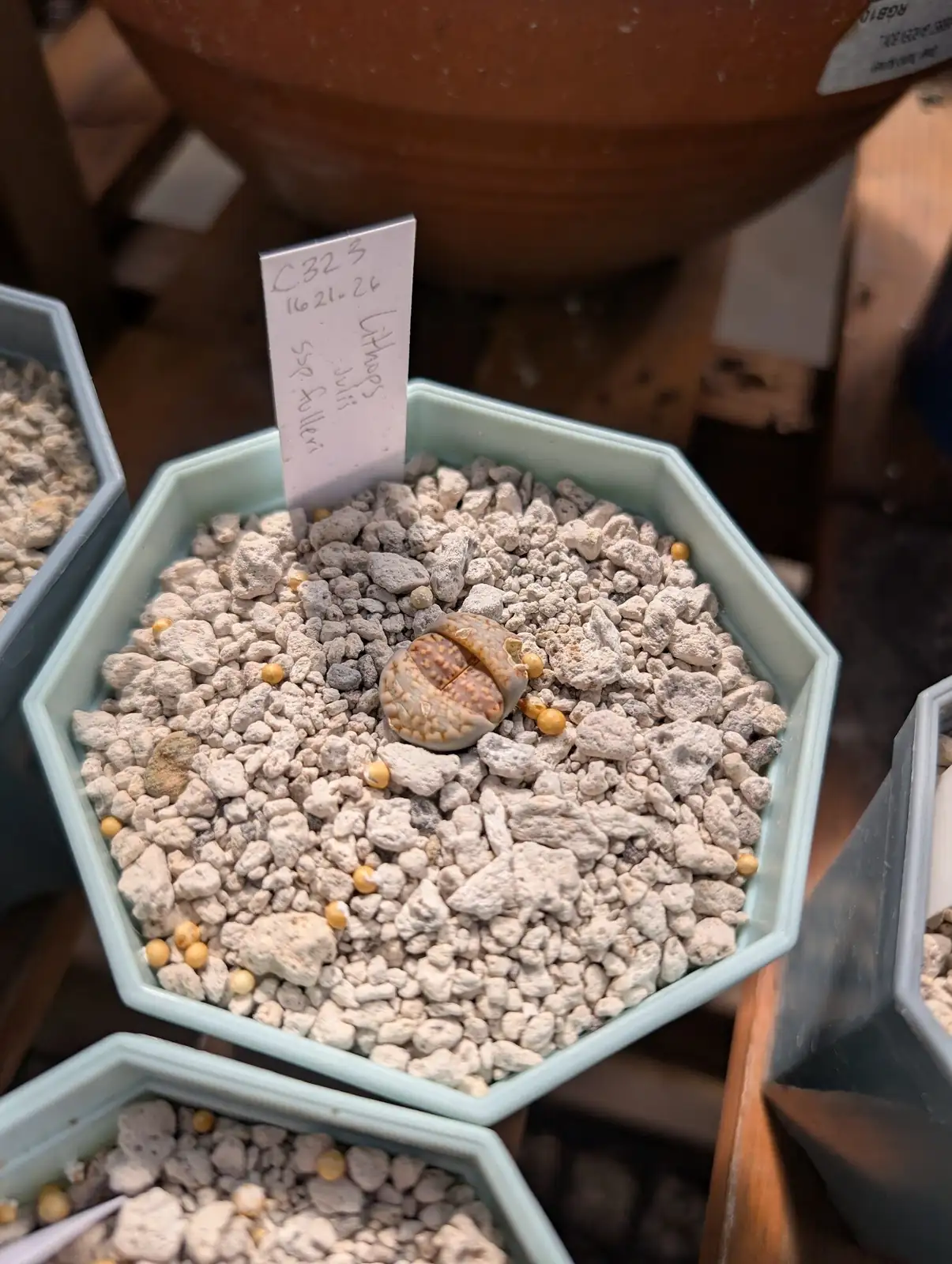
In winter through early spring, Lithops are busy replacing last year’s leaves with a fresh pair. The new pair feeds entirely on the old one. Watering during this period interrupts the handoff, causing swelling, splitting, and rot. This “no-water while they’re digesting last year’s leaves” rule is the key to success.
A practical, season-by-season care calendar
Use the plant’s body language alongside the calendar below. Climates vary, but the sequence is consistent.
Late winter to early spring: Leaf replacement is underway
- What you’ll see: The old leaf pair wrinkles, thins, and papery “skins” begin to sheath the new leaves.
- Watering: Do not water until the old leaves are almost completely dry and papery. This may take weeks to a couple of months.
- Light and air: Bright light to full sun indoors (aim for 6+ hours). Excellent airflow helps prevent rot.
- When to resume: Once the old skins are dry and the new pair is clearly emerged, give a modest drink, then allow a thorough dry-out again.
Spring to early summer: Fresh leaves settle in
- What you’ll see: A tidy, plump new pair; roots re-growing.
- Watering: Sparing “sips” only when the mix is bone dry and the body shows slight wrinkling. Think light, infrequent watering, not a routine schedule.
- Fertilizer (optional): If you feed at all, wait until late spring or early autumn and use a very dilute cactus fertilizer (1/4 strength). Less is more.
High summer: Heat rest
- What you’ll see: In hot conditions many Lithops partially dormancy-rest. Growth slows; they hunker down.
- Watering: Sharply reduce. In extreme heat, you can pause watering altogether. If they wrinkle deeply and temperatures are moderate, a light drink is acceptable—but keep it rare and let the mix dry fast.
- Light: Bright is good; give light midday shade behind hot glass and ensure airflow to avoid scorching.
Late summer to autumn: Main growth and flowering
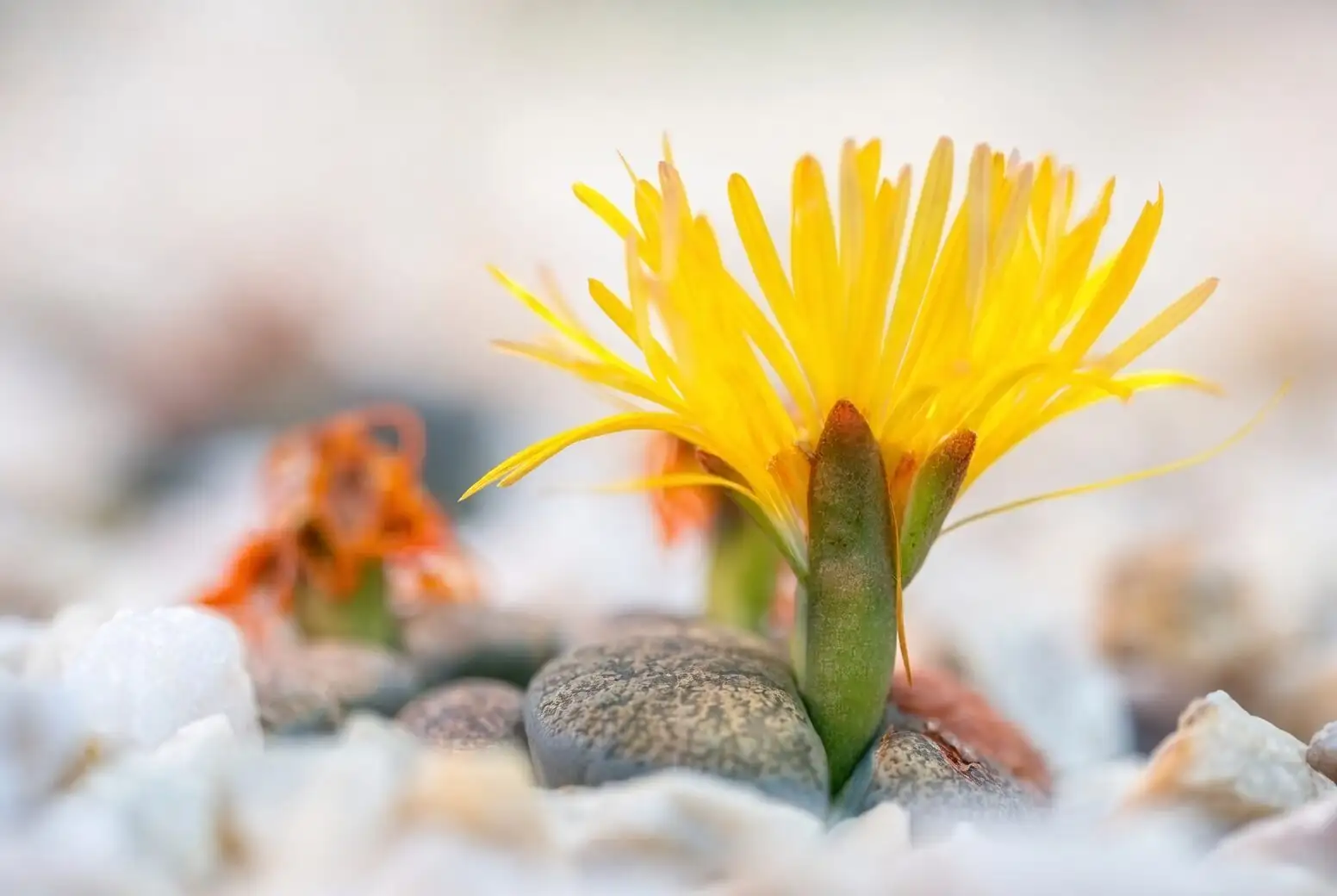
- What you’ll see: Buds and daisy-like flowers (often white, sometimes yellow). This is their “active” season.
- Watering: You may cautiously increase frequency, but always let the mix dry thoroughly between drinks. Never keep the potting mix wet and never let water sit in a saucer.
- Fertilizer (optional, choose just one approach):
- One gentle feed in autumn at 1/4 strength, or
- Very dilute, low-nitrogen cactus feed about every 2 weeks during active growth only—then stop for summer rest and winter.
- After blooming: A new pair starts forming inside. Begin tapering water as autumn advances. As soon as you see the old leaves start to wrinkle for the coming replacement, stop watering again.
Winter: Bright and mostly dry
- What you’ll see: The new pair hidden inside; old pair steadily shriveling.
- Watering: Keep it bright and mostly dry. Maintain the no-water rule until old leaves are nearly papery and spent, then repeat the cycle.
Read the plant’s “body language”
- Slight lateral wrinkling: Time for a light drink—if it’s not in the leaf-replacement window.
- Old leaves thinning to a papery sheath: Do not water yet. Let the new pair finish feeding.
- Puffy, translucent, or splitting bodies: Classic overwatering sign—stop and increase light/airflow.
- Tall, stretched “mushrooming”: Not enough light; move to a brighter window or add a grow light.
- Mushy base or sour smell: Root rot; unpot, trim rot, and replant in a very gritty, dry mix.
Light and placement that keep Lithops compact
- Aim for 6+ hours of direct sun. Indoors, south- or west-facing windows are excellent; bright east can work. North windows are typically too dim.
- Acclimate new plants to strong sun over 1–2 weeks to prevent scorch.
- In very hot summers behind glass, give light midday shade and robust airflow.
Soil: Fast-draining and gritty
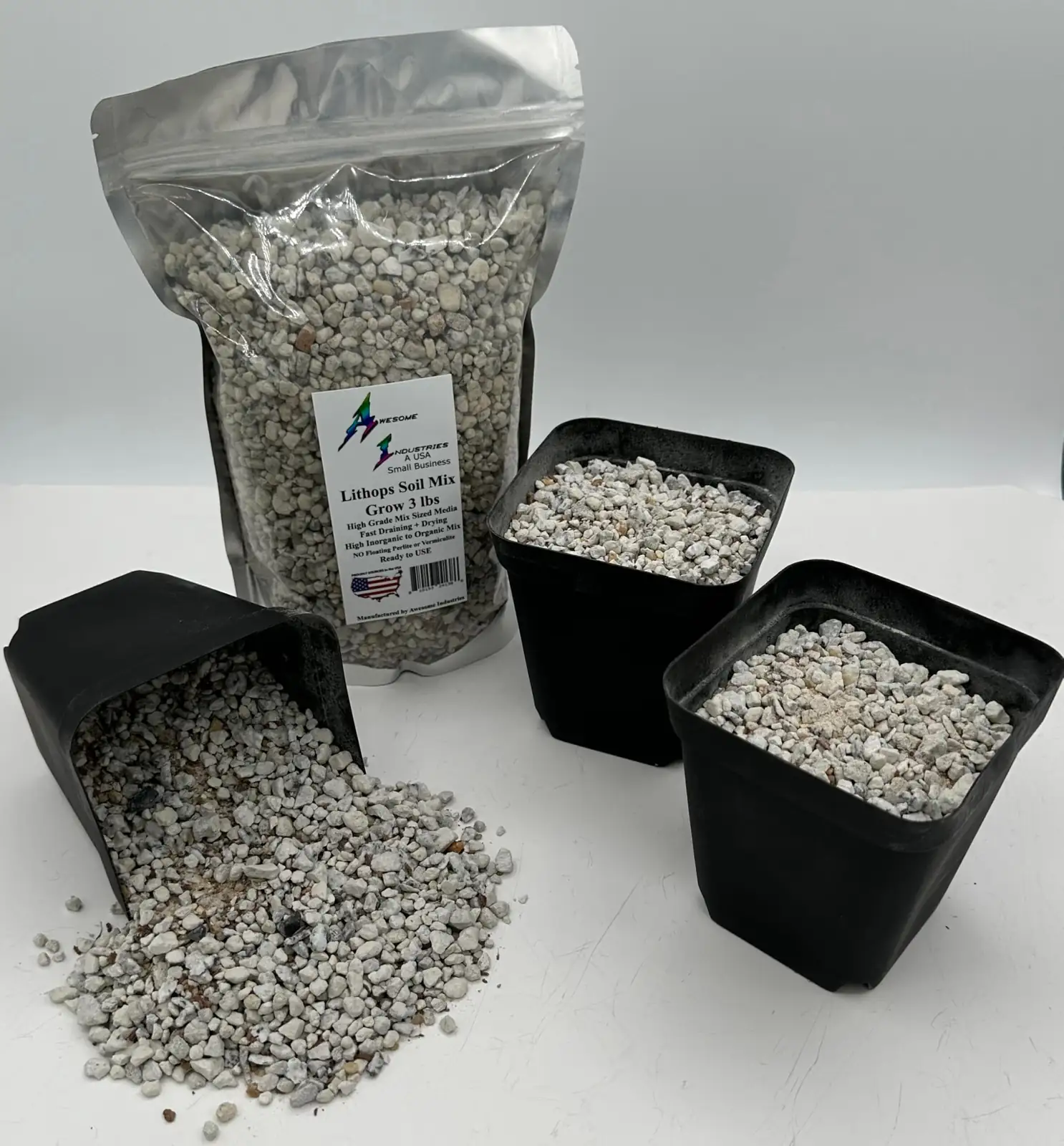
- Goal: Water should run through quickly and the mix should dry fast.
- Practical DIY starting point: Mix potting soil with coarse grit/sand at about 2:1 by volume. If drying is still slow, increase the mineral fraction (think more pumice, coarse sand, or fine gravel) until it dries promptly.
- Great mineral components: Pumice, coarse sand, chicken grit, fine gravel, scoria. Keep organic matter low.
Potting made simple
- Pot style: Small, shallow pot with a drainage hole—Lithops have relatively shallow, sparse roots.
- Sizes: 7.5–10 cm (3–4 in) pot for a single head; 10–12 cm (4–4.7 in) often holds 3–5 plants.
- Top-dress: A thin layer of decorative pebbles looks natural and helps anchor plants. Don’t pack tightly or trap moisture against the body.
- Repotting rhythm: Infrequent—about every 2 years, or longer if the mix remains open and fast-draining. Many growers repot in late winter to early spring. Remove only fully dried, papery old leaves.
Watering technique that prevents rot

- Always let the mix go completely dry. A wooden skewer or the pot’s weight can help you judge dryness.
- Water lightly around the root zone; avoid splashing fertilizer or water into the central fissure.
- Never leave water in a saucer. Lithops hate “wet feet.”
- Skip misting. They prefer low humidity, and damp air plus wet soil invites rot and fungus gnats.
Temperature, humidity, and hardiness
- Best growth: 15–26°C (59–79°F)
- Winter indoor target: Keep above ~12°C (54°F); prolonged cold below ~5°C (41°F) is risky.
- Humidity: Low is ideal with excellent ventilation.
- Outdoors: Frost-tender; suitable year-round only in mild, frost-free climates (roughly USDA 10–11) and best kept on the dry side.
Buying smart
- Choose plants that are firm, plump, and compact with crisp patterns and an intact two-lobed body.
- Avoid soft or blackened tissue, mushy bases, fresh scars/sunburn, persistent wet soil, or visible pests.
- Seed-grown plants usually need 2–3 years to reach flowering size—be patient.
Propagation
- Most reliable: Seeds, typically sown spring to early summer. Germination often in 7–10 days at ~19–24°C (66–75°F), but seedlings are slow; expect 2–3 years to flower.
- Division: Possible for mature, multi-headed clumps.
- Leaf cuttings: Not a thing for Lithops.
Pests and problems (and how to dodge them)
- Biggest threat: Rot from overwatering or slow-draining soil.
- Common pests: Mealybugs (including root mealies), aphids, and fungus gnats in overly moist mixes. Quarantine newcomers; inspect roots if growth stalls inexplicably.
- Culture is the cure: Strong light, gritty mix, full dry-down, and airflow.
Flowering notes
- Season: Late summer to autumn.
- Look: Dainty daisy-like blooms, mostly white (some yellow), popping from the central fissure and often larger than the plant itself.
Symbolism and “flower language”
- Symbolism: Lithops embody resilience and “beauty in disguise”—thriving in harsh deserts while masquerading as stones.
- On so-called flower language: Unlike long-standing cultural flower-lore for roses or chrysanthemums, Lithops don’t have a deep, historic “language of flowers.” Modern attributions (endurance, minimalism, hidden treasure) are contemporary interpretations rooted in their camouflage and austere habitats rather than traditional folklore.
Myth-busting for stress-free success
- “Water once a month.” Rigid schedules kill. Follow the plant and the season, not the calendar.
- “They like humidity.” No—low humidity and airflow are their comfort zone.
- “They’re tiny; they must need tiny pots of rich soil.” They do like tiny pots—but in gritty, lean, fast-draining media.
Quick reference: the no-water window
- Do not water from the time you notice the new pair forming inside and the old leaves start to shrivel, through winter, and into early spring—until the old leaves are nearly papery and used up.
- Resume with a modest drink once the new pair is fully emerged and the old skins are dry.
Follow this cycle, keep the light strong and the soil lean and quick-draining, and your Living Stones will reward you with compact bodies, crisp patterns, and autumn blooms—without the drama.