

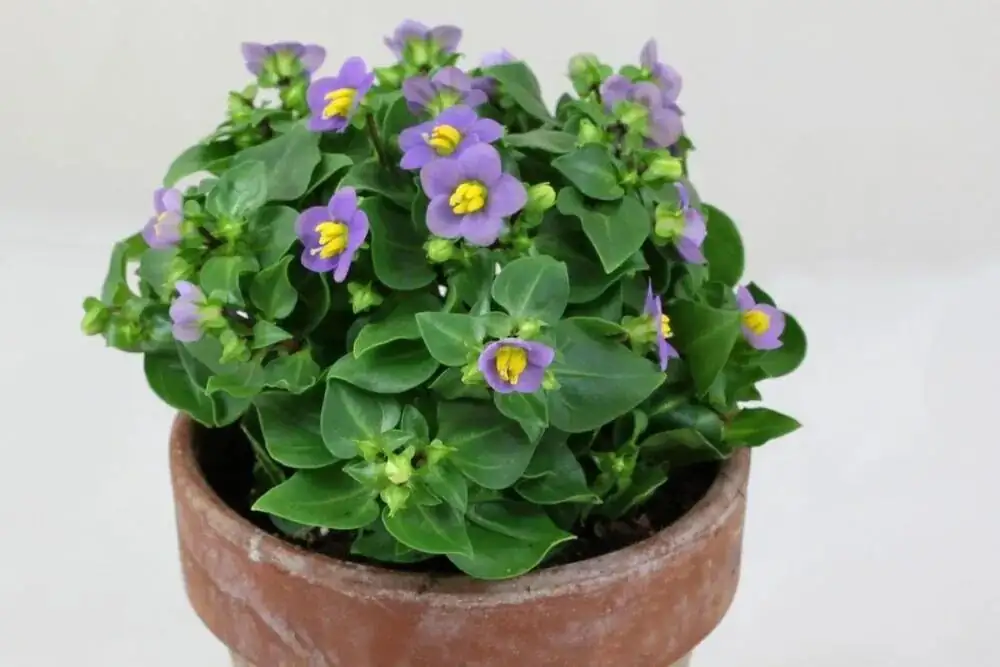
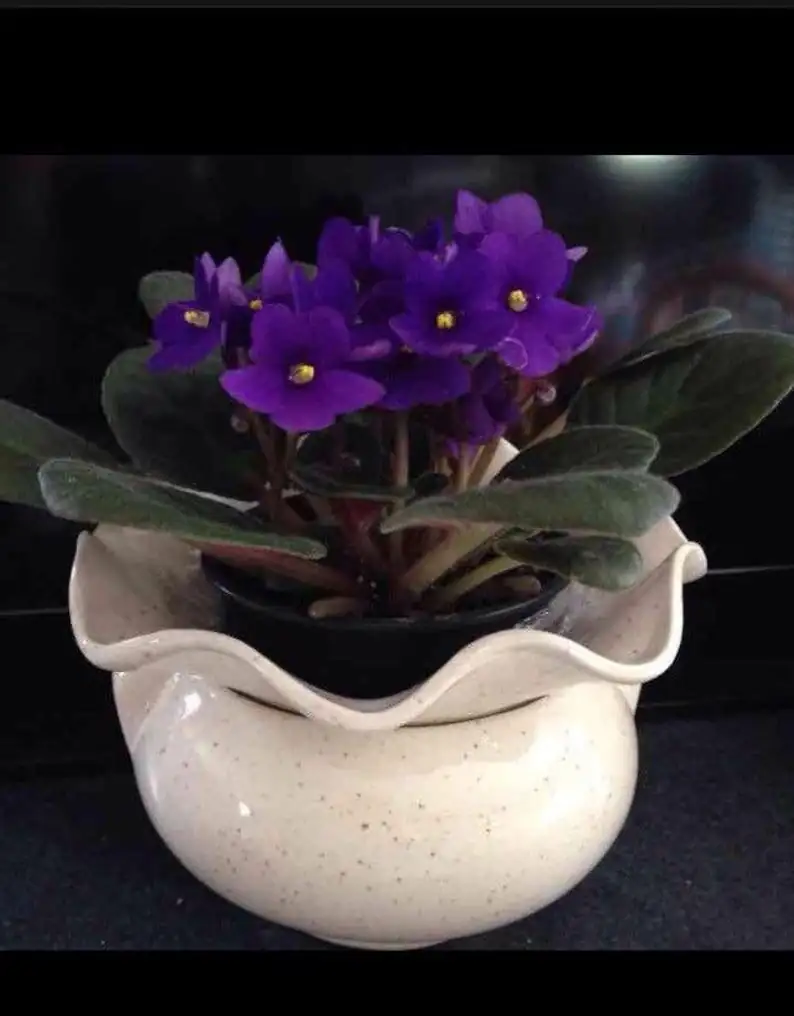
Persian violet (Exacum affine) is the little pot bouquet that thinks like a cool spring morning—compact, glossy, and suddenly smothered in violet-to-lavender stars with sunny yellow centers. Its secret to a long, luxurious show? Cool air, bright-but-gentle light, plump humidity, and a steady rhythm of water, feed, and timely deadheading. Here’s your week-by-week calendar from bud set to peak display so you know exactly when to nudge humidity, when to water more (or less), and the precise moment to snip spent blooms.
Set the stage (before Week 1)
- Light: Bright indirect light or soft morning sun (east window is ideal). Shield from strong midday rays.
- Temperature: Cool is key—15–21°C (59–70°F). Heat shortens the show.
- Humidity: Aim for moderate to high humidity. Indoors, use a pebble tray or room humidifier—especially if heat is on.
- Soil and pot: Light, fertile, well-draining potting mix that holds even moisture. Ensure drainage; never let the pot sit in water.
- Don’t repot in bloom: It triggers bud drop. Slip the nursery pot into a decorative cachepot instead.
- Smart shopping: Choose plants with lots of unopened buds, firm, glossy leaves, and no yellowing.
Tip: Have a hygrometer and a watering can with a fine spout. Persian violet appreciates gentle, even care.
Your week-by-week calendar (late winter–spring)
Week 1: Homecoming and bud steadying
- Light: Place immediately in bright, indirect light near an east- or north-facing window.
- Temperature: Keep to 15–21°C (59–70°F).
- Humidity: Raise to 55–60% right away via pebble tray or humidifier.
- Watering: Keep evenly moist. Water when the top 1–2 cm (½–¾ in) feel just dry; then water thoroughly and let excess drain.
- Feeding: Wait. Let the plant acclimate.
- Grooming: Remove any yellowing leaves; don’t pinch buds.
- Watch: Minor bud drop can happen after the move—stabilize light and humidity to minimize it.
Week 2: Bud swell and first feed
- Humidity: Nudge to 60% if you see tight clusters swelling.
- Watering: Same even-moist routine. Avoid swings from wet to dry.
- Feeding: End of week—apply a balanced liquid fertilizer at half strength.
- Grooming: No pruning yet. Rotate the pot 90° to keep growth even.
Week 3: First color hints
- Light: Keep bright, indirect; increase distance from glass if midday sun intensifies.
- Humidity: 60–65% helps prevent bud blast.
- Watering: Slightly increase volume if leaves feel taut and the plant is filling out; still allow drainage.
- Feeding: Not yet (feeding every 2–3 weeks is plenty).
- Grooming: Snip any spent single blooms that finished early, cutting just above a leaf pair.
Week 4: Opening act
- Flowers begin to open.
- Watering: Blooming increases demand. Check moisture daily; water when the surface is just turning dry.
- Humidity: Hold 60–65%. Avoid misting blooms—petals can spot; rely on ambient humidity instead.
- Feeding: If you fed in Week 2, skip this week. If you started later, feed now.
- Deadheading: Start a quick daily sweep—remove flowers the day petals lose sheen or when yellow anthers turn dull.
Weeks 5–6: Peak display
- Light: Bright, indirect light; a touch of gentle morning sun is fine, no harsh midday rays.
- Temperature: Keep it cool. Nights at 15–18°C (59–64°F) extend bloom life.
- Humidity: 60–70% during the heaviest flush.
- Watering: The plant is thirstiest now. Water thoroughly when the top 1 cm (⅜ in) dries; never let it go bone-dry.
- Feeding: Repeat at half strength at the start of Week 6 (2–3 week interval).
- Deadheading: Daily. Remove each bloom at the base of its pedicel, just above the nearest leaf pair. This keeps the dome neat and encourages continued flowering.
- Grooming: Lightly thin only obviously spent clusters; avoid hard cuts during peak.
Weeks 7–8: Sustained bloom and finesse
- Light/Temp/Humidity: Maintain the same “cool-bright-humid” triad.
- Watering: If room temps creep up, water frequency may rise; never let the root ball dry out.
- Feeding: One more half-strength feed at the close of Week 8 if flowering is still strong.
- Deadheading: Continue. The 30-second daily tidy makes a dramatic difference.
- Pest check: Warm, dry rooms invite spider mites and aphids. Look under leaves; wipe with a damp cloth and increase humidity if needed.
Week 9 and beyond: The graceful encore
- If bloom continues: Keep the routine—cool air, even moisture, and feeding every 2–3 weeks.
- If heat arrives and flowering flags: Move to the coolest bright spot you have, sustain humidity, and keep the soil evenly moist to extend the finale.
- Long-term reality: Persian violet is a tender perennial often treated as a short-lived flowering houseplant. Once flowering declines in summer warmth, it’s normal for vigor to wane. Enjoy the show, then replace with a fresh plant next cool season.
The exact moments to deadhead (and how to snip)
- When: As soon as petals lose their satin sheen, edges fade, or yellow anthers turn brown/dull. Don’t wait for full drop.
- Where to cut: Follow the flower’s slender stalk (pedicel) to the first leaf pair and snip just above it.
- Why it matters: Removing spent blooms prevents seed set, keeps the cushion tidy, and channels energy into new buds.
Pro tip: Keep a small pair of clean snips next to the pot; a daily micro-tidy is faster than a weekly overhaul.
Watering like a pro—no wilt, no rot
- Feel-first rule: Water when the top 1–2 cm (½–¾ in) of mix is barely dry; never soggy, never bone-dry.
- Deep, then drain: Water until excess flows from the drainage hole; empty the saucer after 10 minutes.
- Pot weight cue: Lift the pot—learn its “just-watered” vs. “time-to-water” weight.
- Summer safeguard: If temps spike, increase humidity first, not fertilizer. Keep moisture steady to avoid bud drop.
Humidity: the quiet performance enhancer
- Targets: 55–60% in early bud set; 60–70% during peak bloom.
- Best methods: Pebble tray with water below pot base, room humidifier, clustering plants. Avoid misting flowers.
- Airflow: Gentle, clean airflow prevents botrytis; avoid hot drafts or blasts from heaters.
Light and placement tweaks that pay off
- Best windows: East for gentle sun; bright north for steady, indirect light.
- Avoid: Hot south or west windows without sheer curtains.
- Rotate: Quarter turn each week for an even, rounded mound.
Quick fixes and troubleshooting
- Buds dropping: Light too low, air too dry, or root ball dried once. Boost brightness and humidity; resume even moisture.
- Flowers fading fast: Room too warm. Move to a cooler spot and keep humidity up.
- Wilting despite watering: Check roots. If black/mushy, it’s root rot from waterlogging—improve drainage and avoid standing water.
- Sticky residue or webbing: Aphids or spider mites. Rinse foliage gently, increase humidity, and treat early.
- Yellowing foliage: Overwatering or low light. Let the top layer dry slightly before next watering and brighten the location.
Safety, symbolism, and a little backstory
- Non-toxicity: Not known to be toxic to people or pets.
- Origin: Native to Socotra Island (Yemen); introduced to European horticulture in the 19th century and cherished for winter-to-spring color.
- Symbolism (flower language): Often associated with calmness, delicacy, and refined beauty—its poised, petite blooms read like a soft-spoken compliment. Unlike centuries-old coded flower languages, Persian violet’s “meaning” is modern and observational: its compact elegance and gentle fragrance evoke tranquility and grace indoors.
Season’s end and what’s next
- As summer heat builds, bloom typically wanes. You can try to carry the plant forward in the coolest bright spot, but most home growers simply replace it next late winter to spring.
- Insider cycle: Commercial growers sow seed in autumn–winter for the next cool-season display—why your best plants always arrive right when the air turns crisp.
Follow this cool-bright-humid cadence, keep moisture even, and deadhead right on cue—your Persian violet will repay you with a long, fragrant chorus of yellow-eyed blooms that look freshly arranged, every day.