

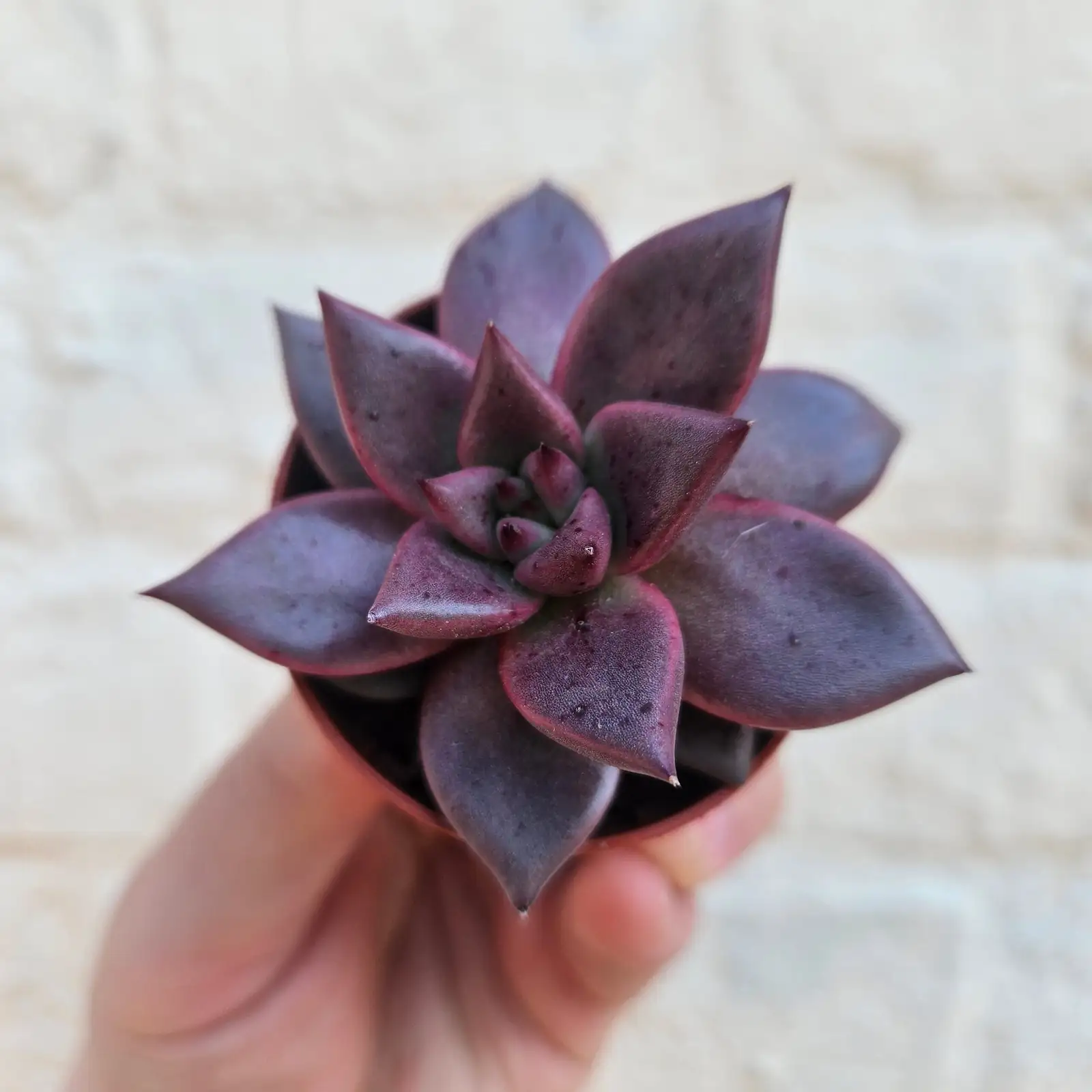
Echeveria ‘Red Taurus’ brings drama in miniature: tight, symmetrical rosettes that flush deep wine-red to burgundy under strong light, then send up elegant summer spires tipped with red-and-yellow blooms. Keeping that color and form is easy—if you treat water like a spice, not a sauce. The secret? How fast your pot and potting mix let moisture evaporate and air move. Dial in evaporation and airflow, and you’ll stretch watering intervals just right while shutting the door on rot.
Meet the plant
- Name: Echeveria ‘Red Taurus’ (often sold as “Red Taurus”)
- Family/Genus: Crassulaceae, Echeveria
- Origin: Horticultural cultivar; Echeveria species are native mainly to Mexico and Central America
- Habit and size: Clump-forming rosettes about 8–15 cm wide; plants 10–20 cm tall; flower stalks 20–40 cm
- Flowers: Bicolored red-and-yellow bells in summer
- Color cue: Best burgundy tones develop with bright, direct sun
Light, temperature, and placement essentials
- Sunlight: Bright light to full sun; aim for 4–6+ hours of direct sun. In very hot climates, offer light afternoon shade to prevent scorching.
- Temperature: 15–27°C (59–81°F) is ideal. Protect from frost; keep above 0–5°C (32–41°F).
- Humidity: Low to moderate with good airflow.
- Where it thrives: Sunny windowsill, bright balcony, greenhouse, or outdoors in warm seasons (USDA 10–11 for year-round).
The evaporation engine: pot, grit, and airflow
Think of your setup as a three-part system:
1) Pot material and shape = how fast water can leave the container walls.
2) Gritty amendments (pumice, perlite) = how freely air circulates in the root zone.
3) Airflow around the plant = how quickly the surface and crown dry.
These three levers decide your watering interval and your rot risk. Change any one, and the whole rhythm changes.
Pot materials compared: how they reshape watering
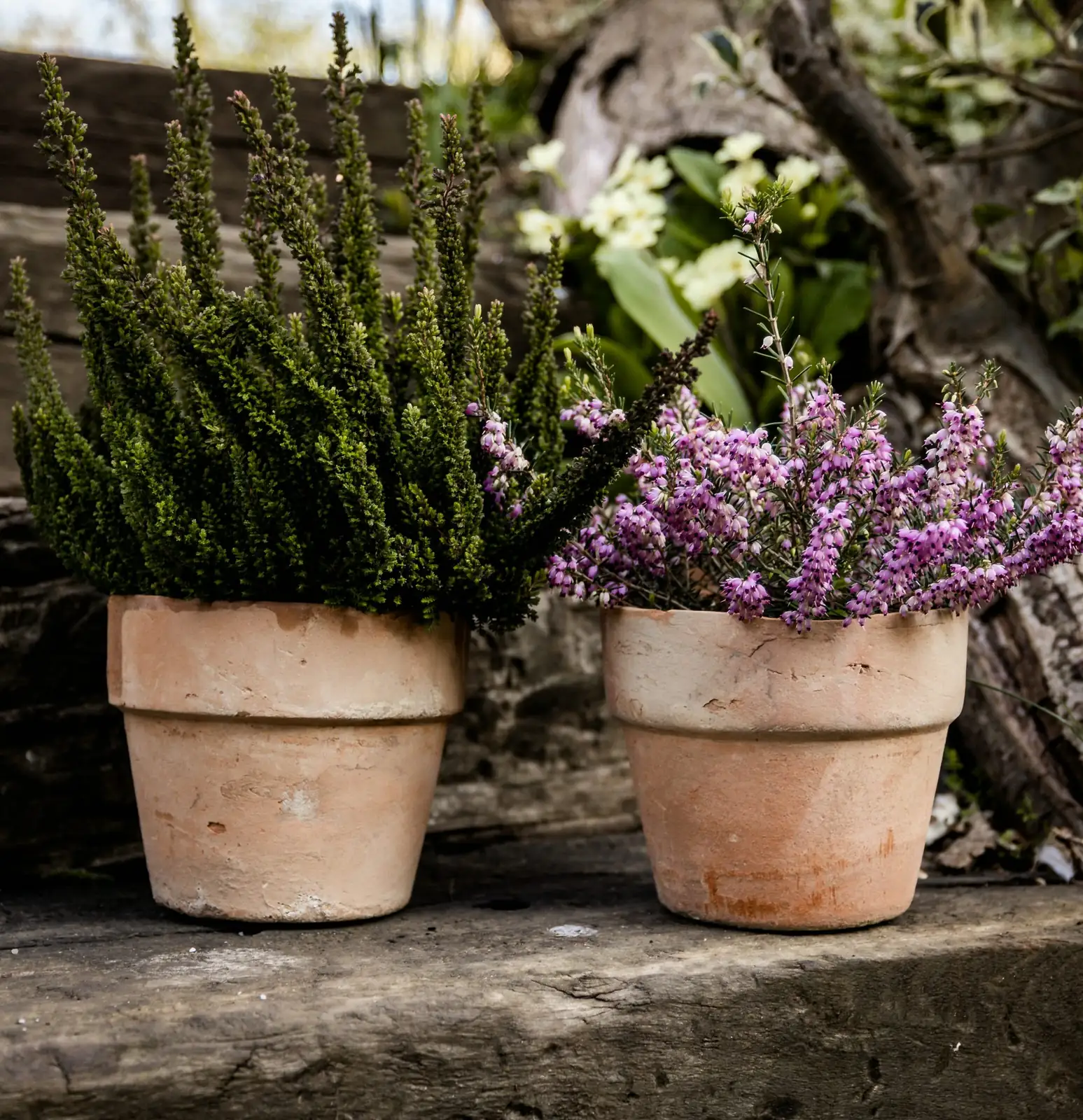
Terracotta (unglazed clay)
- What it does: Acts like a mini-radiator. Its porous walls wick moisture from the mix and evaporate it into the room.
- Result: Faster dry-down, shorter watering intervals, and lower rot risk.
- Best for: Indoor growers, humid climates, cautious waterers, and anyone prone to overwatering.
- Watch-outs: You’ll water more often; mineral salts may crust the rim (harmless, can be brushed off).
Glazed ceramic (and other non-porous ceramics)
- What it does: Non-porous walls hold moisture in.
- Result: Slower dry-down, longer intervals between waterings, but higher rot risk if the mix isn’t gritty.
- Best for: Hot, arid climates; growers who can resist frequent watering.
- Watch-outs: Pair with a very free-draining, gritty mix and always use a drainage hole.
Plastic
- What it does: Light, non-porous, warms quickly in sun.
- Result: Longest time-to-dry indoors. Roots may stay wet too long in low airflow conditions.
- Best for: Outdoor summer growing with wind and heat; cuttings you want to mist less (because moisture lingers).
- Watch-outs: Easy to overwater indoors; anchor or choose wider shapes to prevent tipping.
Pot size and shape matter
- Shallow, wide pots: Faster evaporation, a great match for shallow-rooting Echeverias.
- Deep, narrow pots: Hold a “perched” wet zone at the bottom longer—riskier in low airflow spots.
- Non-negotiable: A drainage hole. ‘Red Taurus’ will not tolerate a sealed container.
Gritty amendments: pumice vs. perlite
Your mix is the plant’s breathing apparatus. Mineral grit adds air pockets and escape routes for water, so roots get oxygen instead of sitting in a swamp.
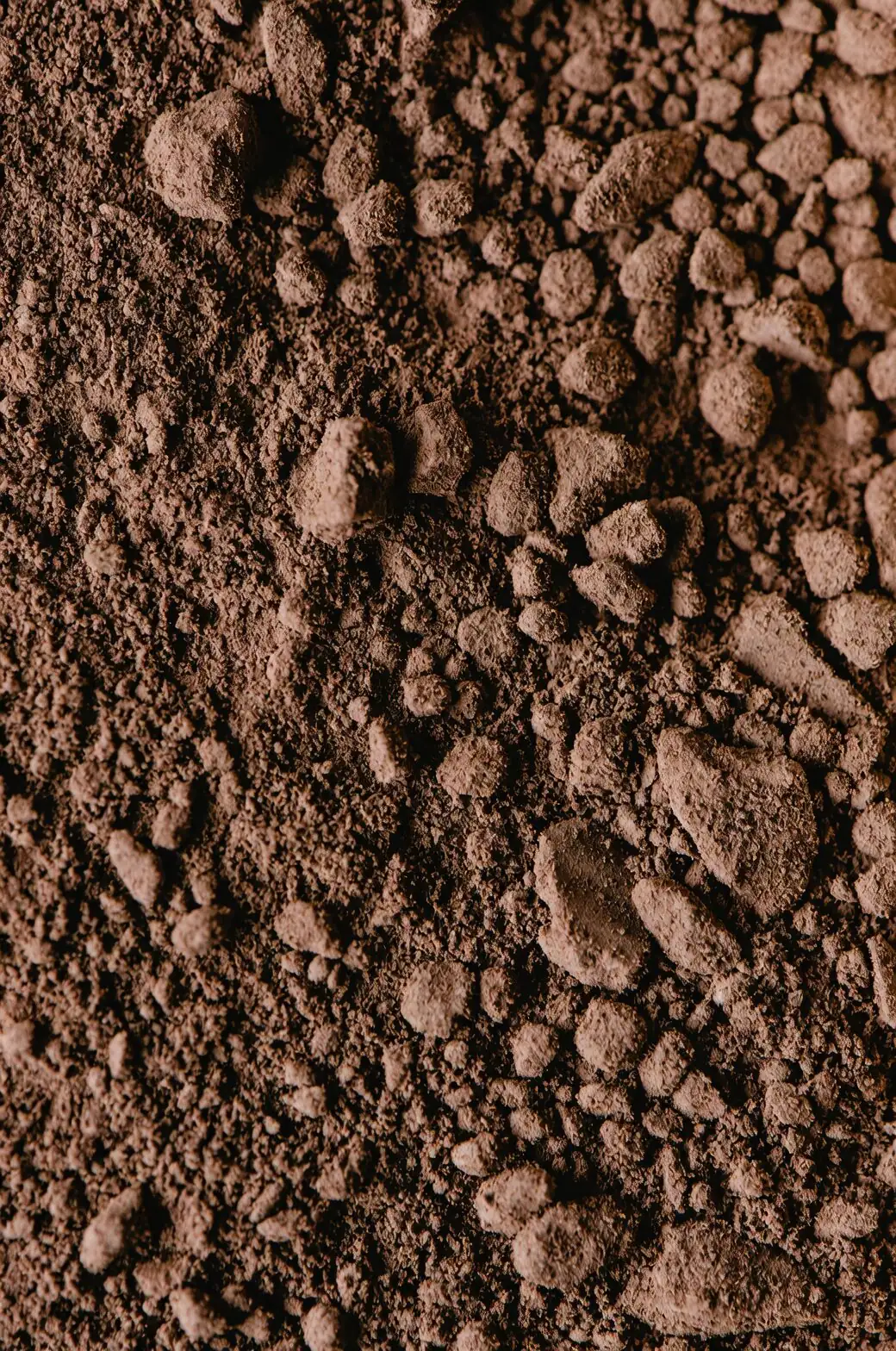
Pumice
- Pros: Porous volcanic rock with internal pockets; improves drainage and airflow; doesn’t float; adds weight to stabilize top-heavy rosettes; long-lasting.
- Cons: Heavier and sometimes harder to source.
Perlite
- Pros: Very light, widely available, excellent for aeration.
- Cons: Floats and can migrate to the surface; crushes into fines over time; dusty (rinse before use).
Particle size and texture
- Aim for coarse particles roughly 2–6 mm. Avoid fines and peat-heavy mixes that hold water around the crown.
- Top-dressing with gravel looks tidy and keeps leaves clean, but slightly slows surface evaporation—water more conservatively and check moisture below the top layer.
Mix templates by environment
All start with a very free-draining cactus/succulent mix, then add mineral grit (pumice or perlite) to taste:
- Indoors, average airflow: 40–60% mineral grit
- Indoors, humid or low airflow: 60–70% mineral grit
- Outdoors, warm and breezy: 30–50% mineral grit
- In non-porous pots (glazed/plastic): bump grit to the high end of these ranges
These ranges push water out fast while retaining just enough moisture in mineral pores for steady rooting.
Airflow: the quiet ally
- Why it matters: Moving air speeds evaporation, discourages fungal growth, and dries the rosette center after dew or splashes.
- Easy boosts:
- Crack a window or run an oscillating fan on low.
- Avoid crowding—leave space between rosettes.
- Rotate pots so all sides get light and breeze.
Watering: turn “soak and dry” into a rhythm
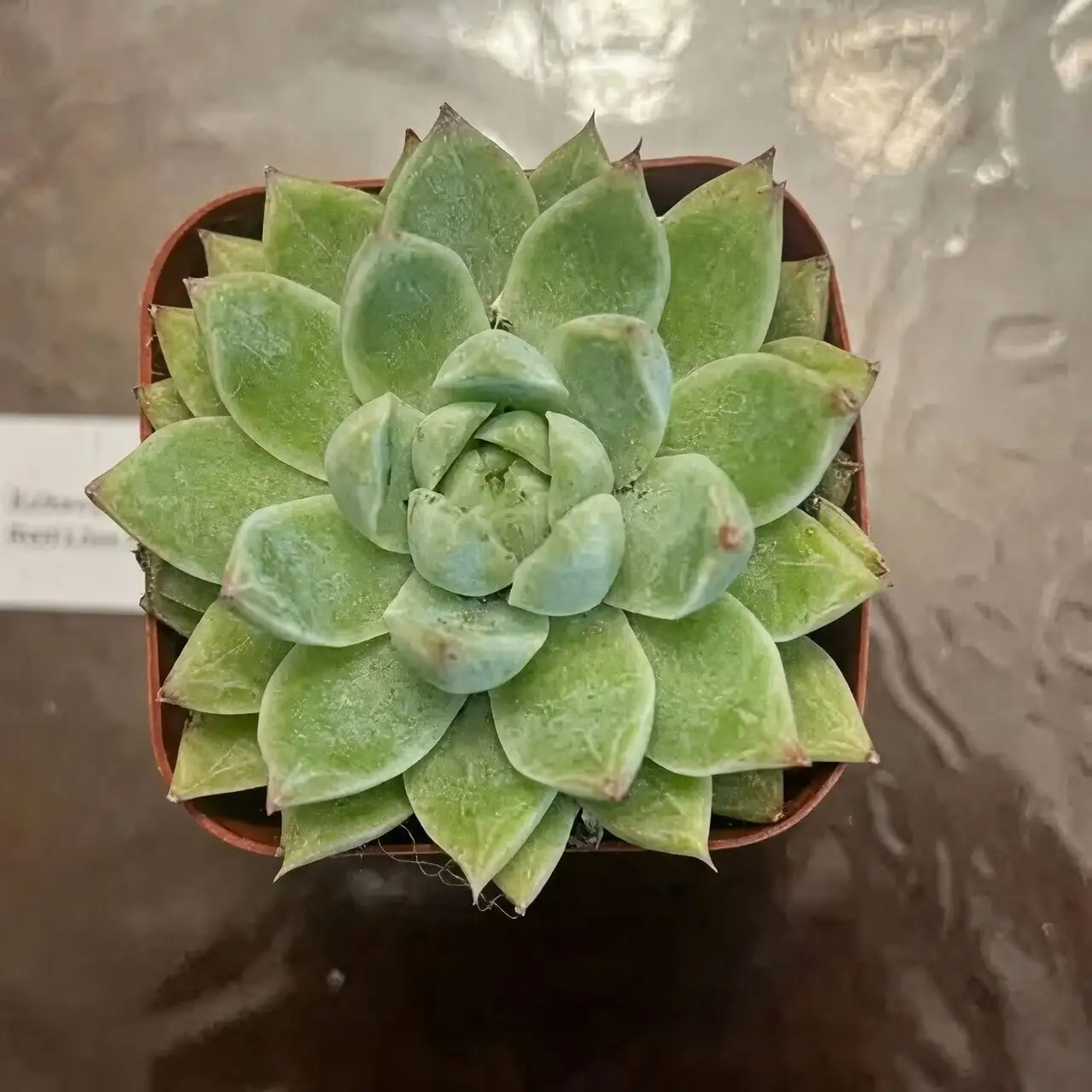
- Core method: Water thoroughly, then allow the mix to dry completely before watering again. Always water at the soil line—keep the rosette dry.
- Typical tempo:
- Growing season (spring–summer): often every 7–14 days, but your pot+mix+airflow can push that shorter or longer.
- Winter: about every 3–4 weeks or less, especially in cool rooms with low light.
How pot and grit shift the interval
- Faster dry-down (shorter intervals between waterings):
- Terracotta + 60–70% pumice/perlite + good airflow
- Shallow pot in a bright, warm spot
- Slower dry-down (longer intervals):
- Glazed ceramic or plastic + modest grit + low airflow
- Deep pot in a cooler, dimmer corner
Think of it like this: increase porosity or pot breathability, and you’ll water a bit more often—but with much lower rot risk. Decrease porosity or airflow, and you must stretch the time between waterings to let the root zone truly dry.
Know when it’s time
- Weight test: Lift the pot—dry feels surprisingly light.
- Skewer test: Insert a wooden skewer to the bottom; if it comes out clean and dry, water.
- Finger test: Feel through the drainage hole; cool/damp means “wait.”
- Visual cues: Slightly soft lower leaves can mean thirst; soft, translucent leaves high on the rosette often signal overwatering.
Seasonal tweaks
- Summer heat: Provide light afternoon shade in scorching sun; water only when bone-dry.
- Winter: Bright light, cooler temps, and minimal water. Cold + wet roots = rot.
Rot risk: red flags and fixes
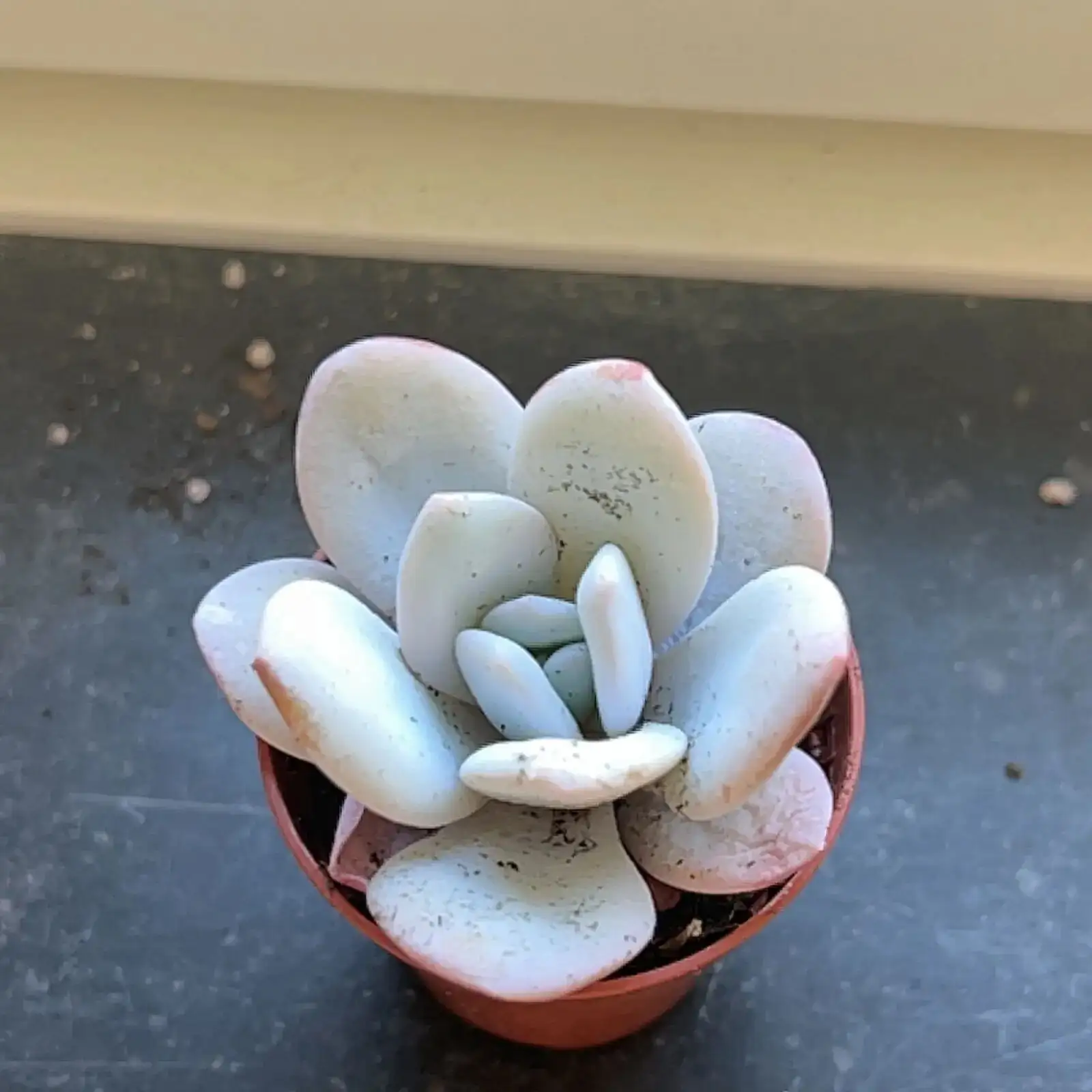
- Early warnings: Mushy, translucent leaves; a sour smell; browning at the rosette center.
- Immediate actions:
- Unpot and inspect roots; trim any blackened tissue.
- Let the plant and fresh-cut surfaces callus 2–5 days.
- Replant in a drier, grittier mix and a breathable pot.
- Improve airflow and reduce watering frequency.
Routine care snapshot
- Fertilizer: Feed lightly in spring–summer with a cactus/succulent fertilizer at 1/4–1/2 strength every 4–6 weeks. Skip in winter.
- Grooming: Remove dried lower leaves and spent flower stalks.
- Repotting: Every 1–2 years in spring into a pot with drainage holes; terracotta helps soil dry faster.
- Propagation: Separate offsets or take leaf cuttings. Let cuttings callus 2–5 days, place on a dry, gritty mix, and water sparingly once roots form.
- Pests: Mealybugs (leaf axils), aphids on flower stalks, spider mites in hot spells. Treat with insecticidal soap or isopropyl swabs; increase airflow.
- Safety: Generally non-toxic to people and pets, though nibbling may cause mild stomach upset.
Quick troubleshooting
- Leaves turning greener than burgundy: Increase light gradually to 4–6+ hours of direct sun; cooler nights can deepen color.
- Rosette stretching tall: It’s etiolation from low light. Move to brighter conditions; you can behead and re-root for a compact form.
Bringing it all together
If ‘Red Taurus’ had a mantra, it would be: bright sun, bone-dry breaks, and air to breathe. Let terracotta act as your moisture escape valve or, if you love the look of glazed ceramic, counterbalance with extra pumice or perlite and longer gaps between waterings. The right pot, a gritty mix, and a whisper of breeze transform watering from guesswork into a reliable rhythm—and keep those wine-red rosettes tight, vibrant, and rot-free for seasons to come.
Symbolism note: Like many Echeverias, ‘Red Taurus’ is linked with endurance and self-reliance—apt for a plant that thrives by storing its own reserves and asking, above all, for a little sun and space to breathe.