

If your rattlesnake plant’s leaves are wearing crispy brown tips like a tired fringe, don’t blame your watering schedule just yet—blame what’s in the water. Goeppertia insignis (still often sold as “Calathea insignis”) is breathtakingly patterned and refreshingly honest: give it pure, soft water and steady humidity, and it will look glossy and lush. Give it mineral-heavy tap water or drafts, and it tells you immediately at the leaf edges. Here’s how to make an instant difference with simple water-quality fixes and a few smart habits.
Meet Goeppertia insignis, the rattlesnake plant
- Native home: Brazilian rainforest floors—think warm, softly lit, and humid.
- Look: Long, wavy-edged leaves with snakeskin-dark markings above and rich burgundy undersides.
- Size indoors: About 75 × 45 cm (30 × 18 in).
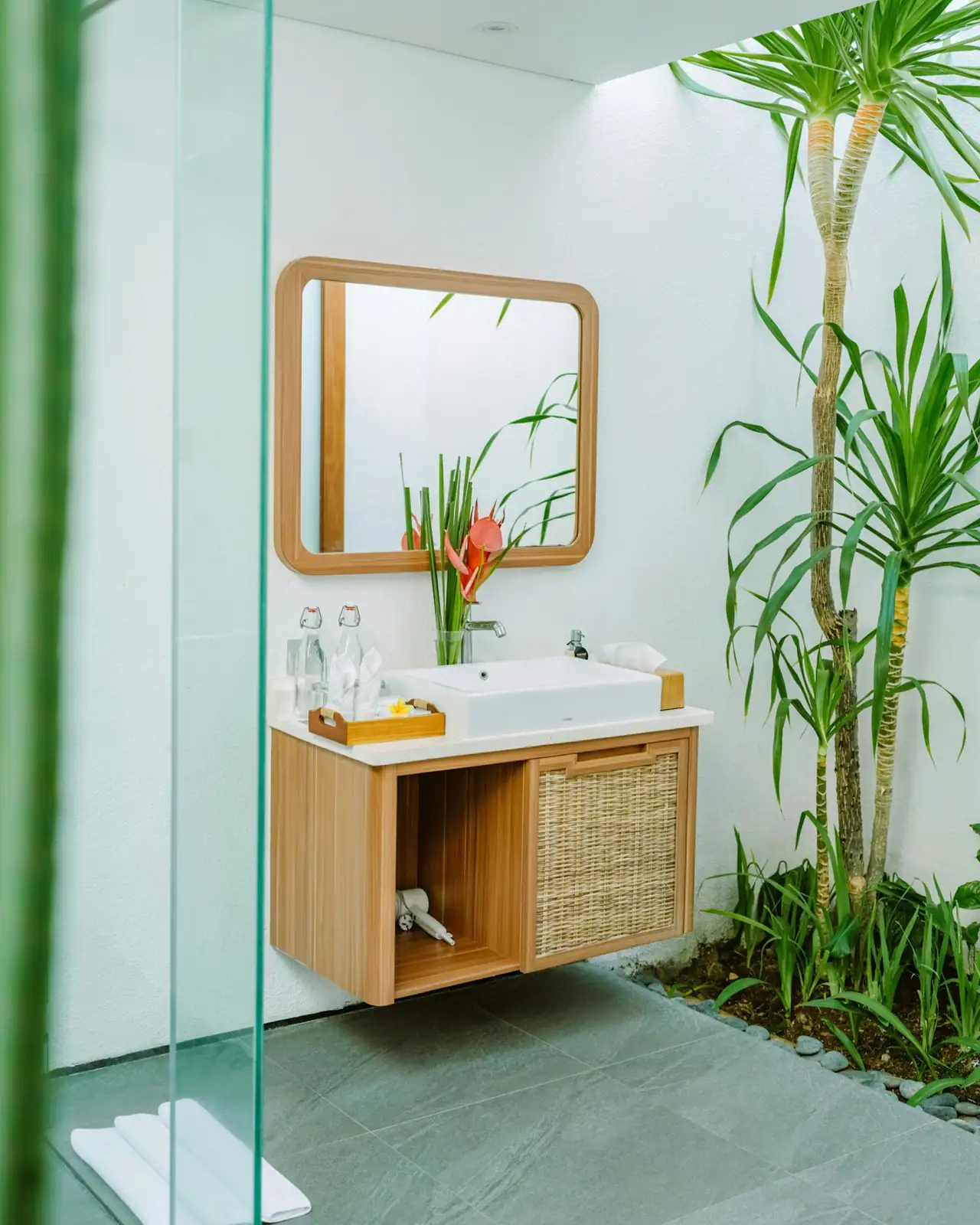
- Light and placement: Bright, indirect light to light shade; avoid harsh sun. A steamy bathroom or kitchen near an east/north window is perfect. Keep away from vents and drafts.
- Comfort zone: 15–24°C (59–75°F), humidity 50%+.
- Soil: Moisture-retentive but airy—use 2 parts quality houseplant mix to 1 part perlite (2:1).
Why brown tips happen (and how to stop them fast)
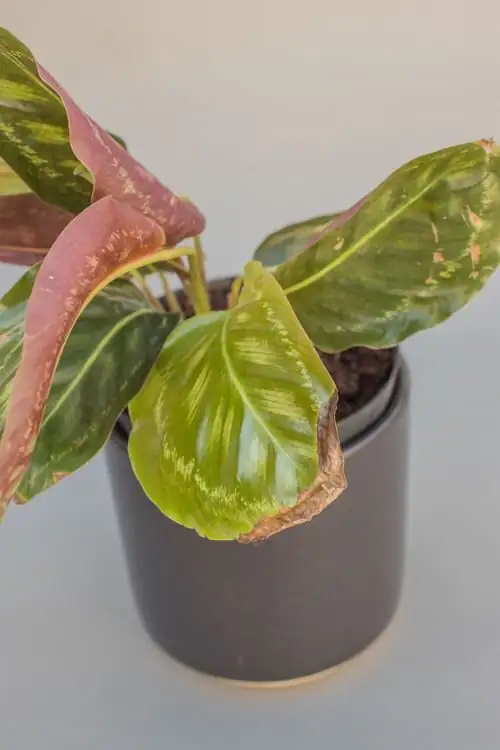
Brown, papery edges are usually the plant’s SOS for:
1) Mineral-heavy water and salt buildup
2) Low humidity and airflow stress (drafts)
3) Overfertilization or compacted, poorly draining soil
Quick fix in a sentence: switch to rainwater or distilled, raise humidity to 50–60%+, and flush the soil to push out accumulated salts.
The mineral story in plain language
Tap water often contains chlorine/chloramine plus calcium, magnesium, and other dissolved salts. These aren’t a problem for us, but this plant evolved on pure rainwater. Excess salts accumulate in soil and leaf tips, where water evaporates and minerals “burn” tissues—hence the crispy margins and white crust on soil or pot rims.
Humidity matters, too
Dry air speeds evaporation at the leaf edge and makes tip burn worse. Aim for 50%+ (higher is better). A humidifier or a pebble tray under the pot delivers steadier results than quick misting alone.
Instant water-quality upgrades you can do today
From “best” to “better than nothing,” here are easy options—with what each actually solves.
1) Rainwater (gold standard)
- How: Set out a clean, food-safe bucket or covered tote on a balcony/patio, or use a small rain diverter on a downspout. Discard the first few minutes of a storm (the “first flush”) if you can, then collect.
- Store covered in a cool, dark spot; use within a couple of weeks.
- Why it works: Naturally soft and mineral-light—exactly what this plant wants.
2) Distilled or RO water
- Distilled jugs are inexpensive and immediately effective. Reverse osmosis (RO) systems give you a steady supply if you own many humidity-lovers.
- Stretch the budget: If your tap isn’t extremely hard, mix 3 parts distilled/RO to 1 part tap and watch the tips—adjust if browning persists.
3) Good pitcher filter (activated carbon)
- Brands that reduce chlorine and some metals can help, especially if your tap water is moderate. They won’t remove all dissolved minerals but are often “good enough” for many homes.
- Tip: Test with a simple TDS pen. Under ~100 ppm tends to keep Goeppertia happier; if you’re much higher, move to rain/distilled/RO.
4) Let tap water sit 24 hours (a modest help)
- Standing water allows much of the chlorine to dissipate. It won’t remove chloramine or hardness, so consider this a stopgap, not a cure-all.
5) Boiled and cooled water (situational)
- Boiling can reduce some “temporary” hardness and drives off chlorine, but not chloramine or all minerals. If this is your only option, it’s a slight improvement—still not as reliable as rain/distilled/RO.
Pro tip: Whatever you use, bring water to room temperature before watering—chilly water stresses roots and can mimic watering issues.
Flush out mineral buildup (the overlooked step)
Even with better water, old salts may remain in the pot. Leach them out:
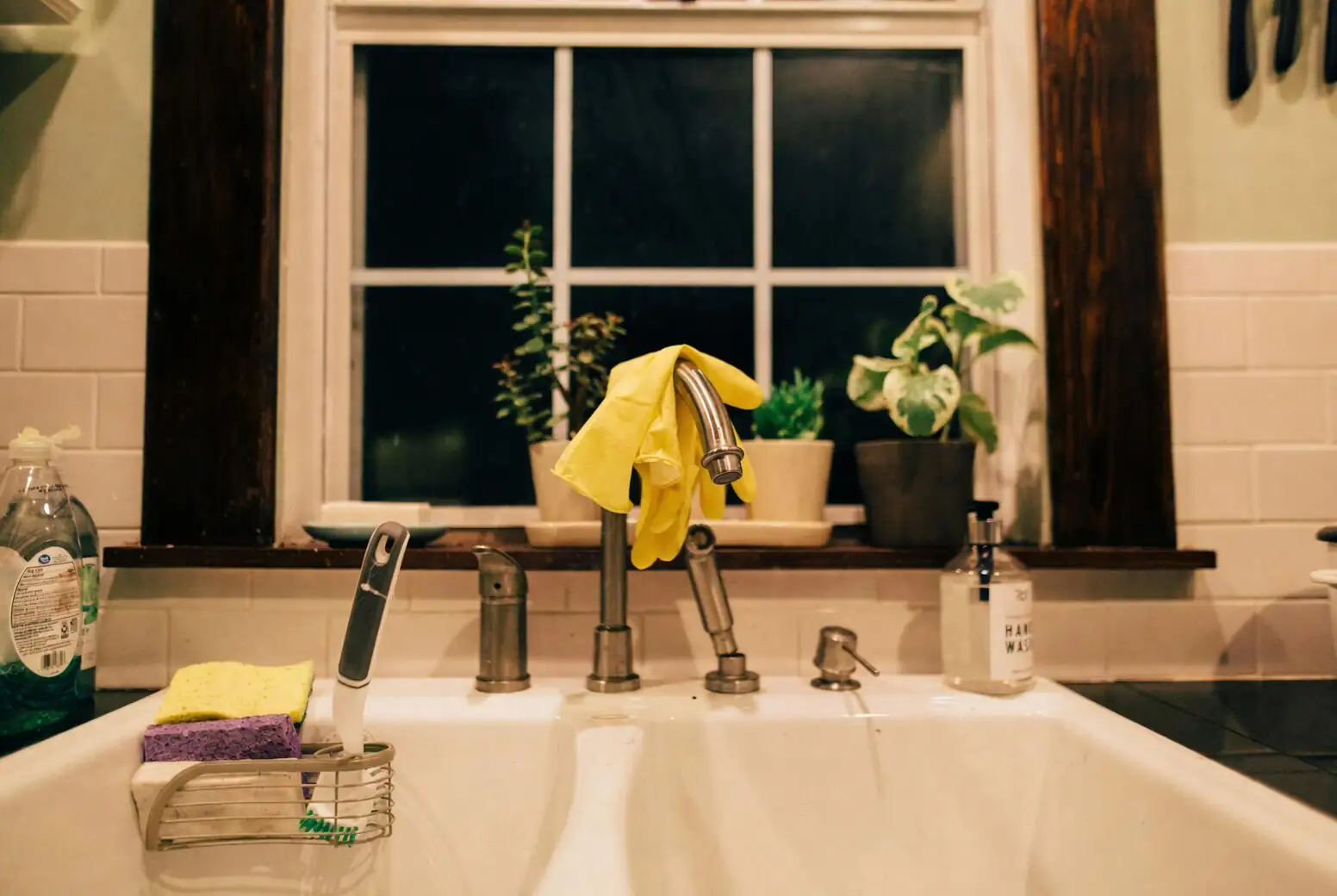
- Move the pot to a sink/shower. Slowly pour soft water through the soil—about 2–3 times the pot’s volume—letting it fully drain.
- Repeat monthly if your tap is hard, or any time you see whitish crust on the soil or pot rim.
- Severe buildup? Repot in spring into fresh mix (2:1 potting mix:perlite). Ensure the pot has a drainage hole.
Watering rhythm that prevents stress
- Spring to autumn: Keep the mix evenly moist, never soggy. Water when the top 1–2 cm (0.4–0.8 in) of soil dries. Thoroughly moisten, then drain completely—don’t let the pot sit in runoff.
- Winter: Let the surface dry a little more between waterings.
- Container tip: A plastic nursery pot nested in a decorative cover pot helps maintain gentle, even moisture. Terracotta wicks fast and can encourage salt crust and crispy edges if your air is dry.
Brown-tip triage: a 48-hour plan
1) Switch the water now to rain, distilled, or RO.
2) Raise humidity to 50–60%+ with a humidifier or a pebble tray; keep away from heating/cooling vents.
3) Flush the soil thoroughly to remove built-up salts.
4) Pause fertilizer for 3–4 weeks.
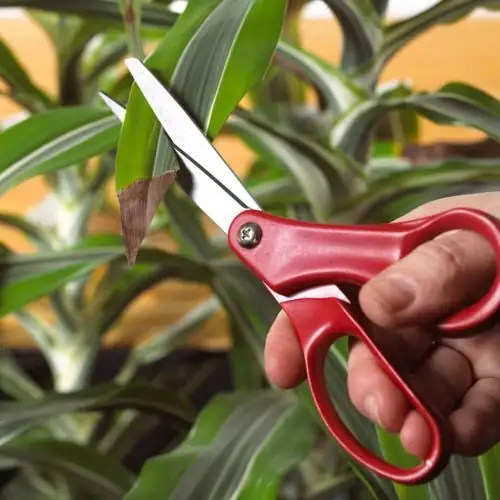
5) Trim brown tips for looks: use clean scissors and follow the shape of the leaf, leaving a thin line of brown so you don’t cut healthy tissue.
6) Reassess light: bright, indirect is best; avoid direct sun that can scorch patterns.
You should see new growth emerge cleaner within a few weeks. Old damage won’t reverse, but future leaves will tell you you’re on track.
Fertilizer without the burn
- Growing season: Feed every 2 weeks at half strength. This plant is sensitive—err on light feeding, and always water first, then fertilize onto moist soil.
- Winter: Reduce or pause if growth slows.
- Prevent buildup: Perform a plain-water flush every month or two.
Comfort checklist that supports flawless foliage
- Light: Bright, filtered light; avoid direct sun that scorches or fades markings.
- Temperature: 15–24°C (59–75°F); avoid dips below ~13°C (55°F).
- Humidity: 50%+; bathrooms and kitchens are ideal.
- Drafts: Keep away from doors and vents; steady air = prettier edges.
- Pruning: Remove yellowing or damaged leaves at the base with clean scissors.
- Repotting: Every 2–3 years or when root-bound, ideally in spring.
- Pests: In dry air, spider mites can appear. Rinse foliage and treat with insecticidal soap or horticultural oil if needed.
- Pet-safe: Generally non-toxic to cats and dogs.
Diagnosis guide: mineral burn vs. other issues
- Mineral/salt burn: Brown, crispy margins, sometimes with a pale halo; white crust on soil or pot; often despite “enough” watering. Solution: softer water + soil flush.
- Underwatering: Soil dries hard and fast; leaves curl, edges crisp, plant wilts then perks up right after watering. Solution: water a bit sooner, improve humidity and potting mix.
- Overwatering/poor drainage: Constantly wet soil, yellowing leaves, possible mushy stems. Solution: aerate soil, ensure drainage, adjust watering frequency.
Simple rainwater hacks that work
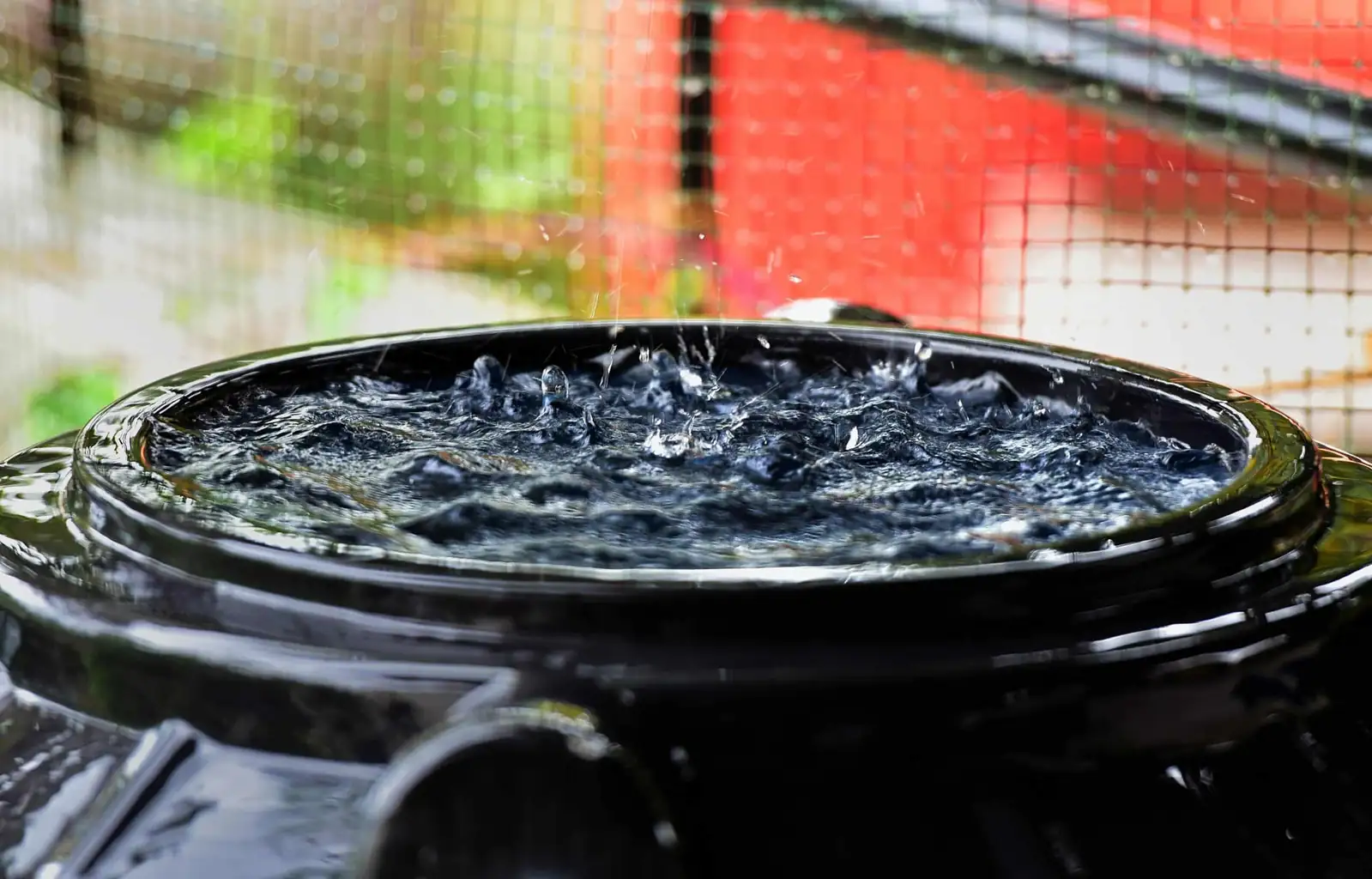
- Balcony bucket method: A lidded, food-safe container with a mesh screen keeps debris and mosquitoes out. Label it “plant water.”
- Micro diverter: Clip a small diverter to a downspout during rainy weeks; discard the first 2–3 minutes of runoff, then collect.
- Storage: Keep containers covered and out of sun; use within a couple of weeks for best freshness.
Symbolism and the vibe it brings
The rattlesnake plant often symbolizes calm and renewal—fitting for a houseplant that thrives in warm, spa-like rooms. Its nightly leaf postures and burgundy undersides add a quiet, meditative drama to bathrooms and kitchens where humidity hums. Like most “flower language,” these meanings are cultural rather than botanical, but they resonate: steady care in a steady environment, rewarded with restful beauty.
Quick-start recap
- Use rain, distilled, or RO water; a pitcher filter is a decent step up from hard tap.
- Flush the soil monthly to remove salts.
- Keep humidity at 50%+; a humidifier or pebble tray beats misting alone.
- Bright, indirect light; temperatures 15–24°C (59–75°F); no drafts.
- Feed lightly at half strength every 2 weeks in the growing season.
Make those water and humidity tweaks today, and your Goeppertia insignis will return the favor—with fresh, clean-edged leaves that look airbrushed, not frazzled.