

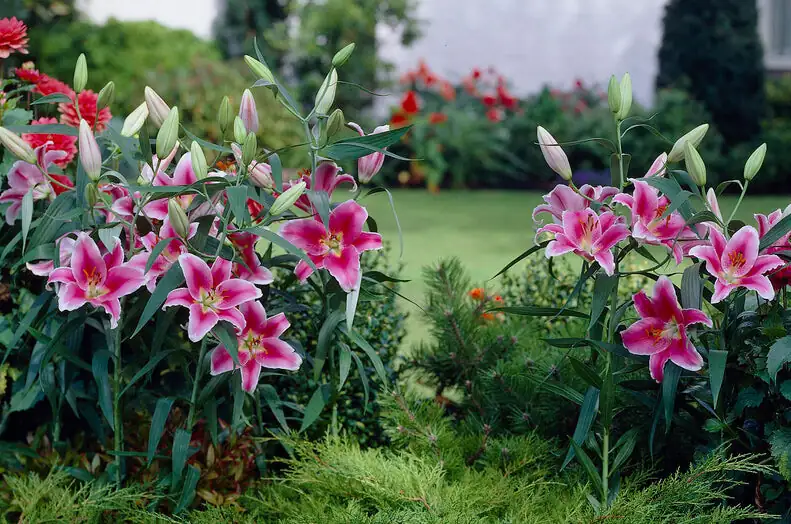
Imagine a plant that loves a sunny shoulder rub but insists on cool feet. That’s the lily in a nutshell. Give Lilium spp. bright light up top, crisp drainage below, and smart watering and feeding in between, and you’ll be rewarded with towering stems and armfuls of fragrant, dramatic blooms—all while keeping those precious bulbs rot-free.
The golden rules for massive blooms (and cool, happy bulbs)
- Sun: 4–6+ hours of direct sun, with afternoon shade where summers are hot.
- Drainage: absolutely sharp. Lilies forgive a late feed, but not wet feet.
- Watering: steady, deep moisture during active growth; never soggy; dry-ish in dormancy.
- Feeding: modest but consistent from early growth through bud set.
- Planting depth: deep enough to let stem roots form—typically 2–3× bulb height in beds; slightly shallower approaches can work in containers if drainage is excellent and pots are deep.
Step-by-step: from bag to bloom
1) Choose the right spot
- Sunlight: Aim for at least 4–6 hours daily. In hot climates, morning sun plus dappled afternoon shade keeps flowers pristine and bulbs cooler.
- Wind: Pick a site sheltered from strong winds; tall stems are elegant, not invincible.
- Airflow: Space plants to avoid muggy, stagnant air that invites disease.
2) Prep the soil for speed-drain magic
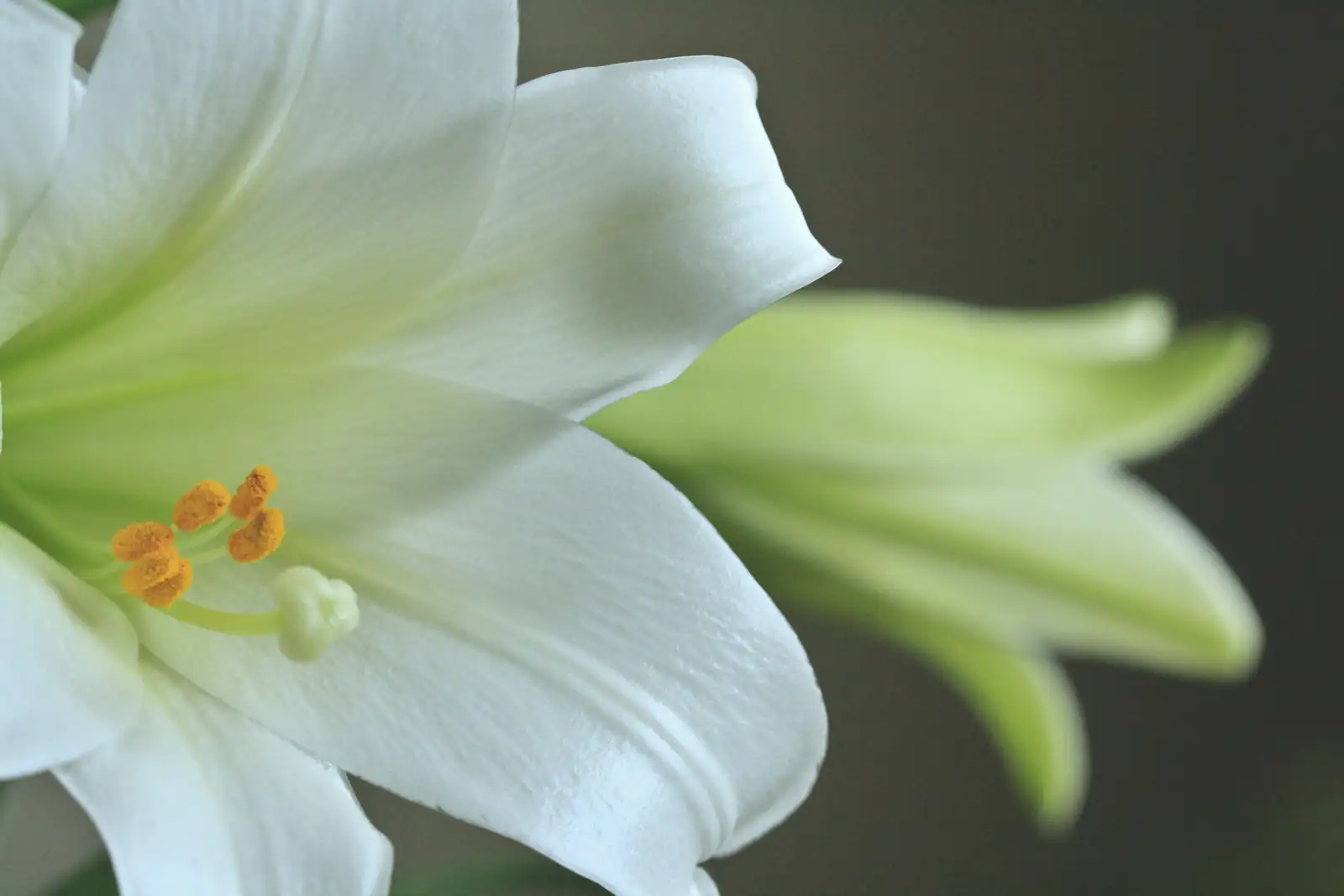
- Texture: Fertile, loose, and very well-drained. Slightly acidic to near-neutral (about pH 5.5–6.5) suits most lilies.
- Mix for containers: A practical recipe is roughly
- 40% compost or leaf mold
- 30–40% peat or coco coir
- 20–30% coarse sand/perlite/pumice
- Boosters: A small amount of well-rotted organic matter at planting is helpful. Bone meal can support flowering where appropriate. Avoid heavy, water-retentive media.
3) Plant at the right depth (the stem-root secret)
Lilies make two root systems: basal roots beneath the bulb and stem roots along the underground stem. Planting depth helps the bulb stay cool and powers bigger blooms.
- In garden beds:
- Depth: Plant about 2–3× the bulb’s height (often around 20 cm / 8 in for many types).
- Spacing: 20–45 cm (8–18 in) apart depending on variety.
- Orientation: Pointy end up. Backfill lightly and water to settle.
- In containers:
- Pot: A deep container with generous drainage holes (at least 15–20 cm / 6–8 in deep).
- Medium: Use the gritty, fast-draining mix above.
- Depth: Depending on setup, bulbs may be planted deeper or, in some methods, covered by just 2–3 cm (0.8–1.2 in) of mix—especially if pre-sprouted. The shallower the cover, the more critical perfect drainage becomes.
- Count: 1–3 bulbs per pot for best performance and airflow.
- Mulch to keep “feet” cool:
- Lay 5–8 cm (2–3 in) of organic mulch after the soil warms. Or use low, shallow-rooted companions (think airy groundcovers) to shade the root zone while keeping stems in sun.
Watering, dialed for bloom and bulb safety
- After planting: Water thoroughly once to settle soil around the bulb.
- During active growth (spring to bud set):
- Keep evenly moist but never wet. A practical benchmark is a deep watering roughly once a week, adjusting for heat, rainfall, and pot size.
- Water at the base in the morning; avoid overhead splashing that encourages leaf and petal diseases.
- During flowering:
- Stay consistent—drought at this stage reduces flower size and count.
- Do not wet open blooms.
- After flowering:
- Deadhead promptly. Ease off watering as foliage begins to yellow.
- Dormancy:
- Once stems die back, keep the medium on the dry side. Never let containers sit in saucers of water.
Pro tip: In heat waves, containers may need water more often than beds. Your cue is the top few centimeters of mix: water when they begin to dry, not when they’re still cool and damp.
Feeding for fireworks
- At planting: Start with fertile soil and a light organic base.
- Early growth: Apply a balanced fertilizer once roots are active.
- Bud formation: Shift toward a formulation with relatively higher phosphorus and potassium to support blooms.
- Options:
- Feed at early growth and again at bud set, or
- Use a diluted liquid feed every 15–20 days during active growth.
- Avoid heavy nitrogen and avoid feeding before the bulbs have re-rooted into moist, aerated soil.
Sun exposure that supercharges flowers (without cooking bulbs)
- Cool-to-mild temperatures (about 15–25°C / 59–77°F) deliver strong growth.
- In cool-summer climates, full sun brings maximal bloom power.
- In hot-summer regions, give afternoon shade or high, open dappled light. Think “sun on shoulders, shade at the ankles.”
Drainage: the non-negotiable
- Beds: If puddles linger 5–6 hours after rain, build a raised bed or mound and amend with coarse mineral material.
- Pots: Use pot feet or bricks to lift containers; ensure fast outflow after watering.
- Golden rule: Bulbs fail more often from waterlogging than from cold in the ground.
Quick seasonal game plan
- Spring: Shoots emerge. Begin regular watering once growth is active; feed lightly. Stake tall cultivars if windy.
- Summer: Buds and blooms—keep evenly moist, shade blooms in extreme heat, and never wet petals.
- Late summer to fall: Deadhead; let foliage feed the bulbs. Gradually reduce water as leaves yellow.
- Fall/winter: Stop watering after dieback. In cold areas, many garden lilies overwinter in beds (often around USDA Zones 4–8), but protect pots from freezing solid.
Troubleshooting fast
- Bulb rot:
- Cause: Soggy soil, poor drainage, or pots sitting in water.
- Fix: Replant in a grittier mix, water only when the top layer starts to dry, and water at the base. Remove any rotted tissue; consider a labeled fungicide if rot recurs.
- Weak or missing blooms:
- Usual suspects: Not enough light, bulbs too small/immature, planting too shallow (poor stem-root formation), or lean feeding.
- Remedy: 4–6+ hours of sun, plant 2–3× bulb height in beds, and feed from early growth through bud set.
- Mushy petals or spotting:
- Cause: Overhead watering, wet blooms, or poor airflow (Botrytis loves that combo).
- Fix: Keep flowers dry, improve spacing/air, and water mornings at soil level.
- Pests and diseases:
- Watch for aphids (virus vectors), lily leaf beetles (where present), and gray mold. Use airflow, base-watering, and prompt cleanup of spotted leaves. Treat soft-bodied pests with insecticidal soap/horticultural oil as locally approved; use labeled fungicides if necessary.
Container-only pointers
- Choose a deep pot with excellent drainage and a gritty medium.
- Group bulbs for a full look but allow space for air.
- Never let the saucer collect water.
- In winter, protect from hard freezes and prolonged subzero spells.
- Avoid shuffling blooming pots around—bud drop and stem breakage are real.
Cut-flower savvy (and a vital safety note)
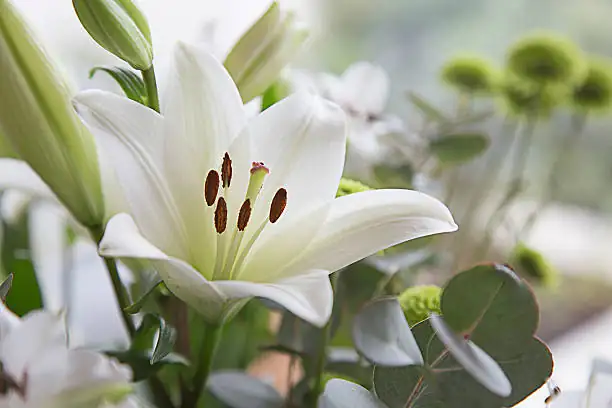
- Harvest when the first bud is fully colored but not yet open.
- Remove anthers to prevent pollen stains and prolong bloom.
- Keep bouquets away from ripening fruit—ethylene gas shortens vase life.
- Cats: Many true lilies (Lilium spp.) are extremely toxic to cats—pollen, petals, leaves, even the vase water. Keep all lilies away from cats and seek urgent veterinary help if exposure is suspected.
A note on flower colors and symbolism
- Palette: White, yellow, orange, pink, red, and purples abound—sometimes brushed or spotted—but there are no naturally blue true lilies.
- Meaning: Across cultures, lilies often symbolize purity, renewal, devotion, and auspicious unions. The white “Madonna lily” echoes purity in Western iconography, while in Chinese culture, layered lily bulbs evoke wishes for “a hundred years of harmonious union”—a classic blessing at weddings. These associations grew from centuries of religious, artistic, and festive use rather than botany itself; they’re cultural stories we attach to the flowers’ striking beauty and heady fragrance.
One last reminder: think “sun above, shade below”
If you remember just one mantra, make it this: stems in sun, bulbs in cool, airy, quick-draining soil. Combine that with consistent moisture during growth and a timely bloom-boosting feed, and your lilies will repay you with towering stems, pristine leaves, and those big, breathtaking summer flowers that stop people in their tracks.


