

Imagine a pot erupting into safe, miniature flames. That’s Campfire Crassula—Crassula capitella ‘Campfire’—a compact succulent whose stacked leaves blush from gray‑green to searing orange‑red when light and temperature are just right. The trick is ramping up light like a dimmer switch, not a strobe. Done well, you’ll prevent scorch outdoors and coax festival‑bright color indoors by a sunny window.
Meet the plant behind the glow
- What it is: Campfire Crassula, also sold as Campfire Plant, Red Pagoda, or Red Pagoda Crassula. A garden‑selected cultivar with a parent species native to southern Africa.
- Look and size: Fleshy, opposite leaves tightly stacked along stems; architectural, almost pagoda‑like. Typically 10–30 cm (4–12 in) tall and 20–60 cm (8–24 in) wide in containers, spreading and lightly trailing with age.
- Seasonal color: Fresh green in spring/summer or milder light; margins redden and can turn vivid orange‑red to scarlet with stronger light and cooler nights in autumn/winter.
- Flowers: Small, starry clusters, white to pale pink, most often in autumn.
- Personality: Drought‑tolerant, sun‑loving, rot‑averse, and frost‑tender. Thrives on a bright windowsill, balcony, or beside a floor‑to‑ceiling window.
Light makes the flame
Pigment is performance art: more light plus a cool day–night temperature swing cue the reds. But light needs choreography.
- Best color: Bright light to full sun, especially in cool, bright autumn/winter.
- Indoors: East or south windows are prime. Keep it as close to the glass as you can without touching cold panes in winter.
- Outdoors: Acclimate gradually. In extreme heat, give gentle afternoon shade; heat plus intense sun can scorch leaves even on sun‑lovers.
The outdoor “sun ramp” that prevents scorch
Think of this as physical training. You’re building sunscreen in the leaves—slowly.
Pre‑ramp setup
- Potting mix: Very free‑draining cactus/succulent mix with grit/perlite. Always use a pot with drainage holes.
- Watering baseline: Use a drench‑and‑dry rhythm. Begin the ramp when the plant is hydrated but not freshly soaked.
- Orientation matters: Start where morning sun is available and afternoons are bright shade. South and west exposures need extra caution.
- Heat watch: When highs exceed about 85–90°F (29–32°C), provide mid‑afternoon shade; “bright shade” is the safe zone for most smooth‑leaf succulents in peak heat.
Two‑to‑three‑week ramp (adjust to your climate and plant response)
- Days 1–3: Bright shade only (no direct sun). Good airflow.
- Days 4–7: 1 hour of early morning sun, then bright shade.
- Days 8–10: 2–3 hours morning sun, then bright shade.
- Days 11–14: 4 hours morning sun, then dappled shade. If foliage stays firm and color deepens without paling or spotting, you can stretch toward gentler late‑morning/early‑afternoon light.
- Week 3+: In mild climates, you may progress to full sun by late morning. In hot regions, keep a veil of afternoon shade (e.g., shade cloth, pergola, or positioning east of a wall/fence).
Scorch signals and quick fixes
- Early warnings: Leaves wash out to pale beige with a glossy cast, especially near the base—that’s sun stress. Dial back to morning sun plus shade.
- Sunburn: Brown/black patches won’t heal. Remove only if 70–80% of a leaf is damaged.
- What not to do: Don’t lurch from hot sun straight indoors to low light; the shock adds stress. Instead, shift to a shadier outdoor nook or create temporary shade (umbrella, shade cloth).
The indoor “window glow” plan for maximum pigment
Indoors, you’re the lighting designer. Your goal: intense light with gentle nights.
Best placements
- East window: Gold standard—generous morning sun without harsh late heat.
- South window: Excellent, especially in winter. In summer, use sheer curtains at midday if leaves pale.
- Beside tall, bright glazing: Position within 15–30 cm (6–12 in) of the glass for intensity.
Light‑boosting habits
- Rotate the pot a quarter‑turn weekly to avoid a lopsided plant and uneven color.
- Pull back sheer curtains in autumn/winter to sharpen light.
- Keep foliage dust‑free for better light capture (no misting—wipe gently).
Temperature cues for color
- Ideal growth: 18–24°C (64–75°F).
- Keep above 8°C (46°F). In winter, cooler nights (never near freezing) plus bright days push reds. A slight day–night swing by an open window in safe temperatures can help.
- If temps dip toward 5°C (41°F) or below: keep the mix dry and pause watering entirely to reduce rot risk.
Watering cadence that supports color
- Method: Soak thoroughly, then let the mix dry well before the next drink.
- Spring: Often about weekly if it’s actively growing and drying fast.
- Summer: Many growers water every 2–3 weeks, less during heatwaves if growth pauses.
- Autumn: Light watering when dry (often weekly in bright, mild conditions) supports peak color and possible blooms.
- Winter: Very bright, very sparing. Keep mostly dry. If near/below 5°C (41°F), stop watering.
Feeding, soil, and airflow
- Fertilizer: Feed monthly in active growth with a dilute, balanced‑to‑bloom‑leaning, lower‑nitrogen option (e.g., 15‑15‑30). Skip feeding in cold, low‑light winter.
- Mix: Gritty, fast‑draining blends prevent soggy roots and preserve leaf turgor.
- Air: Dry air and ventilation are friends; still, humid corners invite rot and leaf spotting.
Color checklist: from green to “campfire”
- Brightest window or gentle outdoor sun after acclimation
- Cooler, safe nights in autumn/winter (above 8°C/46°F)
- Drench‑and‑dry watering; no chronically damp mix
- Monthly low‑strength feeding during active growth
- Good airflow; no misting
Seasonal rhythm at a glance
- Spring: Repot, tidy away dead basal leaves, take cuttings, resume light feeding. Begin outdoor acclimation.
- Summer: Strong light with afternoon shade in extreme heat; water only after thorough drying.
- Autumn: Peak color and possible flowering; great time to shape and propagate.
- Winter: Keep very bright and on the dry side; protect from cold and frost.
Quick styling and propagation
- Growth habit: Low and branching; stems become lightly trailing and spill over pot rims—great in shallow bowls or the front edge of mixed planters.
- Pruning: Pinch leggy tips; replant the trimmings.
- Propagation: Tip cuttings 3–6 cm (1.2–2.4 in) with 6–7 leaves. Let cut ends callus, insert into gritty mix, and keep warm and bright (18–22°C / 64–72°F). Rooting in about 14–21 days is common.
Buying smart
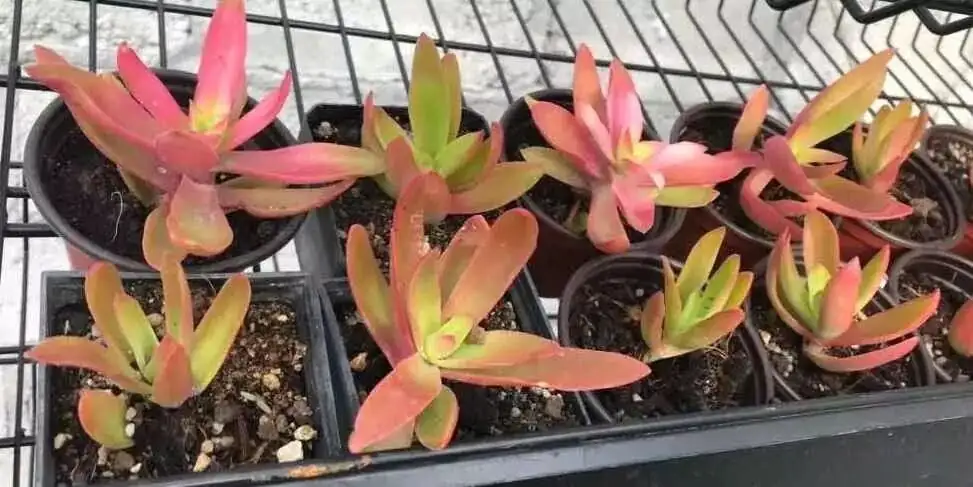
Choose compact, symmetrical plants with tightly stacked leaves and firm stems—often around 5 cm (2 in) tall is perfect for small containers. Avoid mushy bases, blackened roots, scars, and hitchhiking pests like scale or whitefly.
Troubleshooting
- Black, soft leaves: Classic rot from excess moisture or poor drainage, especially in cool, stagnant air. Unpot, remove rot, improve mix and airflow, and reduce watering.
- Pests: Whitefly and scale sometimes visit. Wipe off early, then use insecticidal soap or horticultural oil as directed. Improve ventilation.
- Leaf spot/rust: Linked to damp foliage and poor airflow. Remove affected leaves, keep drier, ventilate, and use an ornamentals‑labeled fungicide if needed.
Cold and hardiness
Frost tender; roughly USDA Zone 10–11 for year‑round outdoor growth. Bring containers under cover well before frost. If a surprise chill looms, keep the mix dry and protect from rain.
Safety
Not consistently documented as toxic, but treat as “do not eat.” Keep away from pets and children who nibble.
Symbolism and “flower language”
Campfire Crassula is often linked with a prosperous, upbeat home and with passion or boldness—apt for a plant that ignites into scarlet in cool, bright seasons. Unlike historical Victorian “flower language,” modern succulent symbolism is more community lore than canon: the meanings arise from color, resilience, and the joy these plants spark in living spaces.
One last spark
Campfire thrives on thoughtful contrasts: bright light with cool nights, soaking drinks with long dry spells, and morning sun with afternoon mercy. Treat light like a dial, not a switch, and you’ll enjoy a potful of safe, glowing embers all season long.