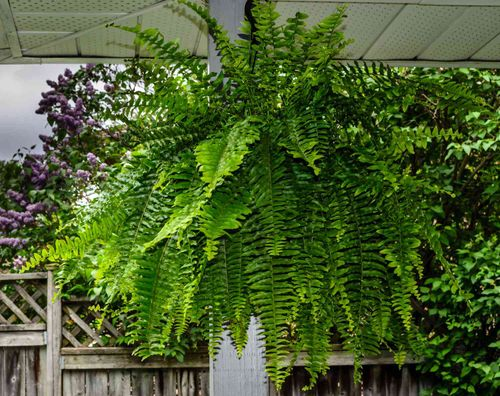
Think of Boston fern as the porch’s soft green fountain: it spills, it sways, it cools the scene down a notch just by showing up. In warm zones, Nephrolepis exaltata is practically made for outdoor living—provided you give it bright shade, steady moisture, and a gentle spot out of harsh wind. Here’s your playbook for keeping those fronds lush through steamy summers and bringing them back inside without drama when the season changes.
Meet the plant (and why porches love it)
- Botanical name: Nephrolepis exaltata (family Nephrolepidaceae)
- Common names: Boston fern, sword fern, ladder fern, boss fern
- Look: Finely divided, feathery fronds that rise upright, then cascade into a dense, fountain-like mass. Individual fronds can reach up to about 120 cm (48 in) in great conditions.
- Size in containers: Often 30–90 cm (12–35 in) tall and 60–90 cm (24–35 in) wide; many settle around 60 × 60 cm (24 × 24 in).
- Evergreen, non-flowering fern: reproduces via spores and by runners (stolons).
- Pet-friendly: generally regarded as non-toxic to cats and dogs.
The bright-shade placement playbook

The sweet spot outdoors is dappled light with excellent airflow—morning sun is fine; strong midday/afternoon sun scorches.
- Porch orientation
- East- or north-facing porches are ideal.
- West-facing porches: tuck ferns deeper under an overhang or add a sheer shade cloth to soften late sun.
- South-facing: hang under a solid eave or tree canopy so the plant sees brightness but no direct midday beams.
- Quick light test
- Hand-shadow trick: a soft, fuzzy shadow means bright shade; a sharp, dark shadow means too much sun.
- Too dim? Fronds turn sparse. Slide the basket a bit brighter but still sun-sheltered.
- Microclimate moves
- Keep at least 30–45 cm (12–18 in) away from sun-baked walls that radiate heat.
- Under trees, aim for high, shifting dapple (like under a lacey canopy), not dense, gloomy shade.
- Leave space between baskets for air to move—good airflow discourages pests and fungal issues.
- Container and mix
- Use a moisture-retentive, free-draining medium: peat/leaf-mold–based mix with perlite or coarse sand.
- Slightly acidic is preferred. Avoid heavy, soggy media.
- Hanging baskets 15–20 cm (6–8 in) wide quickly look full; group multiple clumps for that plush “green fountain.”
Heat-wave hydration and summer survival
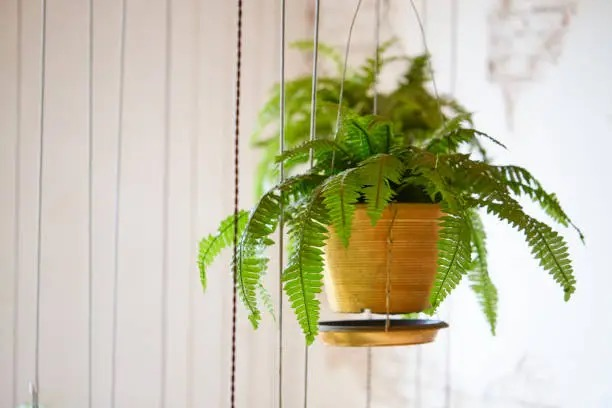
Boston ferns adore humidity but still need oxygen at the roots. The goal is evenly moist—not parched, not waterlogged.
- Temperature comfort zone
- Best at 16–24°C (61–75°F).
- Above ~35°C (95°F) stresses plants; below ~10–12°C (50–54°F) is tolerated briefly. Aim to keep above ~7°C (45°F).
- Watering rhythm
- Check often in heat. Water thoroughly when the top 2–3 cm (about 1 in) feels slightly dry, then let excess drain fully.
- In hot spells, baskets may need water several times per week; on breezy, sun-reflective porches, even daily.
- Every couple of weeks, soak the whole pot for ~10 minutes, then drain well—this rehydrates the core evenly.
- Heat hacks that actually help
- Water mornings so fronds dry fast with the day’s airflow.
- Add a thin surface layer of damp sphagnum or fine bark to slow evaporation (keep crown clear).
- Cluster plants to raise local humidity; if practical, place a wide water tray or pebble basin below (not touching the pot base).
- Move baskets a notch deeper into shade during heat waves.
- Skip fertilizer during extreme heat; resume light feeding when temps ease.
- What not to do
- Don’t leave baskets sitting in saucers of water; roots need air.
- Don’t rely on misting alone. Occasional misting is fine, but it’s humidity + consistently moist media that keep tips from crisping.
Wind protection without fuss
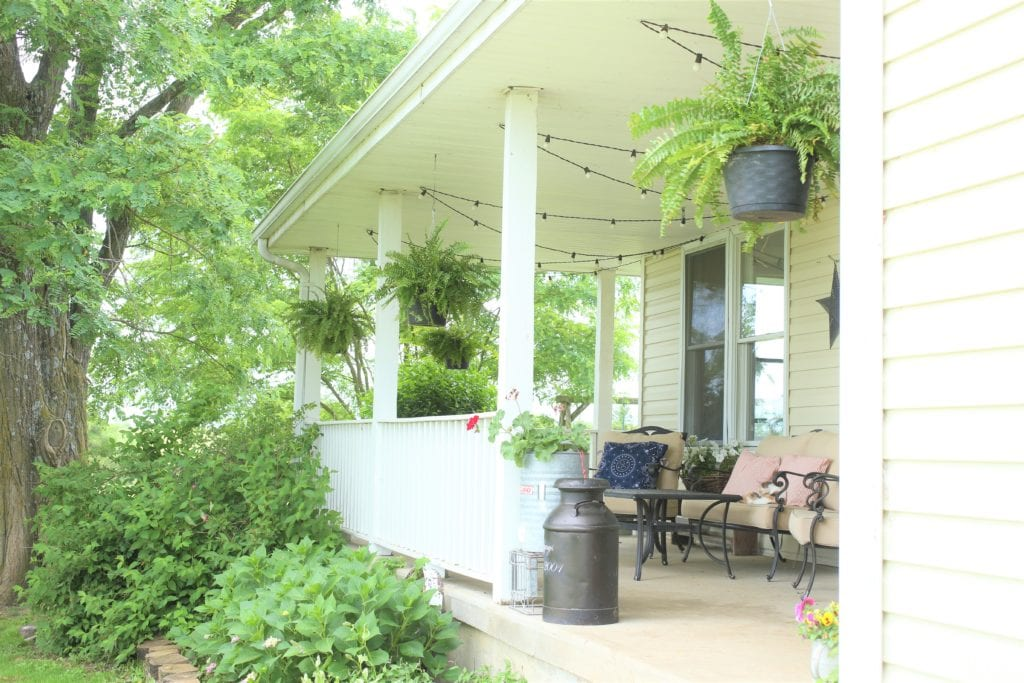
Strong gusts shred fern fronds and spin hanging baskets like wind chimes.
- Placement and hardware
- Tuck ferns behind a railing, screen panel, or column—enough shelter to break gusts but keep airflow.
- Use a sturdy S-hook with a swivel to reduce twisting. Heavier coco-fiber or resin baskets resist spin better than ultralight plastic.
- In very exposed spots, consider a plant stand instead of a hanger.
- Frond care
- Remove torn or browned fronds at the base—tidy plants handle wind better.
- Keep fronds dry before windy cold snaps to reduce chill.
Warm-zone calendar (outdoor routine)
- Spring
- Acclimate plants outdoors gradually to bright shade.
- Repot or divide crowded clumps; refresh the mix.
- Start light, regular feeding: balanced liquid at 1/2 strength monthly.
- Summer
- Prioritize moisture and humidity; protect from harsh sun and drying winds.
- Flush the pot with plain water if you see browning tips from fertilizer salts.
- Scout pests (spider mites love dry air); hose-rinse fronds and treat with insecticidal soap or neem if needed.
- Autumn
- Ease off feeding; keep evenly moist but avoid waterlogging with cooler nights.
- Plan your winter strategy (protection outdoors in Zones 10–11 or move inside elsewhere).
- Winter
- Year-round outdoors mainly in USDA Zones 10–11. In rare cold snaps, pull baskets close to the house or cover with frost cloth.
- In cooler regions (and many Zone 9 locales), bring ferns inside before nights linger below ~10°C (50°F).
Painless overwintering and seasonal migration indoors
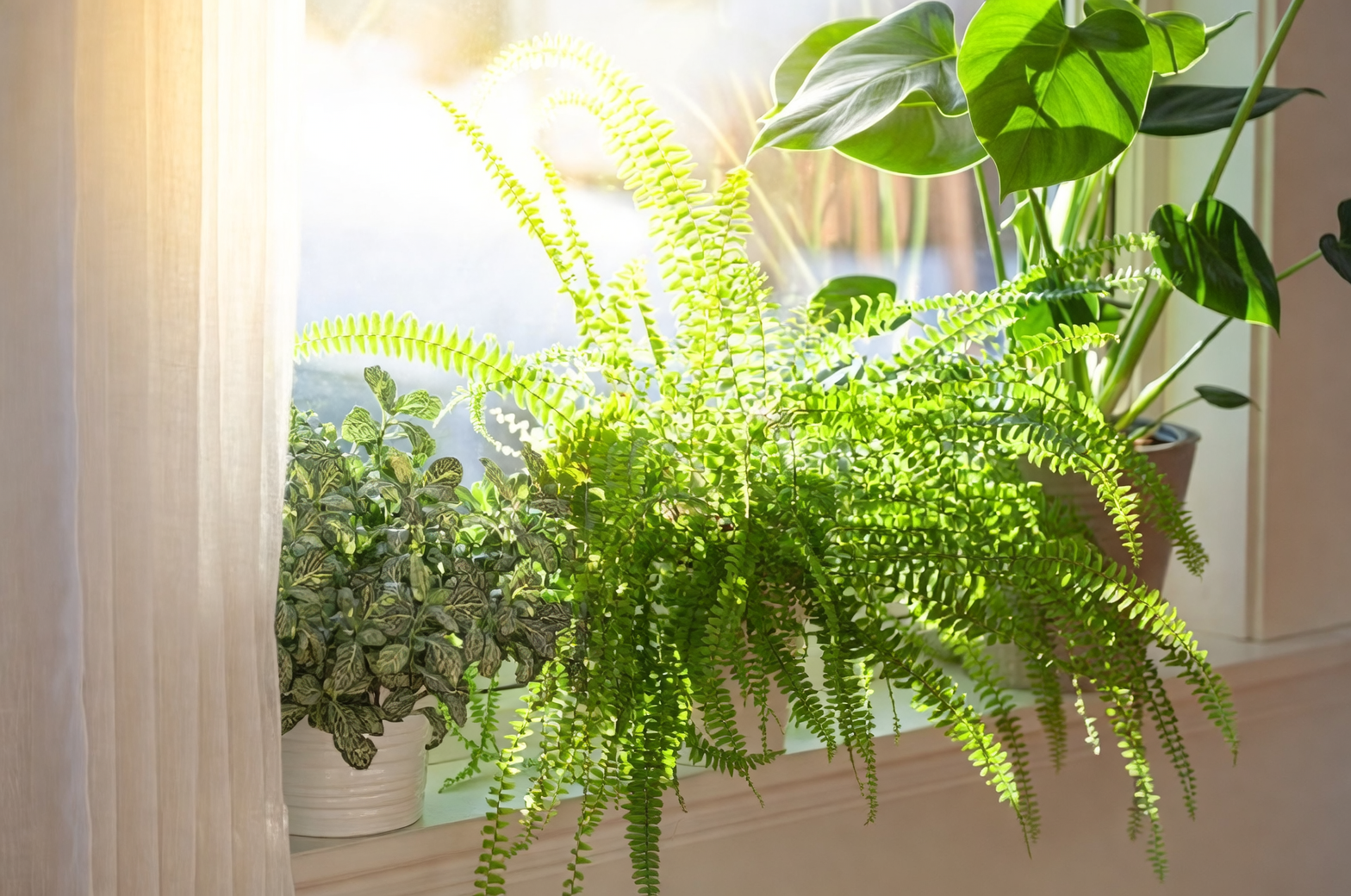
Bringing a porch fern inside doesn’t have to be a heartbreak.
- When to move
- Relocate indoors before a cold spell: use ~10°C/50°F nights as your cue. The plant is frost-tender; aim to keep above ~7°C/45°F at all times.
- Pre-move “spa day”
- Rinse fronds thoroughly to remove dust and hitchhiking pests.
- Inspect undersides for mites, scale, mealybugs; treat if needed.
- Lightly thin old/browned fronds; refresh the top layer of mix or repot if rootbound.
- Indoor setup
- Light: bright, indirect—near an east- or north-facing window, or set back from a bright window with a sheer.
- Humidity: 50–70%+ is ideal. Use a humidifier, pebble tray (pot base above waterline), or group plants; keep gentle airflow.
- Watering: keep evenly moist but never soggy; reduce frequency compared with summer.
- Feeding: pause through late autumn/winter; resume in spring.
- Reintroduction to the porch
- Harden off in spring: a few hours of bright shade at first, then extend time outdoors over 7–10 days.
- Trim to shape and resume light feeding.
Troubleshooting at a glance
- Crispy tips or curled leaflets
- Usually low humidity, a too-dry root ball, salt buildup, or sun scorch. Boost humidity, re-establish even moisture, flush the pot, and shift to gentler light.
- Pale, sparse growth
- Light too low or feeding too lean in active season. Brighten the spot (still shade) and feed lightly.
- Scorched fronds
- Too much direct sun. Move into dappled light; trim damaged fronds at the base.
- Pests
- Spider mites (dry, dusty porches), mealybugs, scale; outdoors, slugs/snails may nibble. Rinse fronds, improve humidity/airflow, and treat with insecticidal soap or neem.
- Root rot
- From chronically waterlogged media. Refresh to a free-draining mix and adopt a soak-then-drain routine.
Propagation to refresh porch displays
- Division (easiest)
- In spring or early summer, slide the plant out, split into clumps with healthy roots, and pot into fresh mix. Keep evenly moist until re-established.
- Runners (stolons)
- Peg baby plantlets into small pots of mix; once rooted, sever from the mother plant.
- Spores (advanced, slow)
- Mature fronds produce sori (spore clusters) underneath. Sow on a fine, sterile medium, keep evenly moist and humid, and be patient.
Design tips for the perfect “green fountain” look
- Hang at eye level or just above, where fronds can drape without brushing traffic.
- Pair with shade companions—caladium, coleus, impatiens, or variegated ivy—in nearby containers for a layered, cooling palette.
- On deep porches, stagger baskets front-to-back so each gets bright shade and breeze.
A note on symbolism
Ferns have long symbolized renewal, sincerity, and the quiet magic of hidden places—likely because they thrive in cool, sheltered woodlands and unfurl new fronds (fiddleheads) with rhythmic grace. Boston fern brings that calm, forest-soft energy to porches and rooms alike.
Quick zone cheat sheet
- Zones 10–11: Outdoor perennial with protection from rare chills; bright shade, steady moisture year-round.
- Zone 9: Microclimate-dependent; be ready to protect from cold snaps or bring inside.
- Zone 8 and colder: Treat as a seasonal porch plant; migrate indoors before cool nights settle in.
Give your Boston fern bright shade, gentle air, and a drink before it asks—and it will pay you back with a constant green cascade, all porch season long and into the next.