

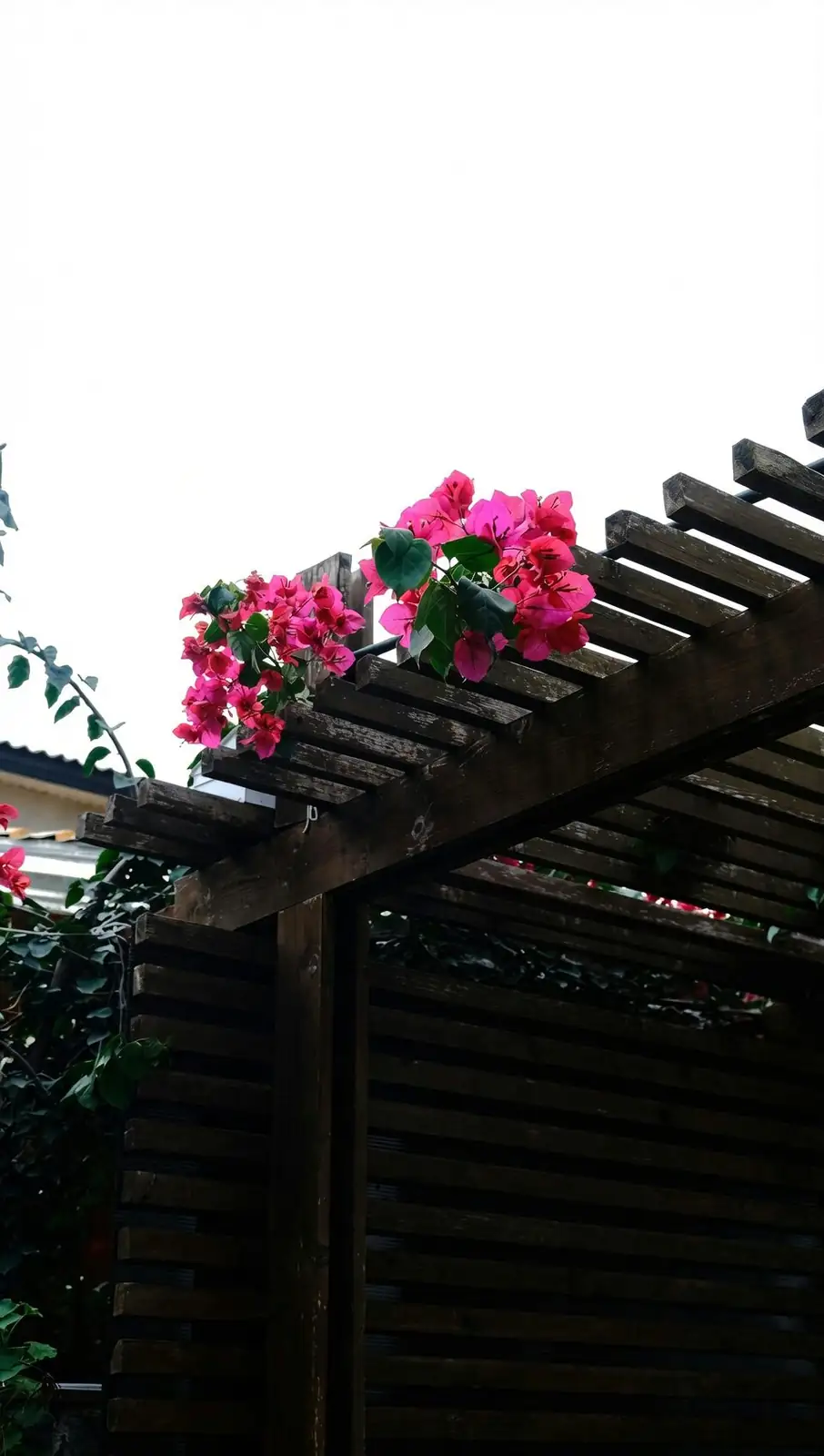
Think of bougainvillea as a sun-fueled confetti machine. Those fiesta-bright “petals” are really papery bracts wrapped around tiny, creamy flowers—and with the right light, watering rhythm, potassium-leaning feed, and smart pruning, you can cue wave after wave of color from spring through winter.
Bougainvillea glabra (and commonly grown hybrids such as Bougainvillea × buttiana) at a glance
- Family: Nyctaginaceae
- Common names: Bougainvillea, Paperflower, Bougainvillea Vine
- Origin: South America (Brazil for B. glabra); many popular garden forms are hybrids grown worldwide
- Habit: Woody, often thorny, scrambling climber or shrub; train on trellises, hoops, wires, pergolas, or shape as a compact bush/standard
- Size: About 1.5 m × 1.5 m (5 ft × 5 ft) in containers with training; 1.5–6 m (5–20 ft) outdoors in warm climates with support and pruning
- Blooming season: Mainly spring through autumn; in frost-free, very bright conditions it may flower in repeated cycles much of the year
- Hardiness: Tender; best outdoors year-round in USDA Zones 10–11 (some manage warm Zone 9 with protection)
The nonstop color routine, season by season
Spring: Wake-up, branch out, set the stage
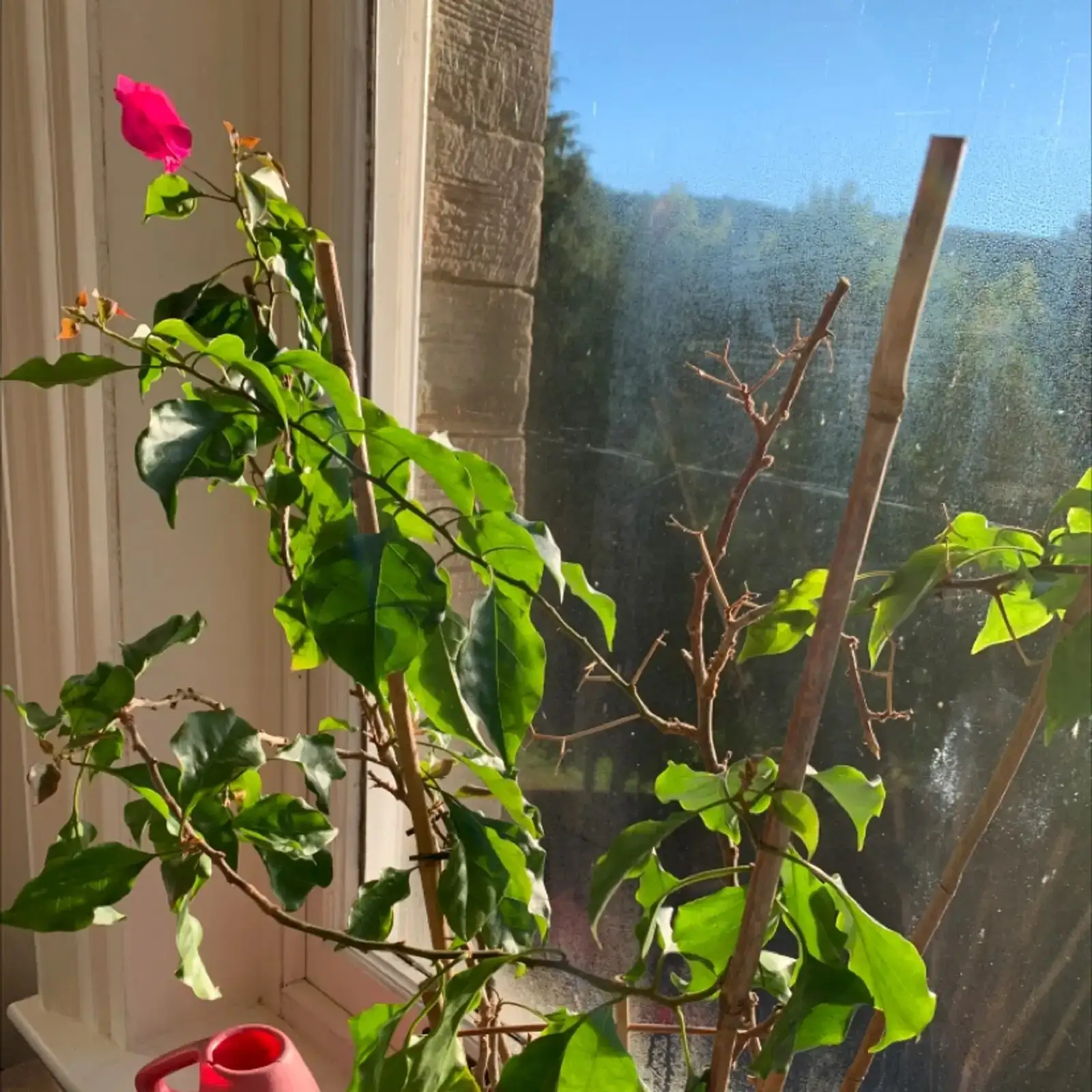
- Sunlight target
- Aim for 6+ hours of direct sun daily. Outdoors, choose the brightest balcony/patio or a warm wall. Indoors, use the sunniest south- or west-facing window or a bright sunroom.
- Temperature
- Best growth around 15–30°C (59–86°F). Protect from late frosts; keep above 7–10°C (45–50°F) if nights are chilly.
- Watering rhythm
- Water deeply, then drain thoroughly. Water again only when the top layer is dry and the mix is trending toward “nearly dry,” not constantly damp.
- Tip: In a fast-draining mix, this often means a thorough soak, then hands off until the pot feels noticeably lighter.
- Feeding plan (potassium-leaning)
- Start regular feeding once active growth resumes:
- Option A: Monthly with a bloom-leaning formula that favors potassium (e.g., around 15-15-30).
- Option B: Every 2 weeks with a balanced liquid feed; switch every third feed to a higher-potassium bloom fertilizer.
- Go easy on nitrogen—too much = leaves instead of bracts.
- Pruning and training
- Pinch or lightly tip-prune soft, long shoots to encourage branching (bougainvillea often blooms on new growth).
- Tie new stems to your trellis/hoop/wires to set a neat framework for summer.
- Remove dead or weak wood; avoid severe cuts if you’re chasing an early flush.
- Root “sweet spot”
- Slight root restriction promotes flowering. Repot only if truly needed, and just one size up. Mature plants often prefer a spring top-dress instead of a big move.
Summer: Full-throttle color, with strategic stress
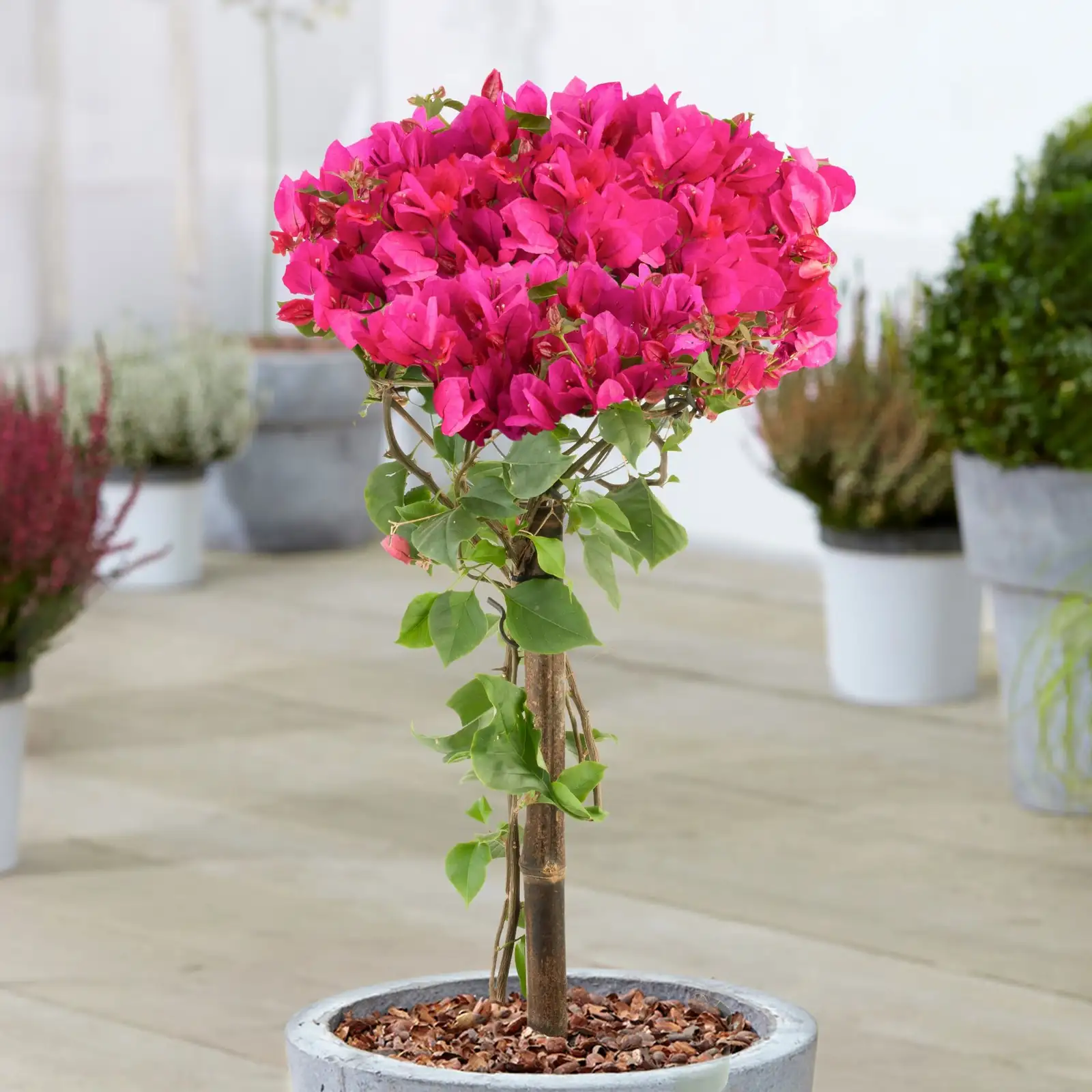
- Sunlight target
- Stay at 6+ hours of direct sun. More sun typically means more bracts.
- Provide good airflow; very stagnant, hot interiors invite pests.
- Watering rhythm
- Continue “deep-water, then dry-down.” Let the mix approach nearly dry between waterings—never sit in water.
- Bloom nudge: A brief, controlled dry-down (without letting the plant severely wilt) can trigger bud formation for the next flush.
- Feeding plan (potassium-leaning, bloom support)
- Maintain the spring plan. During peak blooming, a one-time monopotassium phosphate boost can intensify color.
- Flush the pot with plain water occasionally to prevent fertilizer salt buildup.
- Pruning and training
- After each bloom flush, lightly tip back overly long shoots to keep energy cycling into new, flower-ready growth.
- Keep stems tied in—neat scaffolding = better light on all sides and stronger displays.
- Soil and pot notes
- Use a sharp-draining, airy mix (quality potting soil + coarse sand/grit/perlite). Strong drainage holes are non-negotiable.
- Resist over-potting; slight pot-bound roots help flip bracts into overdrive.
Autumn: Ease the water, sharpen the color
- Sunlight target
- Keep 6+ hours of direct sun. Shorter days can still yield strong color with bright exposure.
- Temperature
- As nights cool, prepare to move containers indoors before temperatures dip below about 7–10°C (45–50°F).
- Watering rhythm
- Slightly reduce frequency to encourage flowering and avoid cold+wet roots. Still water deeply each time, then allow more drying between waterings.
- Feeding plan
- Continue bloom-leaning feeds while it’s actively growing and bright. As growth slows, reduce feeding cadence and stop once winter conditions set in.
- Pruning and training
- After flowering, trim side shoots to maintain shape. Remove any congested or weak growth to keep the canopy airy and sun-washed.
- Tie in new growth neatly for a compact, sculpted look over winter.
- Overwinter prep
- Check for pests before bringing plants in. Clean leaves, refresh the top 2–3 cm (about 1 inch) of mix if needed, and position in the brightest indoor spot.
Winter: Rest bright, drink light
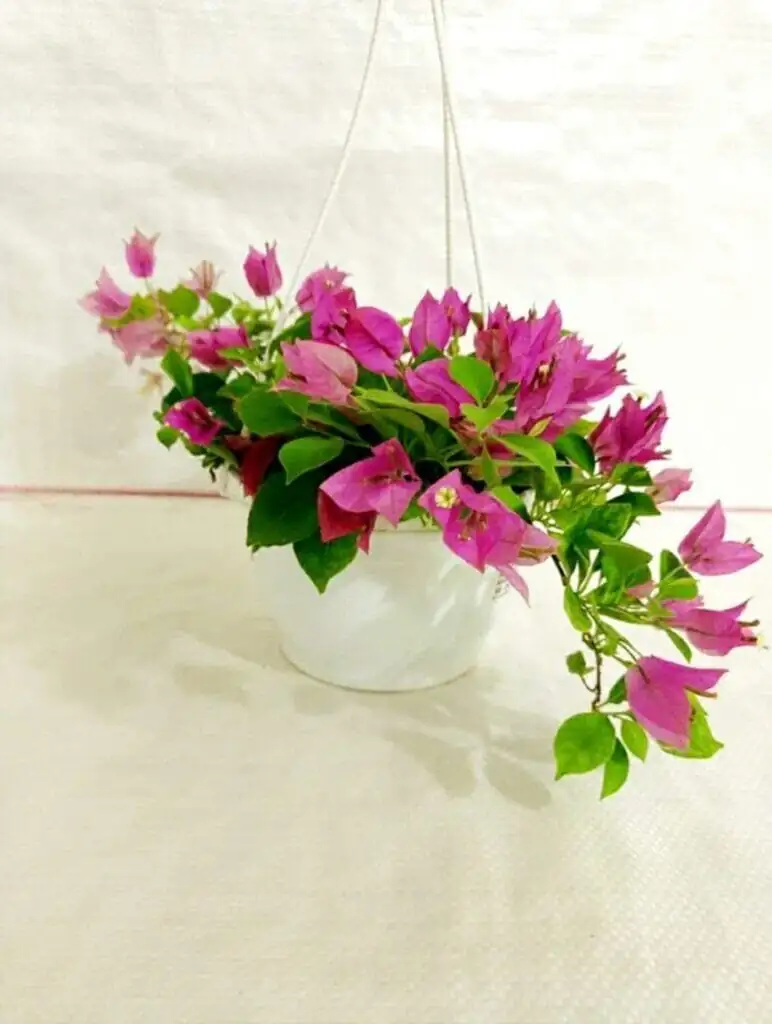
- Sunlight target
- The sunniest window/sunroom you have—direct light matters for holding foliage and preparing spring vigor.
- Temperature
- Keep above 7–10°C (45–50°F); flowering is generally best when consistently above 15°C (59°F).
- Watering rhythm
- Go sparing: let the mix dry more between deep waterings. Cold + constant moisture = root rot and leaf/bract drop.
- Some warm indoor setups may need water every 4–5 days; many need far less. Always let the pot tell you—light weight and a dry top layer before you water.
- Feeding plan
- Pause regular fertilization. Resume in late winter/early spring as days lengthen and growth restarts.
- Pruning
- Minimal cuts now—remove only dead or damaged bits. For older, woody plants, a late-winter, moderate rejuvenation can restore vigor, but avoid gutting the framework you’ve trained.
Why this routine works (the plant science in plain English)
- Sunlight drives sugar production. More direct light = more energy to invest in bracts and repeated bloom cycles.
- Deep-water, then dry-down balances roots. Bougainvillea hates “wet feet,” and a short, controlled dry-down can tip internal signals toward flowering rather than leafy sprawl.
- Potassium is the bloom’s best friend. K supports bud set, color intensity, and overall stress tolerance. Nitrogen, while necessary, pushes green growth at the expense of bracts when overdone.
- Slight root restriction focuses the show. A snug root zone shifts the plant’s resources from endless vine and leaf growth into flowering—like turning down the volume on vegetative ambition so the bloom chorus can sing.
Training for maximum impact
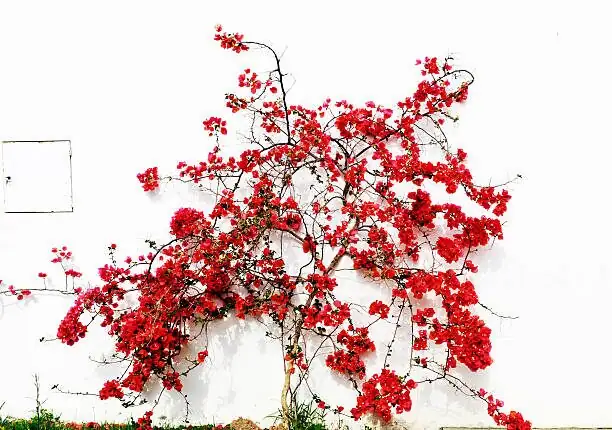
- Choose your shape: trellis fan, hoop, wires along a warm wall, standard “lollipop,” or even bonsai-style forms.
- Tie early and often: soft stems are easy to guide. Even spacing improves light penetration and keeps displays even from top to bottom.
- Rotate containers a quarter-turn every couple of weeks so all sides catch the sun.
Soil and container smart tips
- Mix: Use a fast-draining, well-aerated blend—quality potting mix cut with coarse sand, grit, or perlite.
- Pot size: Close to the root ball, with strong drainage holes. Step up only one size when repotting; many mature plants are happiest with a spring top-dress.
- Multiple starts: For instant fullness in a large pot, some gardeners plant two or three young plants together and train them as one.
Common hiccups and quick fixes
- All leaves, few bracts
- Likely causes: not enough direct sun, too much water, or nitrogen-heavy feeding.
- Fix: move to max sun, let the mix dry more between deep waterings, switch to a potassium-leaning feed.
- Bracts drop early
- Causes: sudden chills, low light, overwatering, or a recent move.
- Fix: stabilize temperature above 7–10°C (45–50°F), ensure bright sun, water only after partial drying, avoid drafts.
- Pests
- Watch for spider mites (especially in very dry indoor air), mealybugs, aphids, caterpillars, and scale.
- Prevention: strong sun, good airflow, and dry-down between waterings. Treat as needed with horticultural oil or insecticidal soap, following local label directions.
Safety note
- Sap can irritate skin/eyes; ingestion may cause GI upset. Thorns are sharp. Wear gloves and keep out of reach of children and pets.
A quick note on “flower language”
- Bougainvillea is widely associated with passionate color, warm welcome, and celebration—fitting for a plant that drapes homes and streets with festive brightness. This symbolism isn’t from a single classical source; it’s a cultural blend born from centuries of planting in sunny gateways, courtyards, and festival routes across the tropics and subtropics—essentially the living banner that says “you’re invited.”
Final nudge: keep it bright, keep it draining, and keep your fertilizer leaning toward potassium. Add a thoughtful pinch here, a brief dry-down there, and a slightly snug pot—and your bougainvillea will return the favor with a months-long cascade of paper-light color.