

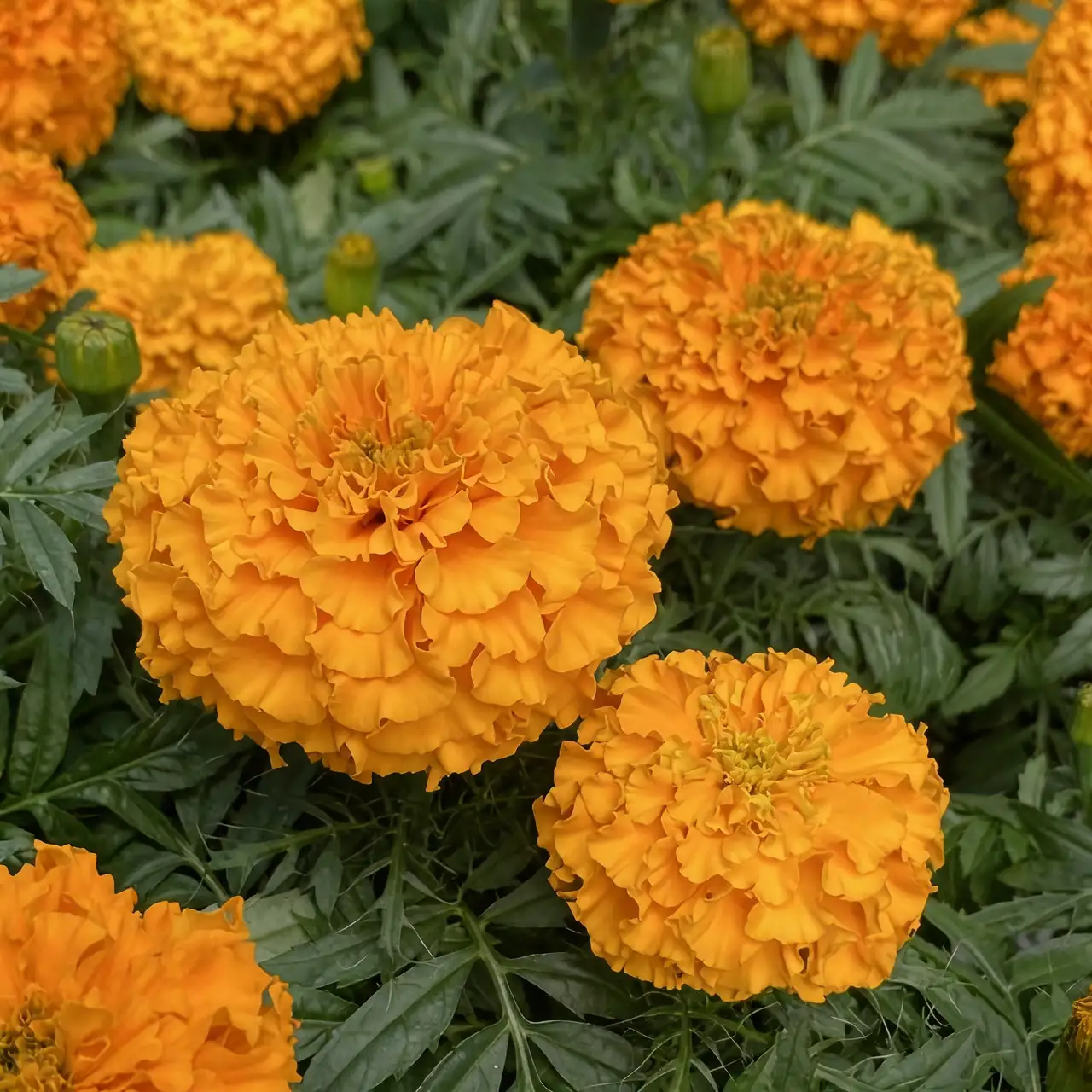
Bright, big, and brilliantly easy—that’s Tagetes erecta in a nutshell. Commonly called African Marigold (and native to Mexico and Central America), this warm-season bloomer rewards even first-time growers with ruffled “pom‑pom” flowers from summer right up to frost. Master a few basics—strong sun, smart watering, fast-draining soil, and quick deadheading—and you’ll have a nonstop show in beds, borders, and containers.
Meet Tagetes erecta at a glance
- What you’ll see: Sturdy, bushy plants topped with 2–5 inch (5–12 cm) blooms in glowing yellow, gold, and orange (sometimes with creamy or warm red tones).
- Size: About 12–35 inches tall (30–90 cm) and 8–18 inches wide (20–45 cm), with compact dwarfs under 12 inches and some tall cuts up to 4 feet.
- Season: Summer to fall; in warm regions, often from late spring to first frost.
- Personality: Easy, sun-loving, adaptable, and excellent in containers, borders, and veggie gardens as a companion plant.
Sunlight and placement: where marigolds are happiest
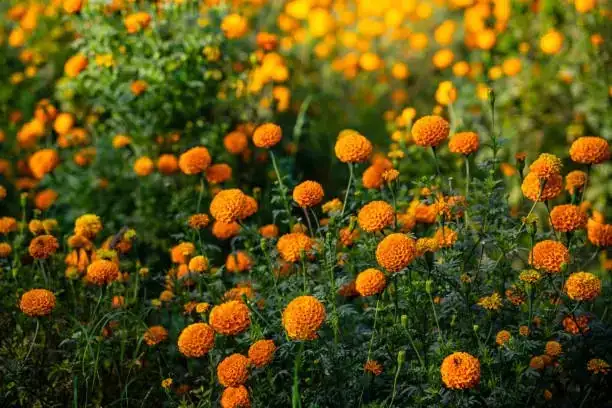
Think “sun tank.” African marigolds bloom best with 6–8+ hours of direct sun daily.
- Full sun is ideal. In very hot climates, give light afternoon shade to prevent stress and keep blooms rolling.
- Choose airy spots. Good airflow discourages mildew and other diseases.
- Smart siting:
- Beds near light-colored walls or pavement get extra reflected heat—great in spring, rough in extreme summer. Adjust with a touch of afternoon shade if temperatures soar above ~90°F (32°C).
- South- or west-facing exposures are prime for long, luminous flowering.
Watering rhythms that work (and prevent the dreaded collapse)
The golden rule: Water deeply, then let the surface dry slightly before watering again. Soggy soil is the fast track to root/stem rot and sudden collapse.
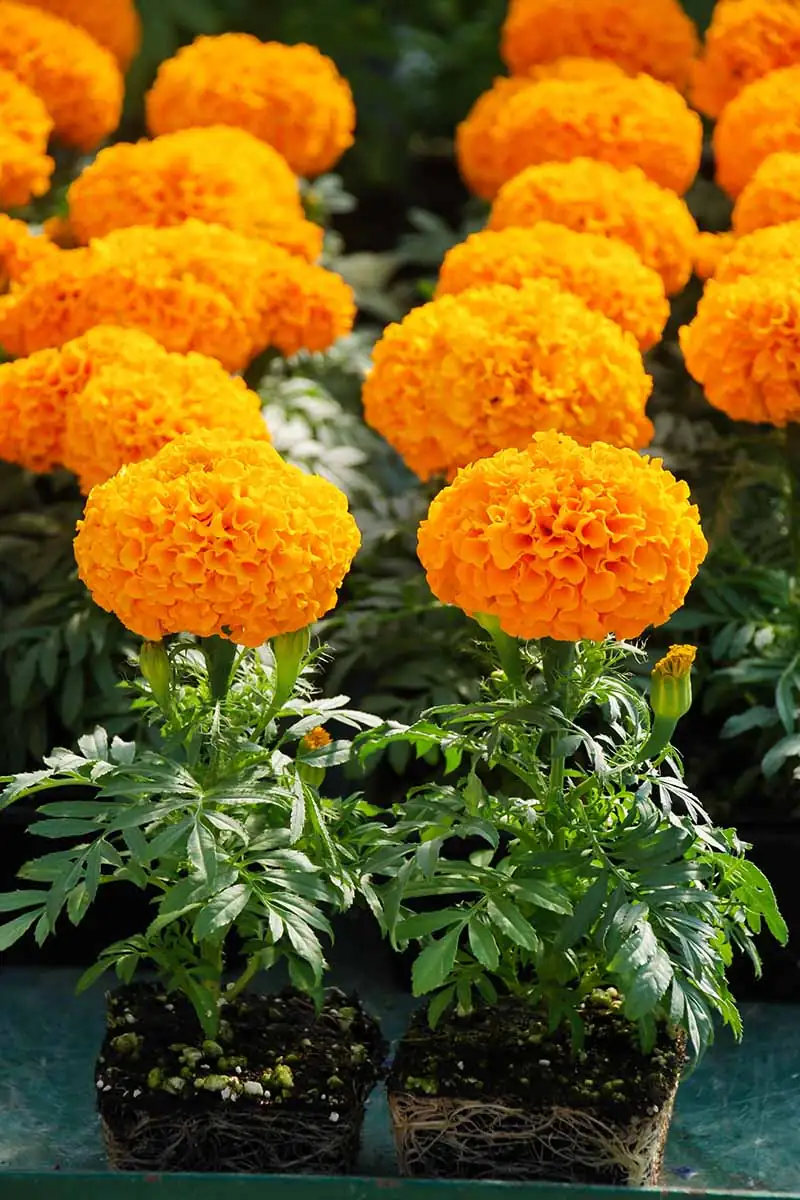
- New transplants (first 2–3 weeks): Keep evenly moist while they root in. Water when the top inch feels dry.
- Established in-ground plants: Aim for a thorough soak roughly once a week in warm weather, adjusting for rain and heat. They handle short dry spells far better than wet feet.
- Containers: Pots dry faster, especially in heat or wind. Check daily in midsummer; water when the top 1–2 inches are dry. Avoid letting pots sit in saucers of water.
- How to water:
- Water at the base—keep foliage and blooms dry to reduce spotting, mildew, and botrytis.
- Morning is best; plants dry quickly, and roots drink before the day’s heat.
- Use the “lift test” for containers: if it feels feather-light, it’s time to water.
Pro tip: In heatwaves, a light mulch (fine bark, straw, or leaf mold) stabilizes moisture—just keep it a little back from stems for airflow.
Soil and drainage tweaks that make all the difference
Marigolds aren’t fussy, but they are anti-swamp. Think well-drained, moderately fertile, and breathable.
- In-ground beds:
- Ideal: Loamy soil with pH about 6.0–7.5.
- To improve heavy clay: Mix in compost/leaf mold plus coarse sand or perlite for drainage.
- Raised beds help if your site stays wet.
- Containers:
- Use a high-quality, free-draining potting mix.
- Add 10–30% perlite or coarse sand if your mix holds water too long.
- Always use pots with generous drainage holes.
- Spacing:
- Match the label for your cultivar; as a general guide for African marigolds, 8–18 inches (20–45 cm) between plants supports airflow and reduces disease.
Feeding for flowers (not just leaves)
Moderation wins. Too much nitrogen = lush leaves, fewer blooms.
- At planting: Mix in compost or use a balanced, all-purpose fertilizer.
- During growth: Light feeding every 2–4 weeks with a balanced fertilizer (e.g., 10‑10‑10 or 20‑20‑20).
- Before peak bloom: A bloom-boosting feed (higher phosphorus/potassium) can plump buds and improve color.
- Back off if you see lots of leaf growth but few flowers—shift to more sun, better airflow, and leaner feeding.
Deadheading and pinching: the turbo button for nonstop color
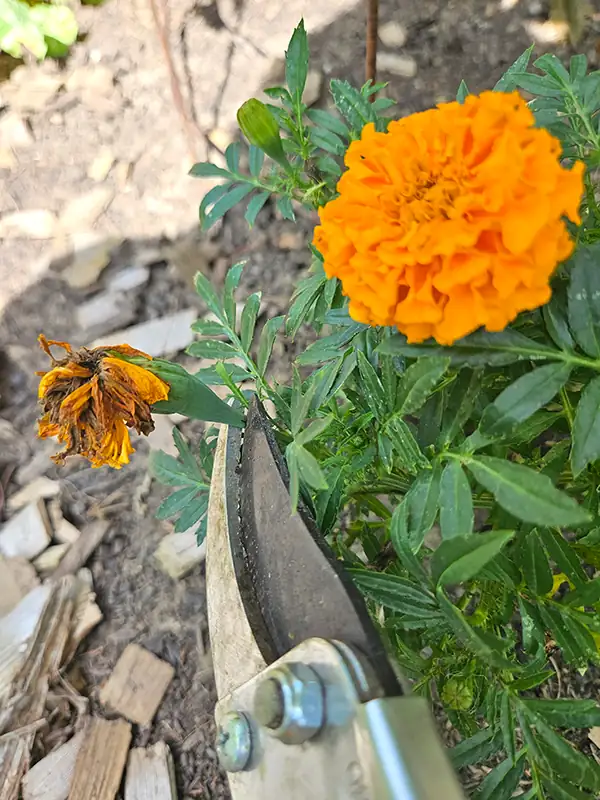
Deadheading keeps energy flowing into new buds rather than seeds.
- How to deadhead quickly:
- Snip spent blooms back to the first set of healthy leaves or a side branch.
- Don’t just pop the pom‑pom off—take the stem back a node for cleaner regrowth.
- Early pinch for bushiness: When plants are 4–6 inches tall, pinch the growing tip to encourage branching and more flowering stems.
- Midseason refresh: If plants get tall or loose, cut back by up to one-third. They rebound with a fresh flush of blooms.
From seed to showtime: easy propagation
- Timing: Sow outdoors after last frost when soil is ~65°F (18°C), or start indoors 6–8 weeks before your final frost date.
- Germination: Warm and fast—typically 5–9 days at 66–75°F (19–24°C).
- Bloom time: About 60 days from sowing for earlier types; ~80 days for big, ball-flowered cultivars.
- Transplanting tip: Pot up seedlings once they have 5–7 true leaves. For bigger plants, grow singly rather than crowding.
Temperature, seasons, and hardiness
- Best growth: Warm, around 65–80°F (18–27°C).
- Extreme heat: Prolonged hot, humid, still air can slow flowering—add airflow and light afternoon shade.
- Frost: Tender. Grown as an annual almost everywhere; outdoors they realistically overwinter only in frost-free Zones 10–11.
Containers that pop
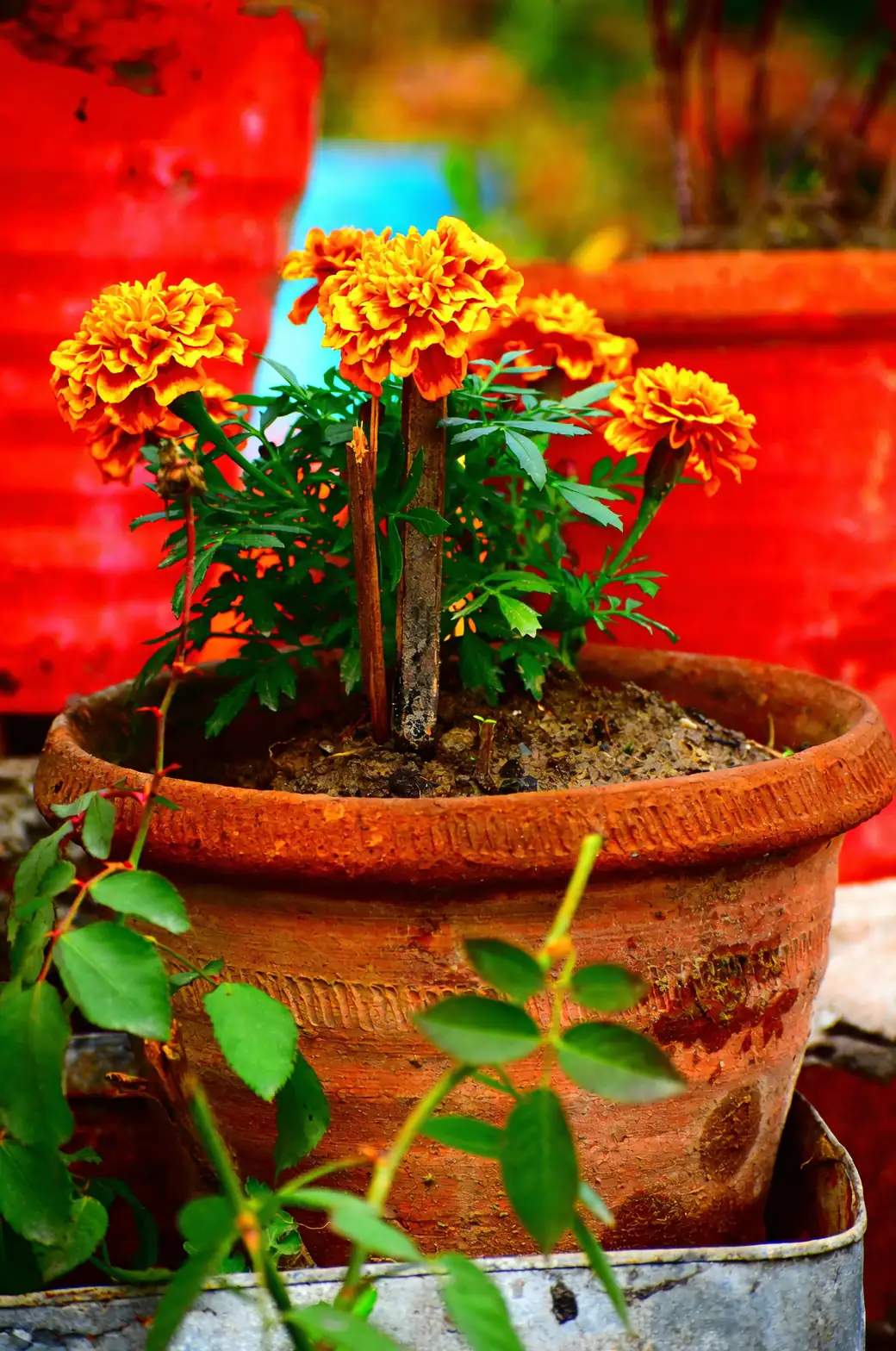
- Pot size:
- Dwarf types: around 6 inches (15 cm) wide.
- Larger African marigolds: at least 10 inches (25 cm) across per plant.
- Mix three dwarfs in a 10–12 cm (4–5 in) pot for a tight tuft, or give each plant its own roomy pot for bigger, showier specimens.
- Watering cadence is faster in pots—monitor daily in summer.
A quick seasonal playbook
- Spring: Plant after frost; maximize sun; keep evenly moist while establishing.
- Summer: Water during dry spells; deadhead often; thin or stake tall types; improve airflow in humid weather; cut back if leggy.
- Fall: Enjoy peak color until frost; save seed from open‑pollinated types if you like surprises next year.
- Winter (frost-free only): With bright light and careful watering, plants may continue to bloom.
Troubleshooting: fast fixes for common issues
- Lots of leaves, few flowers:
- Causes: Not enough sun, excess nitrogen, or hot/humid/still conditions.
- Fix: Move to stronger sun, ease up on nitrogen, improve airflow, consider a bloom-boost feed.
- Sudden plant collapse:
- Likely root/stem rot from soggy soil.
- Fix: Improve drainage, let the topsoil dry slightly between waterings, and never let containers sit in water.
- Powdery mildew or leaf spots:
- Encourage airflow, water at the base, and remove affected foliage. Space plants properly and avoid late-day overhead watering.
- Pests (aphids, mites, thrips, leafhoppers; snails/slugs):
- Rinse pests with a firm spray of water; spot-treat with insecticidal soap or horticultural oil as needed. Hand-pick slugs/snails or use barriers.
Cut flowers that last
Taller cultivars make sturdy, long-stemmed cuts.
- Harvest when blooms are fully open or just at peak.
- Cut early morning, recut stems under water, and strip lower foliage.
- Clean vase water = longer vase life.
Safety notes
Tagetes can be mildly irritating to skin; pets may get mild stomach upset if they chew a lot. If you plan to taste flowers (a regional practice), only use unsprayed plants grown for edible use and try a very small amount first. Calendula (pot marigold) is a different plant that’s more widely used as an edible.
Flower language and symbolism
Marigolds carry big feelings. In Mexico and Central America, Tagetes erecta is central to remembrance and guiding loved ones home during Día de los Muertos—its strong color and scent are believed to light the path for returning spirits. In South Asia, garlands symbolize purity, good fortune, and celebration, while in Chinese culture the plant aligns with longevity and respect for elders. Western symbolism has swung between remembrance and more somber notes like grief or jealousy, depending on era and context. In the garden, that translates into a living emblem of memory, resilience, and bright wishes.
Quick wins for beginners
- Sun, sun, sun—6–8+ hours for the fullest bloom set.
- Water deeply but let the top dry slightly; containers need closer attention.
- Keep soil fast-draining; amend heavy sites with compost plus perlite or coarse sand.
- Deadhead spent blooms and pinch early for a bushier, bloomier plant.
- Feed lightly and regularly; skip the “extra nitrogen” temptation.
Follow these simple rhythms and your African marigolds will put on a cheerful, low-maintenance show from summer right up to the first frost.


