

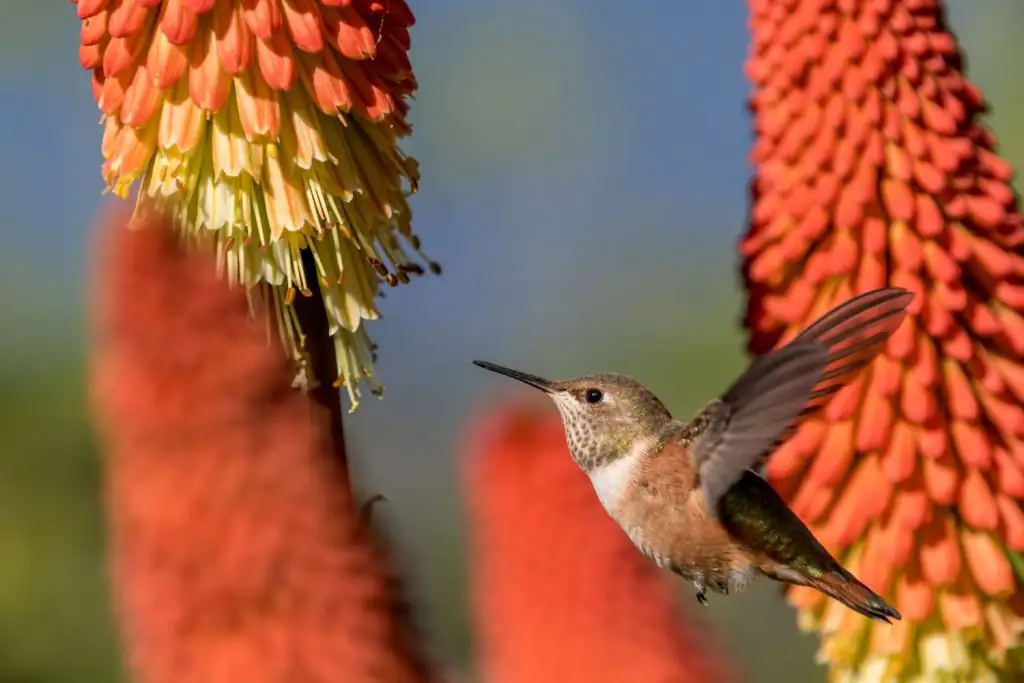
If your garden needs a spark that doesn’t fizzle, plant Red Hot Poker (Kniphofia uvaria) and let those torch-like blooms light the way. Native to eastern and southern Africa (especially South Africa), this sun-loving, clump-forming perennial sends up bold spikes packed with hundreds of tubular flowers that often shift color as they open—from fiery reds and oranges to apricot, yellow, and cream. Hummingbirds, bees, and butterflies swarm it; you’ll get drama without fuss—so long as you master sun, drainage, and a few seasonal habits.
Below is a practical, step-by-step guide to light, watering, drainage, soil prep, feeding, winter protection, and container culture—plus a simple year-round routine to keep the torches blazing.
Light: aim for full sun, with a smart shade tweak in hot regions
- Target: 6–8 hours of direct sun daily for the strongest flower spikes and tight, upright growth.
- In very hot climates: Offer light afternoon shade to reduce stress and prevent leaf scorch.
- Placement ideas: Sunny borders, mixed beds, slopes, coastal sites (salt-tolerant), and pollinator plantings. Dwarf selections shine in containers.
Pro tip: If stems lean or blooms dwindle, you likely need more sun—or a clump division to restore vigor.
Watering: consistent, not soggy (the Goldilocks rule)
- During establishment (first growing season): Provide about 2.5 cm (1 inch) of water per week, including rainfall. Water deeply to encourage roots to head down.
- Once established: Tolerates short dry spells, but flowering is best with steady moisture. Allow the top few centimeters (an inch or two) of soil to dry between waterings.
- Never let the crown sit wet: Crown/root rot is the main enemy. Water at soil level in the morning so foliage and crown dry quickly.
- Containers dry faster: In warm, windy weather, check daily. Water thoroughly when the top 3–5 cm (1–2 inches) are dry.
Signs to watch:
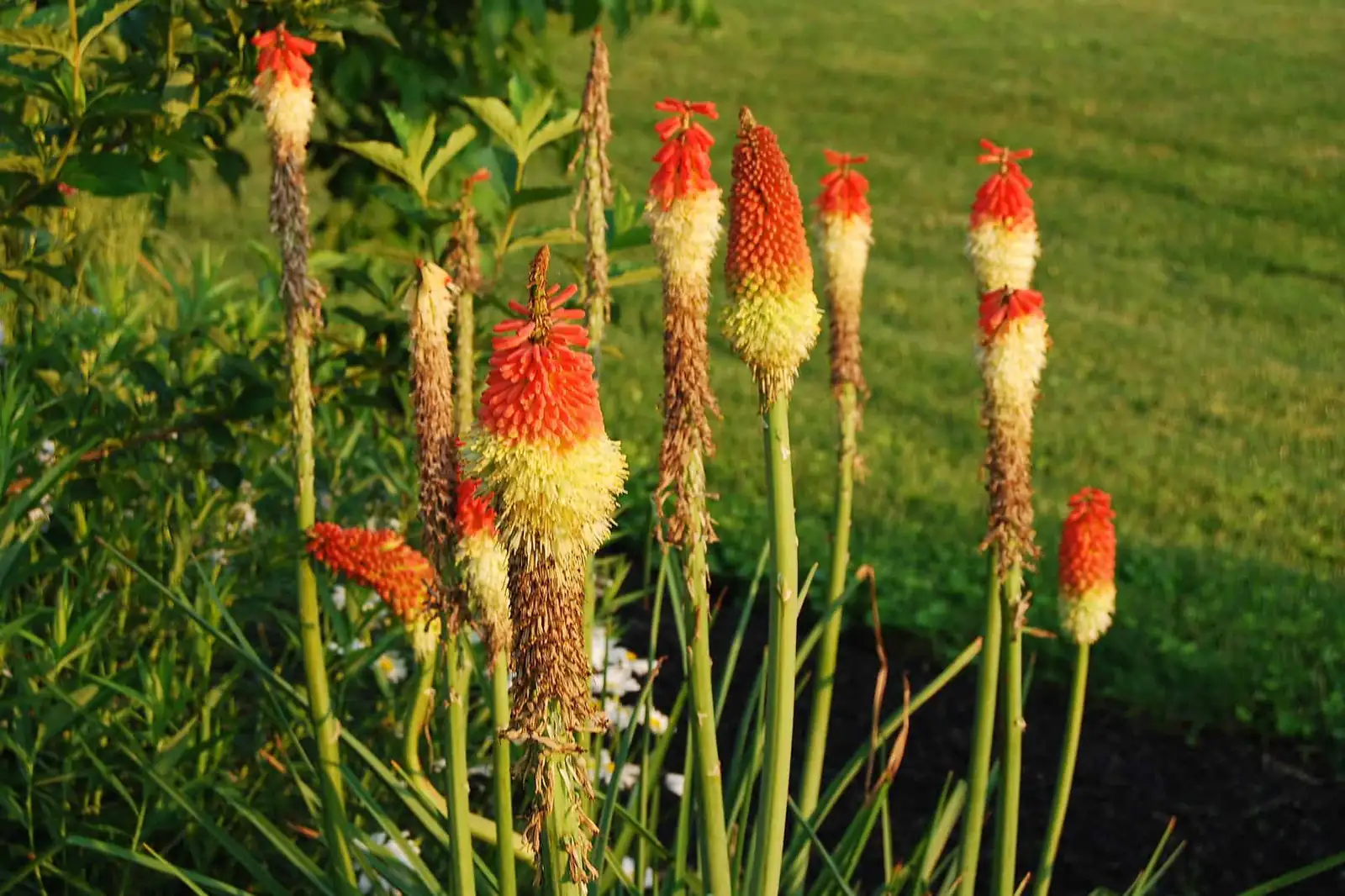
- Underwatered: Wilting, crispy leaf tips, shortened spikes.
- Overwatered: Yellowing leaves, mush at the crown, foul soil smell.
Drainage: the non‑negotiable
If you remember one thing, make it this: sharp drainage keeps Red Hot Poker alive and floriferous.
Step-by-step drainage check and fixes:
- Percolation test: Dig a 20–30 cm (8–12 in) hole, fill with water, let drain, then refill. If water still sits after 3–4 hours, improve drainage.
- Raise the planting: Use raised beds or gentle mounds 8–15 cm (3–6 in) high, especially on clay.
- Amend texture (not just fertility): Blend in coarse materials (grit, crushed gravel, perlite, or coarse sand) with compost to open the soil.
- Site slope: Avoid low spots where winter wet lingers. Even a subtle grade helps.
- Set the crown high: Plant so the crown is level with, or just slightly above, the surrounding soil. Do not bury it deeply.
Soil prep: fertile but fast-draining
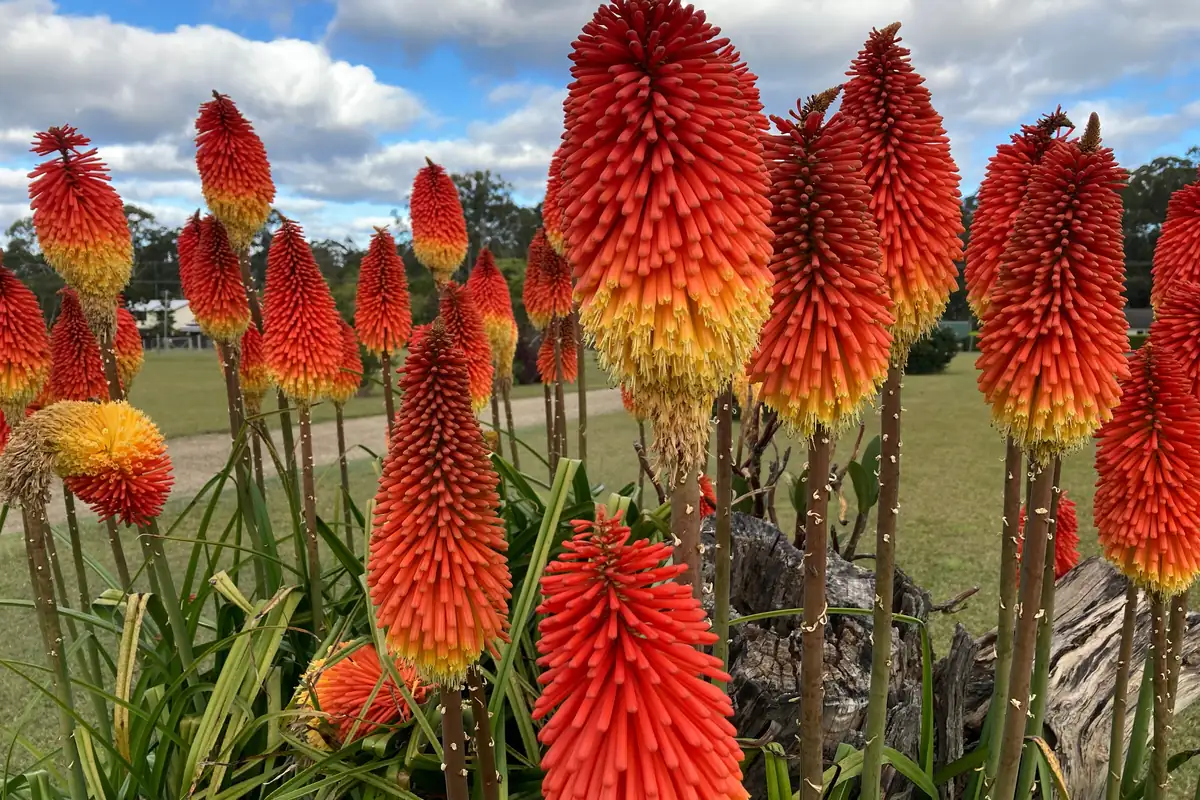
- Texture: Works in many soils if drainage is excellent.
- pH: 6.0–7.5.
- Before planting: Loosen soil 25–30 cm (10–12 in) deep. Mix in well-rotted compost for moderate fertility and moisture balance.
- Avoid heavy, water-retentive mixes or over-rich nitrogen inputs that push leaves over flowers.
Simple in-ground recipe:
- 2 parts native soil
- 1 part compost
- 0.5–1 part grit/perlite/coarse sand (more on clay)
Feeding: light touch wins
- At planting/each spring: Top-dress with compost.
- If growth is weak: Apply a balanced, slow‑release fertilizer in spring at label rates. Avoid heavy nitrogen, which suppresses blooms and flops foliage.
- Stop feeding by late summer to prevent tender growth heading into winter.
Planting and spacing: set them up to glow
- When: Spring is ideal once soil is workable and frosts recede.
- Spacing: 30–90 cm (1–3 ft) apart, depending on variety size.
- How:
- Dig a hole just wider/deeper than the root ball.
- Set the plant so the crown is shallow—generally no more than about 7.5 cm (3 in) below soil level, and preferably at or slightly above grade on heavy soils.
- Backfill, firm gently, water thoroughly, and mulch lightly—keeping any mulch pulled back from the crown.
Winter protection: keep the crown dry and insulated
Hardiness: Commonly USDA Zones 5–9. Cold tolerance varies by cultivar; well-established clumps with protection can handle brief dips near -20°C (-4°F).
- Zones 7–9 (mild): Ensure drainage; tidy as needed. Foliage may be evergreen or semi-evergreen.
- Zones 5–6 (cold/wet winters):
- Tie foliage in loose bundles in late fall to shed water away from the crown.
- Mulch around (not on) the crown with a dry, airy material like straw or leaves to buffer freeze–thaw.
- Keep the crown relatively dry—excess winter wet is more lethal than cold.
- Containers in cold zones:
- Move to an unheated garage/shed where temps hover just above freezing.
- Water sparingly (just enough to prevent bone-dry roots).
- Return outdoors in early spring.
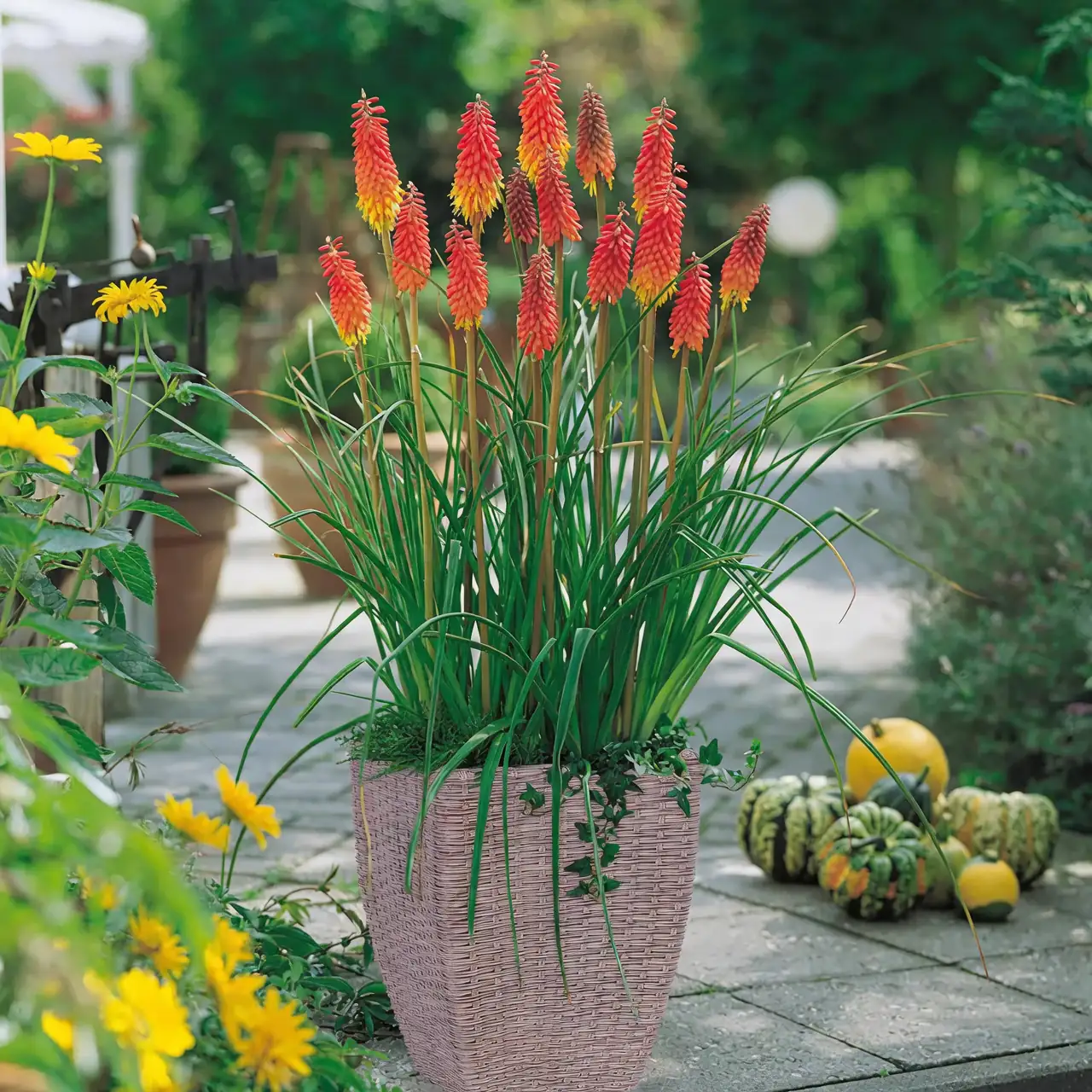
Container success: torches on the patio
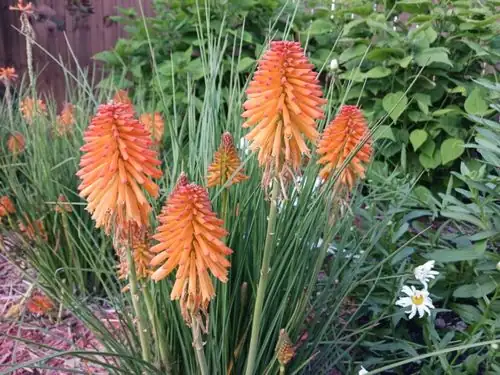
- Pot size: Minimum about 22 cm (9 in) wide for small/dwarf types; larger is better for stability.
- Drainage: Essential—choose pots with multiple large holes. Elevate on pot feet.
- Potting mix: Fast-draining is key. Try 2 parts high-quality potting mix + 1 part perlite/pumice + 1 part coarse sand or fine gravel.
- Sun: Full sun; light afternoon shade in very hot climates.
- Water: Thorough soak, then let the top 3–5 cm (1–2 in) dry. In heat, you may water every 1–3 days.
- Feed: Light, slow‑release fertilizer in spring; refresh top 5–8 cm (2–3 in) of mix annually.
- Repot/divide: Every 2–3 years to prevent overcrowding and keep blooms coming.
Deadheading and grooming: quick snips, longer shows
- Deadhead: Cut spent spikes to the base to tidy and encourage rebloom in repeat-flowering selections.
- Foliage: In colder climates, leave leaves standing over winter for crown protection; cut back the old foliage in early spring before new growth emerges.
- Ongoing: Remove damaged or ratty leaves as needed.
Division: the refresh button
Kniphofia slowly forms wider clumps that may bloom less if overcrowded.
- When: Every few years—early spring, or fall after flowering (in milder regions).
- How: Lift the clump, slice into divisions ensuring each has a healthy crown and roots, and replant with the crown shallow and the soil draining sharply. Water in well.
Simple seasonal routine to keep torches blazing
- Spring
- Cut back winter-worn foliage before new growth.
- Top-dress with compost; apply a light, balanced slow‑release fertilizer if needed.
- Divide crowded clumps and replant shallow.
- Summer
- Water during dry spells (about 2.5 cm/1 in per week target).
- Deadhead promptly to extend bloom.
- Scout for aphids or thrips on fresh growth; blast with water or treat early if needed.
- Fall
- In mild climates, divide after flowering if you skipped spring.
- Reduce watering as growth slows; keep soil draining well.
- Winter
- In cold zones, tie foliage loosely and mulch around (not over) the crown with dry material.
- Keep the crown relatively dry to prevent rot, especially during freeze–thaw cycles.
- Container plants: shelter in an unheated space; water sparingly.
Troubleshooting at a glance
- Not blooming?
- Too little sun (aim for 6–8 hours).
- Clump overcrowded—divide.
- Too much nitrogen—ease off the fertilizer.
- Waterlogged soil—improve drainage.
- Plants still young—seed-grown plants can take time to settle.
- Floppy or short spikes?
- Insufficient light, excess nitrogen, or inconsistent moisture.
- Brown/mushy crown or sudden collapse?
- Crown/root rot from poor drainage or heavy winter wet.
- Pests
- Thrips, aphids on new growth; slugs/snails may nibble foliage. Encourage predators, hand-pick, or use targeted controls. Most issues fade with sun and airflow.
Design and cutting tips
- Pair with cool blues and purples (salvia, Russian sage, veronica) to make the torches pop, or lean into hot blends with black-eyed Susan, cannas, monarda, and goldenrod.
- Cut flowers last 5–7 days in a vase if harvested as the lower florets begin to open. Strip lower foliage and place immediately in clean water.
Safety, pets, and people
Generally considered non-toxic to people and pets. As with many ornamentals, nibbling can cause mild stomach upset in sensitive individuals.
Flower language and symbolism
Red Hot Poker is often associated with passion, strength, confidence, and “standing out”—fitting for a plant that looks like a lit torch. Unlike formal Victorian floriography, these meanings are largely modern, inspired by its fiery palette and upright, flame-like spikes. Think of it as a living exclamation point: a symbol less codified by tradition than by immediate visual impact.
—
Set Kniphofia up with sun, drainage, and a light hand on the watering can, and it will reward you from early summer into fall with glowing spikes that read from across the garden—and from across the patio if you’re growing the compact forms in containers. Keep the crown high and dry, deadhead as you go, and give crowded clumps a fresh start every few years. That’s the whole secret to keeping the torches blazing.


