

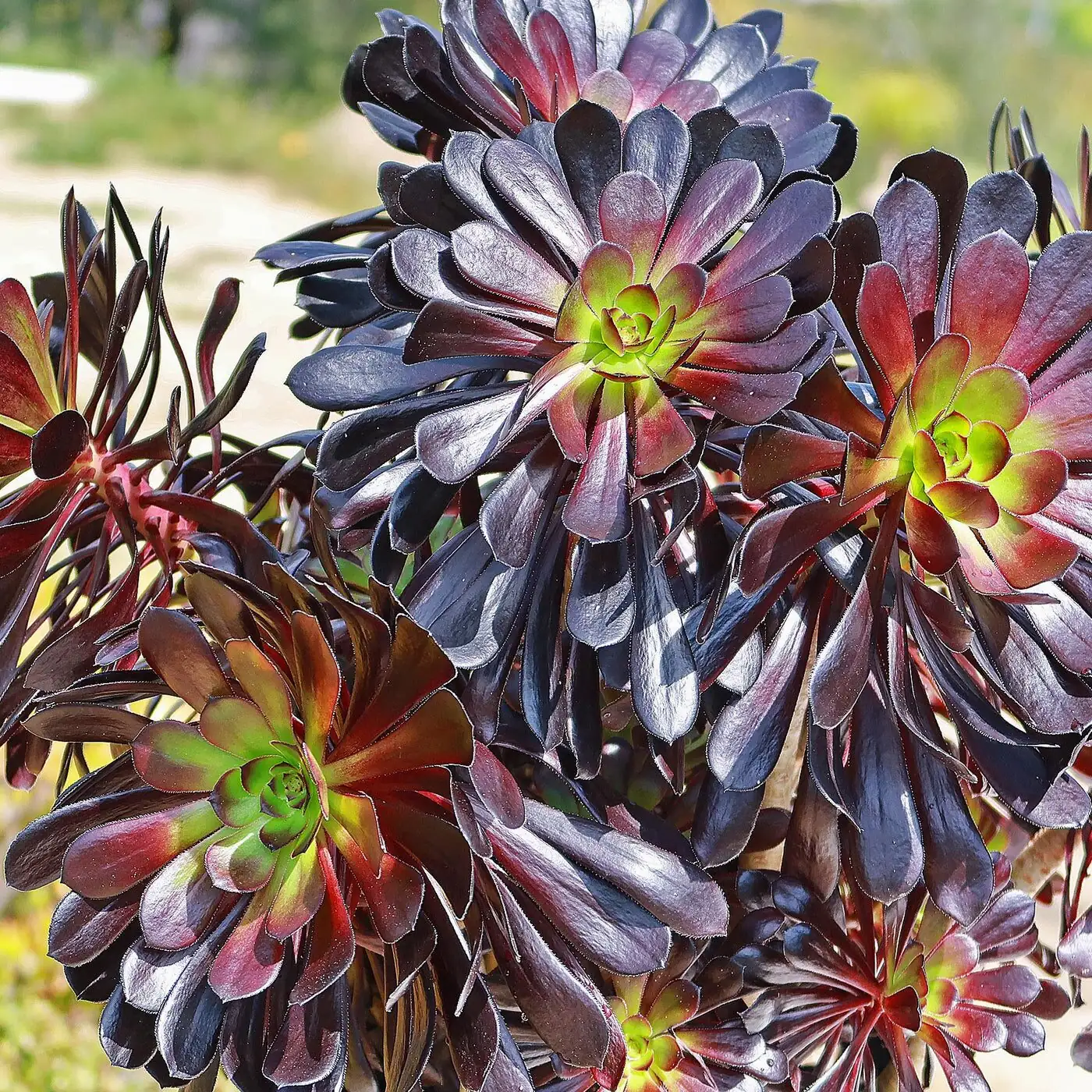
Think of Aeonium arboreum ‘Zwartkop’ as a living bouquet of ink-dark roses perched on woody stems—architectural, dramatic, and surprisingly easy once you sync your care to its rhythm. This aeonium is a cool-season grower that slows down when summer turns blistering. Below is your practical, season-by-season playbook for light, watering, and temperature—plus how to dodge behind-glass scorch and keep those rosettes jet-dark indoors.
Meet the plant in 30 seconds
- Identity: Aeonium arboreum ‘Zwartkop’ (Black Rose Aeonium), a dark-leaved cultivar of the Canary Islands species
- Habit: Upright, branching succulent with tight, glossy rosettes; can become a small “tree”
- Size in pots: Compact when young (around 4 in/10 cm), with potential to reach about 24 × 24 in (60 × 60 cm) over time
- Color: Deep burgundy-purple to near-black in strong light, cooler seasons; greener in lower light
- Flowers: Spring clusters of tiny yellow, star-shaped blooms; a flowering rosette declines afterward, but offsets carry on
- Temperatures: Best around 68–77°F (20–25°C); generally happy 50–75°F (10–24°C); frost-free is essential, keep above ~43°F (6°C)
- Hardiness: Tender; best outdoors year-round only in mild, frost-free climates (roughly USDA Zone 10–11)
—
Season-by-season care
Autumn: prime shaping and color-building
- Light
- Aim for very bright light to full sun. Indoors, choose the brightest window (south or east is ideal).
- If moving from indoors to outdoors (or ramping up light), acclimate over 10–14 days: start with bright shade/morning sun, then extend exposure.
- Water
- Water deeply, then drain fully. Let the top layer dry before watering again. Avoid any standing water in saucers.
- Temperature
- Sweet spot is 68–77°F (20–25°C). Cool nights help intensify color.
- Feeding
- Resume monthly feeding at 1/2 strength (balanced or low-nitrogen succulent fertilizer).
Winter: cool, bright growth and inky tones
- Light
- Give maximum light indoors; winter sun is your friend. Rosettes darken beautifully with strong light.
- Watch for cold windowpanes—keep foliage from pressing against frigid glass.
- Water
- In warm rooms, water when the surface dries. In cool rooms, keep the mix slightly drier to prevent rot.
- Temperature
- Keep frost-free and above ~43°F (6°C). Avoid cold + wet.
- Feeding
- Continue modest monthly feeding while it’s actively growing in winter.
Spring: growth spurt and possible blooms

- Light
- Increase exposure gradually if moving outdoors. Behind glass, bright spring sun can still scorch—use a sheer curtain at midday if needed.
- Water
- Water when the top layer dries. This is the moment to repot (if it’s been 2–3 years) and to prune leggy stems for branching.
- Temperature
- Ideal growth at 68–77°F (20–25°C). Good airflow reduces disease risk.
- Flowers
- If a rosette blooms, it will decline afterward. Let it dry, remove it, and let side rosettes take over.
Summer: semi-dormancy and scorch-avoidance
- Light
- Outdoors: morning sun with bright afternoon shade is perfect. Indoors: bright light is fine, but midday sun through hot glass is risky.
- Expect slightly tighter or partially closed rosettes in high heat—this is a normal “resting” response.
- Water
- Dial way back. Keep the mix almost dry; offer small “sips” only if rosettes start to wrinkle. Never soak the pot in heatwaves.
- Temperature
- Protect from harsh heat behind glass. Ensure strong airflow. Terracotta pots help the mix dry faster.
- Feeding
- Skip fertilizer until growth resumes in late summer or autumn.
—
Behind-glass scorch 101 (and how to prevent it)
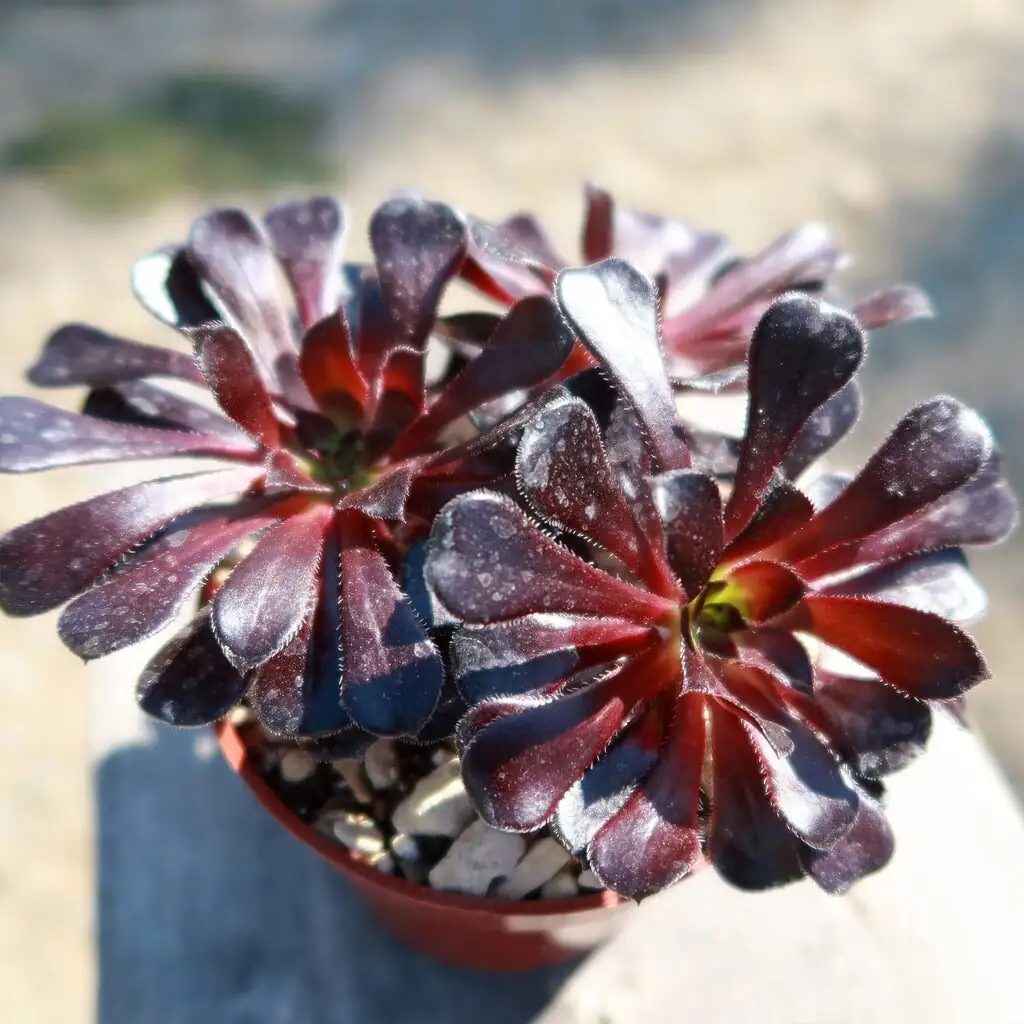
- Why it happens
- Intense midday sun magnified by glass + still, hot air = rapid leaf overheating, even if the room doesn’t feel extreme.
- What it looks like
- Bleached, tan, or crispy patches on the sunward side of rosettes; edges may brown.
- Prevention
- Use a sheer curtain from late morning to midafternoon.
- Pull the pot 6–24 inches back from the window during heatwaves.
- Add airflow (fan on low) and avoid watering onto leaves before peak sun.
- Acclimate to stronger sun over 1–2 weeks each season.
—
How to keep rosettes jet-dark indoors
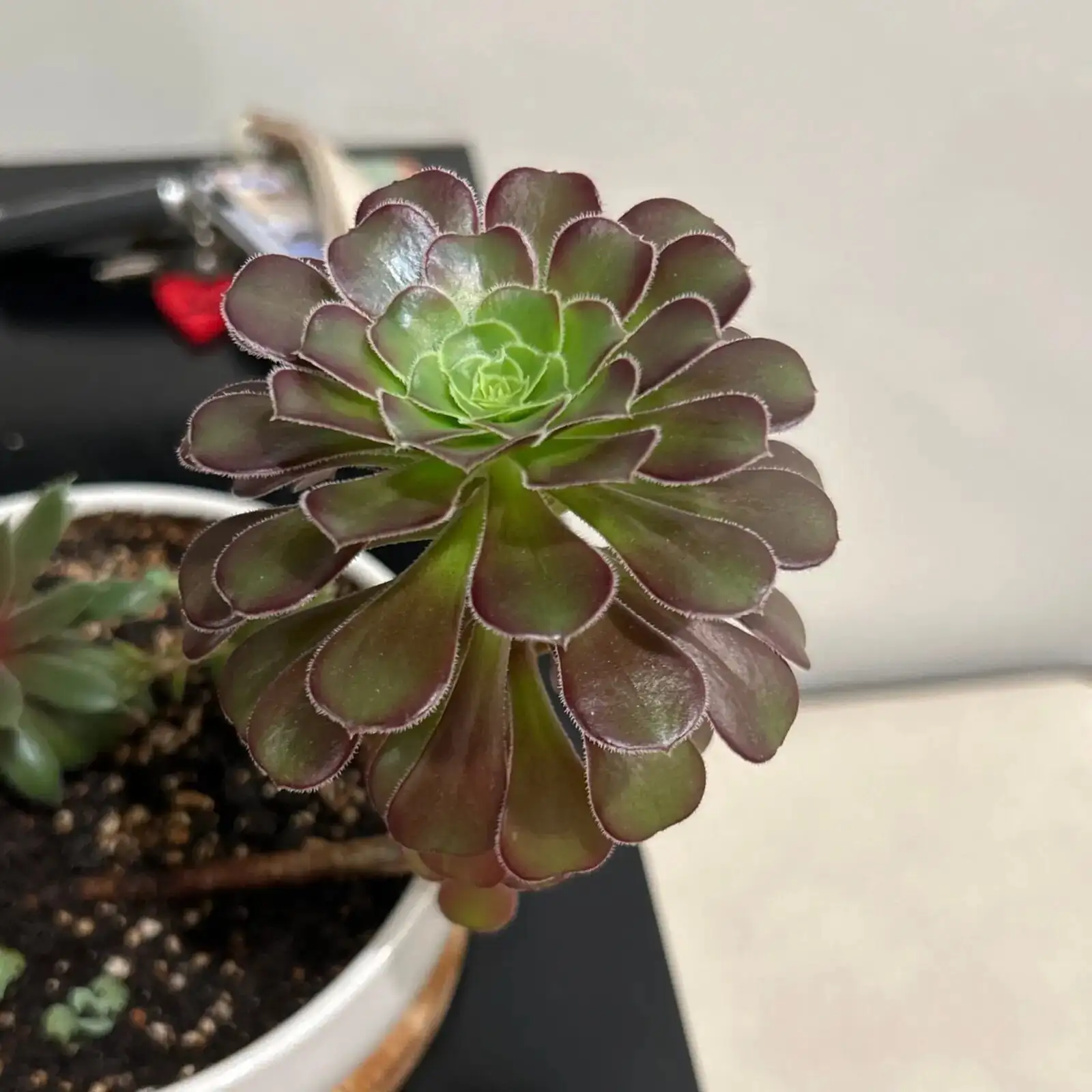
- Give serious light
- Goal: at least 5–6 hours of direct sun equivalent daily.
- Under LEDs: 10,000–20,000 lux (roughly 200–400 μmol·m⁻²·s⁻¹) for 12–14 hours can maintain compact, dark rosettes. Position most lights 8–14 in (20–35 cm) above the canopy and adjust to avoid heat stress.
- Keep nights cooler when possible
- Cooler nights (50–64°F / 10–18°C) often deepen pigmentation.
- Feed lean and skip summer feedings
- Too much nitrogen + low light = softer, greener growth.
- Avoid shade-casting clutter
- Prune or reposition so nothing shadows the rosettes.
- Rotate weekly and dust the leaves
- A quarter-turn each week prevents one-sided stretching; a soft brush keeps the glossy “black” look.
- Expect seasonal shifts
- Slightly greener centers in active growth are normal; color deepens again in cooler, brighter months.
—
Watering, soil, and pots that set you up for success
- The rhythm
- Active growth (autumn through spring): water when the surface dries—thoroughly, then drain.
- Summer semi-dormancy: keep almost dry; tiny sips only if you see wrinkling.
- Cool winter rooms: err drier to avoid rot.
- The mix
- Use a fast-draining cactus/succulent mix cut generously with mineral grit (pumice/perlite/coarse sand).
- Top-dress with gravel to keep necks dry and leaves clean.
- The pot
- Always use drainage holes. Terracotta is excellent in warm months; size up just one step at spring repotting.
- The test
- Check dryness with your finger the first inch down and lift the pot—light = time to water.
—
Placement and airflow
- Indoors
- Brightest window or strong grow lights; add gentle airflow in humid rooms.
- Outdoors (warm seasons)
- Morning sun, afternoon protection—especially during heatwaves. East-facing balconies are superb.
- Skip sealed terrariums
- This aeonium prefers brighter light and better airflow than closed containers can offer.
—
Troubleshooting quick guide
- Rosettes turning greener + stems elongating
- Cause: insufficient light (etiolation). Move brighter, use grow lights, or give outdoor time in mild weather.
- Wrinkling leaves in summer
- Normal sign of semi-dormancy thirst—offer a small sip, not a soak.
- Soft, mushy patches or blackened stems
- Overwatering/root rot. Unpot, trim rot, let callus, replant in drier, grittier mix, and increase light/airflow.
- Tan/bleached patches
- Sun scorch behind glass. Filter light, step back from the window, acclimate more slowly.
- Pests (mealybugs, aphids on flower stalks, whitefly, scale)
- Treat early with insecticidal soap or horticultural oil; repeat weekly until clear and improve airflow.
—
A mini calendar you can pin to the pot
- Autumn–spring: main growth
- Light: very bright to sunny
- Water: when surface dries; drench and drain
- Feed: monthly at 1/2 strength
- Spring extras: repot/prune; remove spent flowering rosettes
- Summer: semi-dormancy
- Light: morning sun, filtered midday/afternoon
- Water: keep almost dry; small sips for wrinkling
- Feed: skip
- Safety: protect from harsh midday sun behind glass
—
Style and symbolism
While it isn’t tied to traditional “flower language,” Black Rose Aeonium has earned a modern symbolism of resilience and bold elegance. Its dark rosettes hold their poise through bright days and lean watering, embodying sculptural calm even when conditions run dry and sunny.
—
Quick reference
- Sunlight: Full sun to bright light; bright partial shade tolerated. Indoors, the brightest window you have.
- Temperature: Best 68–77°F (20–25°C); generally fine 50–75°F (10–24°C); keep above ~43°F (6°C) and frost-free.
- Humidity: Low to average; prioritize airflow over humidity boosts.
- Soil: Fast-draining succulent mix with added grit; never waterlog.
- Hardiness: Tender; outdoor year-round only in frost-free regions (about USDA 10–11).
Follow this seasonal cadence and your ‘Zwartkop’ will reward you with tight, glossy rosettes that read almost black—an ever-stylish focal point on a windowsill, balcony, or sunlit desk.