

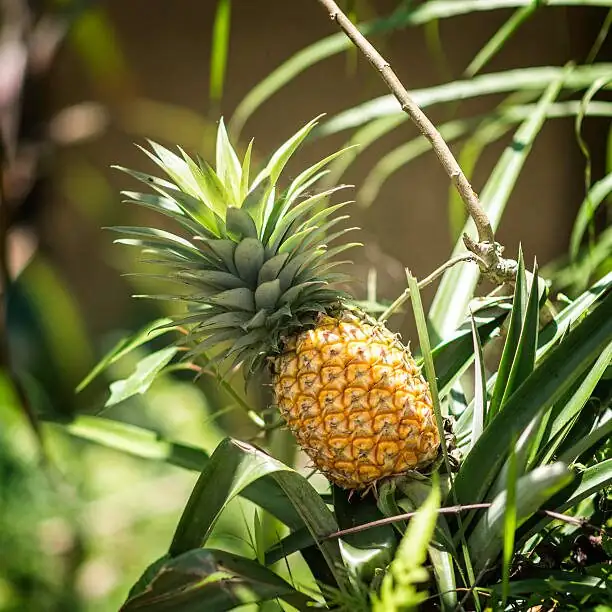
Want tropical sunshine on your windowsill—and a sweet payoff for your patience? Ananas comosus (the pineapple) is a tough, rosette-forming bromeliad that can fruit indoors if you nail the big four: strong light, CAM-savvy watering (yes, including the leaf “cup”), cozy warmth, and seasonal adjustments. Here’s your upbeat, practical playbook—plus a month-by-month calendar—to coax that iconic, golden “multiple fruit” right at home.
Meet your indoor pineapple
- Botanical: Ananas comosus (Bromeliaceae)
- Native range: South America, especially the Paraná–Paraguay river basins (southern Brazil to Paraguay)
- Habit: Herbaceous perennial forming a spiky, waxy-leaved rosette around a short stem; after 12–20 months, a central flower spike appears, then swells into a single fused fruit topped with its own leafy crown
- Size: Typically 3–5 ft tall and wide; leaves up to ~3 ft long
- Timeline: From a planted crown to harvest is commonly 18–24 months
- Bonus: After fruiting, the mother declines but makes offsets (suckers/slips) for the next generation
Light: the “make or break” for indoor fruit
Pineapple is a sun-lover. Indoors, think south-facing window, sunroom, or a warm, bright greenhouse.
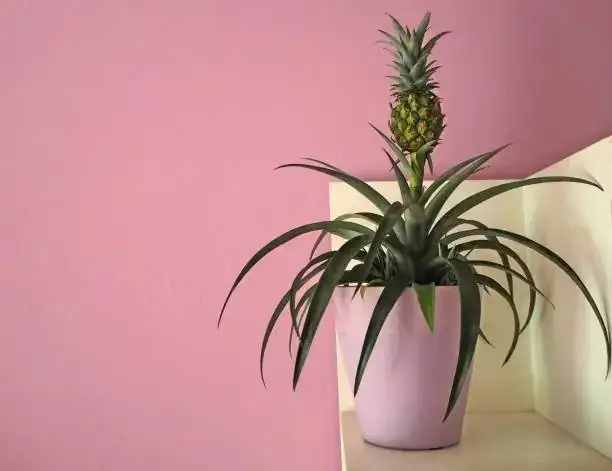
- Aim for:
- As much direct sun as you can provide; supplement with full-spectrum LED grow lights in darker homes
- 10–12+ hours of bright light daily during active growth
- Signs you’ve got it right: Compact rosette, steady leaf production, no elongated, floppy growth
- If moving outdoors for summer: Acclimate gradually over 10–14 days to avoid scorch
Warmth and airflow: tropical, not stuffy
- Temperature sweet spot: 24–27°C (75–80°F) for strong growth; tolerates 18–35°C (65–95°F)
- Keep above 10–16°C (50–60°F) in fall/winter for steady health
- Air: Loves moderate-to-high humidity with good ventilation; stagnant, humid air invites fungus
- Cold caution: Brief dips near -2°C (28°F) can injure foliage—avoid; bring containers in when nights fall below ~16°C (60°F)
CAM‑savvy watering (including the leaf cup)
Pineapple uses CAM photosynthesis—grabbing carbon mostly at night to conserve water. You don’t need to water at night, but you should water in a way that respects its drought tolerance and rot sensitivity.
- Potting mix moisture
- Water deeply, then allow the top 2.5–5 cm (1–2 in) to dry before watering again
- In bright, warm conditions, that might be weekly; in cool/low light, it might stretch to every 2–3 weeks
- Never let the mix stay soggy; waterlogged roots = rot and wilt
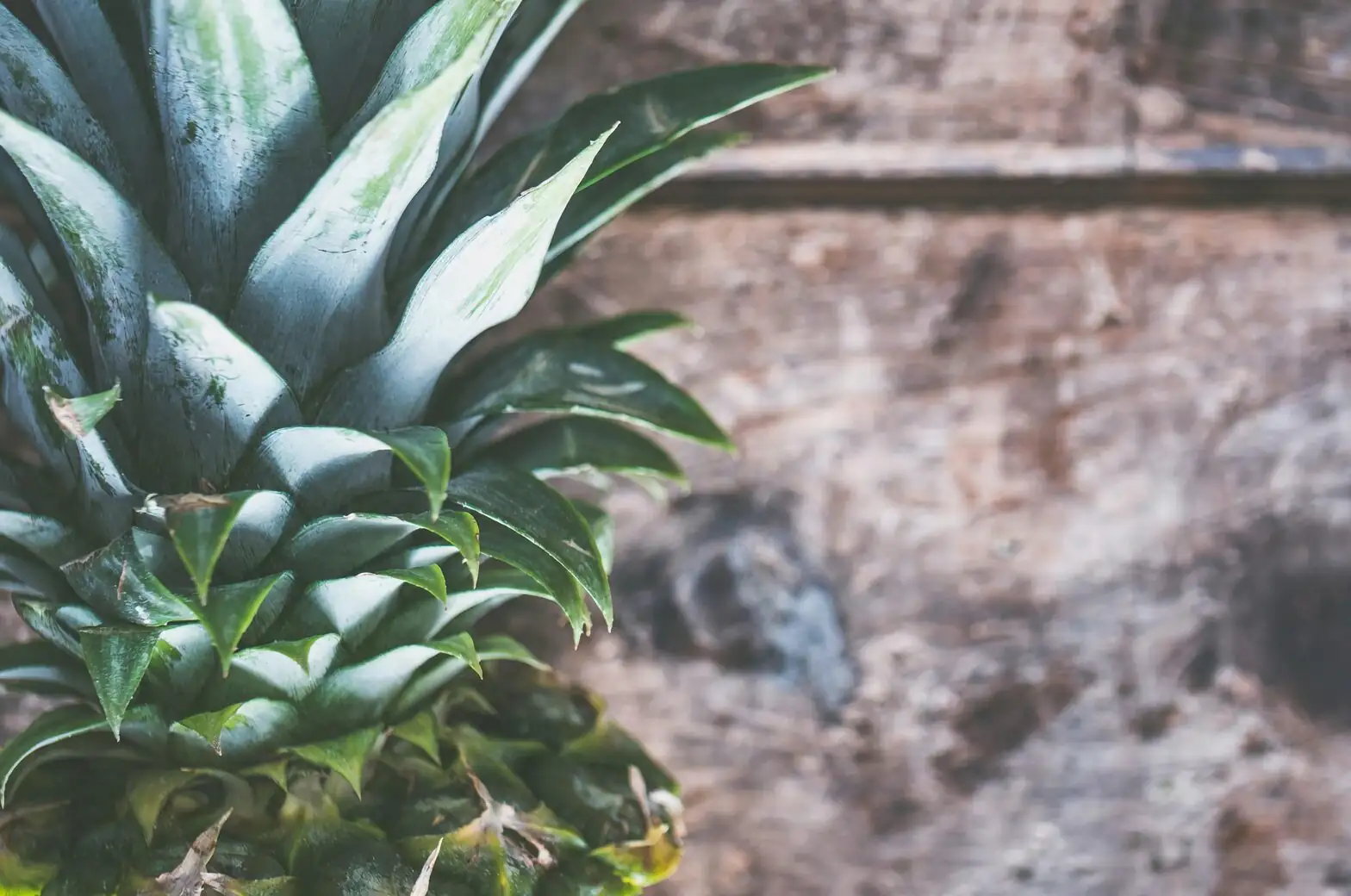
- The leaf “cup” (central rosette)
- You may keep a small amount of clean water in the cup when it’s warm and bright
- Refresh every 2–3 weeks to prevent stagnation and fungal issues
- In cool or dim conditions, keep the cup mostly dry and rely on soil watering instead
- Timing tip
- Water early in the day so leaf axils dry before night; the root zone remains evenly moist, and disease risk stays low
Soil and potting: fast-draining and slightly acidic
- Mix: Loose, airy, and fast-draining—think sandy or sandy‑loam with organic matter
- pH target: 4.5–6.5 (slightly acidic suits pineapple best)
- Container: A pot with ample drainage; a broad, stable base helps support the rosette
- Repot: When rootbound or the mix has compacted; use a bromeliad/cactus‑style blend to keep air in the root zone
Feeding for fruit-forward growth
- During active growth (spring–summer):
- Use a balanced, water‑soluble fertilizer (around 20‑10‑20 is common)
- Feed monthly at label strength, or every 1–2 weeks at lower strength
- You can apply to the soil and lightly to the leaf cup in warm, bright conditions
- Fall–winter:
- Reduce frequency significantly or pause if growth is slow
- Controlled‑release fertilizers also work well for containers
Seasonal rhythm at a glance
- Spring–summer: Full sun, warmth, thorough watering with partial drying between, regular feeding
- Fall–winter: Brightest available light, keep warm, reduce watering, minimal to no feeding
- Expect roughly 18–24 months from crown planting to harvest. A second, smaller “ratoon” crop may follow if you keep a strong sucker after harvest (another 12–18 months).
How to induce bloom indoors (when the plant is mature)
Once your plant has had 12–20 months of vegetative growth in strong light and warmth, you can nudge it to flower.
- Ethylene trick (classic grower method)
- Place a ripening apple or a few apple cores beside the rosette
- Enclose the plant and apple loosely with a clear plastic bag for 1–2 weeks
- Keep out of direct sun while bagged to avoid overheating; keep the mix just lightly moist
- After the bag comes off, return to full light and resume normal care
- What to expect
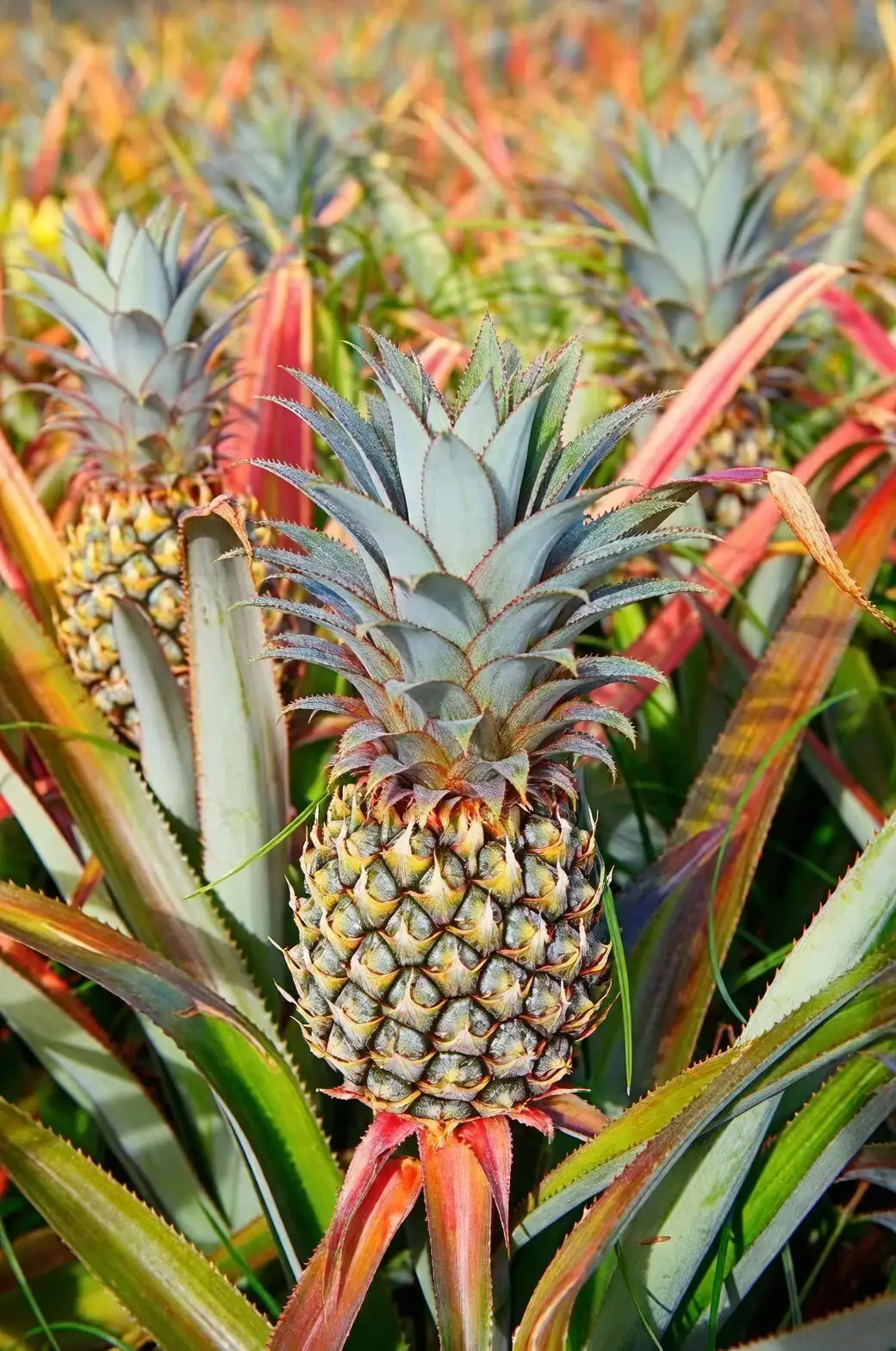
- A flower bud typically forms in the center, followed by many purple‑to‑red blooms that develop into a single fused fruit
- Fruit matures over several months; do not overwater during this period
Month‑by‑month care calendar to coax fruit indoors
Northern Hemisphere timing shown; adjust 6 months for Southern Hemisphere. Year 1 focuses on vegetative growth; Year 2 is prime for inducing bloom and ripening.
January
- Light: Maximize sun; add grow lights to reach long photoperiods
- Water: Lightly—allow the top 1–2 in to dry; keep leaf cup mostly dry if room is cool
- Heat: Keep >16°C (60°F); avoid drafts
- Feed: Pause or very light if growth is slow
February
- Light: As above; clean windows and lights for max intensity
- Water: Still conservative; good airflow
- Prep: Check potting mix structure—plan a spring refresh if compacted
March
- Light/heat: Days lengthen; growth stirs
- Water: Increase slightly as the plant perks up; refresh leaf cup if it’s warm and bright
- Feed: Resume a balanced fertilizer at low strength
April
- Light: Step toward stronger sun; begin hardening off if summering outdoors
- Water: Deep, then partial dry; never soggy
- Feed: Regular schedule; consider a controlled‑release top‑dress
May
- Outdoors: Move out after acclimation if nights stay >16°C (60°F)
- Water: More frequent in heat; refresh leaf cup every 2–3 weeks
- Feed: Stay steady; robust leaf growth now fuels future fruit
June
- Peak growth: Full sun and warmth
- Water: Deeply and regularly; excellent drainage mandatory
- Feed: Maintain schedule; optional light foliar/cup feeds in warm, bright weather
- Inspect: Mealybugs/scale can hide in leaf axils—wipe and treat early
July
- Growth drive continues
- Water/air: Keep airflow moving to deter fungi; don’t let the pot stew in saucers of water
- Feed: Consistent, modest nutrition beats heavy doses
August
- Steady as she goes
- Water: Heat may require more frequent deep soaks; let top layer dry in between
- Plan ahead: Choose 1 strong sucker post‑fruiting to keep for a future ratoon crop
September
- Transition: Light begins to wane
- Water: Start easing frequency if growth slows
- Feed: Begin tapering fertilizers by month’s end
- Move in: Bring plants indoors before nights drop <16°C (60°F)
October
- Indoors: Brightest window + supplemental light
- Water: Conservative but thorough; keep leaf cup water minimal if rooms are cool
- Hygiene: Trim dead leaf tips; improve air movement
November
- Resting light levels
- Water: Infrequent; avoid cold, wet roots
- Feed: Generally pause
December
- Low‑light month
- Water: Sparingly; refresh any cup water only if warm and bright, otherwise keep it dry
- Check maturity: If your plant has 12–20 months of strong growth, prepare to induce bloom late winter
Year 2 bloom plan (overlay)
- Late January to March: If the plant is mature and robust, try the ethylene bagging method
- Spring to summer: Bud and bloom development, then fruit swelling; maintain bright light, warmth, and careful, non‑soggy watering
- Late summer to fall: Fruit finishes; harvest when the shell turns golden‑yellow and aromatic
After harvest: keep the pineapple party going
- Mother plant: Will decline; remove dead leaves gradually
- Offsets:
- Suckers (along the stem) and slips (below the fruit) can be potted to start new plants
- Keep one strong sucker in place for a ratoon crop (another 12–18 months to fruit)
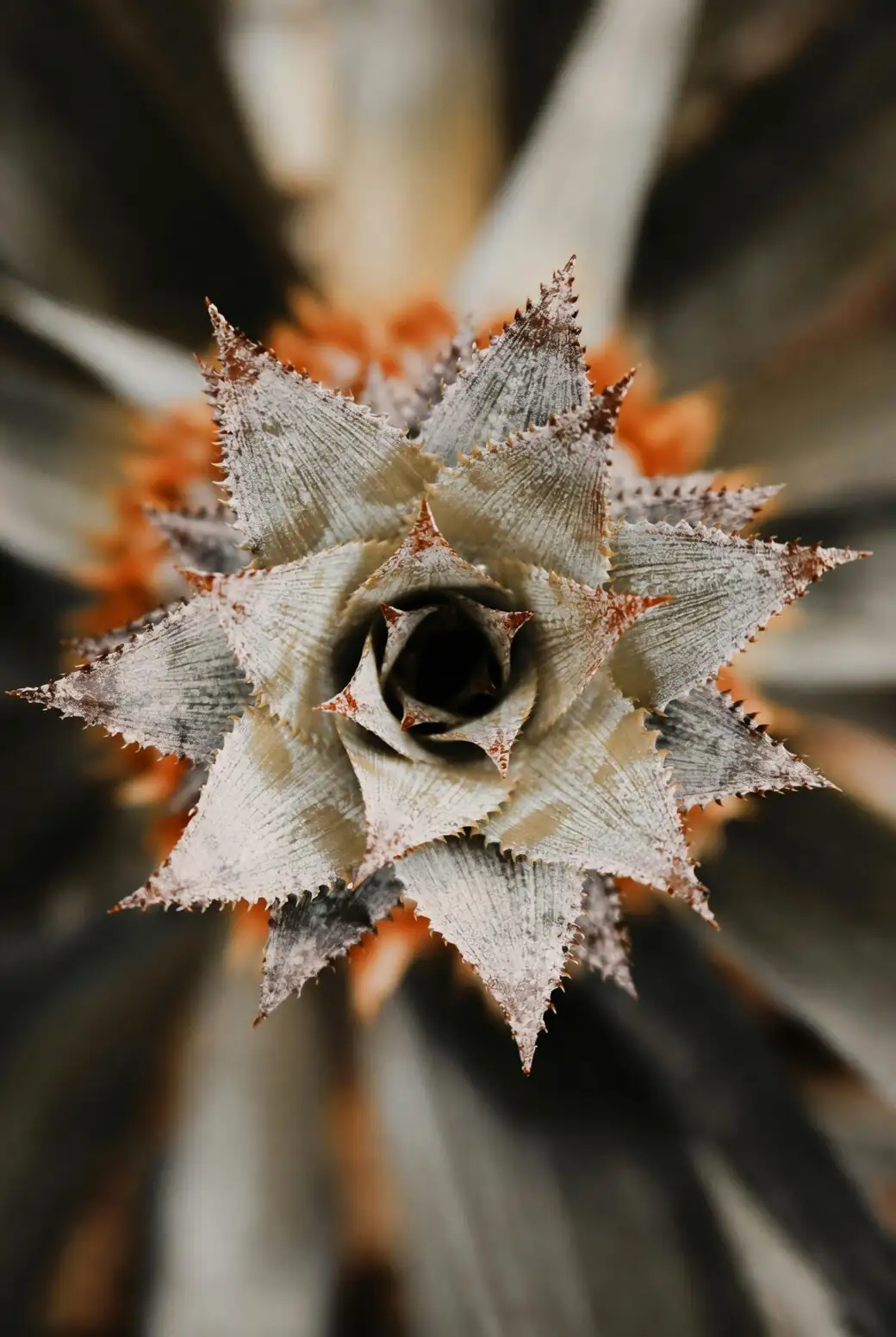
- Crowns: You can also twist off the fruit’s leafy crown, let it dry 1–2 days, root, and grow a new plant
Troubleshooting at a glance
- Pale, elongated leaves: Not enough light—move to stronger sun or add grow lights
- Brown leaf tips with soggy mix: Overwatering or poor drainage—repot into an airy, fast‑draining mix and let the top layer dry between waterings
- Leaf bases black or mushy: Stagnant water in the cup in cool conditions—empty the cup and improve warmth/airflow
- Little to no growth in summer: Insufficient light or feeding; ensure warmth and modest, regular fertilizer
- Pests: Mealybugs, scale, thrips—inspect leaf axils; treat with horticultural soap or oil; improve airflow
Safety and handling
- Generally non‑toxic to people and pets
- Waxy leaves often have sharp, saw‑toothed edges—handle with care
- Fresh fruit contains bromelain, which may irritate sensitive mouths (cooking reduces the effect)
A welcoming symbol—with deep roots
The pineapple has long symbolized hospitality and abundance—its rarity in old Europe made it a prized, festive centerpiece. That “welcome” spirit lives on today in pineapple décor and gifting. Grow one at home, and you’re literally cultivating a housewarming emblem.
Quick essentials checklist
- Light: Full, direct sun indoors or out; supplement in winter
- Warmth: Prefer 24–27°C (75–80°F); never cold and wet
- Water: Deep, then dry the top 1–2 in; refresh leaf cup water every 2–3 weeks in warm, bright conditions
- Soil: Fast‑draining, slightly acidic (pH 4.5–6.5)
- Feed: Balanced, regular feeding in spring–summer; little to none in winter
- Timeline: ~18–24 months from crown to harvest; a second fruit possible from a retained sucker
With bright light, warmth, and a little bromeliad know‑how, your windowsill can absolutely yield a fragrant, golden pineapple—with the leafy crown to prove it.