

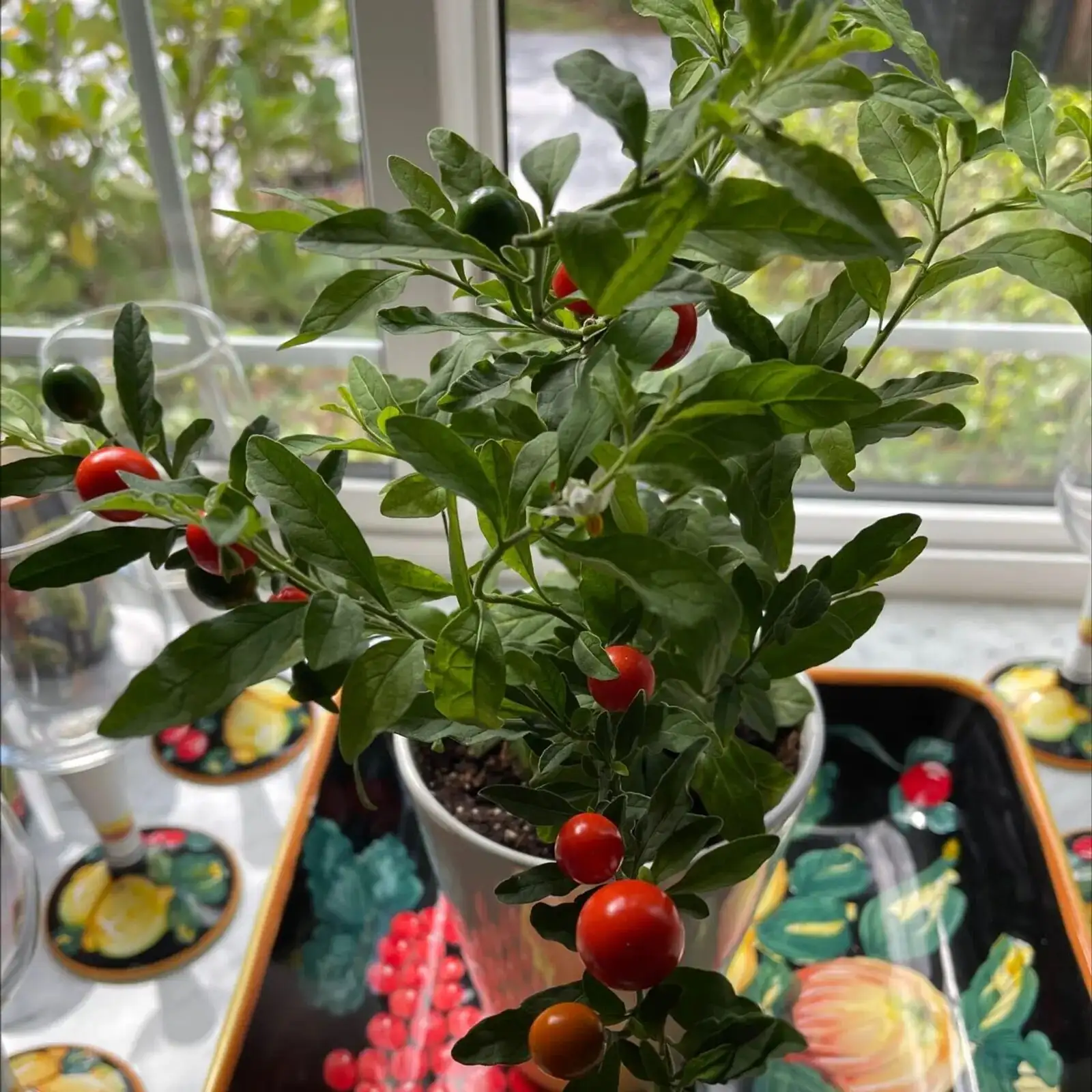
Think of Jerusalem cherry (Solanum pseudocapsicum) as a jewel box on stems: a compact, evergreen subshrub that ripens glossy berries from green to orange to brilliant coral-red just as the days grow short. The trick to carrying that color from a sunny balcony to a cozy living room is a smooth, steady transition—no chill shocks, no soggy roots, no surprise gusts. Here’s a friendly, field-tested guide to move your plant indoors with its berries intact.
Meet the plant you’re shepherding inside
- Identity and nicknames: Jerusalem cherry, Christmas/False/Madeira/Winter cherry (not a true cherry), Solanaceae family.
- Habit and size: Compact, bushy evergreen subshrub, typically 30–60 cm tall and 30–45 cm wide in a 10–15 cm pot. Pinching once when young keeps it dense and rounded.
- The show: Small, starry white flowers in autumn followed by clusters of long-lasting berries that color up through winter.
- Light and climate: Loves bright light to full sun, tolerates partial shade; frost-tender and warm-loving.
- Caution: Toxic if eaten—keep away from children and pets.
When to start the move
- Watch the nights: Bring indoors before nights flirt with 8–10°C (46–50°F). A single cold snap or drafty night can trigger leaf and berry drop.
- Prime indoor spot: A bright east- or south-facing window. Aim for steady 20–25°C (68–77°F) by day and, in winter, never below 8–10°C.
A 10–14 day acclimation plan (berry-saving edition)
Think “gentle, stepwise changes.” If a sudden frost is forecast, prioritize warmth and move indoors immediately; you can fine-tune light and water after.
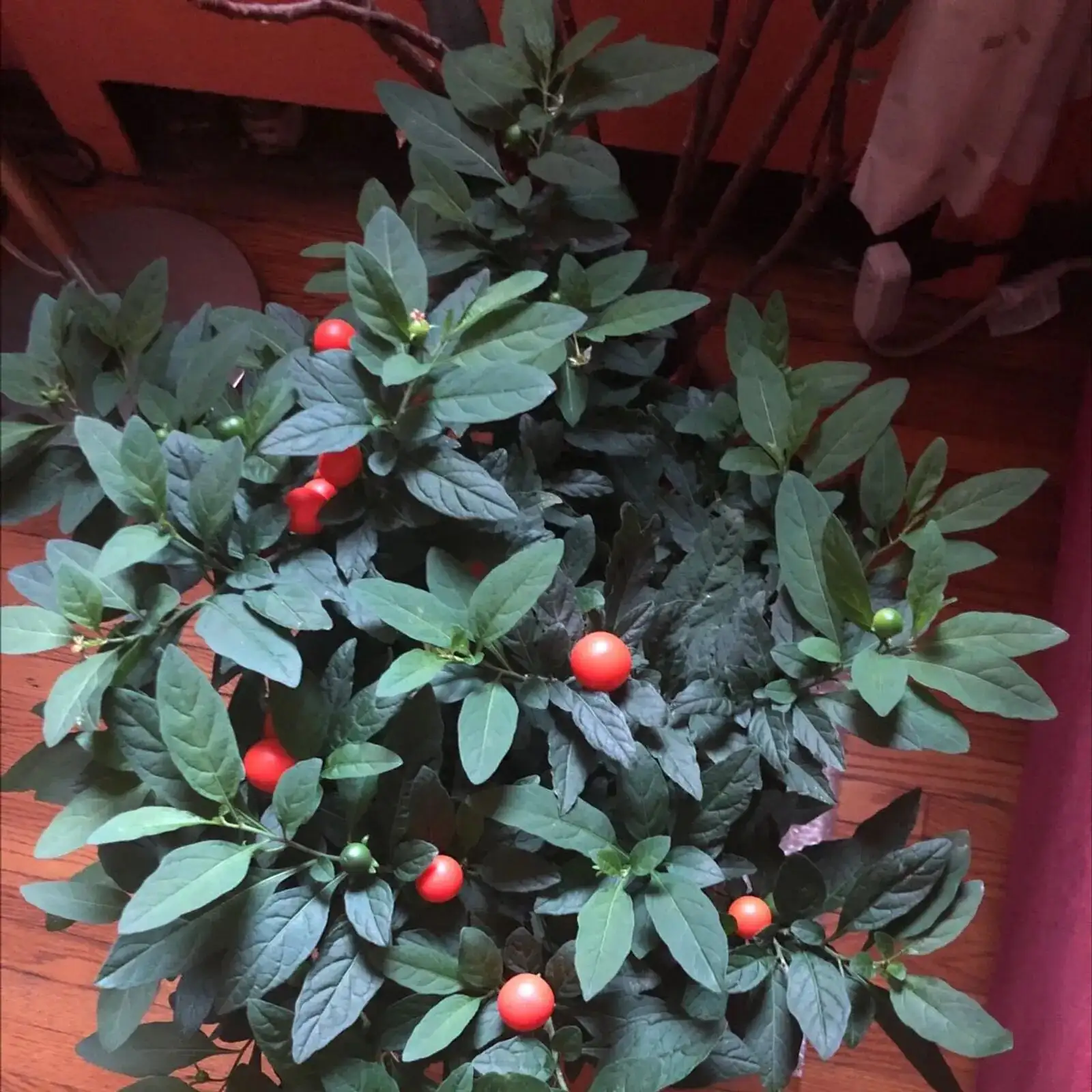
1) Days 1–3: Soften the light outdoors
- Shift from full, exposed sun to a bright but sheltered balcony position (under a clear awning, against a warm wall).
- Reduce wind exposure now; use a windbreak screen if needed.
2) Days 4–7: Dryness rhythm reset
- Let the top 2–3 cm (about 1 in) of potting mix dry between waterings; avoid the “drought then drench” cycle.
- Start watering at the pot rim or bottom-water to keep berries dry.
3) Days 8–10: First indoor stints
- Give it several hours a day in its future indoor window, then return it to the sheltered balcony if nights remain mild. This eases the jump in humidity, light, and airflow.
- Space heaters, radiators, and AC vents are enemies—scope out any draft sources now.
4) Days 11–14: Full indoor move
- Park it in bright light (east/south window). Rotate the pot 1/4 turn weekly for even coloring.
- Stabilize temperature and watering; avoid moving it around the home.
Pro tip: Handle like glass. Fruit-laden stems snap easily, and ripe berries can drop with a bump. Cradle the pot, not the canopy, and secure the plant in a box for transport.
Balcony shelter before the move: wind and rain hacks
- Windbreaks: Place behind balcony glazing or a clear polycarbonate sheet; or tuck it near a sun-warmed wall or corner.
- Rain shields: Use a clear awning or a deep overhang to prevent pounding rain that can spot berries and saturate soil.
- Heavy pots and ties: Use a weighty container and discreet ties to prevent toppling.
- Drainage on point: Feet under the pot and a free-draining saucer keep roots out of standing water.
Indoors: where to put it (and what to avoid)

- Best seat: Bright east- or south-facing window. It tolerates partial shade, but strong light keeps berries colored and attached.
- Draft control: Keep away from door blasts, cracked windows, heat registers, and AC vents. Sudden temperature swings = fruit drop.
- Temperature targets: Happy at 20–25°C. In winter, keep above 8–10°C and avoid “cold + wet.”
Optional boost: If your winter light is weak, a small LED grow light set 25–35 cm above the canopy for 10–12 hours can preserve berry color.
Watering that keeps berries on
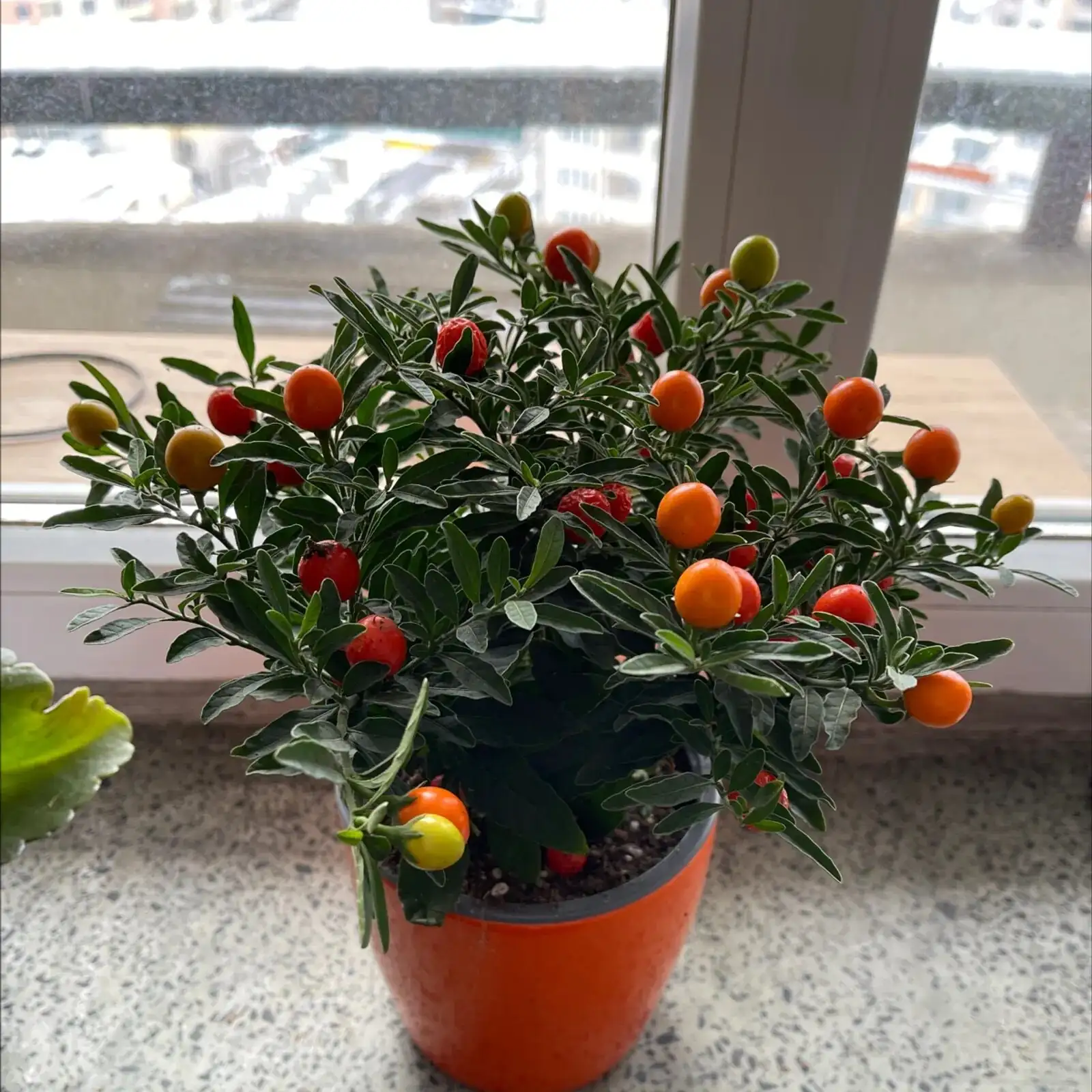
- Golden rule: Evenly on the slightly dry side—never waterlogged.
- How to check: Water thoroughly only when the top 2–3 cm of mix is dry. Indoors in cool, cloudy stretches, that often means every 4–5 days—adjust to your room conditions.
- Technique matters:
- Pour slowly at the soil line or bottom-water; avoid splashing berries (spots and rot risk).
- Use a narrow-spout watering can; empty any saucer after 10–15 minutes.
- Stage-specific tweaks:
- Flowering (autumn): A touch drier encourages better fruit set.
- Fruiting (autumn–winter): Keep lightly moist to slightly dry; no drought swings.
Soil and potting for a smooth transition
- Potting mix: Rich yet airy—loam-based mix lightened with peat/coco and coarse sand/perlite for drainage.
- Pot size: Slightly pot-bound in a 10–15 cm container keeps growth tight and fruiting focused.
- Repot only when needed; overpotting = soggy roots and berry drop.
Feeding for color, not lush leaves
- Active growth: Feed every 2 weeks with a balanced fertilizer.
- As buds and flowers appear in autumn: 1–2 feeds higher in phosphorus and potassium (e.g., a bloom/fruit formula similar to 15-15-30) to support berries. Then pause heavy feeding while the display lasts.
Gentle handling and discreet support
- Stake lightly if fruit clusters weigh down soft stems.
- Avoid pruning during peak display. If you’re keeping the plant another year, cut back after winter to encourage fresh shoots.
Quick troubleshooting: why berries drop (and fast fixes)
- Low light: Move to a sunnier window or add a grow light.
- Cold drafts or temperature swings: Relocate away from vents/doors; keep above 8–10°C in winter.
- Wet, stagnant soil: Improve drainage, water only when the top layer dries, and never let the pot sit in water.
- Rough handling: Stabilize the plant when moving or rotating; support heavy stems.
Pests and leaf spot watch
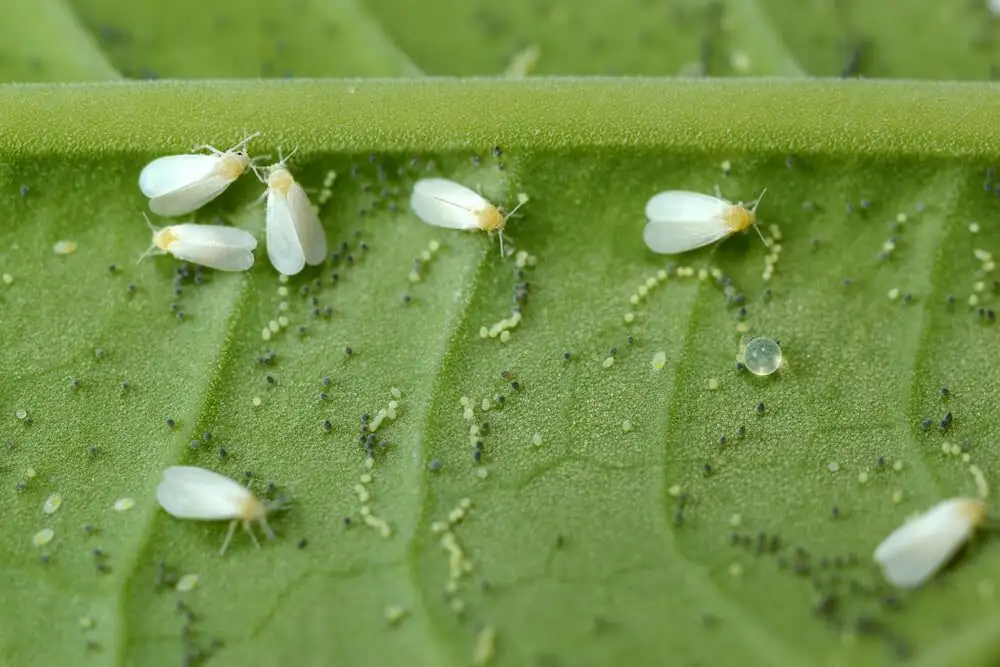
- Whiteflies love indoor Jerusalem cherries. Isolate new arrivals, check leaf undersides, and treat with insecticidal soap or horticultural oil; repeat as needed.
- Leaf spot/anthracnose thrive in stagnant, damp conditions. Improve airflow, avoid wetting leaves and berries, and remove affected parts promptly.
Safety first
- All parts, especially berries, are toxic if eaten. Display out of reach of children and pets.
A simple seasonal calendar for balcony-to-living-room growers
- Spring–summer: Full, bright light; water as the surface dries; feed every 2 weeks. Outdoors in warm weather if sheltered from harsh wind and heavy rain.
- Early autumn: Buds/flowers—slightly reduce watering; give 1–2 higher P/K feeds.
- Mid–late autumn: Begin the 10–14 day acclimation; move indoors before nights hit 8–10°C.
- Autumn–winter display: Bright window, steady temps above 8–10°C, light watering (often every 4–5 days in cool/dim weather), and keep the mix slightly on the dry side.
Symbolism (and what it really says)
The bright winter berries have long made Jerusalem cherry a seasonal “good luck” gift—cheer and prosperity condensed into coral-red pearls during the darkest months. That meaning is cultural rather than botanical, rooted in winter gifting traditions where long-lasting color stood for endurance and fortune. Displayed by a sunny window, it’s a small, vibrant promise that warmth—and spring—are on their way.
Keep or compost next year?
Often grown as a one- to two-year decorative plant, Jerusalem cherry can be kept going under strong light. After winter’s show, cut back, resume feeding and bright conditions, and it may flower again in autumn. In very mild climates (roughly USDA Zones 10–11), it can live outdoors year-round—everywhere else, think of it as a warm-season balcony star and a winter windowsill classic.
Berry-saving recap:
- Bring in before 8–10°C nights.
- Bright window, steady 20–25°C days.
- Water only when the top 2–3 cm dry; keep berries dry.
- Shelter from wind/rain, and avoid drafts indoors.
Do those four, and your little “cherries” will sparkle straight through winter.