

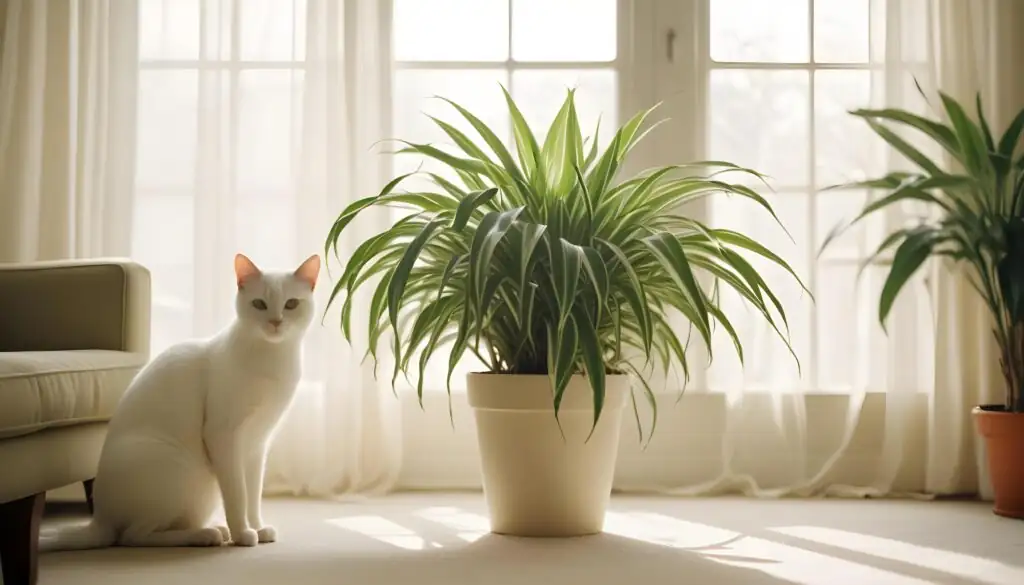
You brought home a Spider Plant (Chlorophytum comosum) for its ribboned leaves and those joyful, dangling “spiders,” and now you want the lighting just right: bright enough to keep the stripes crisp and the runners coming, but not so intense that midday rays crisp the edges. Here’s your friendly, expert guide to placing this classic plant so it glows—not cooks.
Meet the light-loving, shade-shy sweet spot
Spider Plant thrives in bright, indirect light—the kind of radiance you get beside an east window or a few feet back from a sunny south/west window behind a sheer. That’s the Goldilocks zone for:
- Strong, compact growth
- Vivid variegation
- Plenty of runners and plantlets
It will tolerate lower light, but expect softer striping, slower growth, and fewer babies. Direct midday sun, especially through hot glass, can scorch leaves. Gentle winter sun, however, is usually fine.
Window-by-window placement that works
East-facing windows (ideal)
- Where to put it: On the sill or within 0–2 ft (0–60 cm).
- Why it works: Bright morning light without the harshness of afternoon sun—great for variegation and runner production.
North-facing windows (bright room)
- Where to put it: As close to the window as possible.
- Notes: Lovely in summer; in winter, it may be too dim for bold stripes or plantlets. Consider a light boost or move it closer.
South-facing windows (powerful light)
- Where to put it: 3–8 ft (1–2.5 m) back, or right on the sill with a sheer curtain.
- Pro tip: Sheers that diffuse 30–50% of the light mimic dappled shade. Keep foliage from touching hot glass.
West-facing windows (strong afternoon sun)
- Where to put it: 3–6 ft (1–2 m) back or behind a sheer.
- Why: Late-day rays run hottest—perfect time to diffuse.
Quick visual cue: the “shadow test”
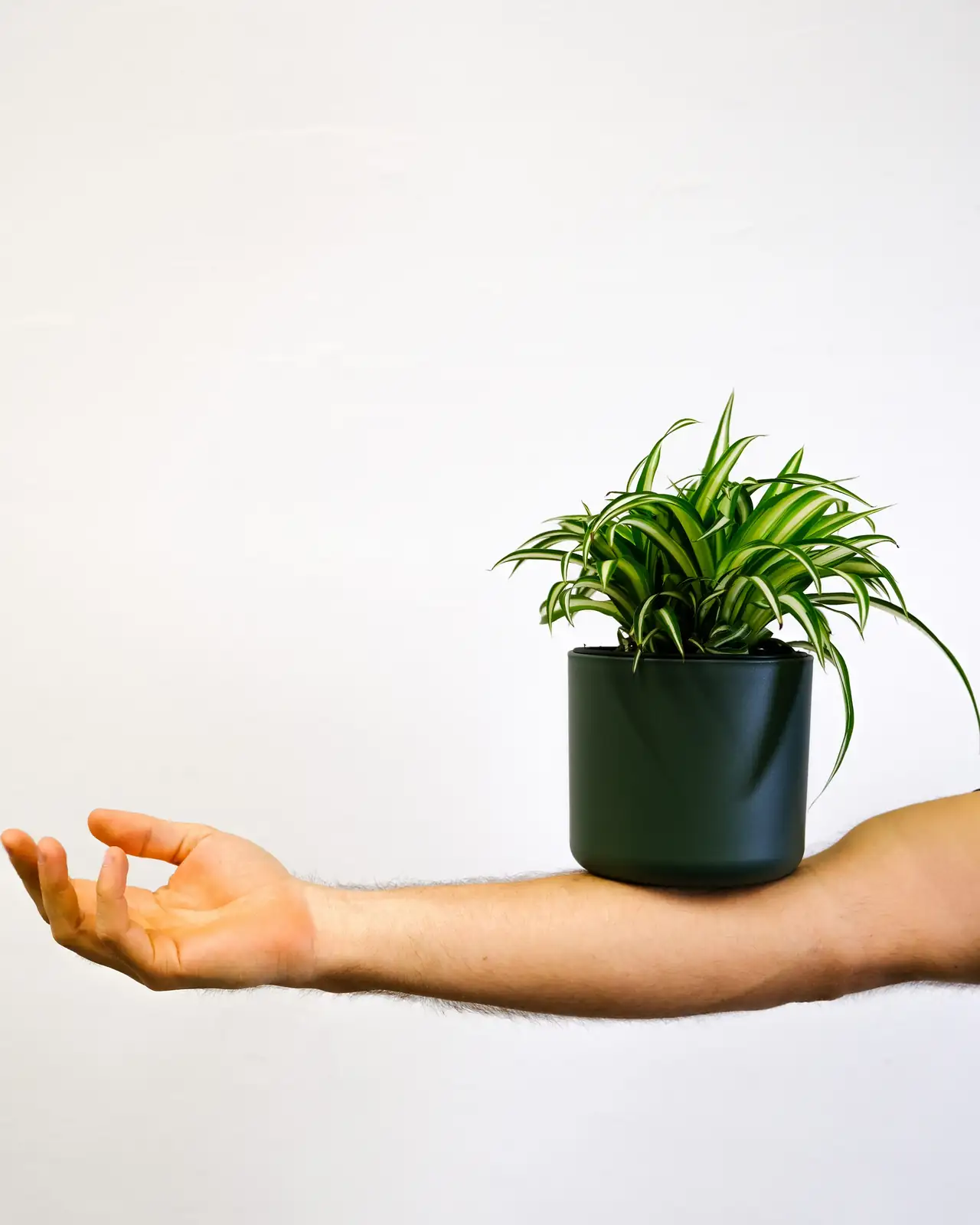
- Bright, indirect light casts a soft-edged shadow of your hand at midday. Crisp, dark shadow = too direct; no shadow = likely too dim.
How to preserve variegation (and stop the fade)
Variegated forms like ‘Vittatum’, ‘Variegatum’, ‘Reverse Variegatum’, and curly ‘Bonnie’ show their best striping with steady, bright indirect light. In lower light, leaves tend to go greener and patterns blur.
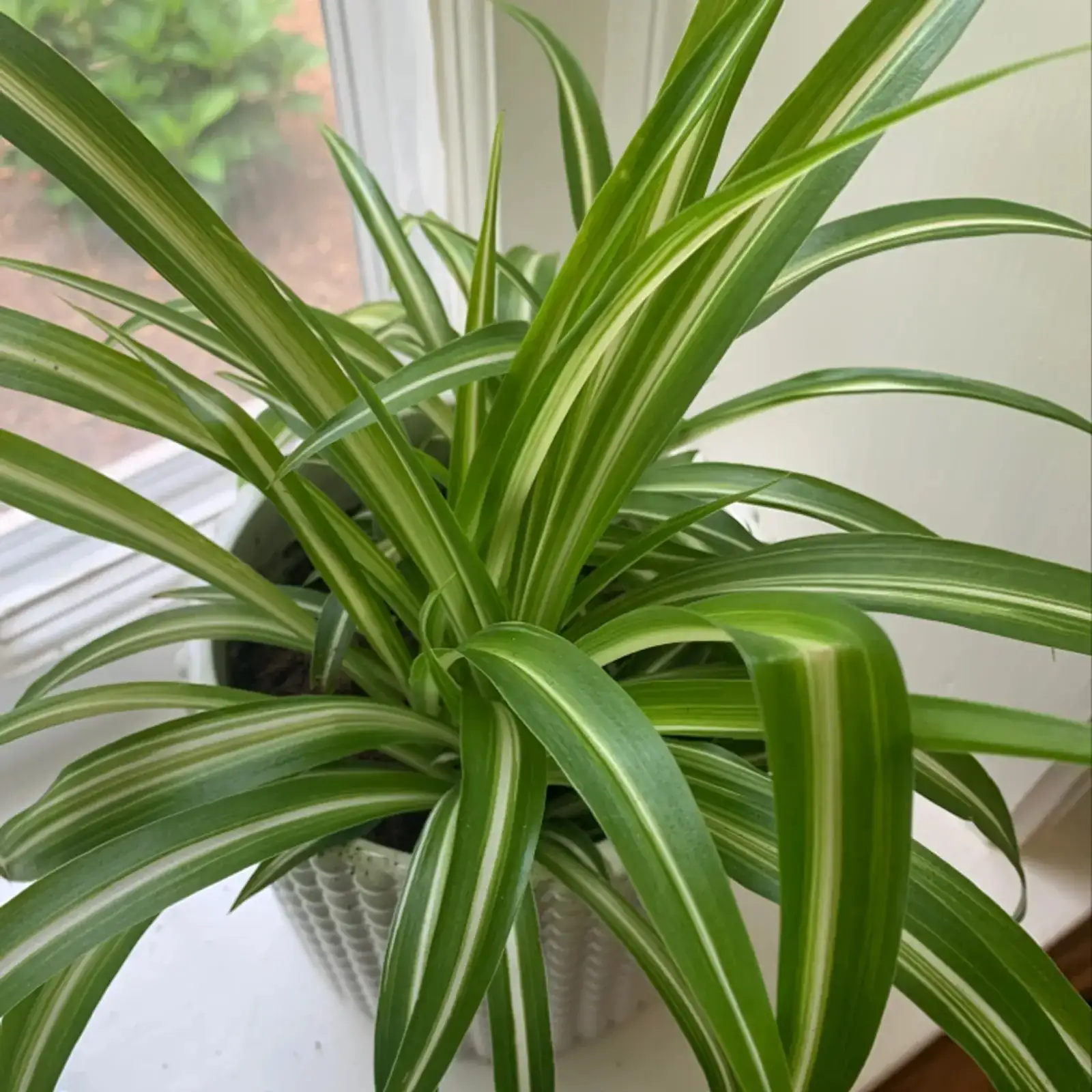
- Give it the brightest indirect spot you have.
- Rotate the pot every week or two for even color.
- Dust leaves gently so light reaches the tissue that makes the stripes glow.
- Feed lightly during active growth—avoid heavy nitrogen, which can push greener leaves and dull the variegation.
- Note: Some cultivars such as ‘Hawaiian’ naturally see variegation soften as they mature; keeping the light bright and indirect helps maintain contrast.
How to encourage runners and a cascade of babies
Runners arrive when the plant feels mature and content.
- Light: Bright, indirect light is the single best “runner trigger.”
- Pot fit: Keep it slightly snug—rootbound-ish plants often send more stolons.
- Season and temperature: Expect the most action in spring–summer around 18–24°C (64–75°F).
- Feeding: Light, regular feeding in the growing season supports blooms and plantlets; avoid heavy nitrogen.
- Watering: Aim for evenly moist, never soggy. Let the top 2–3 cm (about 1 in) dry before watering again.
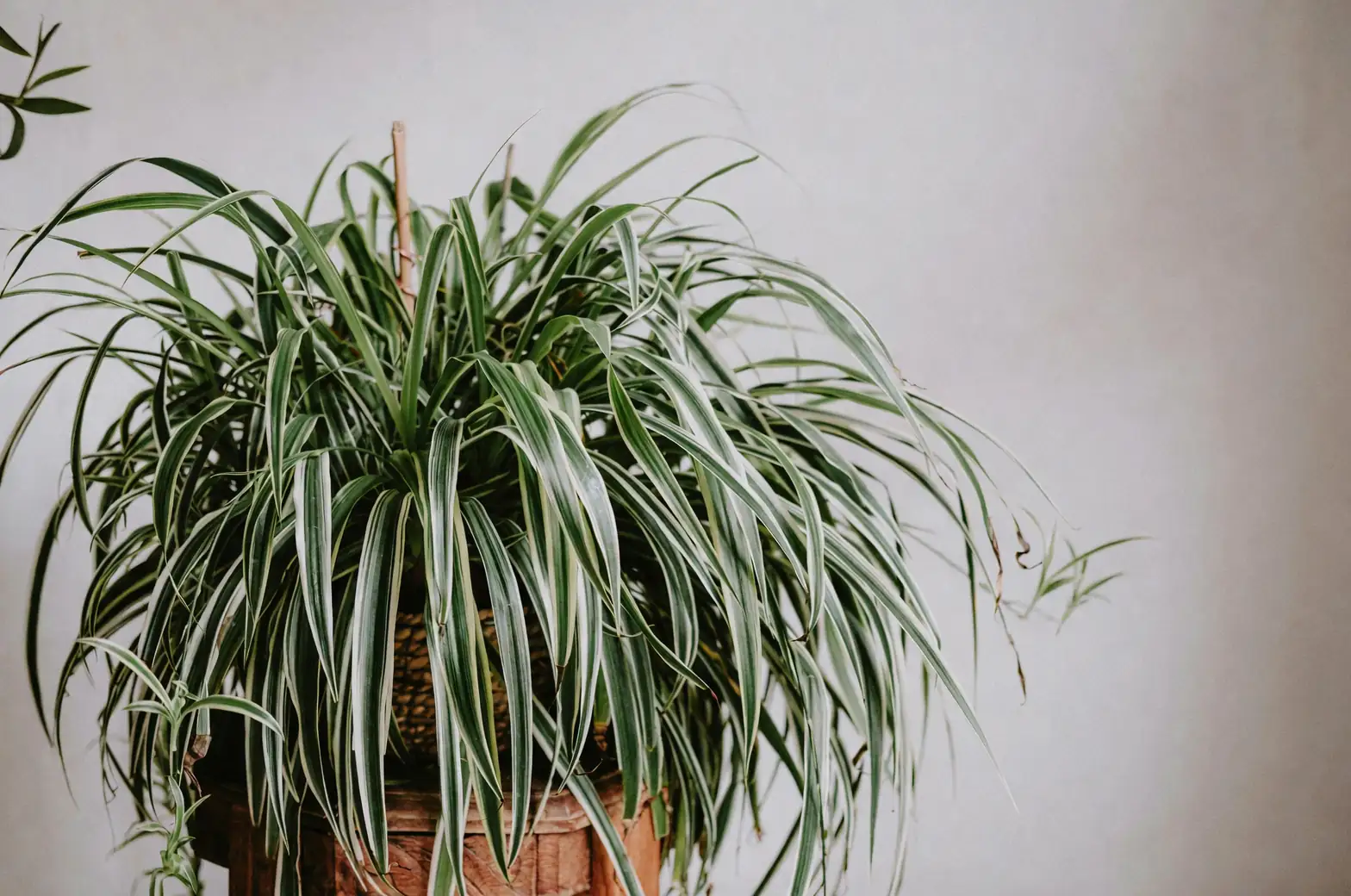
- Placement: Hanging baskets, high shelves, or pedestals let those graceful runners drape dramatically.
Midday scorch: how to prevent it (and fix it fast)
What scorch looks like
- Bleached or crispy patches, often on the white/cream areas first
- Brown rims on leaves after a hot, sunny afternoon
- Warm potting mix and limp leaves by late day
Prevention indoors
- Filter the sun with sheers or blinds during midday/afternoon.
- Step the plant back from south/west glass.
- Avoid pairing strong sun with high heat (above ~30°C / 86°F), which accelerates scorch.
Prevention outdoors (mild climates only)
- Place in bright shade or dappled light (under a tree or pergola).
- Morning sun is fine; provide midday–afternoon shade.
- Acclimate over 10–14 days: start in shade, then gradually increase light.
- Protect from cold; bring indoors as nights approach 7°C (45°F).
If scorch happens
- Move it to bright, indirect light immediately.
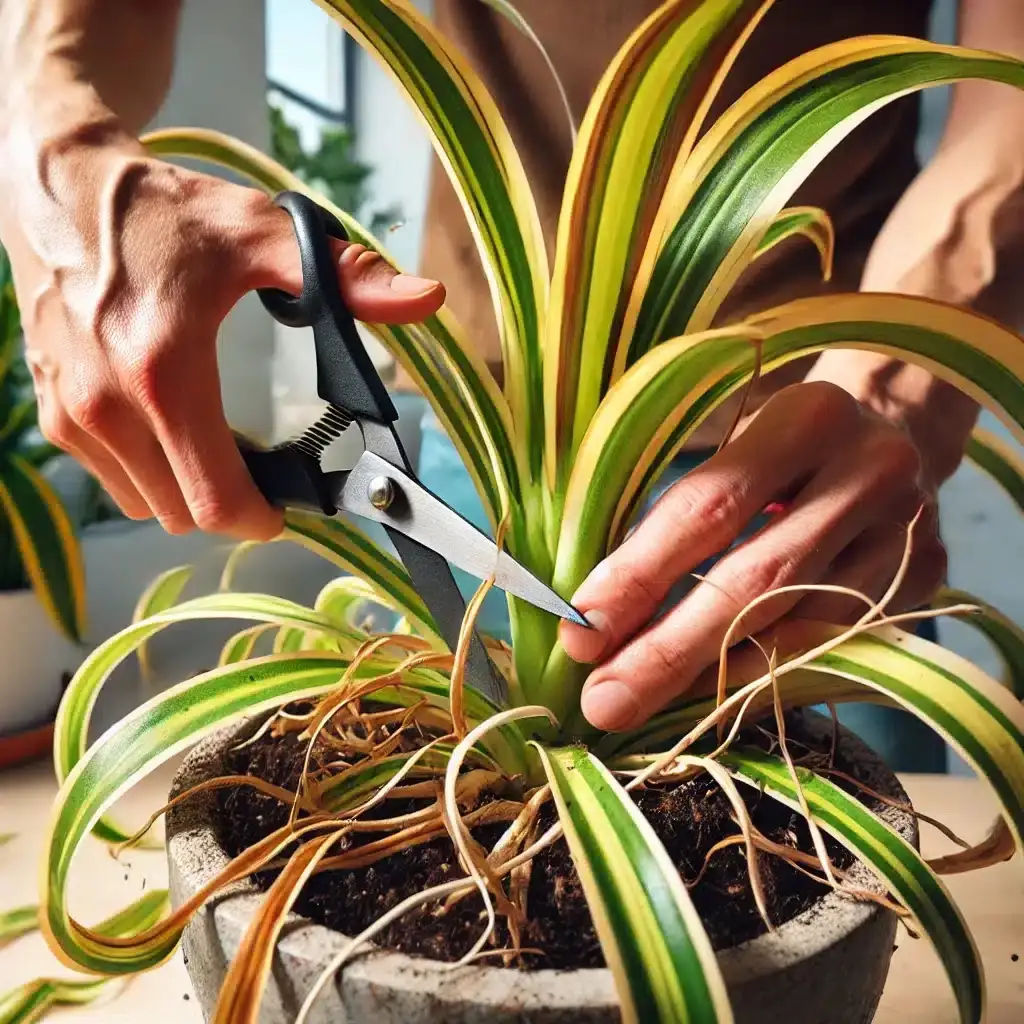
- Trim damaged tips/leaves for a tidy look, cutting along the leaf’s natural point.
- Resume even watering; don’t overcorrect with extra fertilizer.
When natural light is limited: thoughtful grow-light help
Short winter days, deep interior rooms, or dim north exposures? A small, full-spectrum LED can stand in for a bright window.
- Duration: Aim for a consistent “day” of bright, indirect-equivalent light; a timer set for part of the day helps keep growth steady.
- Distance and intensity: Position the light high enough (often 12–24 in / 30–60 cm above the plant, depending on output) so leaves don’t feel hot and no sharp shadows are cast.
- Signs to watch: Washed-out color and crisping mean intensity is too high; limp, stretched growth means too low.
Season-by-season light tweaks
- Spring–summer: Provide bright, indirect light with protection from harsh midday sun; mist occasionally if air is very dry.
- Autumn: Gradually reduce watering and feeding as days shorten; keep bright light to maintain color.
- Winter: Give the brightest indirect light available; gentle winter sun is usually fine. Water more sparingly. Keep above 7°C (45°F).
Water, humidity, and fertilizer: small habits that protect leaves
- Water quality: Minerals/fluoride can cause brown tips. If your tap water is hard, switch to filtered, distilled, or rainwater and flush the pot monthly with lukewarm water (~25°C / 77°F).
- Humidity: Average room humidity is fine; around 50% helps keep tips neat in heated homes.
- Feeding rhythm: During active growth, use a balanced liquid fertilizer lightly and regularly (e.g., every 2–3 weeks). Ease off in winter.
Easy placements you can copy today
- East-window hanging basket: Morning sun, bright afternoons, perfect for plantlets.
- Bright north bath: On the sill for steady, diffused light; humidity bonus.
- South-window living room: 5 ft back with a sheer; rotate weekly.
- West-kitchen shelf: 3–4 ft from the window; pull the shade after lunch on hot days.
- Water culture vignette: Roots in water, crown above the line, near a bright window out of direct sun; change water regularly and rotate the container for balanced growth.
Quick troubleshooting for light-related looks
- Faded stripes, few or no babies: Increase bright, indirect light; avoid heavy nitrogen; ensure the plant is a little snug in its pot.
- Leggy, stretched tufts: Move closer to the light source or filter but brighten; watch for improvement over a few weeks.
- Brown tips: Often water quality, inconsistent watering, very dry air, or fertilizer salts—light helps overall vigor, but fix the water routine and flush the mix monthly.
- Leaves yellowing in dim corners: Brighten the spot or add a light; reduce watering frequency in low light to prevent rot.
A tiny origin note and why it matters for placement
Native to southern Africa (including coastal and inland South African regions), Chlorophytum comosum evolved under bright, filtered canopies—think brilliant daylight softened by leaves. Re-creating that indoors—lots of light, just not the brutal midday beam—is the reason your plant keeps its stripes and sends out those jaunty runners.
With a little placement finesse—east-window mornings, sheers for south/west exposures, and a steady, bright backdrop—you’ll have a Spider Plant that’s vividly variegated, baby-rich, and gloriously un-scorched.


