If your jade plant has ever looked like a tiny tree begging for a spotlight, you’re in luck. Crassula ovata loves a clear routine—strong light, a smart “soak and dry” rhythm, and a few cool-weather cues. Nail those three, and your plant can reward you with winter clusters of starry white-to-blush blooms that smell faintly sweet. Here’s a lively, step-by-step playbook to dial it all in.
Meet Your Jade, Briefly
- Botanical name: Crassula ovata (aka Jade Plant, Money Plant, Lucky Plant, Friendship Tree)
- Native to: KwaZulu-Natal and Eastern Cape provinces of South Africa, and Mozambique
- Look: Thick, glossy, oval leaves like jade pebbles; branching stems that mature into a trunk-like base; red leaf edges under strong light
- Blooming: Winter, when shorter days, cooler nights, and drier soil say “flower time”
Light: The Accelerator Pedal for Compact Growth and Blooms
Think bright, steady, and predictable.
The sweet spot
- Aim for 4–6 hours of strong light daily.
- Best indoor placement: a sunny south- or west-facing window.
- Young plants: bright indirect light is kind; mature plants can bask in some direct sun (especially gentle morning sun or filtered afternoon sun).
Signs your light is right
- Leaves are firm and glossy; new growth is compact.
- Reddish edging develops on leaf margins in stronger light.
- No stretching between leaf pairs (leggy growth = it needs more light).
If you move it outdoors for summer
- Use bright shade or filtered sun and acclimate over 10–14 days to avoid sunburn.
- Bring it back inside well before nights approach 10°C (50°F). Jade is not frost-hardy.
Watering Rhythm: Soak Deep, Then Wait for Bone-Dry
Overwatering is the fastest way to lose a jade. Underwatering is surprisingly forgiving.
The method
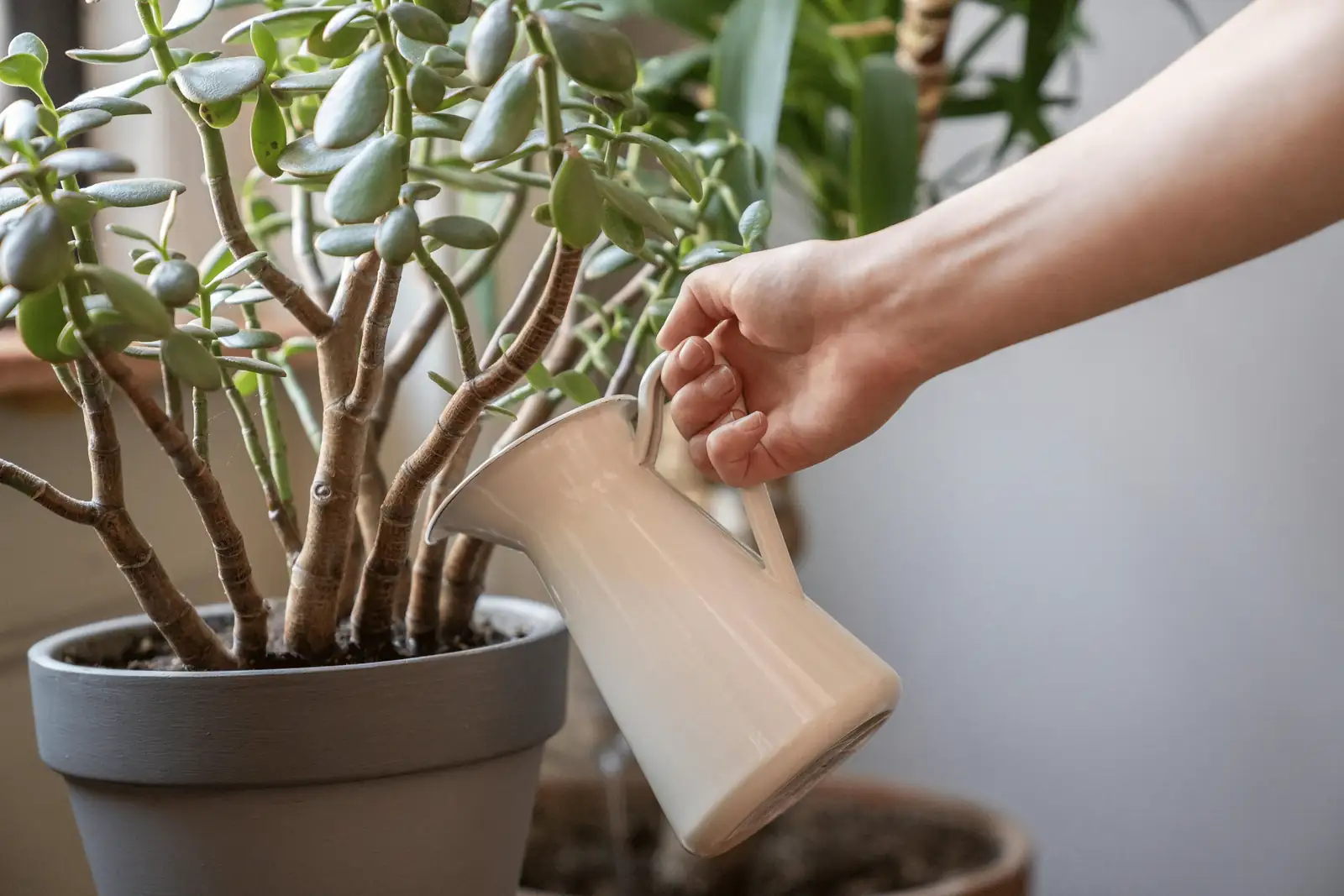
- Water thoroughly until excess drains out the bottom.
- Empty the saucer. Don’t let roots sit in water.
- Wait until the potting mix is completely dry all the way through before watering again.
Seasonal cadence (always check the soil first)
- Spring–Summer: roughly every 7–10+ days depending on light, pot size, and temperature.
- Fall–Winter: sparingly—sometimes just once a month or even less.
Pro tip: Check dryness by feeling through the drainage hole, using a wooden skewer (comes out dry = time to water), and learning the pot’s “light when dry” weight. Try not to splash water onto leaves.
Soil and Pot: Fast-Draining or Bust
- Use a cactus/succulent mix, or blend regular potting soil with perlite at about 2:1 for airflow and quick drainage.
- A pot with a drainage hole is non-negotiable.
- Being slightly root-bound is fine—and can help keep the plant compact and more bloom-inclined.
Temperature and Humidity: Warm Days, Cool Nights
- Daytime comfort: 18–24°C (65–75°F).
- Winter nights: around 13°C (55°F) help trigger flowering.
- Absolutely avoid frost; protect or bring indoors before temperatures approach 10°C (50°F).
- Prefers dry air—normal indoor humidity is perfect.
The Seasonal Playbook That Triggers Winter Flowers
Here’s your year, simplified.
Spring: Build strength
- Light: Keep it bright; consider inching it closer to the window.
- Water: Resume a steady soak-and-dry after the winter slowdown.
- Feed: Every 2–4 weeks with a diluted cactus/succulent or balanced houseplant fertilizer.
- Shape: Prune in early spring to encourage branching and a sturdier trunk.
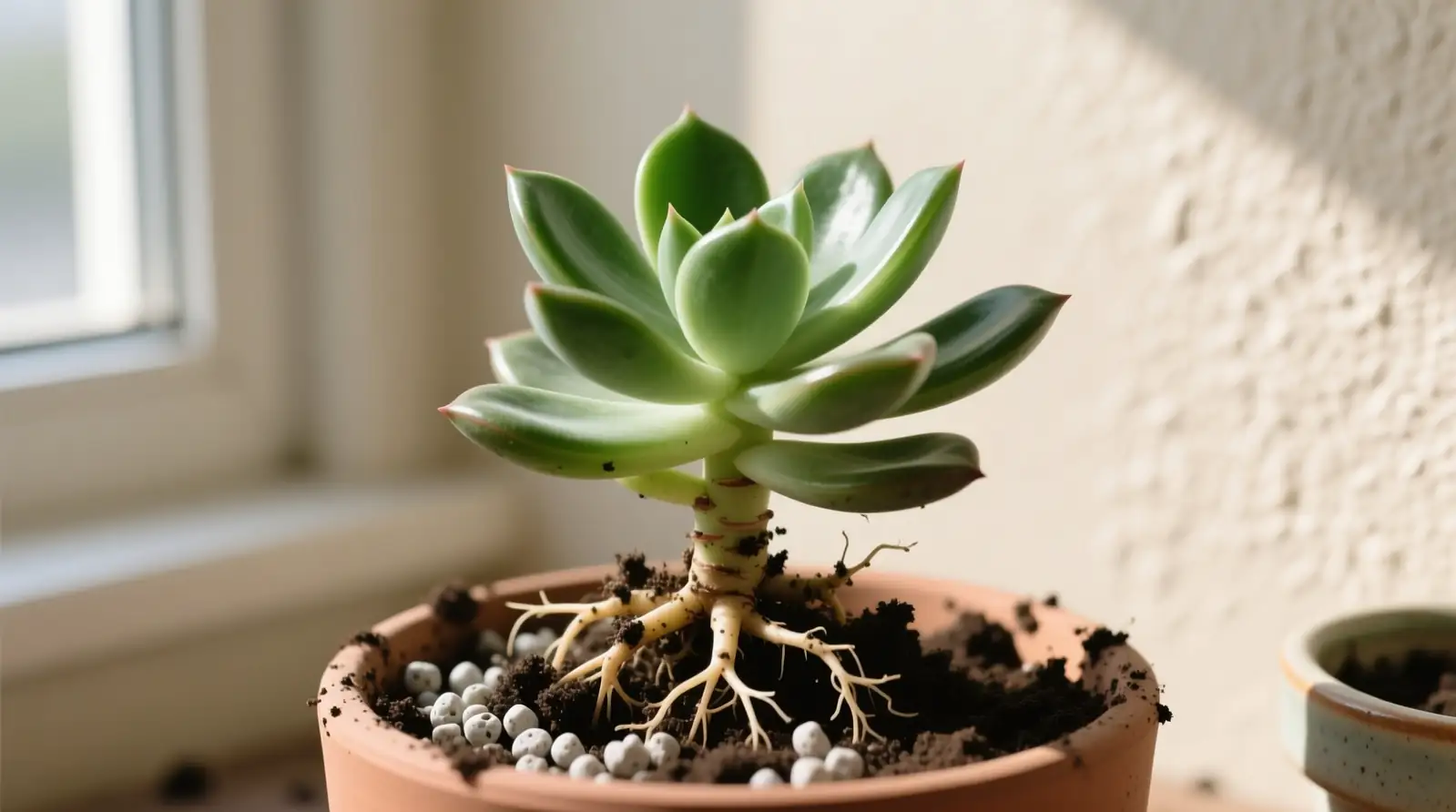
- Repot: If needed (young plants every 2–3 years; mature plants 4–5 years). After repotting, wait ~1 week to water and ~1 month to fertilize.
Summer: Power growth
- Light: Maintain bright conditions; outdoors in filtered sun is fine with gradual acclimation.
- Water: Consistent soak-and-dry.
- Feed: Keep the light, regular feeding going.
- Watch: Leaves turning red at the edges? That’s sun-kissed jade, not stress—assuming they stay firm.
Fall: Signal “winter is coming”
- Light: Keep days bright, but give true darkness at night—avoid bright artificial light after sunset so the plant experiences naturally shorter days.
- Water: Taper off. Lengthen the dry spells between waterings.
- Feed: Stop fertilizing.
- Temperature: Allow cooler nights (around 13°C/55°F if you can) without exposing it to cold drafts or near-frost.
Winter: Cue the blooms
- Light: Bright as possible by day; still dark at night.
- Water: Very sparingly—only after the mix is fully dry; sometimes as little as once a month or less.
- Temperature: Cool nights help. Keep above 10°C (50°F), away from freezing windows or blasts of cold air.
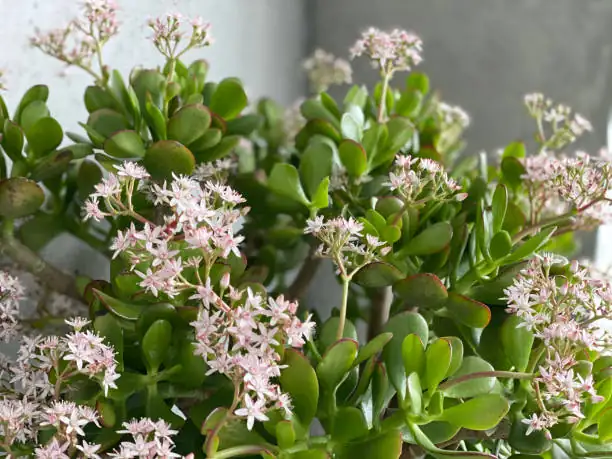
- Patience: Mature plants that have had the fall “dry + cool + short-day” combo may produce rounded clusters of tiny, starry white-to-pink flowers.
The Bloom Blueprint (Quick Checklist)
- Maturity: Older, well-branched plants bloom more reliably.
- Light: Very bright days (4–6 hours of strong light).
- Nights: Cool (around 13°C/55°F) in late fall and winter.
- Water: Lean and infrequent from fall into winter.
- Feeding: None in fall/winter.
- Darkness: No bright artificial light at night—short days matter.
- Potting: Slightly snug roots are fine; don’t upsize late in the year.
Troubleshooting: No Buds Yet?
- Too little light: Move to a brighter window; prune leggy stems in spring to reset shape.
- Nights too warm: If winter nights never cool down, buds are less likely.
- Watering too often: Let the mix go fully dry and lengthen intervals.
- Feeding in fall: Stop fertilizer as days shorten.
- Nighttime light pollution: Turn off grow lights after sunset and avoid streetlamp glare if possible.
- Root shock or recent repot: Blooming often pauses after a big move; try again next season.
Pruning and Styling for a Stronger, Bloom-Ready Plant
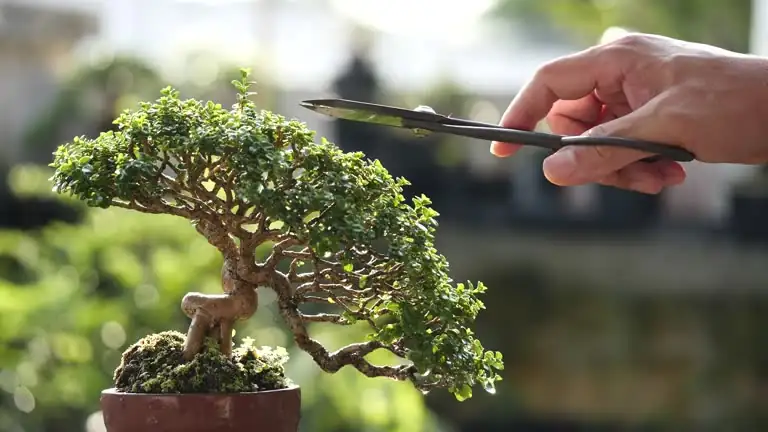
- When: Early spring.
- How: Cut back to a side branch to encourage bushier growth and a sturdier, bonsai-like silhouette.
- Aftercare: Cuts callus quickly; new shoots often pop within weeks in warm, bright conditions.
Health, Pests, and Easy Fixes
- Usual suspects: Mealybugs, scale, aphids, spider mites.
- Fix: Dab with a cotton swab dipped in rubbing alcohol; repeat weekly until gone. Improve airflow.
- Root rot: Almost always from overwatering or soggy soil.
- Fix: Let the plant dry thoroughly, repot into fast-draining mix if needed, and reset your watering cadence.
- Powdery mildew: Uncommon indoors; improve light and airflow if it appears.
Safety Note
- Mildly toxic to cats, dogs, and horses if ingested (vomiting, lethargy/incoordination possible). Keep out of reach. Sap may irritate sensitive skin.
Symbolism and “Flower Language”
Jade plants have long symbolized prosperity, friendship, and longevity. In feng shui, they’re often placed in the southeast “wealth corner” or given as housewarming and business-opening gifts to invite abundance. While these meanings are cultural rather than botanical, they help explain why a blooming jade in winter feels extra lucky—the plant has stored energy through bright days and lean watering, then shares a seasonal flourish of stars just when we need it most.
Your First Month With a New Jade (Mini Plan)
- Week 1: Place near a bright south/west window. Skip watering if soil is still moist; let it dry thoroughly.
- Week 2: Give the first deep soak, then drain the saucer. Observe how long it takes to dry.
- Week 3: If growth is active (spring/summer), begin light feeding. If it’s fall, skip fertilizer.
- Week 4: Adjust distance to the window for more light if new leaves are stretching. Confirm that the soil is going bone-dry between waterings.
Nail the light, learn your plant’s dry-down timing, and use the fall cool-down plus darker nights as your bloom trigger. With that rhythm, your Crassula ovata won’t just survive your windowsill—it’ll put on a winter show.