

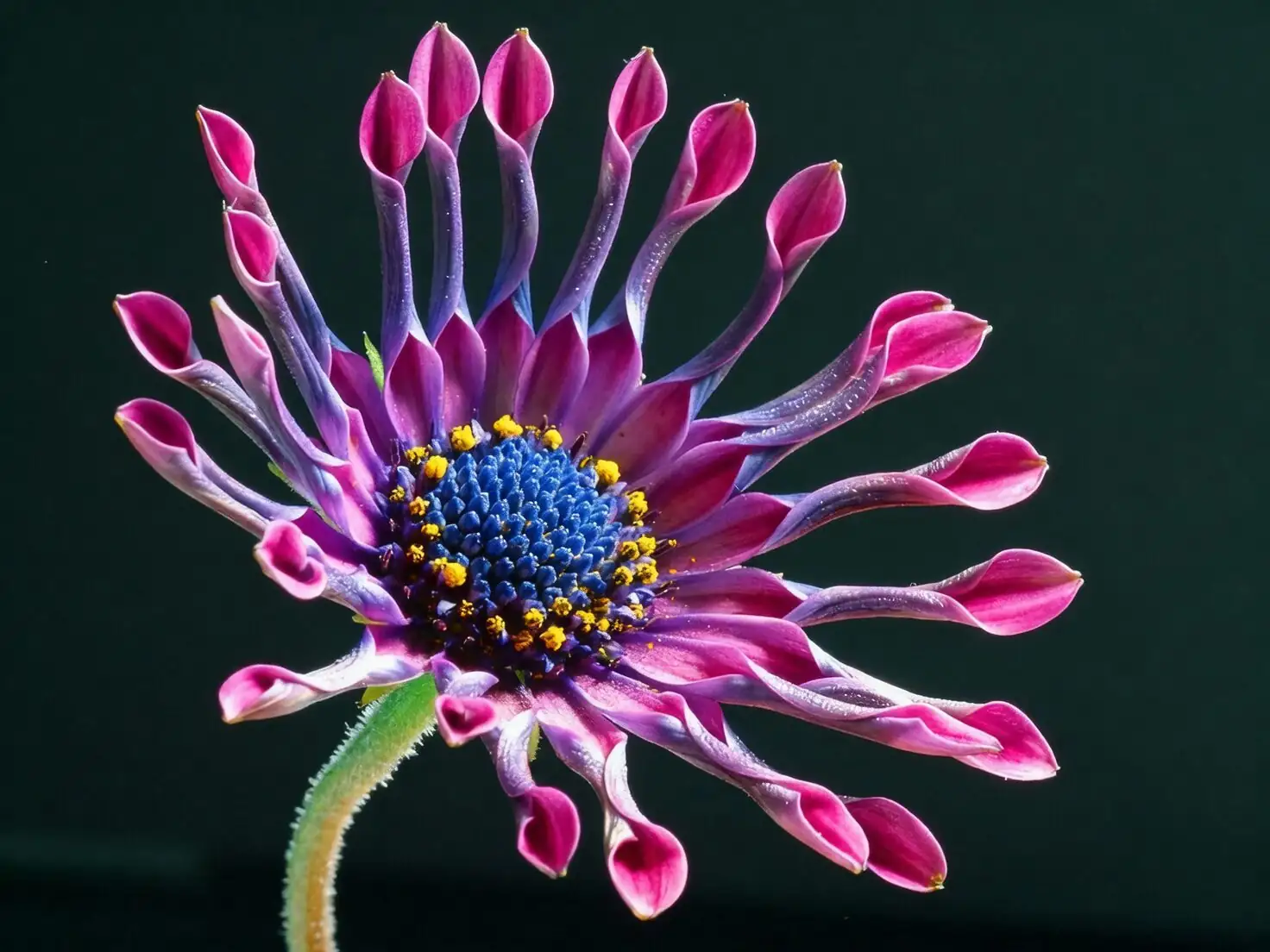
Think of Osteospermum ecklonis—Falling Stars Cape Daisy—as your garden’s sky-blue applause. Give it the right light, steady moisture, light feeding, and a bit of grooming, and it will return the favor with blooms from early spring well into fall. Here’s a lively, step-by-step plan to keep those flowers coming, plus quick tweaks for heat waves and cool snaps.
Meet Osteospermum ecklonis (Falling Stars Cape Daisy)
- Family: Asteraceae (the daisy family)
- Origin: Native to South Africa’s Cape region
- Habit and size: Compact, mounding to spreading; typically 20–45 cm (8–18 in) tall and 30–60 cm (12–24 in) wide
- Foliage: Narrow to spoon-shaped, medium-green leaves; evergreen to semi-evergreen in mild climates
- Flowers: Masses of pale to sky-blue daisies, often with a deeper-toned “eye”
- Blooming season: Early spring through fall (longest in cool-to-mild weather)
- Best placement: Full sun (6+ hours daily) in well-drained, moderately fertile soil; ideal for sunny containers, bright patios, and front-of-border beds
- Temperature sweet spot: 10–24°C (50–75°F). Protect from hard frost; prolonged freezing damages plants. Hardy roughly in USDA 9–11; grow as an annual or overwinter frost-free in colder zones
The Bloom-On Routine: Light, Water, Feed, Deadhead
Follow this four-part rhythm and your Cape daisy will “sing” through the seasons.
1) Light: Sun drives the show
- Aim for full sun: 6+ hours daily. More sun = more blooms.
- Light shade is tolerated but expect fewer flowers.
- Container tip: Give pots a bright, breezy perch. Rotate a quarter turn weekly for even growth.
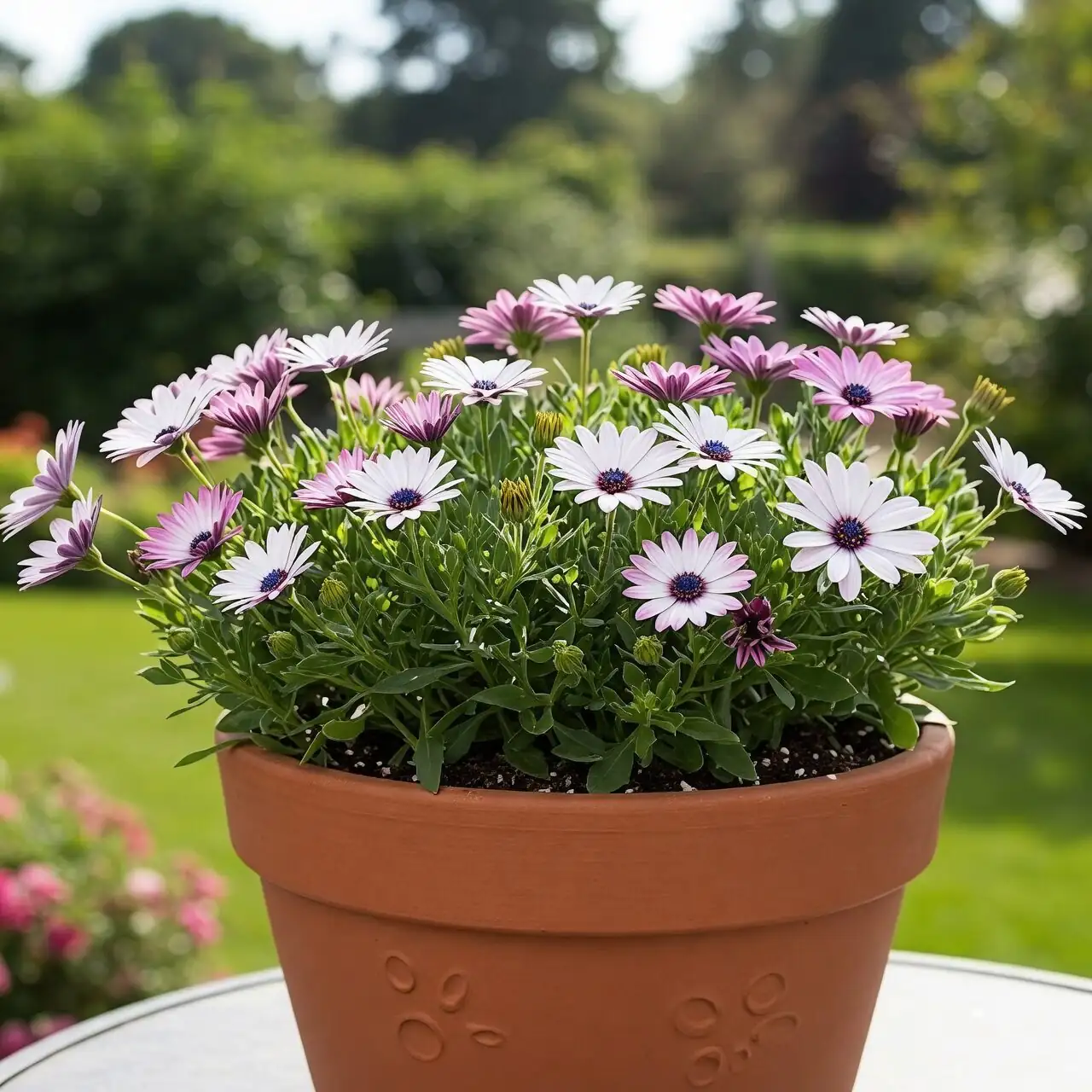
2) Watering: Steady, never soggy
- Water thoroughly, then allow the top 2–3 cm (about 1 in) of soil to dry before watering again.
- Morning is best; avoid letting pots sit in saucers of water.
- Containers dry out faster in heat—check with your finger rather than the calendar.
- Signs to watch:
- Underwatering: Wilting midday that doesn’t perk up by evening; crispy edges
- Overwatering: Limp growth, yellowing leaves, and a heavy, wet pot
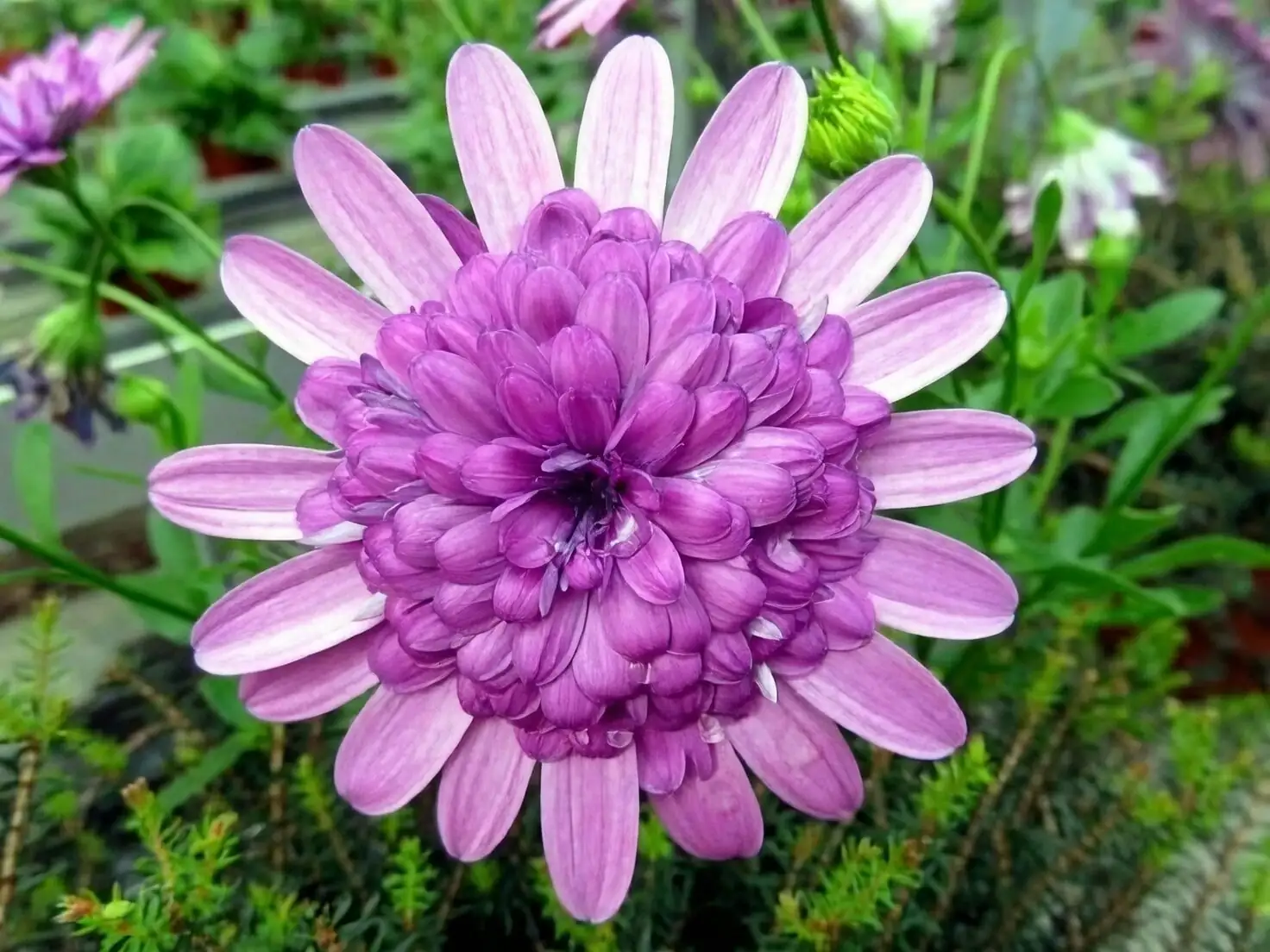
3) Feeding: Light and regular
- During active growth, use a balanced liquid fertilizer at half strength every 2–4 weeks, or apply a slow-release fertilizer per label.
- Ease off feeding during cool, low-light periods.
- Avoid overdoing nitrogen; it pushes leaves at the expense of flowers.
4) Deadheading and quick trims: The secret to nonstop blooms
- Deadhead often so energy goes into new buds, not seed.
- How-to:
- Find the spent bloom.
- Follow its stem down to the first healthy leaf or side shoot.
- Snip just above that node.
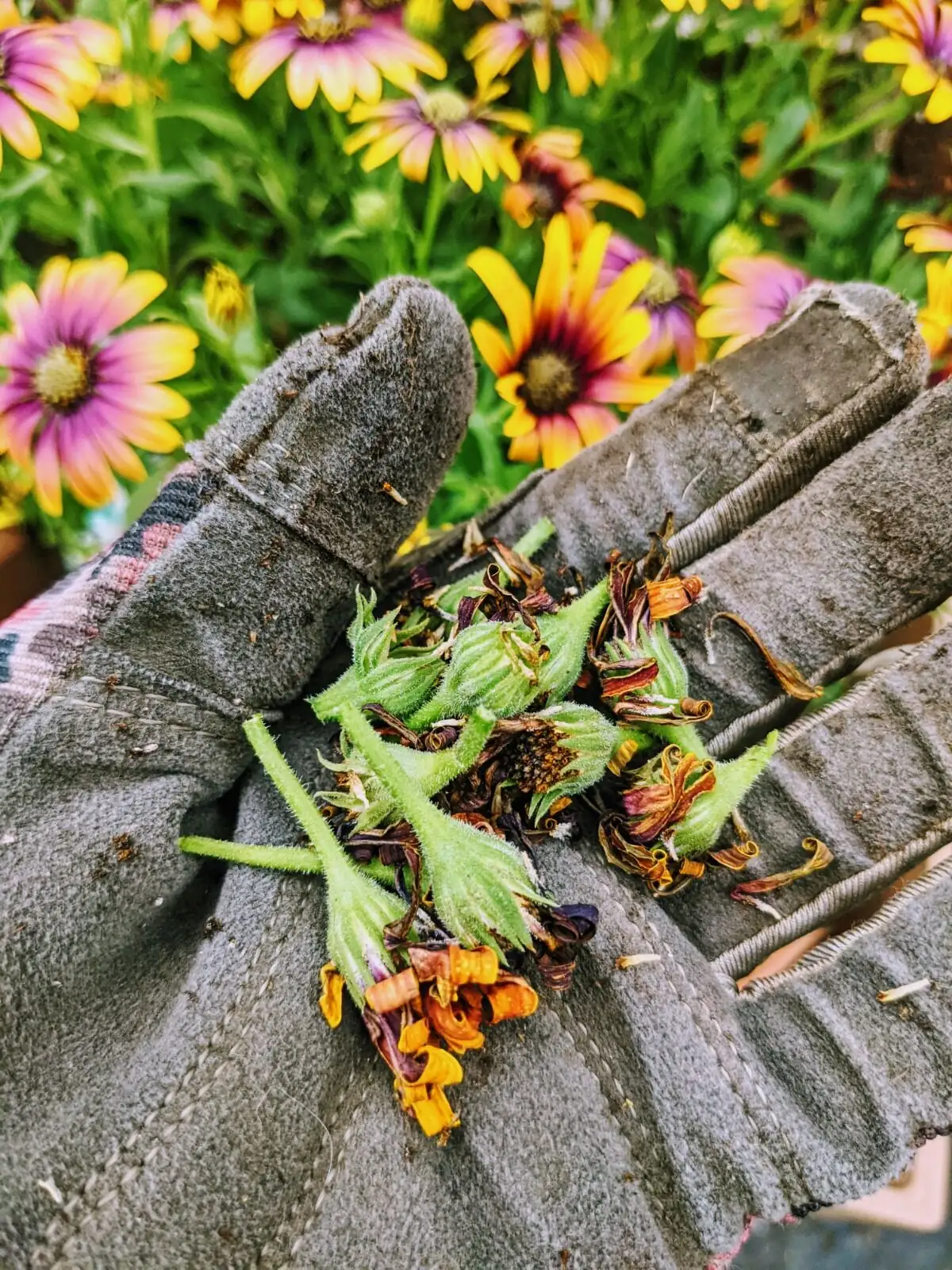
- After a big flush of flowers, give plants a slightly harder cutback to refresh: trim lightly all over to just above strong leafy growth. This triggers fresh shoots and another round of buds.
Your Seasonal Playbook (Spring to Fall—and Winter Care)
Spring
- Plant out after frost risk passes.
- Set in full sun, in sandy or loamy, well-drained soil.
- Begin light, regular feeding.
- Pinch soft tips once to encourage a bushier, flower-packed plant.
- Start your deadheading habit early.
Summer
- Keep watering consistent; let the top 2–3 cm (1 in) dry between drinks.
- Maintain airflow and sharp drainage to prevent root and crown issues.
- After a heavy bloom, trim lightly to re-set for the next wave.
- If intense heat arrives, expect a pause—blooms return as temperatures ease (see Heat Wave Tweaks below).
Fall
- Sun remains your friend—don’t move plants to shade.
- Keep deadheading; reduce fertilizer as nights cool.
- In mild climates, flowering can continue impressively late into the season.
Winter (cold regions)
- Overwinter containers in a bright, cool spot around 10–15°C (50–59°F).
- Water sparingly—just enough to keep the root ball from fully drying out.
- No feeding until days lengthen again.
Quick Tweaks for Extreme Weather
Heat Wave Game Plan
- Shift containers to full morning sun with dappled afternoon shade.
- Water deeply in the morning; never leave pots standing in water.
- Pause liquid feeding until nights cool.
- Boost airflow—space pots and avoid crowding.
- Light shear after the heat breaks to encourage a fresh flush.
Cool Snaps and Light Frost
- Cover in-ground plants overnight with frost cloth; remove by mid-morning.
- Move containers to a sheltered, bright, frost-free spot.
- Ease off watering; cold + wet roots = trouble.
- Skip fertilizer until stable mild weather returns.
- Don’t panic if flowers slow—resume normal care as temps climb.
Containers vs. Beds: Dial in the Drainage
In Pots
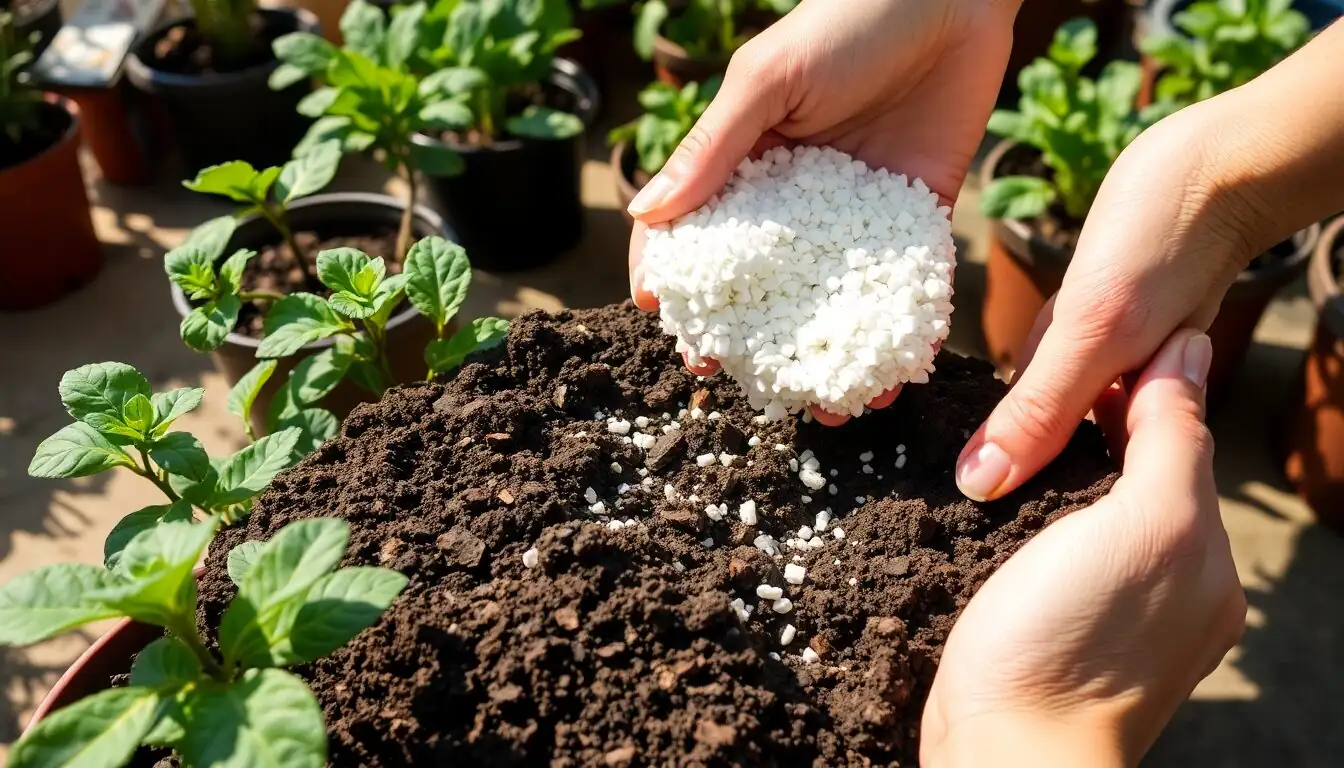
- Use a free-draining, moderately fertile mix (for example, a high-quality peat-free potting mix blended with coarse sand or perlite for extra drainage).
- Repot in spring into fresh mix, stepping up only 2–5 cm (1–2 in) wider than the current pot.
- Ensure clear drainage holes and keep saucers emptied.
In the Ground
- Choose a sunny, open site with sandy or loamy soil.
- If your soil is heavy, elevate the planting area or amend generously for sharp drainage.
- Avoid planting too deep—keep the crown slightly high to prevent rot.
Troubleshooting Flowers That Stall
- Heat pause: Normal in intense summer heat; maintain care and trim lightly—blooms rebound as it cools.
- Not enough sun: Fewer buds and stretched, leggy growth—relocate to full sun.
- Overfeeding (especially high nitrogen): Lush leaves, sparse flowers—switch to half-strength balanced feeding.
- Overwatering/poor drainage: Yellowing, limp growth—improve drainage and let the surface dry between waterings.
- Skipped deadheading: Fading flushes linger—deadhead to re-ignite bud production.
Pests and Diseases: What to Watch, How to Win
- Usual suspects: Aphids, whiteflies, spider mites, thrips.
- Early signs: Sticky residue or distorted tips (aphids), fine speckling (mites), tiny white “moths” when disturbed (whiteflies), silvery streaks (thrips).
- Response: Start with strong light and airflow; treat outbreaks with insecticidal soap or horticultural oil, repeating per label.
- Rot risks: Root and crown rot thrive in waterlogged soil—protect with drainage-first practices and sensible watering.
Propagation: Keep Your Favorites Going
- Best method: Softwood cuttings in spring or summer.
- Snip a non-flowering shoot 7–10 cm (3–4 in) long.
- Remove lower leaves; dip the cut end in rooting hormone (optional).
- Insert into a free-draining medium; keep bright but out of direct midday sun.
- Maintain lightly moist—not wet—until rooted.
- Seeds are possible, but named varieties may not come true from seed.
Safety, Pollinators, and Fun Facts
- Safety: Not widely reported as toxic to people or pets; as with many ornamentals, ingestion can cause mild stomach upset—discourage nibbling.
- Pollinator-friendly: Flowers attract beneficial visitors in sunny weather.
- Fun to note: Many blooms open wide in bright sun and close in low light or at night—don’t mistake bedtime for decline.
- In mild coastal climates, plants can behave as short-lived perennials and flower for months.
Mini FAQ
- Why did my plant stop flowering in mid-summer?
- Cape daisies often bloom best in cool-to-mild weather and may pause in intense heat. Keep it in full sun, water consistently (without waterlogging), deadhead often, and lightly trim after a flush—blooms usually return as temperatures ease.
- Can I grow it indoors?
- It’s best outdoors for flowering, but you can overwinter it indoors. Give it very bright light, keep it cool at about 10–15°C (50–59°F), and water sparingly to avoid rot.
A Note on Meaning (Flower Language)
Falling Stars Cape Daisy is often linked with cheerfulness and optimism—those sky-toned petals and bright centers feel like a pocket of good weather. While modern “flower language” traditions vary and are more poetic than historical, the plant’s habit of opening with the sun and closing in low light naturally suggests positivity, responsiveness, and a sunny outlook. In short: a living reminder to follow the light.
Follow the light-water-feed-deadhead rhythm, add quick weather tweaks when needed, and your Osteospermum ecklonis will reward you with a starry, sky-blue show from spring right through fall.