

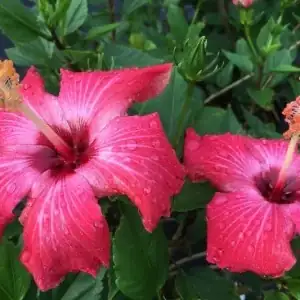
Think of Chinese hibiscus (Hibiscus rosa-sinensis) as the headliner in your tropical show: glossy leaves, outsized blooms, and pure summer drama. Now give that star a cast that keeps the music going—companions that love heat and sun, pull in pollinators, enhance airflow, and quietly toughen the whole planting against pests. Here’s how to design smart pairings for tropical-style borders and big, sun-soaked containers that make hibiscus sing all season.
Know Your Star: What Chinese Hibiscus Wants
- Sun and warmth: Full sun fuels the biggest, brightest shows. Best growth at about 15–25°C (59–77°F); keep above 10°C (50°F). Cold snaps around 5°C (41°F) can yellow leaves; frost can kill tender growth.
- Moisture and soil: Evenly moist but never soggy. Use a rich, slightly acidic, free-draining mix—think loam + peat/coco + coarse sand or perlite for airflow.
- Feeding and pruning: It’s a heavy feeder. During active growth, feed about every 2 weeks with a balanced-to-blooming fertilizer (for example, around 15-15-30). Pinch tips early and prune after a flush of flowers to keep it bushy and blooming.
- Where it thrives: Year-round outdoors in reliably frost-free climates (generally USDA 10–12). Elsewhere, grow in containers for easy seasonal moves.
Why Pairings Matter: Bigger Blooms, Better Air, Fewer Problems
- Bloom impact: Layer color, contrast foliage, and stagger heights so your hibiscus blooms pop from every angle.
- Airflow: Partners that don’t crowd the crown reduce leaf spot and discourage spider mites and scale by keeping foliage drier and better ventilated.
- Pest resilience: A mixed matrix of nectar-rich plants supports beneficial insects (hoverflies, lacewings, tiny parasitic wasps) that prey on aphids, caterpillars, and scale crawlers.
Tropical-Style Border Combos (Frost-Free Gardens)
Design with spacing in mind: give your hibiscus a 30–45 cm “breathing halo” on all sides. Stagger companions so air moves freely under and through the canopy.
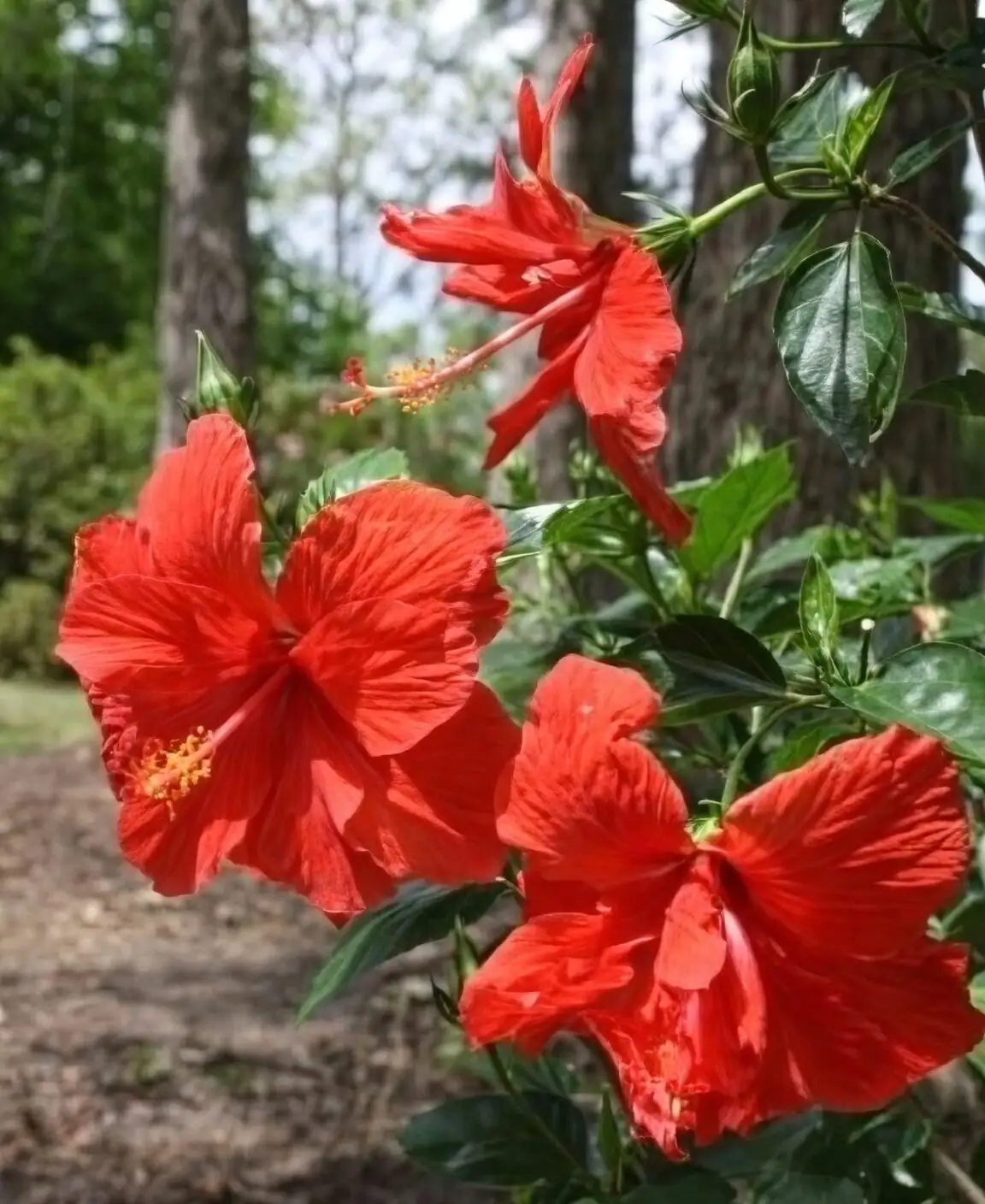
1) Hummingbird Heatwave
- Core: Hibiscus rosa-sinensis (any bold single or double form)
- Companions:
- Cuphea (C. ignea or C. Vermillionaire): nonstop tubular blooms hummingbirds adore
- Salvia (heat-loving types like S. ‘Wendy’s Wish’ or S. guaranitica in warm climates): nectar conveyor belt
- Hamelia patens (firebush): fiery clusters that flower in heat
- Why it works: All thrive in sun and steady moisture; tubular flowers echo hibiscus’ festive flair. Upright salvias and airy cupheas keep air moving around the hibiscus canopy.
2) Butterfly Boulevard
- Core: Hibiscus rosa-sinensis (choose coral, pink, or yellow to contrast)
- Companions:
- Pentas lanceolata (Egyptian starcluster): butterfly magnet with dense umbels
- Stachytarpheta jamaicensis (porterweed): nectar-rich wands, long season
- Lantana (trailing selections for edges or mounded types for mid-layer): heatproof color, heavy with butterflies
- Why it works: Nectar at multiple heights means continuous traffic. Fine-textured porterweed and open-branching pentas won’t smother hibiscus, preserving airflow.
3) Fragrance & Flow
- Core: Hibiscus rosa-sinensis (classic red or bicolor)
- Companions:
- Heliotropium arborescens (heliotrope): warm, vanilla notes; bees love the umbels
- Ocimum ‘African Blue’ basil or Thai basil: aromatic, long-blooming, pollinator-thronged
- Pennisetum setaceum ‘Rubrum’ (purple fountain grass): motion, texture, and built-in air channels
- Why it works: Not every partner has to be nectar-heavy to help—the grass acts as an “air weaver,” while heliotrope and basil set the pollinator table.
Tip: If your climate allows rampant vines, a restrained trumpet vine (Campsis) on a distant support can add hummingbird appeal—but keep it clearly off the hibiscus to protect airflow and avoid crowding.
Large-Container “Recipes” That Keep Air Moving
Choose a generously sized container (45–60 cm wide for mixed plantings) with sharp drainage. Hibiscus is your “thriller”; pick fillers that stay a step lower and spillers that trail without blanketing the crown.
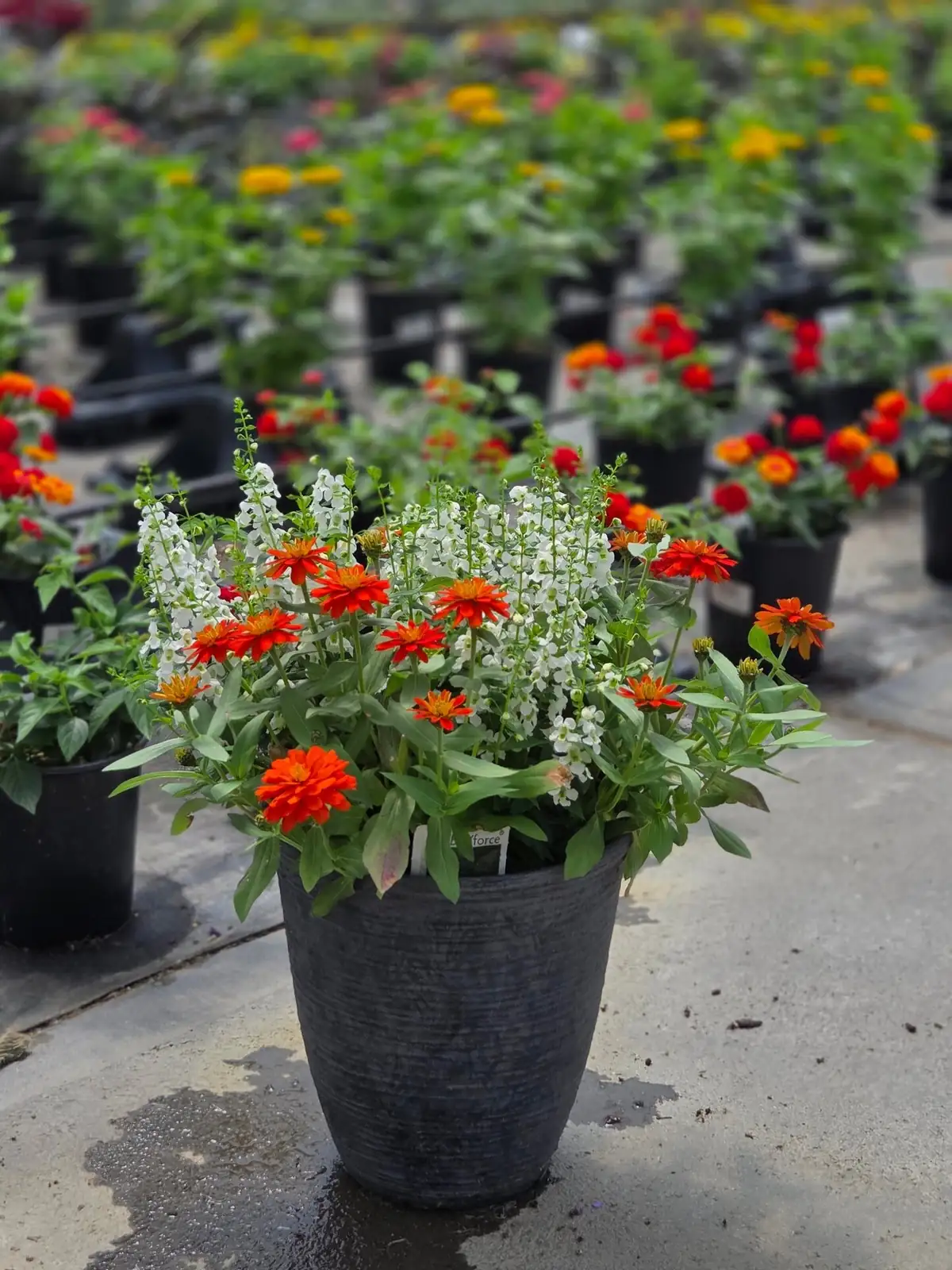
A) Sunset Patio Pot
- Thriller: Hibiscus rosa-sinensis (orange or yellow cultivar)
- Fillers: Angelonia angustifolia (summer snapdragon) in magenta or white
- Spillers: Trailing lantana or calibrachoa; a strand of Ipomoea batatas ‘Margarita’ for chartreuse pop
- Why it works: Angelonia loves heat and sun, blooms for months, and stays open-structured. Lantana/calibrachoa draw pollinators and shimmer beneath the hibiscus canopy without clogging airflow.
B) Tropical Tango
- Thriller: Hibiscus rosa-sinensis (bold red)
- Fillers: Dwarf canna (compact forms) for lush leaves and hummingbird-friendly flowers
- Spillers: Snow Princess-type sweet alyssum (heat-tolerant forms) or white Scaevola (fan flower) to brighten and beckon pollinators
- Why it works: Upright canna leaf spires steer breezes up through the pot; fragrant alyssum/airy scaevola soften edges and invite beneficials.
C) Pollinator Party Bowl
- Thriller: Hibiscus rosa-sinensis (pink)
- Fillers: Pentas lanceolata (hot pink or white) + Cuphea ‘Vermillionaire’
- Spillers: Blue scaevola or Evolvulus glomeratus (blue daze)
- Why it works: Continuous nectar at rim and mid-level keeps traffic high, while the trailing blue tones cool the palette and mirror sky.
Container airflow hacks:
- Keep a visible “light well” around the hibiscus trunk—no dense collars of foliage.
- Angle spillers outward so they drape over the rim instead of layering over the pot’s interior.
Care Rhythm for Containers (So Everything Plays Nicely)
- Watering cadence:
- Spring: about 2× weekly as growth resumes
- Flowering peak in sun and warmth: often every 2 days to maintain even moisture
- After moving indoors in autumn: reduce to ~2–3× weekly; at 12–15°C (54–59°F) about 1× weekly may suffice
- Winter indoors: bright light; water as needed (often 2–3× weekly in warm rooms), never waterlogged or bone-dry
- Feeding: Every 2 weeks in active growth with a balanced-to-blooming formula (e.g., ~15-15-30). Ease off in autumn; stop in winter.
- Pruning: Pinch early (around 20 cm tall) to build a branched, flower-packed shrub. After each bloom flush, a light prune sparks new shoots.
Airflow and Pest-Savvy Design Rules
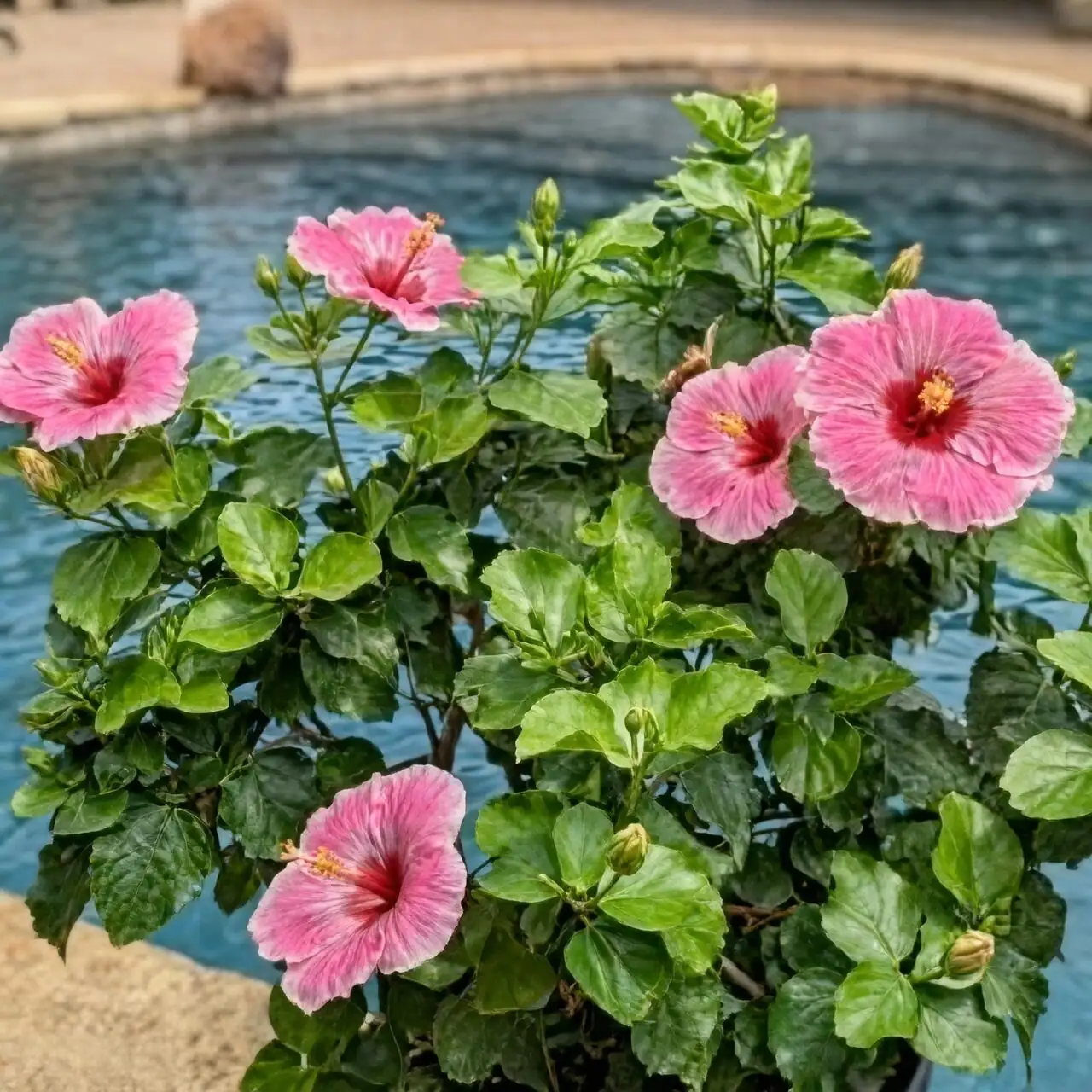
- Space smart: Avoid leafy “necklaces” around the hibiscus stem; preserve 30–45 cm of open air. In borders, stagger plants so leaves overlap lightly, not tightly.
- Water ground, not leaves: Especially late day. Damp, crowded foliage invites leaf spot and mites.
- Mix bloom shapes: Umbels (pentas, basil) + tubes (cuphea, salvia) attract a broader guild of pollinators and beneficials.
- Gentle diversity: A few aromatic partners (basil, marigolds) can help confuse pests while feeding beneficials. Scientific certainty varies, but these blends generally support a healthier micro-ecosystem.
- First-line controls: Blast aphids off with water, follow with horticultural soap or oil if needed. Keep scouting for spider mites, scale insects, and caterpillars, pruning out hot spots early.
Soil and Potting Blend (Shared Comforts)
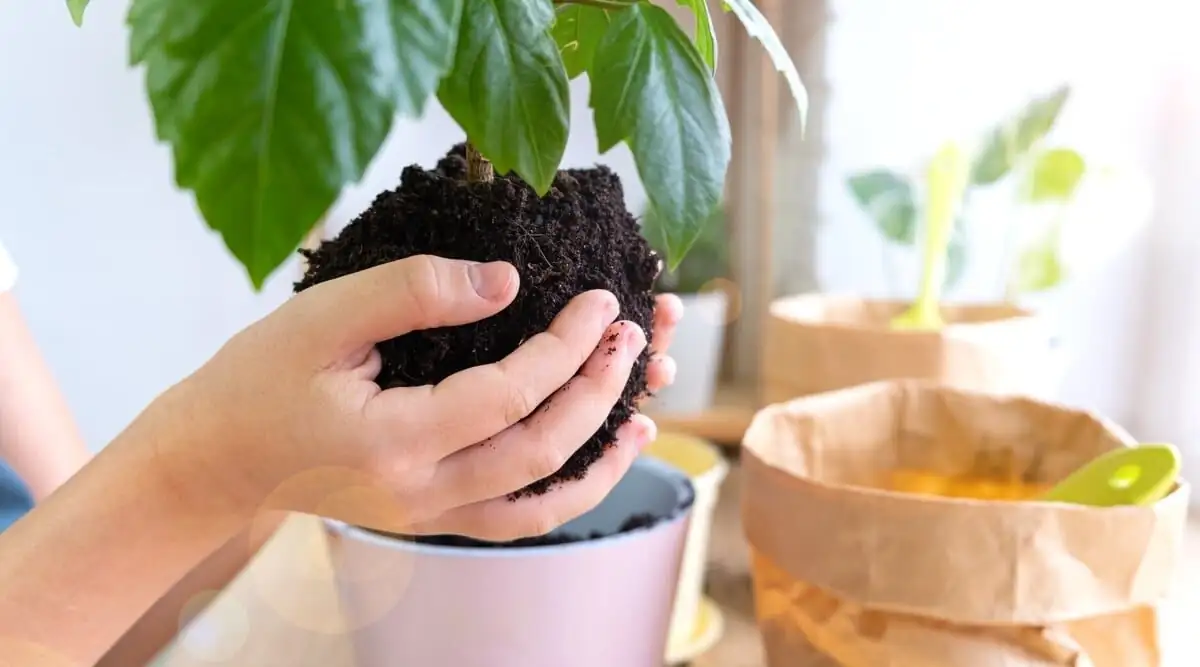
- Blend: Loam/garden soil + peat or coco coir for moisture holding, plus coarse sand or perlite for drainage and air.
- pH: Slightly acidic suits hibiscus and most companions listed.
- Refresh: Repot or refresh top thirds of soil yearly in spring; trim circling roots if necessary.
Seasonal Moves
- Outdoors: Full sun and a breezy position in the growing season.
- Indoors: Before nights approach 10°C (50°F), move pots to the brightest window or a sunny room. Expect some leaf adjustment; keep light high and moisture steady, not wet.
- Propagation notes: Soft tip cuttings of hibiscus root well in a warm, humid setup; many of its companions (pentas, cuphea, basil) also root easily to restock your next season’s show.
Symbolism: What Hibiscus “Says” in the Garden
In many gifting traditions, Chinese hibiscus signals a flourishing home and cheerful prosperity—fitting for a shrub that bursts into generous bloom in warm light. Single-flowered forms are often chosen to celebrate success and family thriving, while double-flowered forms can whisper tenderness and thoughtfulness in romance. The meanings grew from a simple observation: in bright, steady conditions this plant performs abundantly, so it became a living wish for vitality and good fortune at the threshold of a home.
Quick-Pick Companion List by Role
- Nectar powerhouses (pollinators and beneficials): Pentas, Cuphea, Salvia (heat-tolerant forms), Heliotrope, African/Thai basil, Lantana, Scaevola, sweet alyssum (heat-tolerant types)
- Air weavers and structure: Purple fountain grass, upright salvias, dwarf canna
- Spillers that won’t smother: Trailing lantana, calibrachoa, scaevola, blue daze, sweet potato vine (train outward)
Safety side note: Chinese hibiscus is generally considered non-toxic to people and pets, though the sap may mildly irritate sensitive skin. As with any plant, discourage nibbling.
With sun, warmth, and a cast of heat-loving companions, Hibiscus rosa-sinensis doesn’t just bloom—it commands the stage, backed by a living chorus that keeps air circulating, pollinators feasting, and pests at bay. Curtain up.