


Think of bougainvillea as the garden’s bright parade float: papery bracts in jubilant pinks, reds, and whites tumbling over trellises and warm walls. To keep the spectacle rolling through long, hot seasons—with fewer pests and fuss—pair it with drought-loving partners that crave the same full sun and sharp drainage. Lantana, plumbago, rosemary, and agave echo and contrast its colors and forms, while smart spacing and airflow keep the bracts coming.
Meet the star: Bougainvillea glabra (and hybrid cousins)
- Personality: A sun-loving, woody climber with thorns and vivid, papery bracts surrounding tiny, creamy flowers.
- Best seat in the house: Full sun (aim for 6+ hours). Bright, airy, and warm is the winning trio.
- Size and shape: In containers and with training, often around 5 ft × 5 ft. In warm climates on support, commonly 5–20 ft depending on cultivar and pruning.
- Bloom rhythm: Spring through autumn, often in cycles; in very bright, frost-free conditions it may repeat most of the year.
- Soil + water: Fast-draining mix; water deeply, then let it trend toward nearly dry before watering again. Slightly root-restricted plants often bloom better.
- Training: Tie to trellises, wires, hoops, or a warm wall for that signature waterfall effect.
Design with drought-loving partners
Great companions share the same cultural needs: sun, drainage, and moderate-to-little watering. They also provide color harmony or zingy contrast and a range of textures that make bougainvillea’s bracts pop.
Color strategies
- Echoes: Repeat warm hues (gold, orange, magenta) so the display feels cohesive.
- Contrasts: Cool blues and silvers intensify hot bract colors; chartreuse or white makes a clean, modern counterpoint.
- Rhythm: Play tall-and-airy against bold-and-compact—vines + mounds + rosettes is a reliable trio.
Curated partners (with spacing and airflow tips)
1) Lantana (Lantana camara; trailing L. montevidensis)
- Why it works: Heat and drought tough; flowers in bold warms or purples that mirror or contrast bougainvillea bracts.
- Form: Mounding or trailing “skirts” that fill foregrounds and spill over edges.
- Spacing: 18–24 in between mounds; keep 18 in of open space around bougainvillea’s base to prevent crowding and improve airflow.
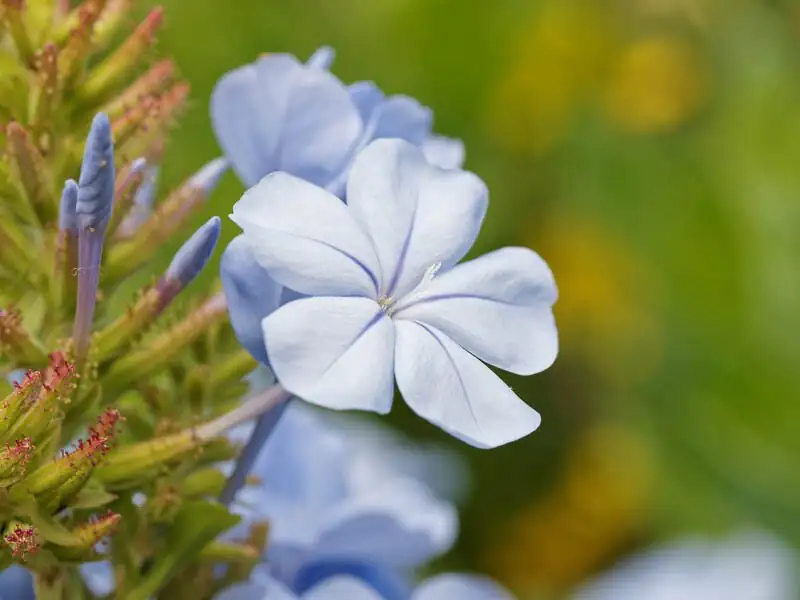
2) Plumbago (Plumbago auriculata)
- Why it works: Sky-blue blooms cool down hot magentas and reds; relaxed habit complements a trained vine.
- Form: Loose shrub; great as a mid-height drift beneath a wall-trained bougainvillea.
- Spacing: Plant 3–5 ft away from the vine’s trunk line so both can breathe and be pruned easily.
3) Rosemary (Salvia rosmarinus; upright or prostrate forms)
- Why it works: Needle-fine texture and soft blue flowers bring calm to bougainvillea’s exuberance; thrives in poor, well-drained soils.
- Form: Upright accents or cascading edges.
- Spacing: 2–3 ft apart; avoid creating a hedge directly at the bougainvillea’s feet—leave an open “collar” for air movement.
4) Agave (e.g., Agave parryi, A. attenuata)
- Why it works: Architectural rosettes and cool gray-green or jade tones sharpen the whole composition.
- Form: Sculptural punctuation that keeps the planting from feeling fluffy.
- Spacing: Give each rosette a clear 2–4 ft radius, and keep at least 2 ft clearance from bougainvillea’s trunk and main stems for safe access and airflow.
5) Bonus drought-lovers for color and texture
- Lavender (Lavandula spp.) and Autumn sage (Salvia greggii): long-season color, bee-friendly, and sun-hardy.
- Succulents like blue chalk sticks (Senecio serpens) and smaller aloes: silver-blue mats and winter structure without extra water.
Tip: Companion plants should share the same watering rhythm: deep soaks followed by meaningful dry-down. Overwatering the companions often means overwatering the vine.
Airflow, spacing, and training that keep pests down and the show up
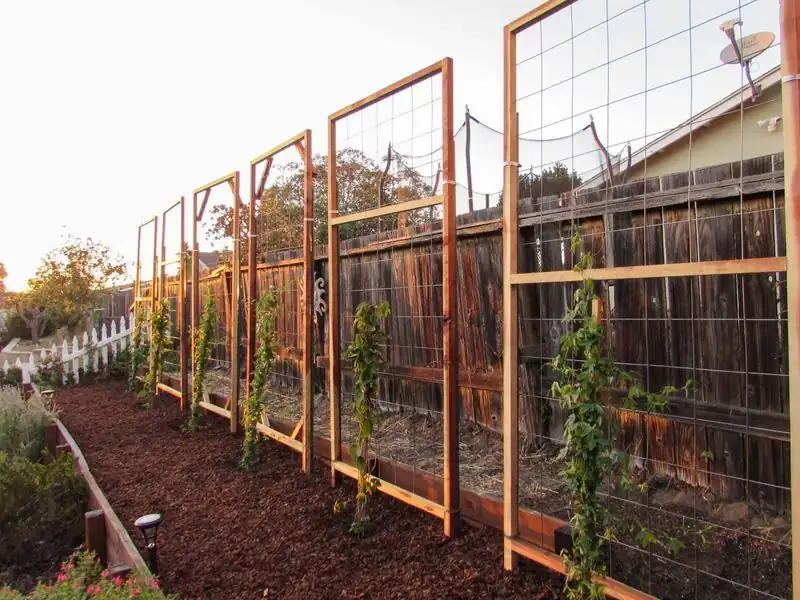
- Keep the crown clear: Maintain an open, 12–18 in radius around the bougainvillea’s base—no mulch piled high, no crowding groundcovers. This reduces stagnant humidity and root issues.
- Aim for layered, not jammed: Stagger companions so foliage masses barely touch at maturity. Good rule: see light filtering between plants at midday.
- Train wide, thin cleverly: Fan out main bougainvillea canes on trellis/wires; thin congested side shoots after a bloom flush. More light inside = more bracts, fewer leaf spots.
- Water smart: Avoid constantly damp soil. Constant wetness invites root rot and leaf drop. Let the mix move toward “nearly dry” between deep waterings.
- Air movement: Sunny, breezy positions reduce spider mites (which love hot, stagnant, very dry indoor air).
- Pest watchlist: Scale, mealybugs, aphids on soft tips, caterpillars, and spider mites. Remove small colonies early; treat with horticultural oil or insecticidal soap per label. Correct care and airflow are your best prevention.
Container recipes that love the heat
Bougainvillea excels in pots, where slight root restriction can supercharge blooms. Choose a free-draining mix (add coarse grit or sand) and a pot just one size up from the root ball.
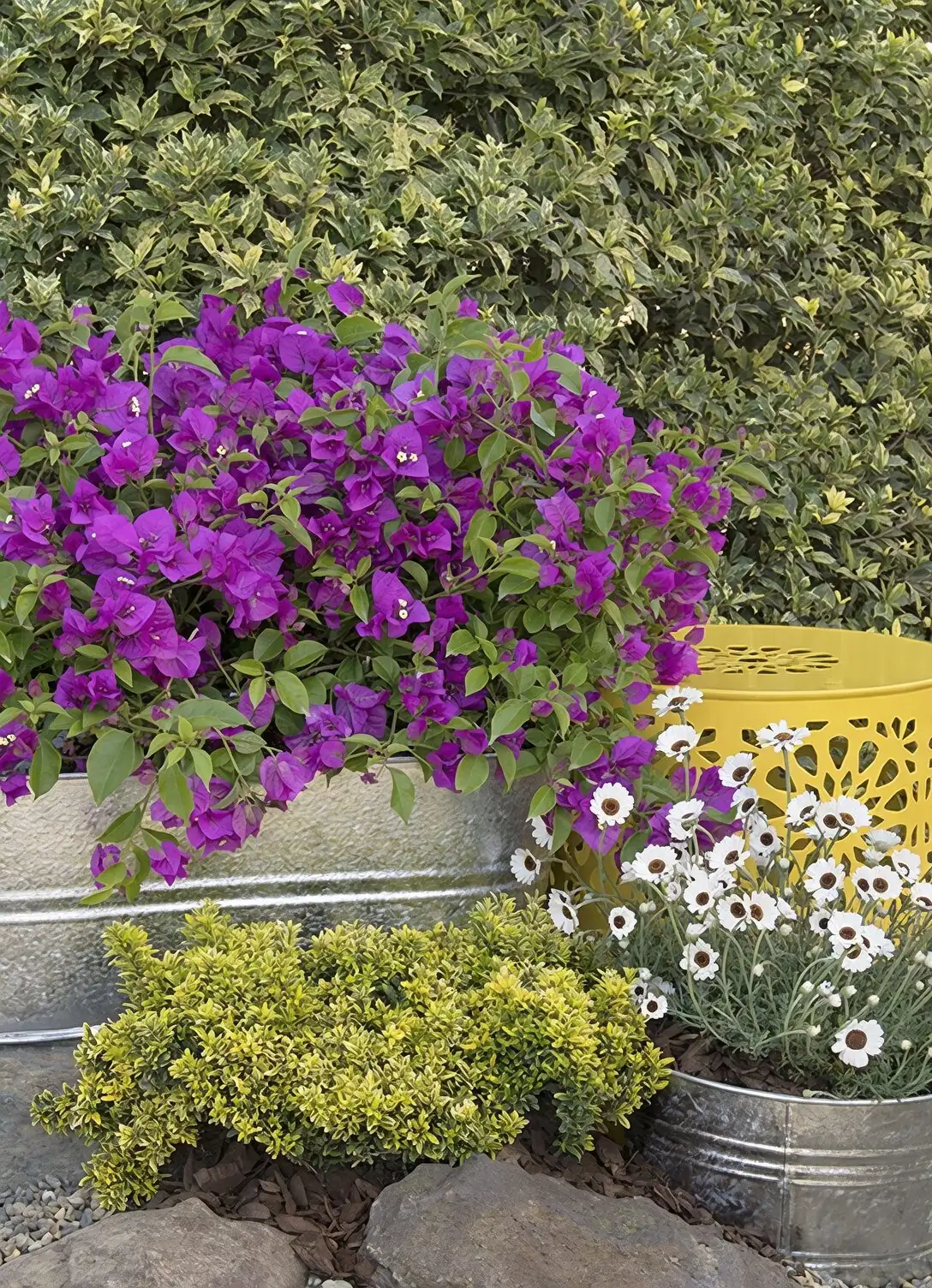
- Sunny Standard
- Thriller: Bougainvillea trained as a small standard.
- Fillers: Upright rosemary and compact lavender.
- Spillers: Trailing lantana.
- Notes: One watering schedule for all—deep, then wait until the top layer is dry and the mix is trending toward dry again. Feed during the growing season with a balanced-to-blooming formula leaning higher in potassium.
- Wall Cascade
- Thriller: Bougainvillea on a trellis set in the pot.
- Fillers: Plumbago (compact form) or salvia selections.
- Spillers: Blue chalk sticks for a cool skirt.
- Notes: Keep mix airy; ensure strong drainage holes; tie new bougainvillea shoots as they elongate.
Quick-care notes for more bracts, fewer leaves
- Sun: Full sun, 6+ hours for best flowering.
- Water: Deeply, then allow partial drying. In autumn, a slight reduction can encourage a bloom cycle. In winter, water sparingly in bright, protected conditions.
- Feeding: Regular during the growing season; avoid high nitrogen dominance. Favor potassium to support bracts. Don’t overdo it—excess nitrogen = foliage, not color.
- Pruning: Pinch or trim long soft shoots; shape after flowering; remove weak or crowded stems. Avoid heavy cuts mid-show if you want the current bracts to last.
- Hardiness: Best outdoors year-round in frost-free zones (roughly USDA 10–11). Protect from frost; overwinter above about 45–50°F if you’re container-growing in cooler regions.
Three ready-made palettes

- Magenta Fiesta
- Bougainvillea in magenta or deep pink
- Golden lantana, blue chalk sticks, prostrate rosemary
- Result: Hot-cold balance with silver-blue relief and nonstop summer energy
- White Cascade
- White-bracted bougainvillea
- Lavender, upright rosemary, Agave parryi
- Result: Crisp Mediterranean vibe; the white bracts glow against steely blues and silvery greens
- Sunset Wall
- Warm-toned bougainvillea (pink to coral)
- Sky-blue plumbago drift, Agave attenuata accents
- Result: Dreamy dusk palette; soft forms meet sculptural rosettes
Spacing in all three: keep at least 12–18 in of open space around bougainvillea’s base, and ensure companions don’t form a continuous hedge at the vine’s feet.
Troubleshooting the common “all leaves, no color”
- Move it: Not enough direct sun is the #1 culprit.
- Dry it: Let the mix dry more between deep soaks; avoid constant dampness.
- Feed it right: Reduce nitrogen, nudge potassium up.
- Be patient: Bracts follow new growth—pinch to branch, then give time in bright, warm conditions.
Safety notes
Bougainvillea’s sap can irritate skin/eyes, and the thorns scratch. Wear gloves when pruning and keep plants out of reach of children and pets. Ingestion may cause gastrointestinal upset.
Symbolism corner
Bougainvillea is widely linked to warm welcomes and celebration—the living equivalent of hanging a colorful banner. While “flower language” traditions vary by culture and are often modern reinterpretations, bougainvillea’s exuberant bracts (technically modified leaves) have long signaled hospitality and festivity in warm-climate streetscapes and courtyards. Whatever meanings you assign, it’s a plant that reads as joy from across the block.
Bring on the sun, give your bougainvillea breathing room, and let drought-happy companions do the rest. With smart spacing and airflow, you’ll have fewer pest problems—and a longer, louder color show.