

If your Watermelon Peperomia (Peperomia argyreia) could send an SOS, it would talk about temperature first. Those oh-so-pretty watermelon-striped leaves are slightly succulent—great at holding water, but quick to complain when heat, cold drafts, or harsh sun push them around. Here’s a targeted triage guide to keep foliage crisp, upright, and vividly striped through summer heatwaves and winter’s weaker light.
Meet the plant: small stature, big personality
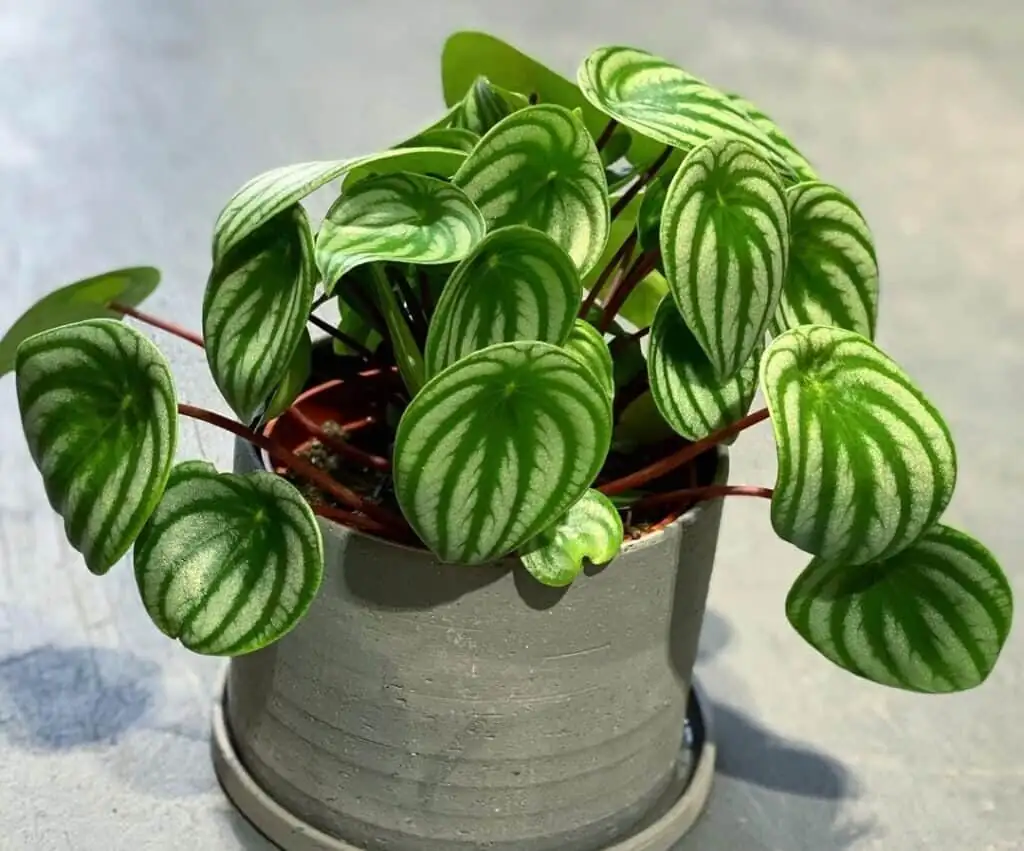
- Look and size: Compact (about 15–30 cm tall and wide), with round, slightly succulent leaves banded in silver and deep green on slender, often reddish petioles.
- Origin and vibe: Native to northern South America (especially Brazil), it’s a tidy, desk-friendly foliage plant that thrives in bright, indirect light.
- Growth habit: Naturally compact, mound-forming, and happiest when slightly pot-bound. Flowers are subtle “rat-tail” spikes; this one’s all about the leaves.
What temperature stress looks like (and what to do)
- Drooping without yellowing
- Likely cause: underwatering, very dry air, or heat stress.
- Fast fix: Water thoroughly (tepid water), drain well, add a pebble tray for a touch of humidity, and pull it back from hot glass or AC vents.
- Yellowing leaves with soft texture
- Likely cause: overwatering, soggy mix, poor airflow, or a chill.
- Fast fix: Let the top of the mix dry before watering, improve drainage/airiness of the soil, add gentle airflow, and move away from drafts.
- Faded striping or stretched petioles
- Likely cause: light too low.
- Fast fix: Brighter spot with indirect light—east window or bright north; in winter, move closer to the light but still avoid harsh midday sun.
- Scorched or crispy edges
- Likely cause: direct, hot sun or hot window glass.
- Fast fix: Sheer curtain (aim for about 40–50% shade) and set the plant back from south/west windows.
When the thermometer tops 30°C (86°F): shade strategies and heatproofing
- Move to part shade
- East or bright north windows shine in summer.
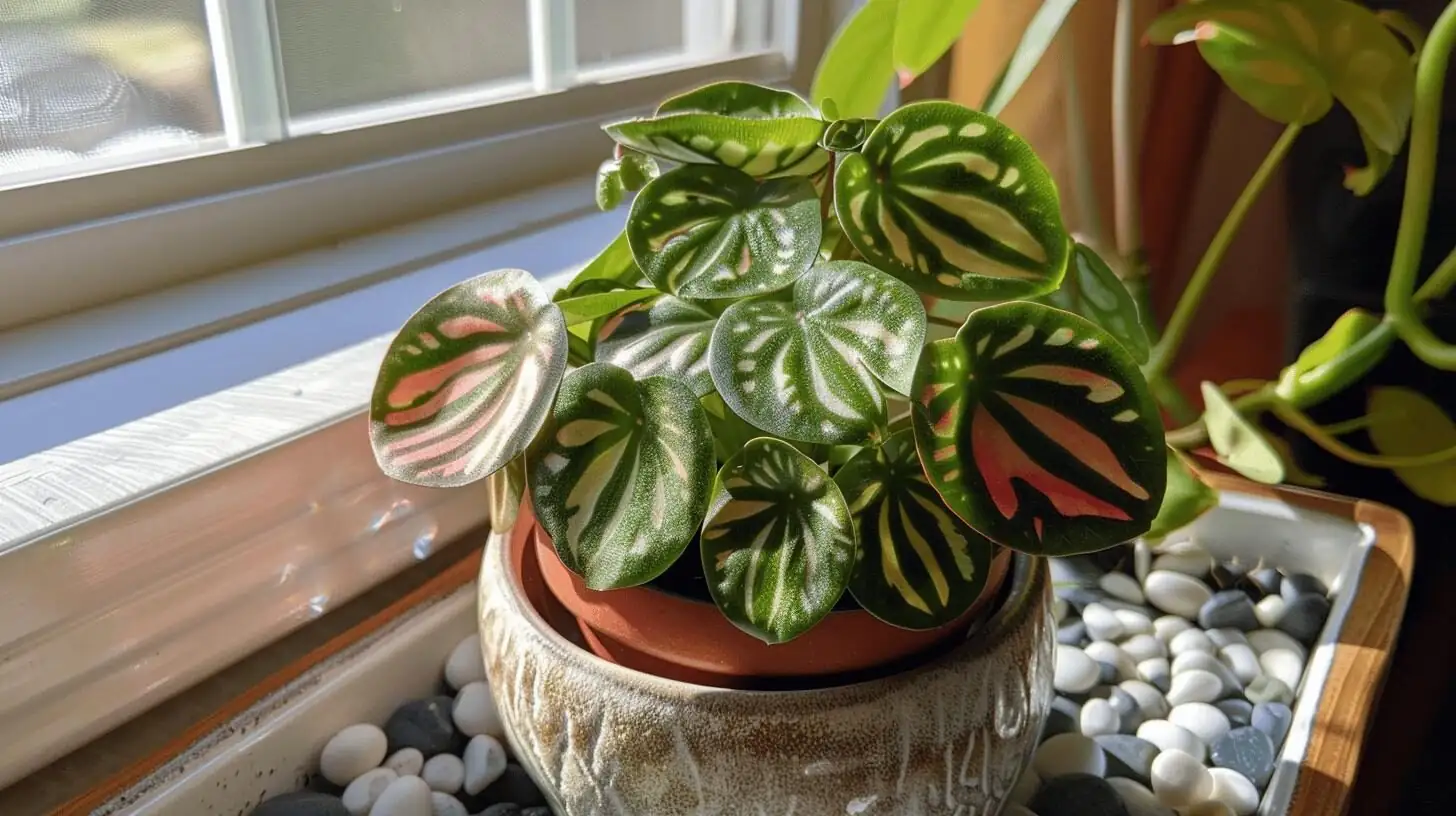
- For south/west windows, use a sheer curtain and set the pot 0.5–1 m (1.5–3 ft) back from the glass to avoid radiant heat.
- Create dappled safety
- Sheer curtains, blinds, or a neighboring taller plant can provide the 40–50% shade this peperomia appreciates near strong windows.
- Humidity and airflow, balanced
- It prefers moderate humidity; if your air is very dry, a pebble tray or occasional light misting helps.
- Pair any humidity boost with gentle airflow (a low, indirect fan) to discourage rot and pests. Avoid stagnant, overly damp conditions.
- Smarter watering in heat
- Water thoroughly, then let the top portion of the mix dry; check moisture more often in hot spells.
- Morning watering is gentler under heat; never leave it sitting in water.
- Pot and mix matter
- Use a loose, fast-draining houseplant mix amended with perlite/coarse sand.
- Avoid dark containers baking on hot sills; ensure drainage holes.
- Heatwave checklist
- Pull back from hot glass; add sheer shade.
- Increase checks on soil moisture; keep evenly moist, never soggy.
- Add a pebble tray + gentle airflow.
- Inspect often for spider mites and mealybugs, which love warm, dry air.
Winter: bright but safe light (and fewer chills)
- Placement
- Move to the brightest safe spot: near an east window, bright north, or set back from a south window behind a sheer.
- Keep leaves off cold glass; a 30–60 cm (12–24 in) buffer helps prevent chilling.
- Light without scorch
- Winter sun is gentler, but strong midday beams can still stress leaves through clear glass—filter if needed.
- Watering rhythm
- Growth slows in cooler months; water sparingly (often about every 2 weeks), letting the mix dry a bit more between drinks.
- Pause or ease off fertilizer in winter.
- A little housekeeping
- Dust leaves to maximize light capture.
- Rotate the pot weekly for even, compact growth.
Draft avoidance: the silent stressor
- Keep it above 13°C (55°F) and away from cold drafts. Avoid temperatures below 10°C (50°F).
- Watch the microclimates: winter window seams, exterior doors, AC/heater vents can chill or desiccate leaves.
- Use vent deflectors or relocate the plant out of direct air streams; stability is your friend.
- Night rule of thumb: pull pots slightly farther from glass on frosty nights.
Humidity and airflow: the dials to prevent droop and yellowing
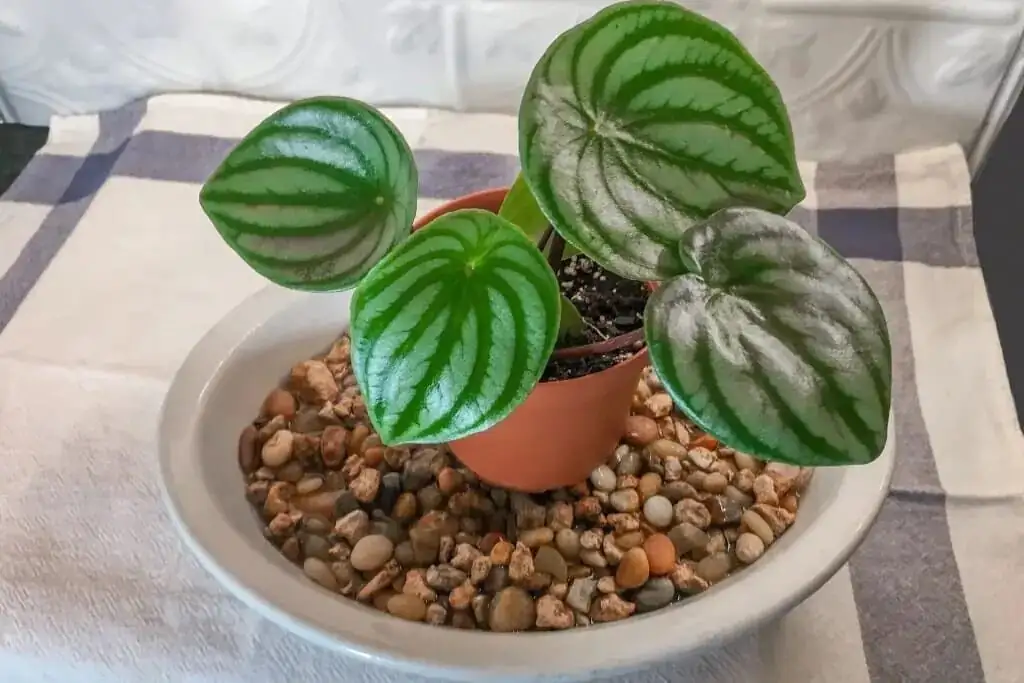
- Target moderate humidity; if the air is very dry, use:
- Pebble tray with water below the pot’s base.
- Occasional light misting (avoid soaking the crown and don’t mist late at night).
- Grouping with other plants for a mild boost.
- Always pair with airflow
- Gentle, indirect airflow reduces leaf spot, discourages mites, and helps the potting mix dry evenly.
- Thin crowded leaves occasionally to improve internal air movement.
Watering and soil tuned to temperature
- Core rule: water thoroughly, then let the top of the mix dry before watering again.
- Spring–autumn: usually about weekly in average conditions; adjust to light and heat.
- Summer: evenly moist but never soggy; no standing water in saucers.
- Winter: water less (often around every 2 weeks), allowing a bit more drying.
- Signs to read
- Overwatering: yellowing, soft leaves, sour-smelling mix.
- Underwatering: drooping, dull leaves, especially in warm, dry air.
- Always use an airy, fast-draining mix and a pot with drainage.
Quick placement map (by window and season)
- East window: ideal year-round; bright without harshness.
- Bright north: excellent spring–autumn; in winter, move a touch closer.
- South/west: spring–autumn use a sheer curtain and set back; in winter, move closer for brightness but still avoid strong, direct midday beams.
Seasonal playbook
- Spring
- Brighter filtered light; resume regular watering as the surface dries.
- Best time to propagate, divide, or repot if truly needed (only one pot size up).
- Summer
- Part shade; avoid hot glass and midday sun.
- Keep evenly moist, ensure airflow, and monitor for pests.
- Autumn
- Maintain bright, indirect light; moderate watering; reduce feeding.
- Winter
- Brightest safe spot; water sparingly; pause feeding.
- Keep away from cold drafts and icy panes.
Fast fixes: a triage toolkit
- Heat droop (≥30°C, leaves limp but green)
- Move to part shade; add sheer; water if top mix is dry; pebble tray + gentle airflow.
- Yellowing with soft petioles
- Let surface dry further between waterings; switch to a faster-draining mix; improve airflow; check for cold drafts.
- Pattern fading in winter
- Increase brightness safely: closer to east/north light or filtered south; dust leaves; rotate weekly.
- Crisp edges or faded patches on the sunny side
- Increase distance from glass; add 40–50% shade via sheer; water in the morning and avoid hot, direct rays.
Care basics recap (beyond temperature)
- Light: Bright, indirect to part shade. Avoid harsh direct sun and very deep shade.
- Temperature: Best at 15–24°C (59–75°F). Stress rises above ~30°C (86°F) and below ~13°C (55°F). Not frost-hardy; avoid below 10°C (50°F).
- Soil: Loose, fast-draining houseplant mix with perlite/coarse sand.
- Feeding: During active growth, either monthly at half strength or every 2 weeks at a lighter dilution (roughly May–August). Ease off in winter.
- Pruning: Minimal—remove yellowing or damaged leaves; thin crowded growth; pinch any leggy bits.
- Propagation: Very easy from leaf cuttings in spring/summer. Roots in ~3–4 weeks; plantlets in ~4–6 weeks. Stem cuttings and division also work.
- Repotting: Likes being slightly pot-bound. Refresh/top-dress annually; repot every 2–3 years, one size up. Typical pots are 10–12.5 cm for many plants; larger, established clumps may sit in 12–15 cm.
- Safety: Generally considered non-toxic to cats, dogs, and people.
Why this plant is so easy to love
- The watermelon look is unmistakable—silvery bands over deep green veins make it a cheerful, modern classic for desks and windowsills.
- Symbolism, lightly held: often linked with freshness and playfulness, more a product of contemporary houseplant culture than old folklore—a reminder to keep your space bright, lively, and calm.
The bottom line
Temperatures set the tone for Peperomia argyreia. Above 30°C, think shade plus airflow and measured moisture. In winter, think brightest safe light without the chill. Keep drafts at bay, fine-tune humidity, and stick with fast-draining soil. Do that, and those watermelon leaves will stay perky, patterned, and photo-ready all year.