If you want a plant that dresses a room as effortlessly as a well-cut blazer, meet Chlorophytum comosum—the spider plant. Its fountain of striped ribbons and playful, dangling plantlets can read crisp, airy, sculptural, or soft depending on the cultivar and where you place it. Shelves and hanging baskets are its natural stage; light is its stylist. Here’s how to make the most of both.
Why spider plants belong on shelves and in hanging baskets
- Fountain shape + runners: Narrow, arching leaves spill elegantly, while long stolons trail baby “spiders” like a living mobile—perfect for edges and airspace.
- Scalable size: Clumps typically reach 20–45 cm (8–18 in) tall, with a 30–60 cm (12–24 in) spread; runners often cascade 30–90+ cm (12–35+ in).
- Beginner-proof beauty: Thrives in bright, indirect light, stays cheerful in lower light, and forgives the occasional lapse.
- Pet-friendlier option: Generally considered non-toxic to humans and most pets (though cats may nibble—hang it higher if you have a curious acrobat).
The cultivar style guide: How each “reads” in a room
Each variety throws a different visual mood. Use them intentionally the way you’d choose textiles.
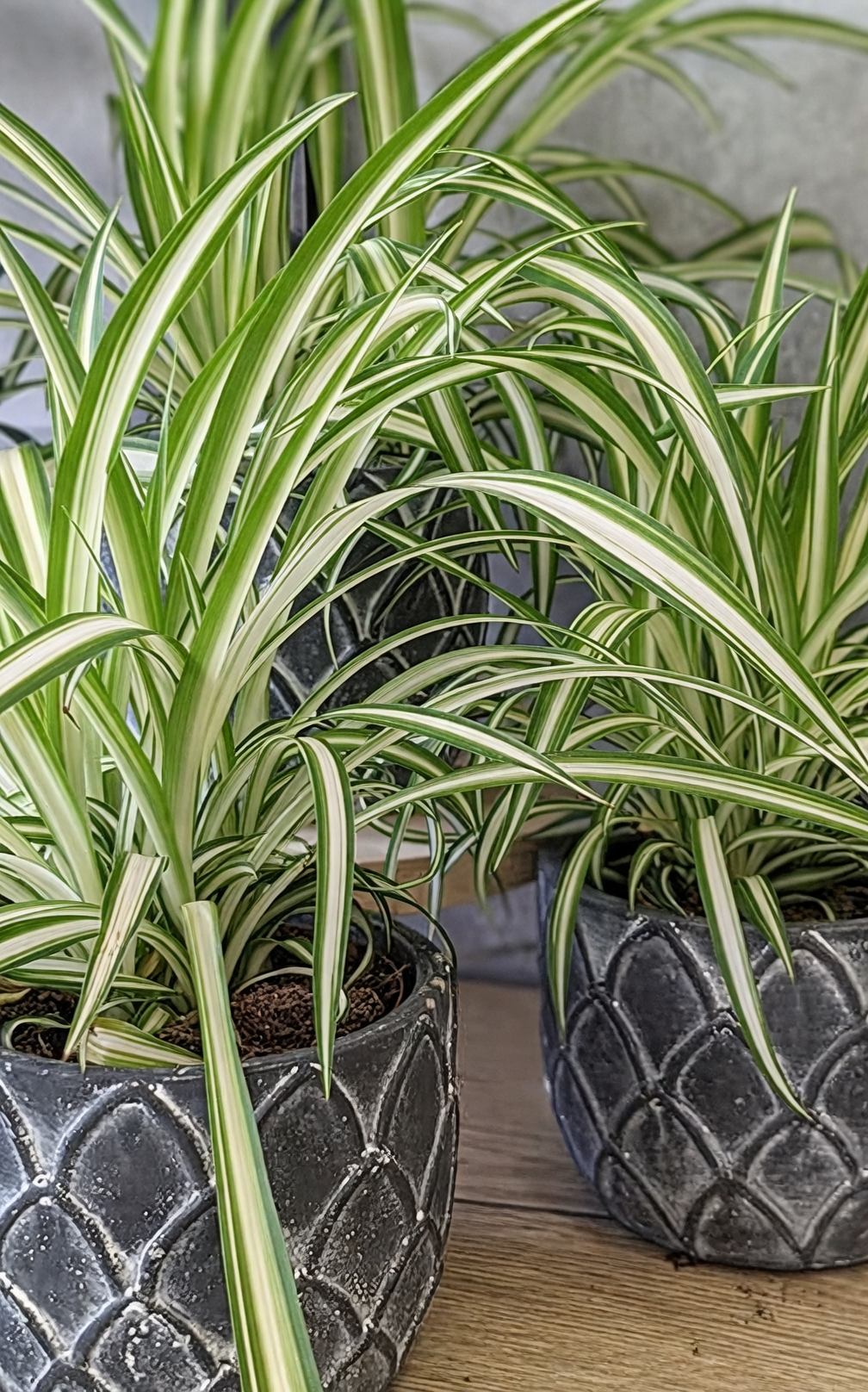
- ‘Vittatum’ (white center stripe)
- Look: Clean, graphic, high-contrast. The bold white runway down each leaf catches light and brightens shady corners.
- Best for: Modern shelves, black or charcoal walls, minimal ceramics.
- ‘Variegatum’ a.k.a. Reverse Variegated (white edges)
- Look: Tailored ribbons with cream margins; softer and more “finished” at the leaf edge.
- Best for: Classic interiors, pale walls, warm wood. Reads elegant rather than loud.
- ‘Bonnie’ (curly, variegated)
- Look: Spiraled, bouncy leaves—like the statement earrings of the plant world.
- Best for: Compact shelves or hanging baskets where curls can be showcased; playful kitchens and bathrooms.
- ‘Hawaiian’ (green-on-green variegation that often fades with maturity)
- Look: Subtle sheen and tonal striping when young; matures to a handsome deep green.
- Best for: Moody palettes, low-contrast spaces, rooms that need calm rather than pop.
- ‘Milky Way’ (broad white/cream center with green margins)
- Look: Wider swath of milky light through the midrib—dramatic yet refined.
- Best for: Neutral interiors that need a bright focal plant without feeling busy.
- ‘Picturatum’ (central yellow stripe)
- Look: Warmer, golden center; pairs beautifully with brass, rattan, and honeyed woods.
- Best for: Cozy reading nooks, mid-century details, earthy palettes.
- ‘White Stripe’ (narrow white or cream line at the midrib)
- Look: Understated. Up close, it’s intricate; from afar, elegantly green.
- Best for: Minimalists, layered plant shelves where you want quiet texture between louder pieces.
Design tip: Place center-striped cultivars (‘Vittatum’, ‘Milky Way’) where you want brightness and visual lift; reverse-variegated types (‘Variegatum’) soften hard lines; curly ‘Bonnie’ adds movement in still spaces; green or green-on-green cultivars ground a vignette.
Light and stripes: How placement sculpts the foliage
Think of light as your dimmer switch for variegation and runner production.
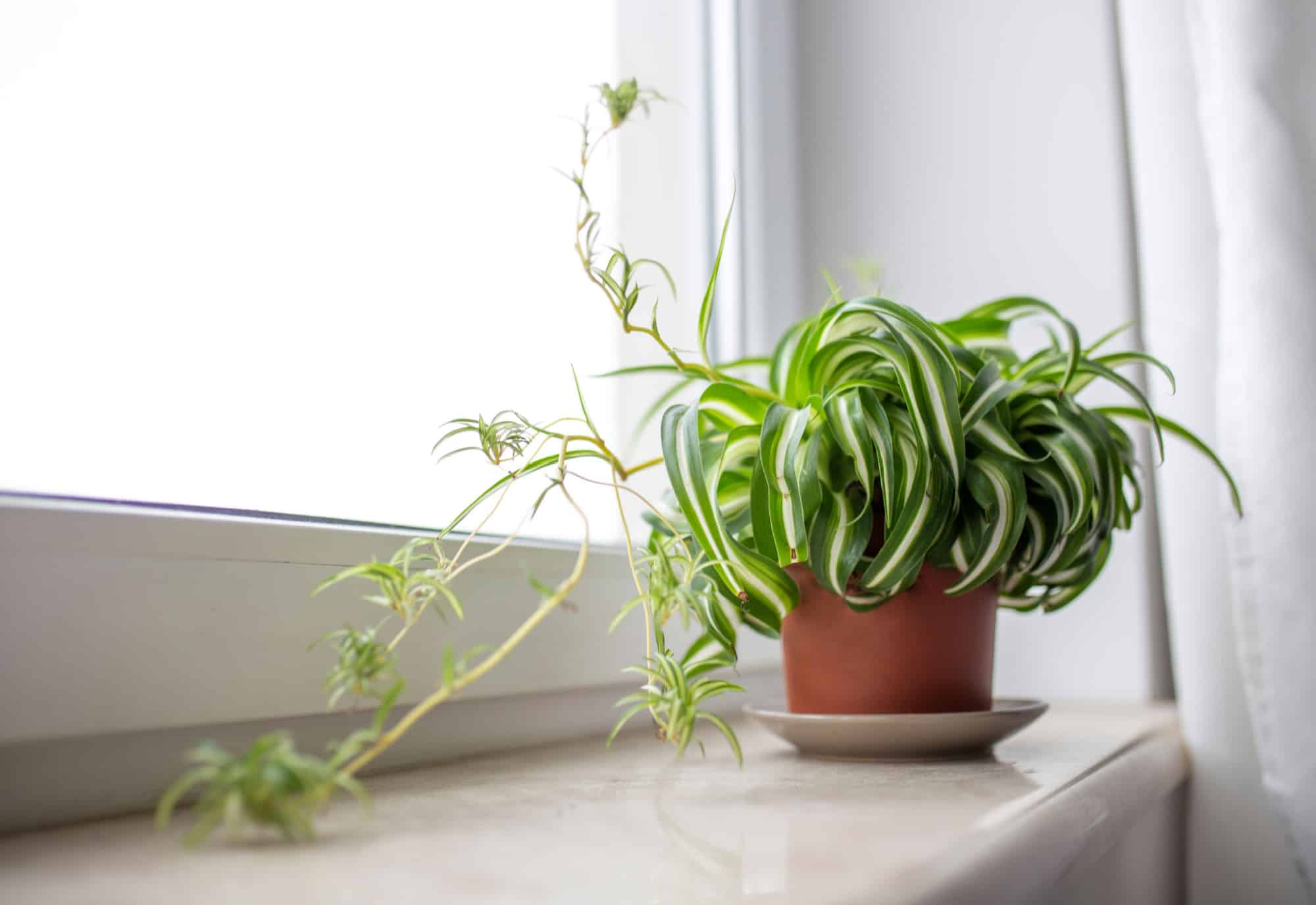
The sweet spot: bright, indirect light
- What you’ll see: Crisp stripes, strong growth, and plenty of runners. Starry white flowers may appear spring–summer, and sometimes intermittently year-round indoors with warmth.
- Where to place:
- Near an east window or a bright north window
- A few feet back from a south/west window or behind a sheer curtain
- Gentle winter sun is usually fine
In lower light
- Expect softer, less defined striping—especially on heavily variegated types—and fewer plantlets.
- Green or green-dominant cultivars hold their looks better here.
- Move 30–60 cm (1–2 ft) closer to the window or add a small LED grow light to sharpen the stripes.
In harsh direct sun
- Risk: Scorched tips and bleached streaks, especially in midday summer sun.
- Fix: Shift farther from the glass, add a sheer, or give it dappled light instead.
Fertilizer affects striping, too
- Heavy nitrogen can push greener growth and blur variegation. Feed lightly and regularly in spring–early autumn with a balanced liquid fertilizer; ease off in winter.
Want more plantlets?
- Maturity, bright indirect light, and a slightly snug pot help. Short days with long, uninterrupted nights can cue stolon and plantlet formation; keep nighttime lighting minimal for a few weeks.
Under grow lights
- Position a full-spectrum LED 20–30 cm (8–12 in) above the leaves for 12–14 hours daily. Keep leaves from touching LEDs to avoid heat stress.
Shelf styling playbook
Choose the right planter
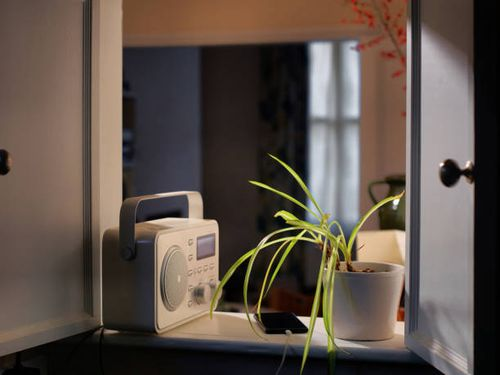
- Use a pot with drainage inside a decorative cachepot or on a saucer—important for wood shelves.
- Slightly snug pots (common sizes 12–20 cm / 5–8 in) make fuller clumps and often encourage runners.
- Materials matter: matte black or charcoal makes white stripes pop; pale stoneware pairs with warm-toned cultivars like ‘Picturatum’.
Place with intention
- Let leaves and runners skim the shelf edge for a soft fringe; give 30–45 cm (12–18 in) of clearance below if you want a cascade.
- Train runners along the shelf lip using small clear clips or removable hooks for a “living garland.”
- Rotate the pot every few weeks for even, symmetrical growth.
Pairing ideas
- For contrast in leaf size and texture: pair with a finely cut fern (e.g., Boston fern) or a chunky-leaved Peperomia.
- For tonal harmony: set ‘Variegatum’ beside light linen-bound books or pale ceramics; use ‘Vittatum’ as the bright anchor between darker accessories.
- Pet-safe curation: spider plant + Peperomia + Boston fern makes a handsome, non-toxic trio.
Hanging basket magic
- Basket choice changes the mood:
- Minimal metal hoop: sculptural, modern.
- Natural rattan or jute macramé: soft, bohemian.
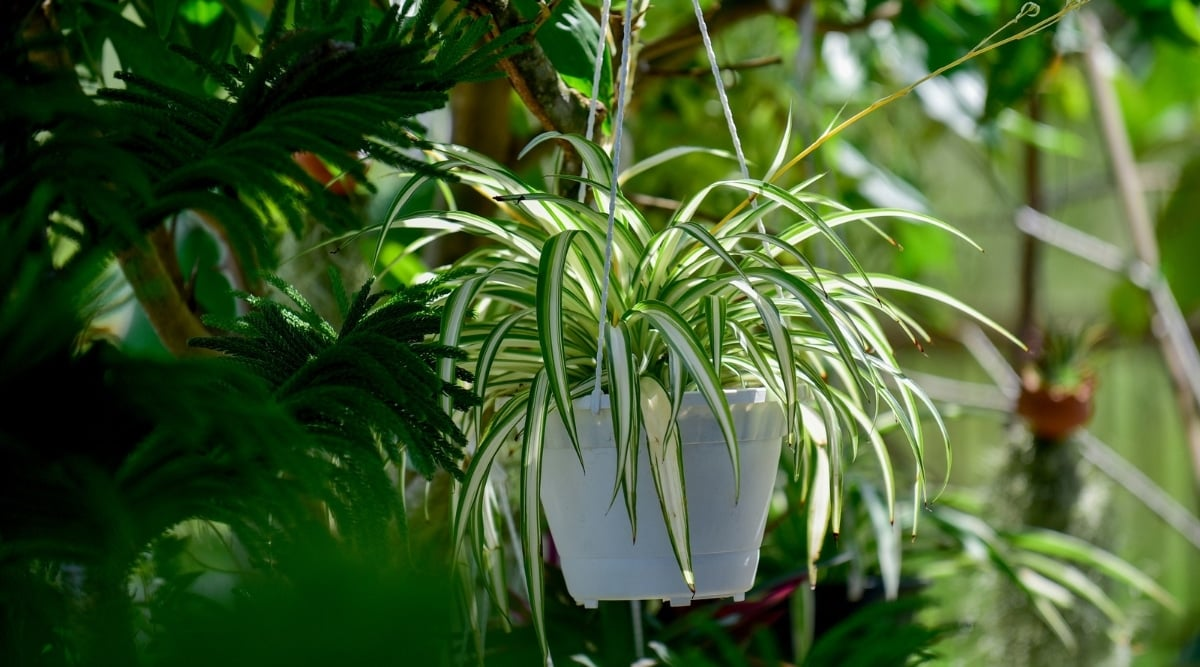
- Height: Hang at eye level over side tables or in bright bathrooms for a spa-like vibe. Aim for bright, indirect light; avoid blasting midday sun through west-facing glass.
- Cluster two or three small baskets with mixed cultivars (‘Bonnie’ + ‘Vittatum’ + ‘Variegatum’) for a chandelier of stripes and curls.
- Let plantlets dangle free, or snip for a tidier silhouette—both are chic. If you’re styling a window, plantlets become a delicate, backlit curtain.
Care that keeps designs camera-ready
- Light: Bright, indirect light is best; tolerates partial shade. Avoid harsh midday sun.
- Water: Aim for “evenly moist, never soggy.” Water when the top 2–3 cm (about 1 in) is dry, then drain thoroughly. Overwatering is a more common mistake than underwatering.
- For crisp tips and clean stripes, flush the pot monthly with lukewarm water and consider filtered, distilled, or rainwater if your tap is high in fluoride/chlorine.
- Humidity: Average indoor air is fine; around 50% helps prevent tip browning. In very dry rooms, mist at midday on bright days or use a pebble tray—avoid keeping leaves wet in cool, stagnant air.
- Feeding: During active growth (spring to early autumn), feed every 2–3 weeks or more lightly every 10–14 days at a dilute rate; reduce in winter. Avoid heavy nitrogen on variegates.
- Grooming: Trim brown tips along the leaf’s natural point; remove yellowed leaves at the base. Rotate the plant periodically for balanced growth.
- Repotting: Every 2–3 years, or when thick roots circle the pot or peek from drainage holes. Move up just one size and refresh the mix.
- Propagation:
- Plantlets: Detach babies with visible aerial roots and pot directly into moist mix, or root in water for 1–2 weeks first. You can also pin an attached plantlet into a nearby pot to root, then snip the runner.
- Division: Split crowded clumps in spring to rejuvenate.
- Water culture: Keep only the roots submerged, crown above water. Change water every 7–10 days in spring/summer and about every 2 weeks in autumn/winter; add a small dose of diluted nutrients periodically.
- Pests and pitfalls: Generally trouble-free. In dry air, watch for spider mites; also mealybugs or scale can hide at leaf bases. Rinse, then treat with insecticidal soap or neem/horticultural oil. Ensure airy, well-drained conditions to prevent rot or gray mold.
Where spider plant comes from—and what it “means”
Native to southern Africa, this generous plant became a global classic because it thrives in real homes, not just perfect conservatories. Its “flower language” isn’t a Victorian tradition so much as modern houseplant lore: resilience, renewal, and hospitality. It rebounds from mishaps and showers you with offspring—easy to share with neighbors and friends. In that sense, its deepest symbolism is generosity that multiplies.
Quick styling recipes to try
- The graphic gallery shelf
- One medium ‘Vittatum’ in a matte black cylinder, flanked by two small pale stoneware vessels. Let runners trail over the edge; clip a few along the shelf lip for a subtle frame.
- The soft-neutral reading nook
- ‘Variegatum’ in a cream footed planter on a wood shelf, paired with linen-bound books and a brass bookmark. Add a small ‘Picturatum’ below for a warm echo.
- The playful kitchen window
- A small ‘Bonnie’ in a white hanging pot at eye level, with a second basket 20 cm lower holding ‘Milky Way’ for contrast. Morning sun through a sheer; plantlets left to dangle.
The essentials, in one glance
- Light: Bright, indirect is best; gentle winter sun okay; keep harsh midday sun off leaves.
- Water: When the top 2–3 cm is dry; drain well; flush monthly; consider low-fluoride water.
- Soil: Loose, fertile, and free-draining (all-purpose mix with perlite/coarse sand).
- Temperature: Happy around 18–24°C (64–75°F); keep above 7°C (45°F).
- Placement: East or bright north windows; a few feet back from strong south/west light; shelves, pedestals, bright bathrooms, or hanging baskets.
Style it high, let it spill, and watch the stripes do what great textiles do: catch the light, change the mood, and make the whole room feel more intentional.