

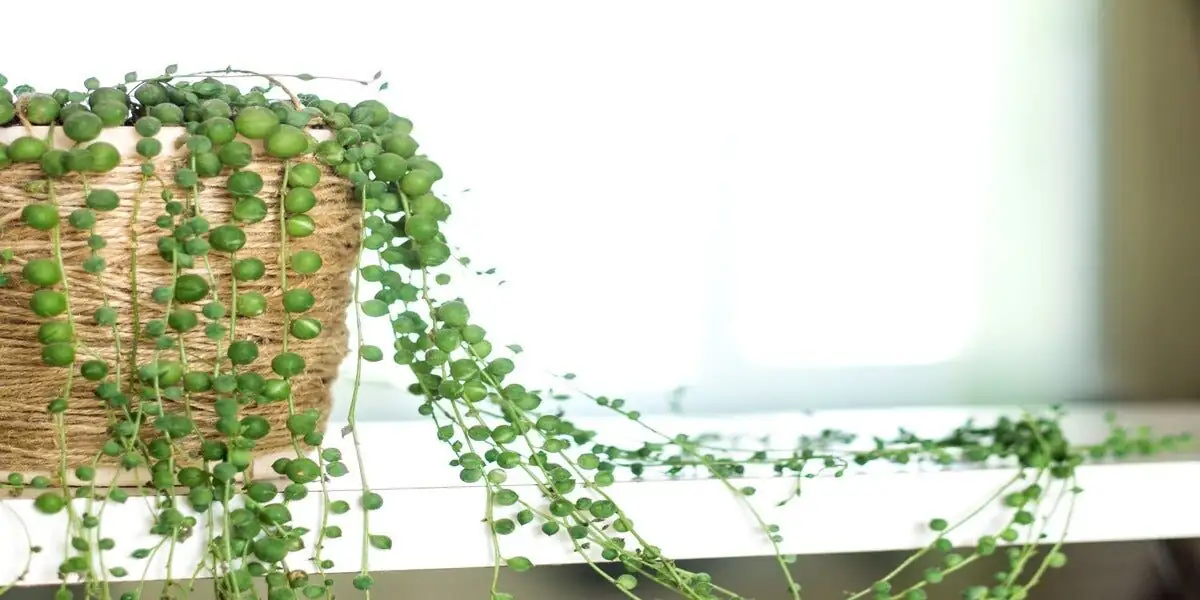
Think of a living necklace that catches light, spills gracefully from a shelf, and even perfumes winter air with a hint of cinnamon. That’s Curio rowleyanus (syn. Senecio rowleyanus)—better known as String of Pearls—an irresistibly sculptural succulent whose bead-like leaves have inspired a very modern language of meaning: bonds, continuity, and prosperity.
Meet String of Pearls at a glance
- Family: Asteraceae; Genus: Curio
- Native range: Southwestern Africa—South Africa’s drier regions (notably the Eastern Cape) and southern Namibia
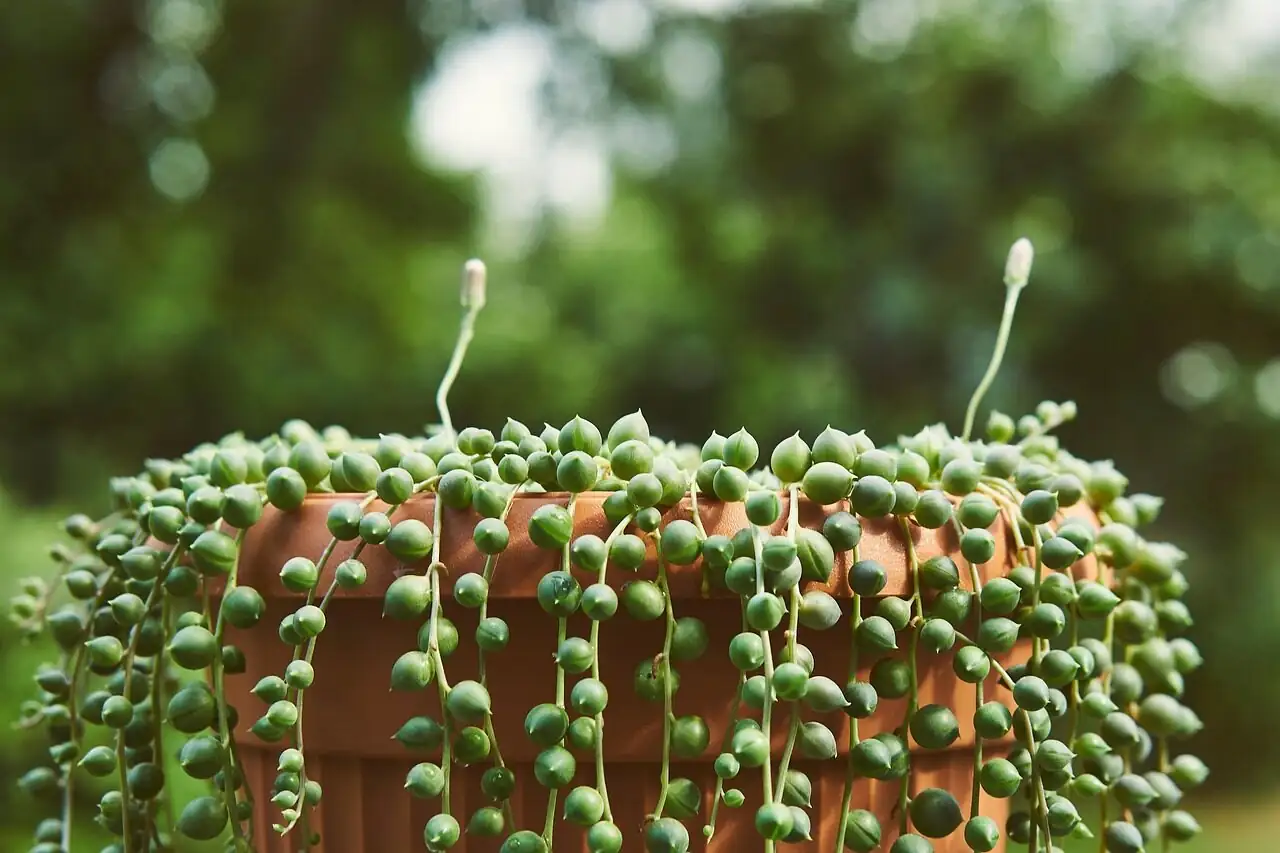
- Habit: Cascading/trailing succulent with slender stems and pea-sized, spherical leaves (“pearls”) that store water
- Size: About 5 cm (2 in) tall at the crown; trails typically 60–90 cm (2–3 ft) in containers
- Flowers: Small creamy-white composites in late fall to early spring (often winter indoors), sweetly spicy like cinnamon/vanilla
Those perfect spheres aren’t just pretty—they’re smart. Each bead is a water tank with a faint, translucent stripe (an “epidermal window”) that lets light penetrate deeper, a clever desert adaptation that keeps pearls plump between drinks.
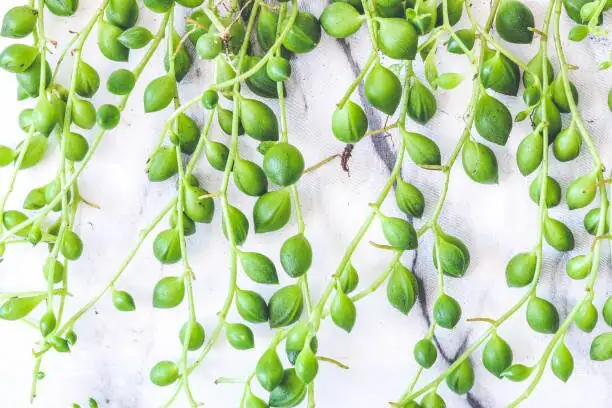
Note: You’ll still encounter older labels such as Senecio rowleyanus or nicknames like Bead Plant, Pearl Plant, String of Beads, and Rosary Vine (sometimes used in the trade—distinct from Ceropegia woodii).
How a modern flower language took shape
Flower language (huāyǔ) isn’t fixed scripture; it evolves wherever people attach feeling to form. In contemporary gifting and décor, String of Pearls has gathered meaning from the way it looks and grows:
- Necklace as metaphor: The plant drapes like a beaded strand. Necklaces symbolize connection—commitments worn close to the heart—so a “living necklace” naturally came to stand for enduring bonds.
- The circle means continuity: In many cultures, round forms suggest wholeness and cycles without end. Each pearl is a tiny circle, and the vine strings them together—continuity made visible.
- Abundance you can count: Dozens, then hundreds, of beads appear as the plant matures. The multiplying “pearls” read as steady prosperity and good fortune that keeps flowing.
- Winter fragrance, warm message: When days are darker, its white blooms release a cinnamon-sweet scent. That unexpected grace in lean months underscores loyalty and good luck through changing seasons.
- Shareable by nature: Snip, root, and give—this plant propagates with joyful ease. The ability to pass along new strands reinforces a message of bonds that grow and generosity that returns.
Put simply, today’s consensus symbolism for Curio rowleyanus: lasting ties, strings of connection, and continuous good fortune.
Cultural significance in gifting
When String of Pearls makes the perfect present
- Anniversaries and weddings: A vow you can watch grow—beads for each shared memory, one after another.
- Housewarmings and new ventures: Trails of “pearls” stand for wealth that accumulates and energy that circulates smoothly.
- Long-distance friendships: A green thread that keeps you connected across time zones.
- Milestones (graduations, promotions): Continuous learning and success “strung together.”
Thoughtful gifting tips
- Include a care card:
- Light: Bright, indirect light with gentle direct sun (morning/late afternoon). Avoid harsh midday glare behind glass.
- Water: Soak, then let the mix dry well; water far less in winter. Slightly deflated pearls mean “time for a drink.”
- Soil: Fast-draining cactus/succulent mix in a pot with drainage (shallow pots suit its shallow roots).
- Temperature: 15–27°C (60–80°F); keep above 10°C (50°F).
- Pet- and kid-safety note: The plant is toxic if ingested and can irritate sensitive skin. Place out of reach.
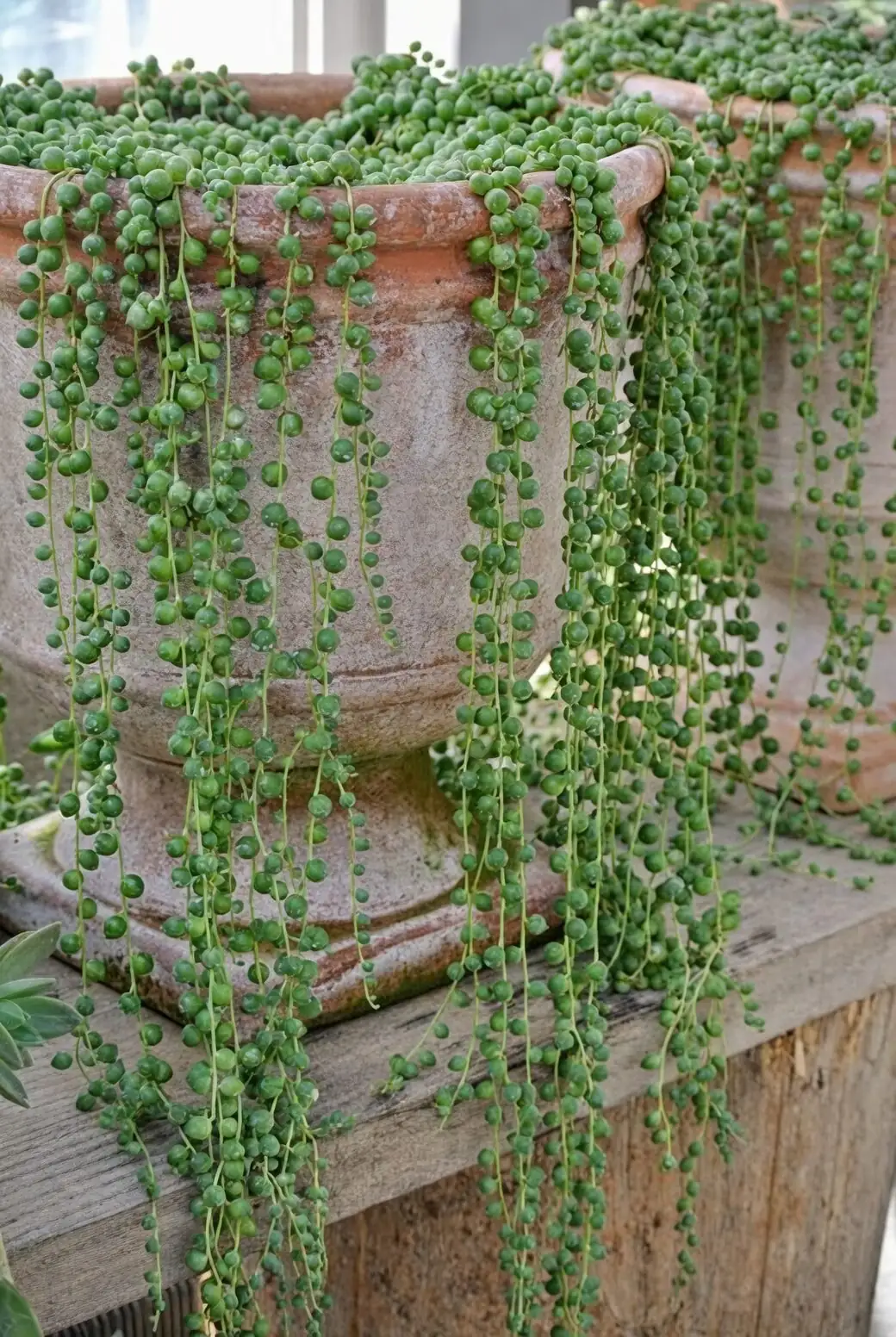
- Style the message: A hanging basket or high shelf lets the “necklace” read at a glance; a minimal pot spotlights the beads.
- Bonus sentiment: Tuck in a labeled cutting for the recipient to root later—future prosperity in a tiny strand.
Suggested card lines:
- “May our bond, like this living necklace, grow bead by bead.”
- “For prosperity that flows and connections that never break.”
- “A string of small joys—may they keep multiplying.”
Feng shui placements for flow and good fortune
While traditions vary, many practitioners read String of Pearls as auspicious: its round leaves (associated with completeness and gentle, prosperous energy) and its flowing vines (a visual of qi in motion) make it a graceful conductor of vitality.
Best spots, aligned with light and energy
- Wealth and abundance (Southeast area of a home or room):
- Place on an east- or west-facing window within that zone for bright, filtered light; let vines cascade to suggest wealth flowing inward.
- Family and health (East):
- A bright shelf or plant hanger here underscores continuity of care and lineage.
- Love and partnership (Southwest):
- Use a pair of plants or a double-tier hanger to echo mutual support and lasting bonds.
- Home office or studio:
- High shelf near your desk to soften edges and keep creative energy circulating—just avoid blasting AC/heat vents and harsh midday sun.
Practical feng shui cautions:
- Skip dark corners (qi stagnates—and the plant will etiolate).
- Avoid cold drafts and steamy bathrooms (it prefers good airflow with low to average humidity; no misting).
- In bedrooms, keep it away from headboards and traffic paths to prevent a cluttered, “tangling” feel.
Styling that supports both chi and plant health
- Aim for a 2–3 ft cascade without tangling doorways or heating vents.
- Use a shallow, well-drained pot; never let water pool at the crown.
- Prune lightly in spring to encourage branching; replant cuttings into the top of the pot for a lush, continuous curtain.
- Pair with simple materials (natural wood shelf, unglazed terracotta, or matte ceramic) to keep the look calm and grounded.
Care in a nutshell (so the symbolism thrives)
- Light: Bright, indirect with a bit of gentle sun; protect from harsh midday rays that can scorch pearls.
- Water: Thorough soak, then dry well; every 2–3 weeks in active growth is common indoors—less in winter. Constantly wet soil invites rot.
- Soil: Gritty succulent mix (e.g., potting mix cut 1:1 with perlite/pumice/coarse sand); always use drainage.
- Temperature: 15–27°C (60–80°F); not frost-hardy.
- Feeding: Half-strength balanced liquid fertilizer monthly spring to early autumn; taper off in fall; stop in winter.
- Pruning: Trim leggy or bare trails in spring to spur branching; remove any shriveled or mushy sections promptly.
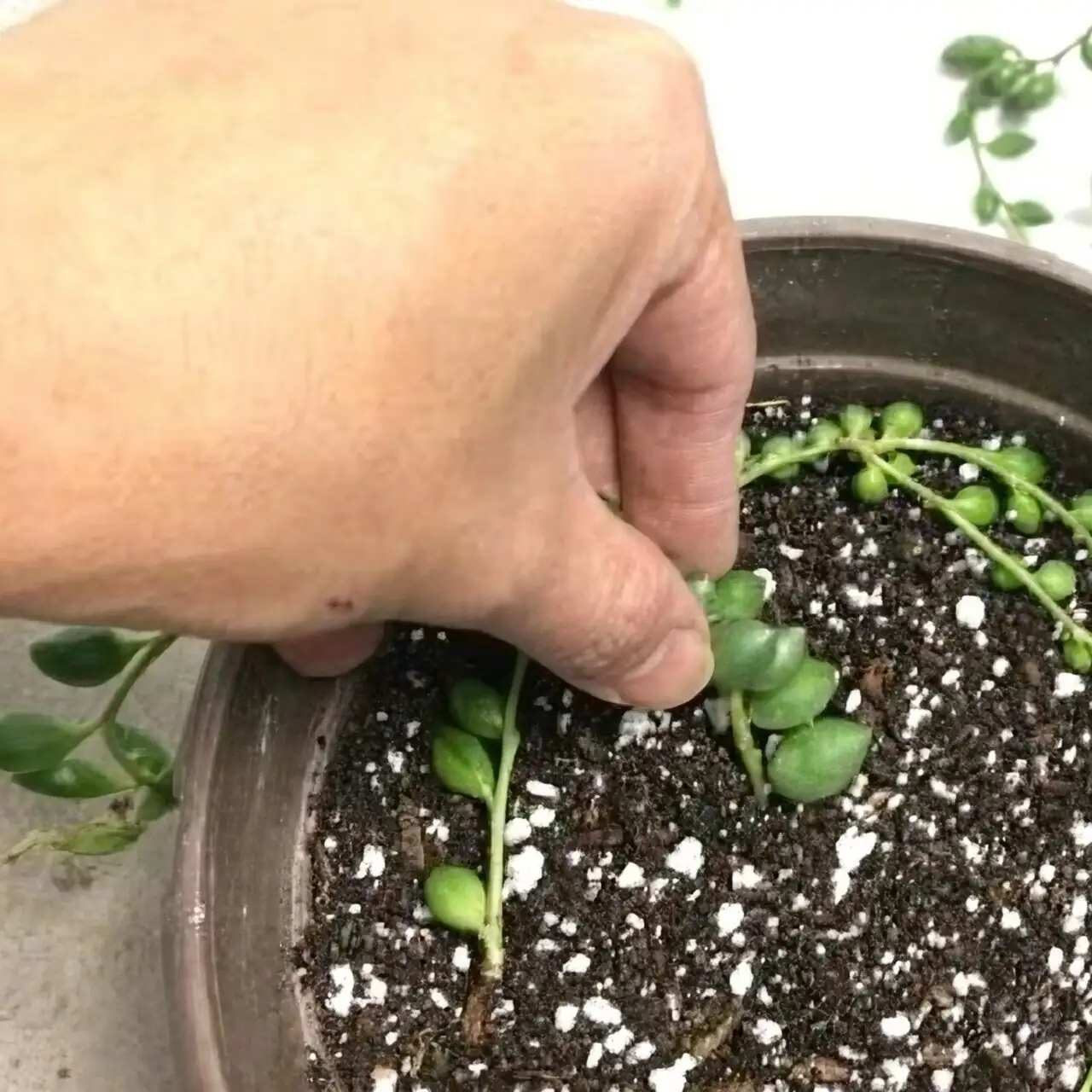
- Propagation: 8–10 cm (3–4 in) cuttings; let callus, then set bare nodes on/in gritty mix. Roots in ~2–3 weeks.
- Flowering nudge: Winter-bright light plus a cooler rest around 10–16°C (50–60°F) can encourage those fragrant winter blooms.
- Pests: Watch for mealybugs, aphids, spider mites—improve airflow, isolate, and treat with insecticidal soap or neem/horticultural oil.
- Safety: Toxic if ingested; keep away from pets and children.
Why String of Pearls resonates now
- It’s visual poetry: a beaded cascade that instantly reads as connection.
- It’s forgiving yet elegant: drought-tolerant, low maintenance, and striking in small spaces.
- It’s shareable: propagation lets one gift ripple into many, a living metaphor for prosperity and community.
In an age that prizes meaningful objects, Curio rowleyanus offers a simple, beautiful promise: let your connections be continuous, your good fortune steady, and your days threaded with small, shining moments—pearl by pearl.