

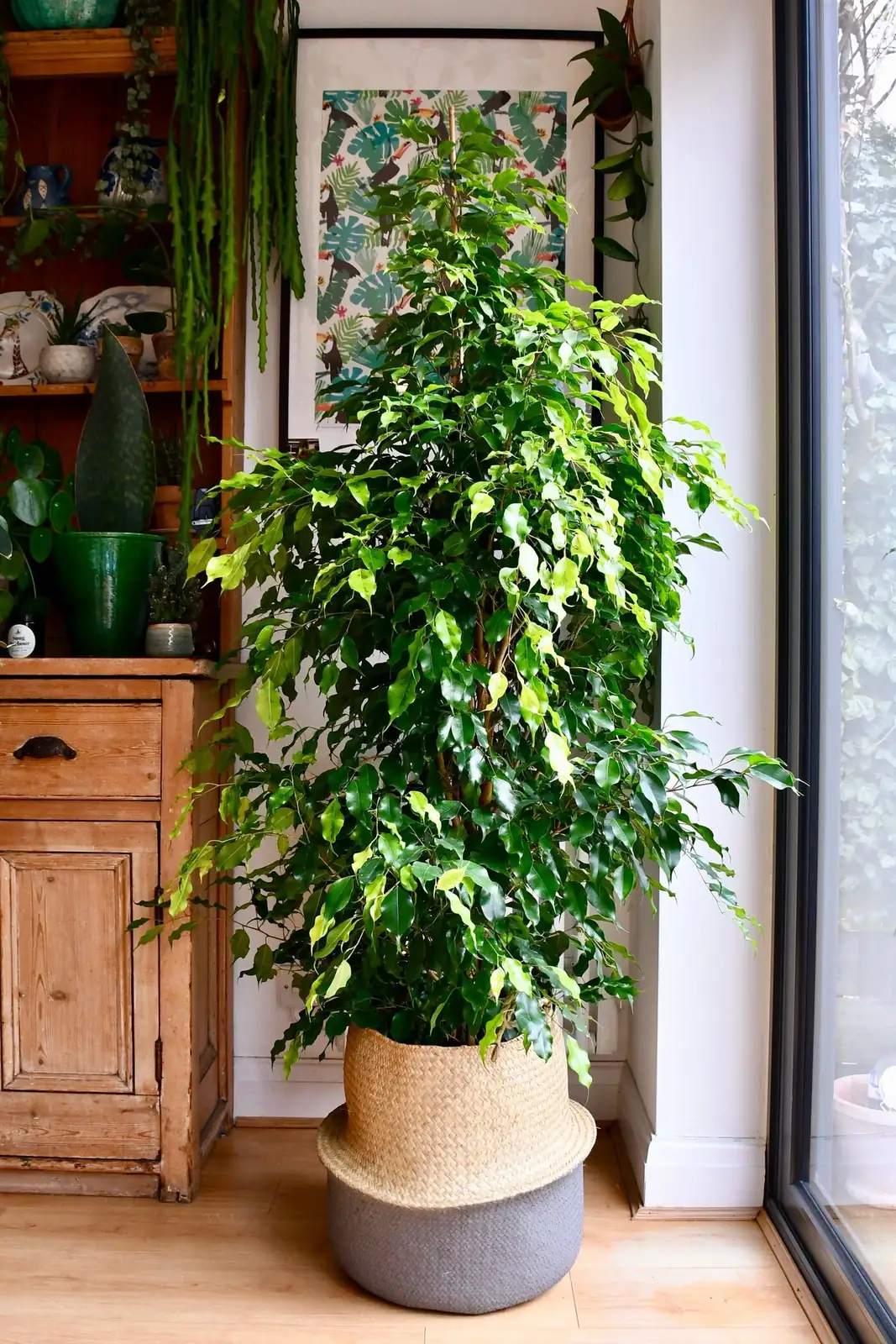
If your weeping fig (Ficus benjamina) has been throwing a leaf-dropping tantrum after a move, take a deep breath. This species is famously expressive—any sudden change in light, temperature, humidity, or watering can trigger a dramatic shed. The good news: with a calm, consistent setup and a clear week-by-week plan, you can stop the drop and get glossy new growth rolling again.
Below is a practical, four-week stabilization plan focused on the four levers that matter most: bright, steady light; 20–25°C warmth; 60–70% humidity; and a rhythm of even moisture without sogginess.
Why weeping figs “melt down” after moves (and how we outsmart that)
- Light shift: Even moving a few feet can cut light intensity dramatically indoors. F. benjamina tolerates medium light but truly thrives in bright, filtered light.
- Temperature dips or drafts: Sustained temps below 10°C can cause yellowing and stalled growth; cold blasts from doors/AC and hot, dry air from heaters also stress it.
- Dry air: Indoors, humidity often sinks below 40%. This plant is happiest at 60–70%.
- Watering swings: Letting the potting mix go bone-dry or keeping it wet for days both trigger leaf drop. Even moisture wins.
- Bonus stressors: Spider mites love dry air and can quickly defoliate a stressed ficus.
Your strategy: lock in consistency. Keep the “feel” of the environment as steady as a metronome and change only one variable at a time.
The 4-week stabilization plan
Before you start (Day 0: Set the stage)
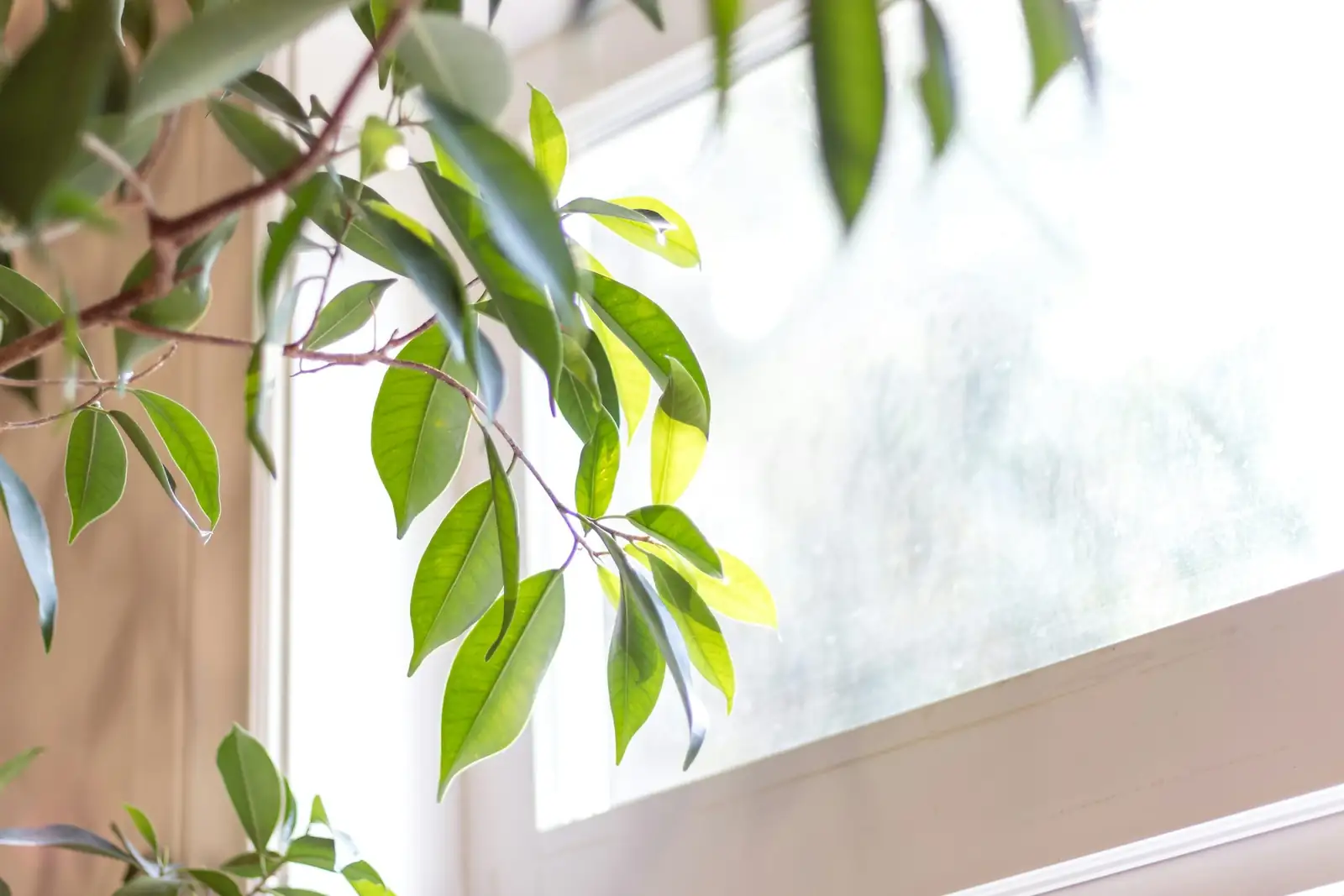
- Choose the final spot now. Avoid moving or rotating for several weeks.
- Light placement:
- Aim for bright, indirect light. East-facing windows are excellent; south/west windows are fine behind a sheer curtain.
- Distance guide: 0.5–1.5 m from a bright window. Your hand should cast a soft-edged shadow at noon.
- Avoid harsh midday sun and deep interior corners.
- Warmth: 20–25°C all day. Keep nights above 13–16°C. No drafts from doors, AC, or radiators.
- Humidity: Target 60–70%.
- Use a humidifier or a wide pebble tray with water (pot sitting on pebbles, not in water).
- In the growing season, light morning misting can help; avoid soaking leaves at night.
- Pot and soil check:
- Ensure the pot has drainage holes.
- Free-draining, airy mix (houseplant soil with perlite/coarse sand) is ideal.
- Water reset:
- If the top 2–3 cm of mix is dry, water thoroughly until excess drains out. Discard drainage—never let the pot stand in water.
- Feeding and pruning:
- Pause fertilizer for the first 1–2 weeks while the plant settles.
- Only prune dead or clearly weak twigs for now.
Week 1: Anchor the environment
- Light: Keep position fixed. No rotation. If leaves scorch or curl, add a sheer curtain. If new growth is tiny/pale, consider nudging a little closer to the window—but wait until Week 2 unless light is clearly too dim.
- Temperature: Confirm room stays near 20–25°C. Shield from doors and vents; avoid placing within 1 m of radiators.
- Humidity: Keep 60–70%. Top up trays, run the humidifier, and space plants for airflow.
- Watering rhythm:
- Check moisture with a finger or moisture meter. Rewater when the top 2–3 cm is dry.
- Goal: slightly moist, never soggy. More harm comes from drought than being just a touch moist, but don’t overdo it.
- Empty saucers after 10 minutes.
- Expectation management: Some leaves will still drop. You’re stabilizing—not forcing instant recovery.
Week 2: Gentle consistency, early diagnostics
- Keep all placements and settings steady.
- Water on the same cues: top 2–3 cm dry → thorough water, then drain.
- Mist lightly in the morning if air is dry, especially in warm months.
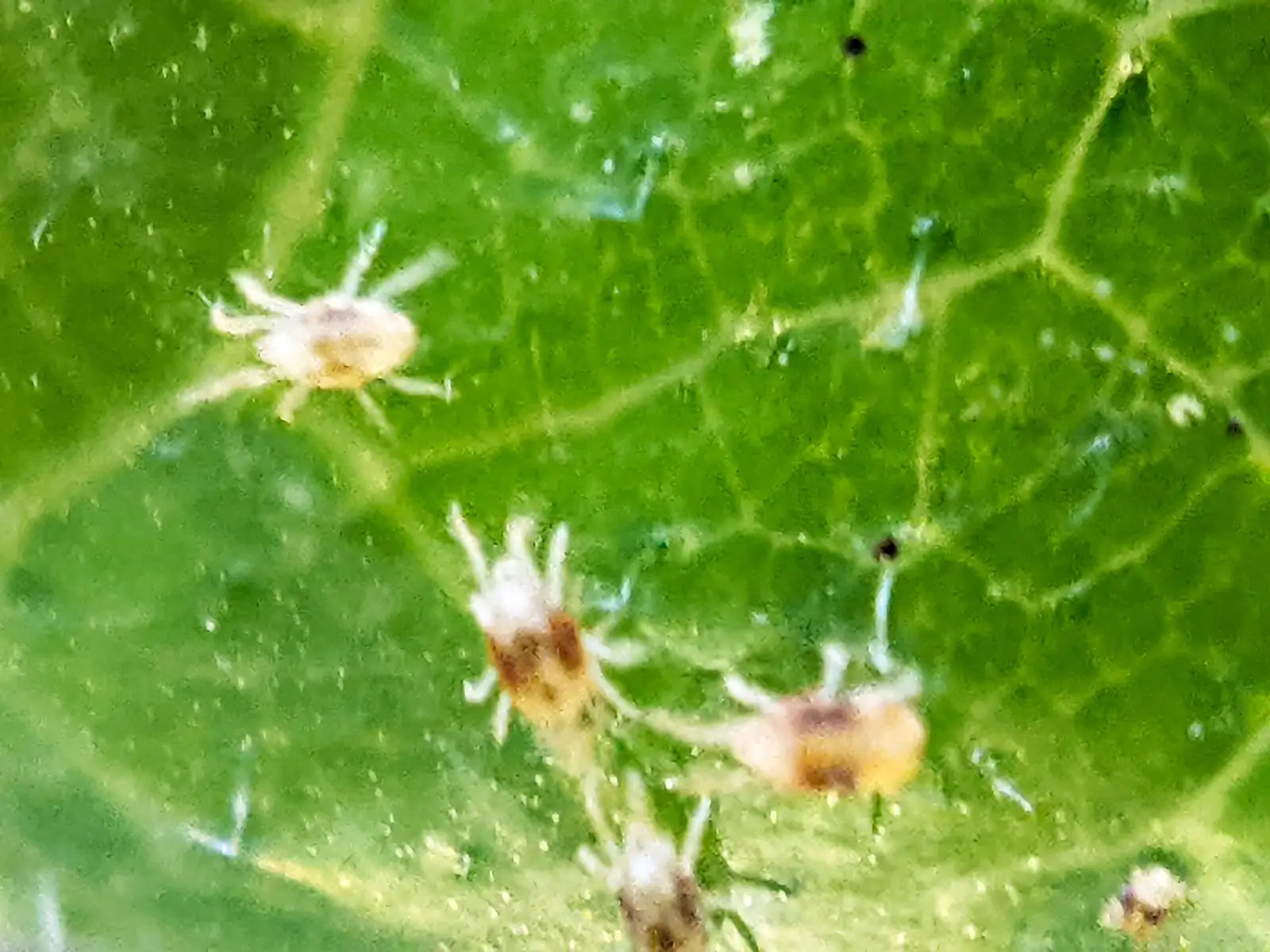
- Pest check: Inspect leaf undersides and stems for spider mites (fine stippling, webbing). If present, raise humidity and treat with insecticidal soap or horticultural oil; repeat per label.
- Leaf audit:
- Yellowing + cool nights? Warm it up; avoid temps below 13–16°C.
- Brown crisp edges? Increase humidity or move away from hot, dry air.
Week 3: Nudge growth once drop slows
- Light: Still bright and filtered. If internodes are stretching or leaves get smaller, scoot 20–30 cm closer to the light—but don’t break the no-drama rule with big moves.
- Warmth/humidity: Hold 20–25°C and 60–70%.
- Watering: Maintain your rhythm. An occasional full soak is fine if excess water drains freely.
- Feeding (growing season only): If you see stable buds or new leaves, resume a balanced houseplant fertilizer about every 10 days. Reduce or pause in autumn/winter.
Week 4: Lock in the routine
- By now the drop rate should be way down, and fresh buds/leaves should appear.
- Fine-tune watering by season:
- Summer: often every 2–3 days depending on light, pot size, and heat.
- Winter: roughly every 10 days in warm indoor conditions.
- Shaping: Light tip-pruning can encourage a fuller silhouette once the plant is clearly pushing new growth.
- Repot? Only if needed:
- Ideal in spring for smaller plants (15–20 cm pots); large specimens every ~2 years.
- Avoid repotting mid-stress unless the mix is failing (stays soggy, smells sour) or roots are severely bound.
Watering rhythm made simple
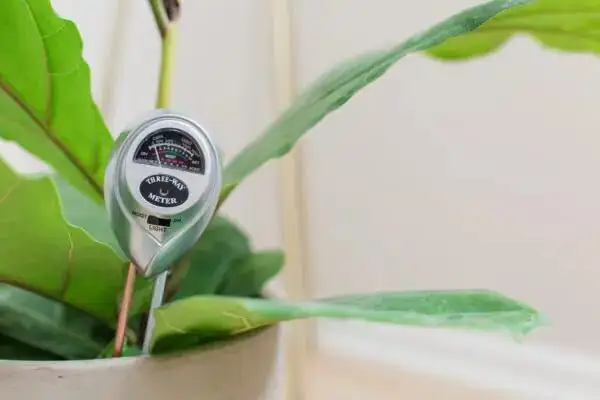
- Test before you pour: Top 2–3 cm dry is your green light.
- Water thoroughly, let excess drain, and empty the saucer.
- Signs you’re off rhythm:
- Too dry: sudden leaf drop; blackened, dried shoot tips.
- Too wet: persistent soggy mix; yellowing leaves; musty smell.
- Mix matters: A loose, free-draining blend (houseplant soil + perlite/coarse sand) helps you maintain “evenly moist” without waterlogging.
Light placement, demystified

- Best: Bright, indirect light by a window. East exposure gives gentle morning sun. South or west needs a sheer curtain midday.
- Okay: Medium/partial shade; growth will be slower and sparser.
- Avoid: Deep interior corners, harsh midday sun, and frequent relocations.
Temperature and humidity: the sweet spot
- Temperature:
- Ideal: 20–25°C.
- Comfortable winter range indoors: 13–16°C.
- Avoid: below 10°C (yellowing/slowed growth) and never below 5°C.
- Humidity:
- Aim for 60–70% to cut down on leaf drop.
- Tools: cool-mist humidifier, pebble trays, grouping plants (with airflow), and gentle misting in warm months.
Fast troubleshooting: symptom → fix
- Lots of yellow leaves, slow growth:
- Check for cool temps (raise to 20–25°C), soggy mix (improve drainage), or low light (increase brightness, add a sheer-only filtered boost).
- Brown, crispy edges; curled leaves:
- Low humidity or hot drafts. Raise humidity and move from heaters/vents.
- Sudden, heavy drop after a move:
- Environmental swing. Stop moving/rotating. Stabilize light, warmth, and humidity; normalize watering.
- Blackened shoot tips:
- Drought history. Reestablish “slightly moist” rhythm; don’t let the mix go bone-dry.
- Fine speckling/webbing:
- Spider mites. Increase humidity; treat with insecticidal soap/horticultural oil and repeat as directed.
- Leaf spots:
- Improve airflow; avoid chronically wet foliage. Consider a copper-based fungicide if needed.
Long-term peacekeeping: your simple calendar
- Spring–summer:
- Bright, filtered light; water generously as needed (often every 2–3 days in summer).
- Feed about every 10 days in active growth.
- Mist in warm months and watch for mites.
- Propagate by tip cuttings (late spring–early summer) or air-layer (late spring–mid-summer).
- Autumn:
- Ease up on feeding and watering as growth slows.
- Winter:
- Keep warm (ideally 13–16°C or above), bright, and humid.
- Water roughly every 10 days; mist if air is dry.
- Keep away from cold drafts.
Safety and handling
- The milky sap (latex) can irritate skin and eyes. Wear gloves when pruning.
- Toxic to cats and dogs if ingested. Keep out of nibbling range.
A note on meaning and mood
Ficus benjamina is often associated with resilience and steadiness—a fitting symbol for a plant that, once settled, grows calmly and gracefully for years. While modern “flower language” assigns virtues loosely, the deeper truth here is practical: stability is its love language. Offer consistent light, warmth, humidity, and moisture, and it responds with poise.
—
Bottom line: Treat your weeping fig like a frequent flyer with jet lag—minimize changes, keep conditions gentle and predictable, and hydrate wisely. Four weeks of quiet consistency is usually all it takes to turn the leaf drop drama into new-leaf confetti.