
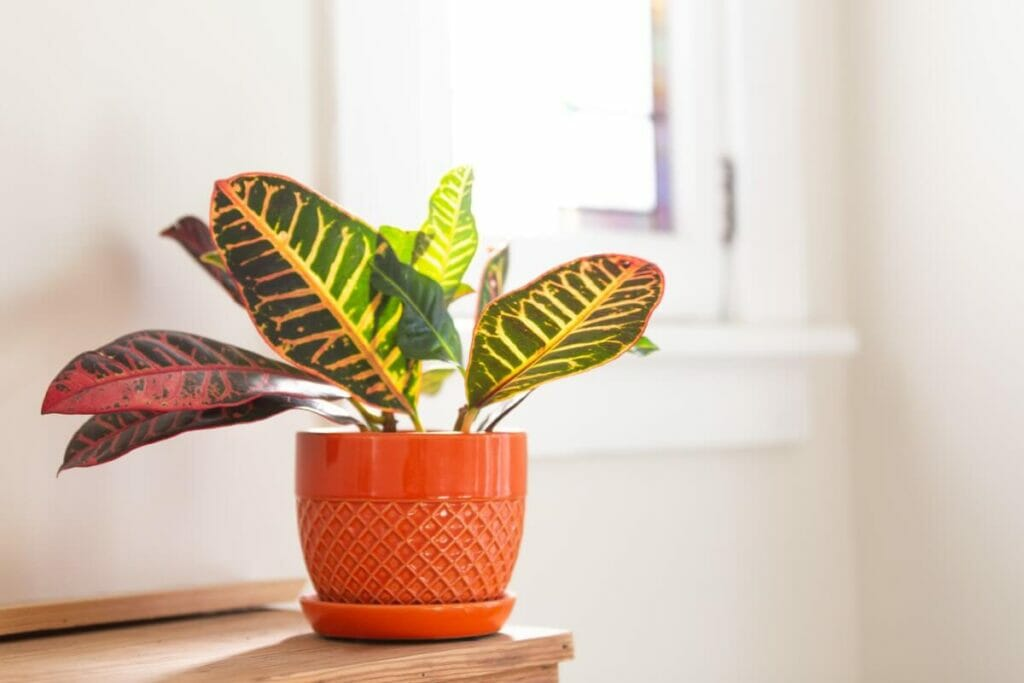
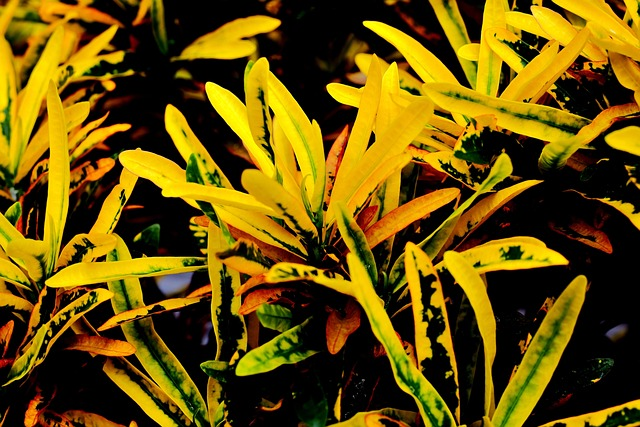
If your croton (Codiaeum variegatum) suddenly looks sulky—dropping leaves, showing speckles, sticky patches, or mystery spots—don’t panic. This is your rapid-response playbook. Croton is a glorious diva: it thrives on steady warmth, bright filtered light, and generous humidity. When those slip—or pests move in—it tells you fast. Here’s how to spot problems in seconds and fix them with simple rinses, insecticidal soap/oil, humidity tuning, and better airflow.
The 60‑Second Triage
Before you treat, stabilize the environment—most croton woes start here.
- Warmth: Keep 21–27°C (70–80°F) if you can; never let it dip below 15°C (59°F). Avoid drafts and AC/heater blasts.
- Light: Bright, indirect light; shield from harsh midday sun.
- Water: Keep the mix evenly moist, not soggy. Water when the top 0.5–1 in (1–2.5 cm) dries, using lukewarm water.
- Humidity: Target 50–70% (can go higher with decent airflow). Dry air fuels spider mites and leaf drop.
- Airflow: Gentle circulation prevents fungal spots and pest flare‑ups—but no cold drafts.
- Isolate: Move a suspect plant away from others. Wear gloves; the milky sap can irritate skin.
Fast ID: Symptoms at a Glance and What to Do
Leaf Drop (the classic croton drama)
- What you’ll see
- Leaves yellowing then dropping, often after a move, cold night, or irregular watering. May be sudden.
- Why it happens
- Temperature dips, drafts, low humidity, letting soil swing from bone‑dry to soggy, or a sudden location change. Pests can add stress.
- First aid
- Stabilize warmth (≥59°F/15°C), bump humidity to 50–70%, and water evenly. Don’t relocate again unless absolutely necessary.
- Follow‑up
- Inspect for mites/scale/mealybugs. Keep light bright and filtered. Expect new leaves as conditions steady.
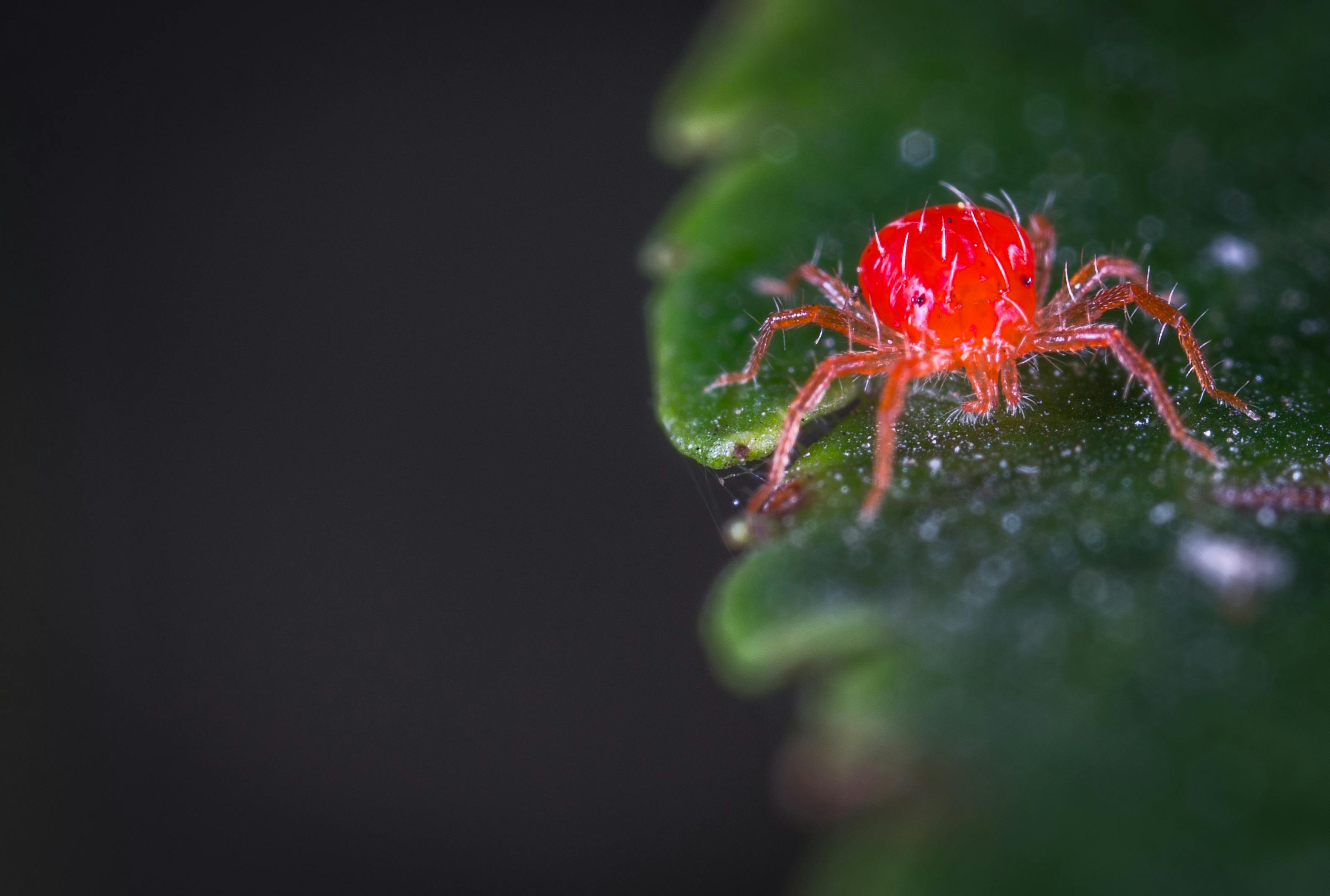
Spider Mites (dusty specks + fine webbing)
- What you’ll see
- Tiny tan speckling or bronzing, especially on undersides; fine webbing between leaves/petioles; leaves may yellow and drop.
- Why it happens
- Dry air and warm rooms are mite heaven.
- First aid
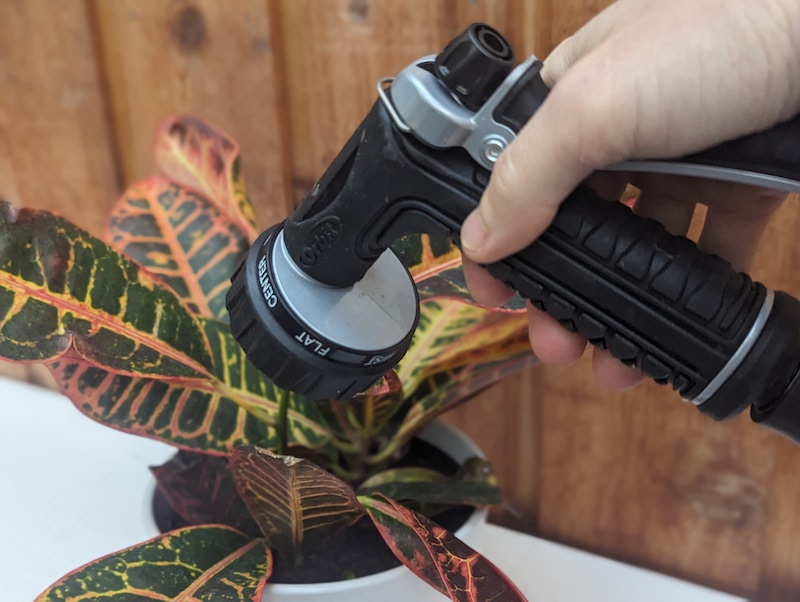
- Rinse foliage thoroughly with lukewarm water (shower/sink sprayer), focusing on leaf undersides.
- After drying, spray insecticidal soap or a horticultural oil, coating all surfaces (especially undersides and stems).
- Follow‑up
- Raise humidity to 50–70%, add gentle airflow, and repeat treatment every 7 days for 2–3 rounds. Keep out of harsh sun until sprays dry.
Scale (bumps that don’t brush off easily)
- What you’ll see
- Dome‑like or barnacle‑looking bumps on stems/leaf undersides; sticky honeydew; possible sooty mold.
- Why it happens
- Scale latch on and drink sap; some crotons are plagued by soft scales that exude honeydew.
- First aid
- Gently scrape with a soft toothbrush or dab each with alcohol on a cotton swab; rinse the plant.
- Follow with insecticidal soap or horticultural oil to hit crawlers and hidden nymphs.
- Follow‑up
- Repeat treatments weekly 2–3 times. Wipe off honeydew; improve airflow. Inspect leaf axils and stems closely.
Mealybugs (cottony clusters)
- What you’ll see
- White, cottony tufts in leaf axils, along midribs, and on stems; sticky honeydew; leaf distortion or stunting if heavy.
- Why it happens
- Mealybugs thrive in sheltered nooks on stressed plants.
- First aid
- Swab visible mealybugs with alcohol; rinse foliage well.
- Spray insecticidal soap or horticultural oil thoroughly (undersides, petioles, nodes).
- Follow‑up
- Weekly re‑treatments 2–3 times, clean honeydew to prevent sooty mold, and keep conditions steady and humid.
Thrips (silvery streaks and twisted new growth)
- What you’ll see
- Silvery/bronzed streaks, black specks (frass), deformed or scarred new leaves; they’re quick and slender.
- Why it happens
- Thrips scrape and suck at tender tissues, favoring new growth.
- First aid
- Rinse the plant carefully; prune the most distorted leaves.
- Use insecticidal soap or horticultural oil with excellent coverage; place yellow or blue sticky cards nearby to monitor adults.
- Follow‑up
- Improve airflow and humidity, and reapply weekly until no new damage appears.
Leaf Spot (fungal, e.g., anthracnose)
- What you’ll see
- Tan to brown spotting that can enlarge; sometimes a halo; spots may coalesce in humid, still air.
- Why it happens
- Splashing water, crowded foliage, and stagnant, high humidity favor fungi.
- First aid
- Remove and discard affected leaves; avoid overhead wetting for a while and increase airflow.
- Follow‑up
- Keep humidity in the 50–70% range with gentle circulation. If severe, a copper‑based fungicide can be used as labeled. Disinfect shears after use.
Note: Rarely, bacterial crown gall causes swollen growths—severely affected crotons are best discarded to prevent spread.
The Rinse–Soap/Oil Routine That Works
- Day 0
- Isolate the plant. Rinse with lukewarm water to dislodge pests and dust.
- Let drip‑dry, then apply insecticidal soap or horticultural oil, covering all leaf surfaces, petioles, and stems—especially undersides.
- Keep out of harsh direct sun until dry. Do not mix soap and oil in one go; rotate if alternating products.
- Day 7
- Inspect with a flashlight; repeat the same treatment.
- Day 14
- Repeat again if any pests remain. Continue weekly until two clear inspections in a row.
Always spot‑test a small area first and follow product labels.
Dialing In Humidity and Airflow (Mite‑proof, Spot‑smart)
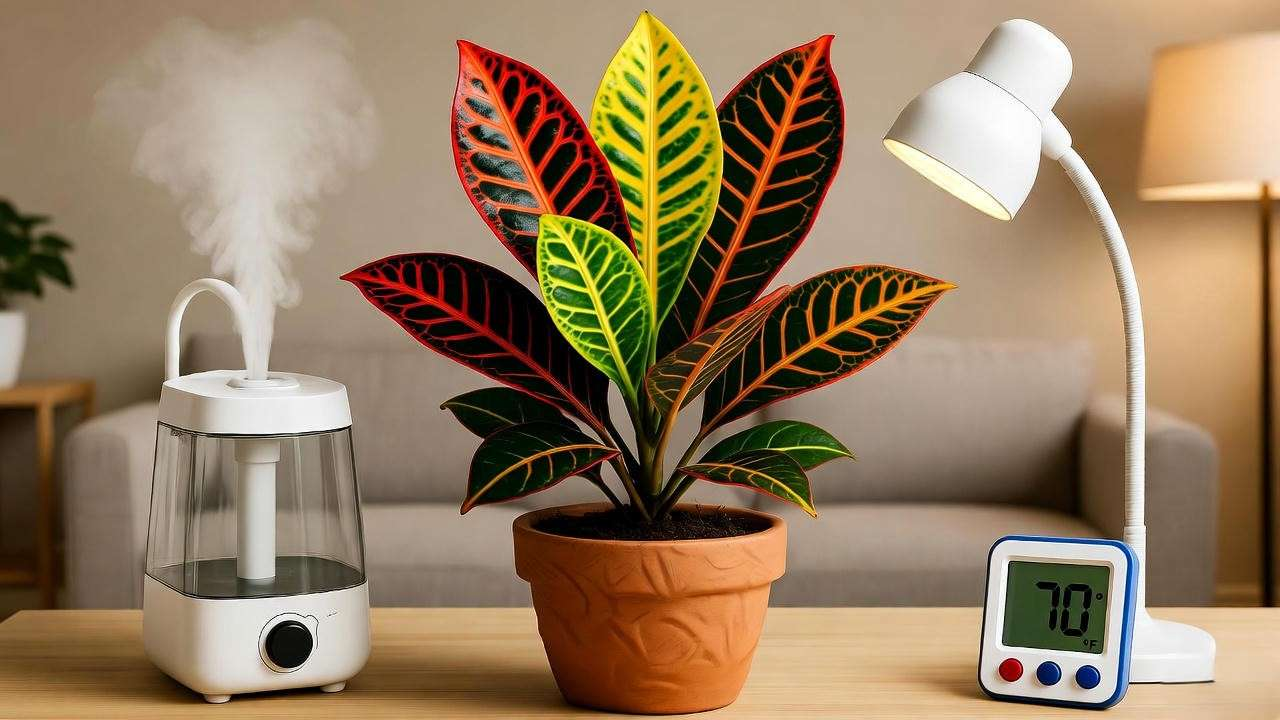
- Aim for 50–70% humidity; up to ~80% is fine if you have gentle airflow.
- Best tools: a small humidifier; a pebble tray with the pot base above the water line; grouping plants together.
- Misting: optional—skip it if it causes spotting in your home.
- Airflow: run a fan on low nearby, not directly blasting the plant; space plants so leaves don’t touch.
- Sanitation: dusted leaves invite mites—wipe foliage periodically with a damp, soft cloth.
Sticky Leaves, Sooty Mold, and Cleanup
- Sticky film = honeydew from scale/mealybugs/thrips. Treat the pest, then:
- Wipe leaves with a damp cloth and a drop of mild soap.
- Clean windowsills, pots, and stakes; wash any residue off to reduce reinfestation.
- Remove heavily infested leaves and bag them—don’t compost.
When It’s Not Pests: Water and Temperature Whiplash
- Underwatering: crispy edges, droop, rapid drop after the mix dries out too long.
- Overwatering: limp, yellowing leaves, and a heavy pot; persistent sogginess risks root rot.
- Cold shock: sudden drafts or cold water can trigger mass leaf drop. Always water with lukewarm water and keep away from drafts.
Prevention That Actually Sticks
- Quarantine new plants for 2–3 weeks; inspect weekly.
- Keep croton warm and stable—above 15°C/59°F at all times.
- Provide bright, filtered light to keep foliage vigorous and colorful.
- Fertilize modestly in spring–fall; skip heavy feeding in winter.
- Prune out dead or infested bits promptly; wear gloves to avoid sap irritation.
- Check undersides and leaf axils every week—early catches are easy wins.
Safety and Pet Notes
Croton is toxic if ingested, and the sap can irritate skin and eyes. Wear gloves when pruning or treating, and keep the plant out of reach of children and pets.
Quick Reference: Symptom → First Move
- Sudden leaf drop → Warmth up, humidity 50–70%, even moisture, no drafts; inspect for pests.
- Fine webs, bronzing → Rinse + soap/oil; raise humidity; repeat weekly.
- Bumps + sticky leaves → Scrape/swab + soap/oil; clean honeydew; repeat.
- Cottony tufts → Alcohol swab + rinse + soap/oil; repeat.
- Silvery streaks, black specks → Rinse, prune worst leaves, soap/oil, sticky cards; repeat.
- Tan/brown leaf spots → Remove leaves, boost airflow, keep humidity moderate; copper fungicide if severe.
Treat quickly, keep conditions steady, and your croton will swagger back with those neon leaves—no drama required.