

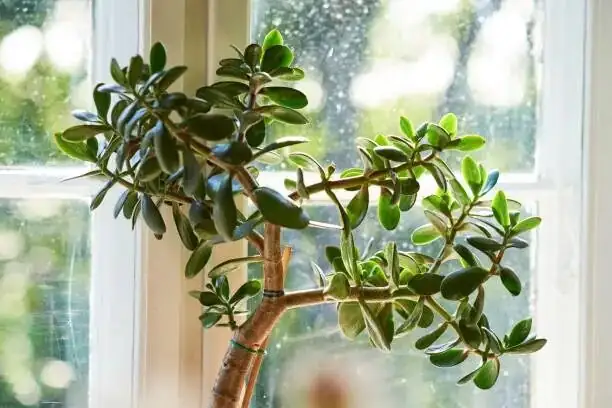
If you’ve ever wanted a plant that forgives missed waterings yet rewards you with a sculptural, bonsai-like silhouette, meet Crassula ovata—the jade plant. Native to South Africa and Mozambique and long associated with prosperity, it’s famously tough, beautifully glossy, and, with the right care, nearly indestructible. The secret to keeping it plump and perky? A simple three-signal method that takes the guesswork out of watering—backed up by bright light, a gritty mix, and a pot that never traps moisture.
Meet the jade plant
- Botanical name: Crassula ovata (family Crassulaceae)
- Also called: Jade Plant, Friendship Tree, Lucky Plant, Money Plant
- Look: Thick, woody, branching stems with oval, fleshy, glossy green leaves that blush red along the edges in strong light
- Size: Typically 60–100 cm (24–39 in) tall and wide in containers; easily kept smaller and bushier with pruning
- Bonus: Mature plants may produce clusters of tiny, starry white-to-pale-pink flowers, especially after a bright, cool, slightly drier winter rest
The three-signal watering method
Overwatering is the jade plant’s one big weakness. Instead of watering by the calendar, “listen” to the plant and its pot. Wait until all three signals say “go.”
Signal 1: Dry mix
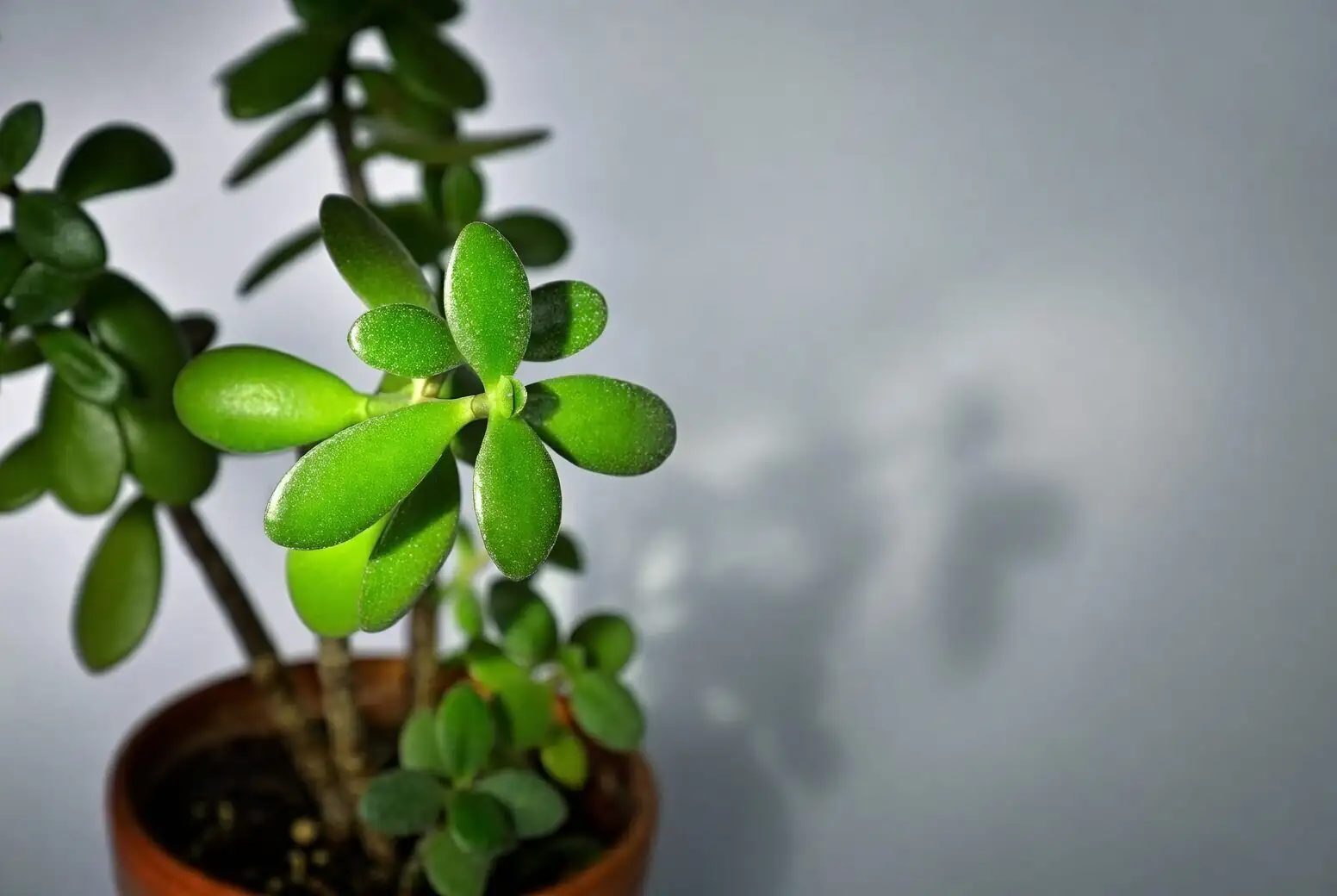
- Probe the potting mix 5–8 cm (2–3 in) down with a finger or wooden skewer. It should feel dry well below the surface—not just the top crust.
- In spring to autumn, aim for the surface and much of the mix to be dry before watering. In winter, let it go even drier.
Signal 2: Pot weight
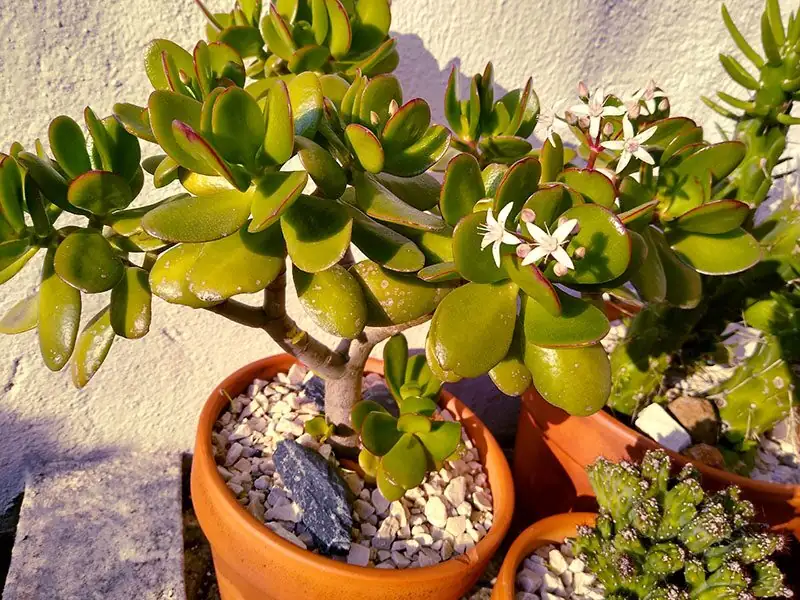
- Lift the pot with one hand. A dry pot feels surprisingly light; a recently watered one feels hefty.
- Calibrate once: after a thorough watering, note the “wet weight.” After you’ve let it dry completely once, memorize the “dry weight.” Water only when it’s back near “dry.”
Signal 3: Leaf feel
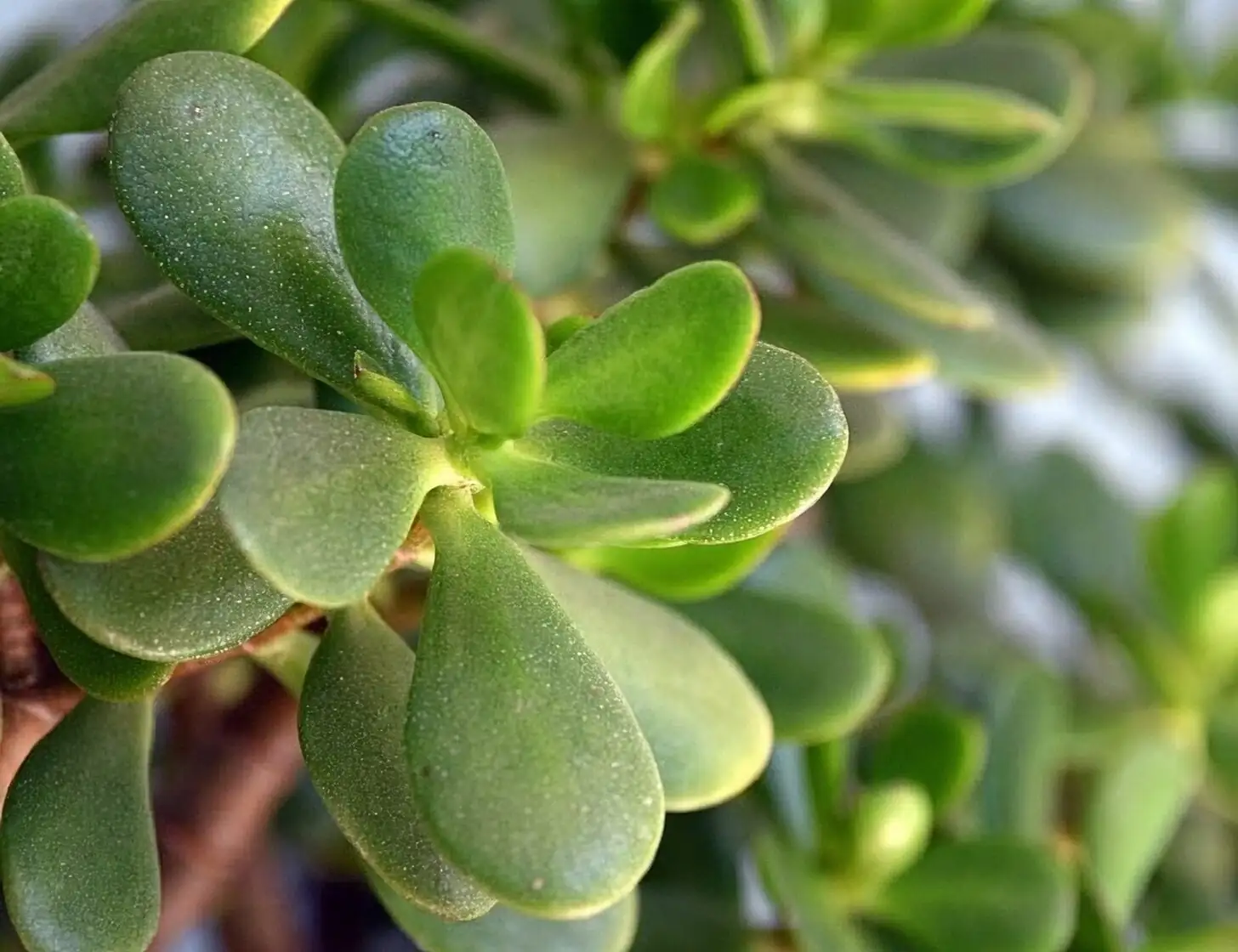
- Healthy, hydrated leaves feel firm and springy.
- Time to water when they have a slight give and are just beginning to lose their tautness. Don’t wait for deep wrinkles or leaf drop.
When all three say “water,” here’s how to do it
- Water thoroughly until liquid runs from the drainage hole, then empty the saucer immediately. Never leave the pot sitting in water.
- Use room-temperature water to avoid shock.
- Good airflow helps the mix dry evenly; avoid stagnant, constantly damp conditions.
Seasonal tweaks
- Spring–summer (active growth): Water thoroughly only after the mix has dried well. Bright light and warm temps mean faster drying.
- Autumn: Growth slows—stretch the intervals between waterings.
- Winter: Keep cool and bright; water sparingly (just enough to prevent severe shriveling). This slightly drier rest can encourage flowering on mature plants.
Light that keeps jades compact and colorful
- Indoors: Give the sunniest window you have—bright light is best, from full sun to partial sun. A south or west window keeps growth tight and can bring out that red leaf edge.
- Acclimation: If your plant has been in low light, introduce stronger sun gradually over 1–2 weeks to avoid leaf scorch (brown, crispy spots).
- Rotation: Turn the pot a quarter turn every couple of weeks for even, tree-like form.
- Outdoors (warm seasons): A bright balcony or patio is perfect. Acclimate to direct sun gradually and shelter from frost. Bring indoors well before temperatures drop near 5°C (41°F).
Pot and soil choices that make rot unlikely
Rot prevention starts below the surface.
The mix
- Use a fast-draining cactus/succulent mix.
- Simple recipe: 3 parts standard potting substrate to 1 part sharp sand, or amend with perlite/pumice for extra drainage.
- Aim for a gritty, airy texture that never compacts into a sponge.
The pot
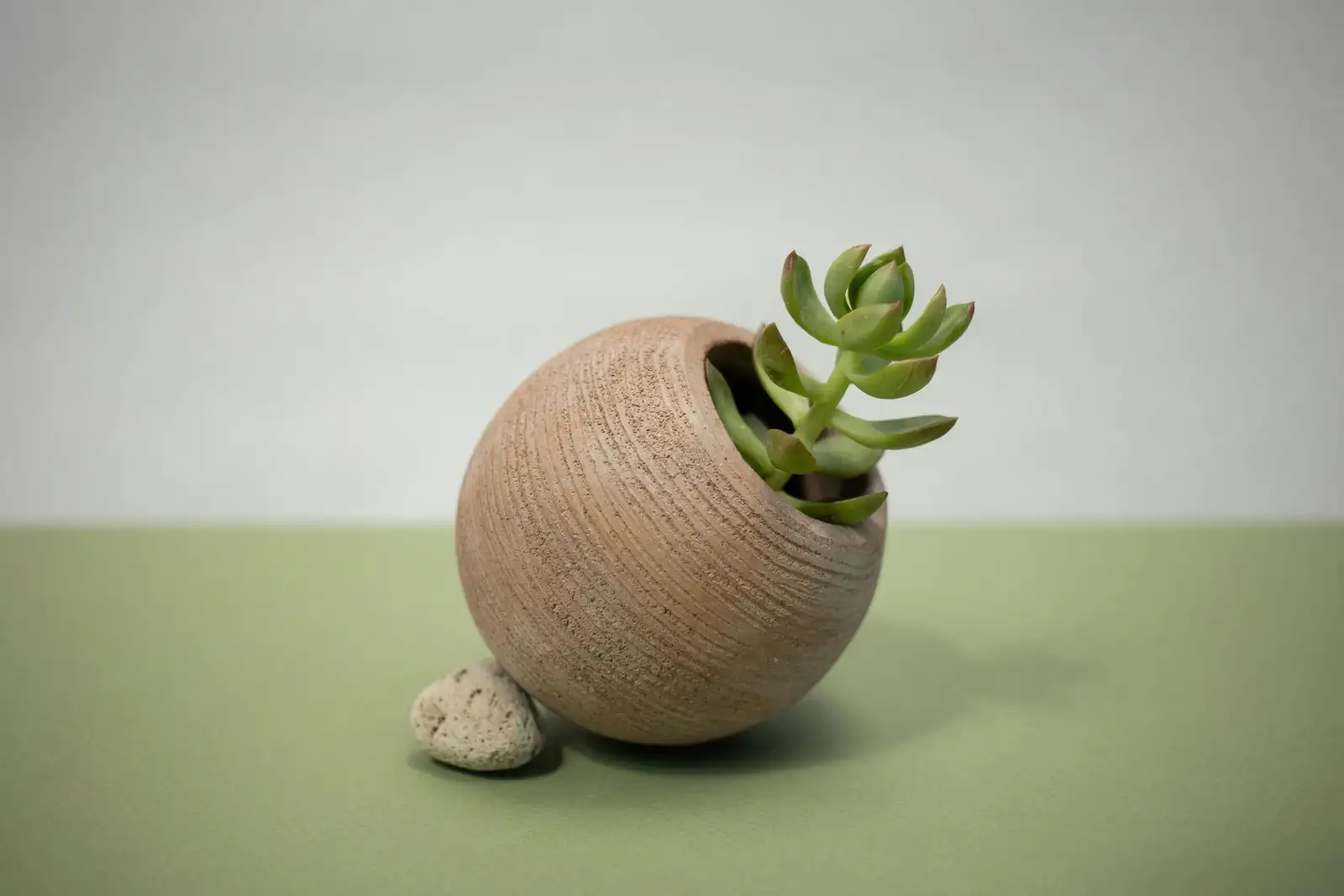
- Must have a drainage hole—nonnegotiable.
- Unglazed terracotta helps wick moisture away; it’s a great choice for beginners.
- Size smart: Avoid oversized pots. For small to medium plants, about 15–20 cm (6–8 in) wide is comfortable.
- Stability matters: Jades get top-heavy. A broad, heavier pot reduces tipping.
Repotting
- Every 2–3 years or when rootbound, preferably in spring. Step up just one size.
- Refresh the top layer of mix annually if you’re holding the same pot.
- Wear gloves if you’re sensitive—the sap can irritate skin.
Temperature, humidity, and placement
- Temperature: Ideal is 15–25°C (59–77°F). Protect from frost; keep above 5°C (41°F). A brighter, cooler winter (around 10–15°C/50–59°F) can help promote blooms on mature plants.
- Humidity: Low to average indoor humidity suits it fine.
- Airflow: Bright, airy spots prevent lingering moisture and mildew.
Feeding for steady, sturdy growth
- In active growth (spring to autumn): Feed 2–3 times with a balanced liquid fertilizer at half strength.
- Skip feeding in winter.
Pruning for shape (and that bonsai vibe)
- Best in spring or summer. Snip just above a node to encourage branching and a fuller canopy.
- Remove weak, crossing, or damaged growth.
- Let cut surfaces dry and callus before you resume normal watering.
Propagation made easy
- Stem cuttings: Take a healthy tip, let it dry and callus for several days, then place in a dry, gritty mix. Water lightly only after roots begin to form.
- Single leaves: Detach, allow to callus, then set on the surface of a dry mix. Mist sparingly until roots and tiny rosettes appear.
Troubleshooting: read the leaves and stems
- Overwatering/rot: Mushy or translucent leaves, blackened or soft stems, sour-smelling mix. Action: Unpot, trim mushy roots, allow to dry, repot into dry, gritty mix, and water sparingly as it recovers. Improve light and airflow.
- Underwatering: Limp, wrinkled leaves and slowed growth. Action: Give a thorough soak, then return to the three-signal rhythm.
- Light stress: Red-edged leaves are often a happy sign of bright light. Brown, crisp patches mean sun scorch—ease back from harsh midday rays and acclimate more slowly.
- Pests: Watch for mealybugs, scale, and spider mites. Isolate, improve airflow and light, and treat with insecticidal soap or horticultural oil as needed.
Safety note
- The sap can be irritating and ingestion may cause gastrointestinal upset. Wear gloves if you’re sensitive, and keep out of reach of pets and children.
A simple seasonal calendar
- Spring–summer: Maximum light; use the three signals to water when dry; optional shaping prune; light feedings.
- Autumn: Reduce watering as growth slows; keep bright.
- Winter: Keep cool and bright; water sparingly to prevent rot; skip feeding. A slightly drier rest may encourage flowering on mature plants.
Symbolism and “flower language”
Jade plants are widely gifted as symbols of wealth, prosperity, and good luck—especially in parts of Asia—thanks to their coin-like leaves and long life. While not rooted in a formal Victorian “flower language,” this modern symbolism has stuck because it fits the plant’s character: resilient, enduring, and generously branching over time. If your jade blooms, consider it a bonus—a quiet nod to patience and well-timed restraint.
Quick FAQ
- Why are my jade’s leaf edges turning red?
- Bright light (and sometimes cooler nights) intensifies that red blush. If leaves also show brown scorch, back off from harsh midday sun and acclimate more gradually.
- What’s the fastest way to kill a jade?
- Overwatering. Use a gritty, fast-draining mix, a pot with a drainage hole, and the three-signal method. Never let it sit in water.
- How can I encourage blooms indoors?
- Give a mature plant very bright light and a cooler, drier winter rest. Even then, indoor flowering can be unpredictable.
One-minute care recap
- Light: Sunniest window; bright light keeps it compact and colorful.
- Water: Wait for three green lights—dry mix, light pot, slight leaf give—then soak thoroughly and drain.
- Soil and pot: Gritty succulent mix in a pot with a drainage hole (terracotta preferred); avoid oversizing.
- Seasons: Feed lightly spring–autumn; go bright, cool, and dry-ish in winter; never let it sit in water.
Do this, and your jade will repay you with decades of glossy leaves, steady growth, and that charming, miniature tree presence that makes it a true heirloom houseplant.