

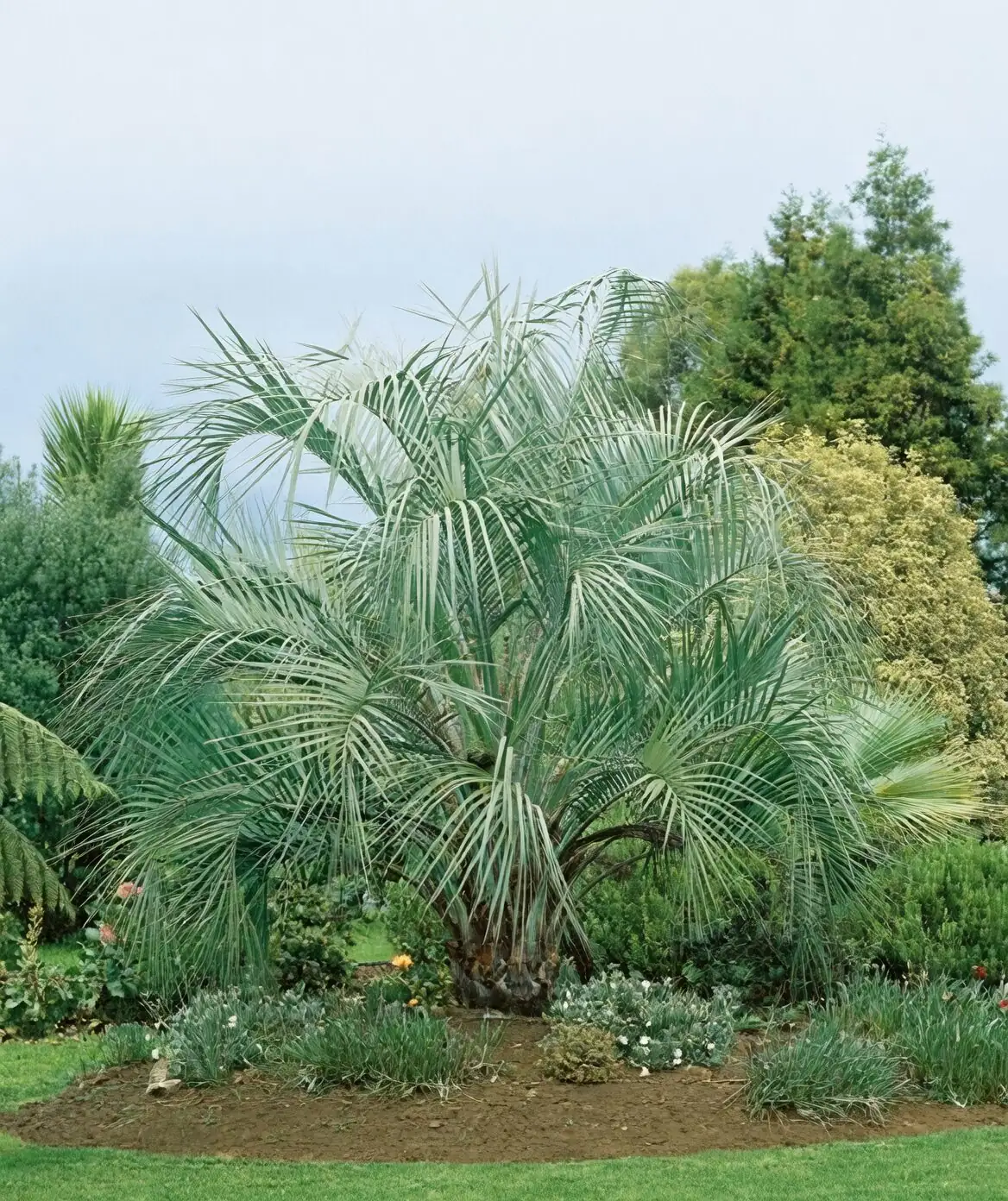
Imagine a blue‑green fountain of feathers in the breeze—your Butia odorata (Pindo Palm, a.k.a. Jelly Palm or Wine Palm) basking in part sun, throwing coastal-cool vibes, and one day perfuming the garden with edible, jelly‑worthy fruits. Now imagine sticky leaves, webbing, or crispy tips stealing that shine. This is your quick, confident, symptom‑to‑solution guide to catching problems early and fixing them safely, indoors or out.
Before you begin: slip on gloves—palm leaf edges can be sharp.
First, set your palm up for success
A healthy Pindo shrugs off most trouble. Give it:
- Light: bright filtered light or part sun outdoors; indoors, the brightest spot you have near a sunny window. In very hot climates, protect from harsh midday sun to prevent leaf scorch.
- Temperature: 50–75°F (10–24°C) in active growth; if overwintering in a container, keep it bright and cooler if possible at 41–54°F (5–12°C).
- Humidity: moderate. In dry indoor air, occasional misting in warm weather and a pebble tray help reduce brown tips and discourage spider mites.
- Soil and pot: free‑draining, loam‑based palm or palm/cactus blend. Choose a pot just big enough for the root ball to avoid waterlogging.
- Water: spring–autumn, keep the mix evenly moist but never soggy; winter, water sparingly—only after the surface dries.
- Feeding: monthly, spring–autumn, with a balanced liquid fertilizer (palm blends with micronutrients are great). Ease off in winter.
- Pruning: remove only fully brown, dead fronds. Avoid cutting green fronds—they feed the plant.
Now, let’s troubleshoot the five usual suspects.
—
Scale insects
Little, domed “barnacles” stuck to fronds and stalks
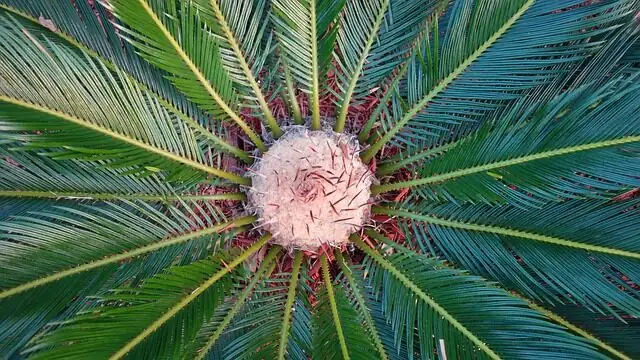
Early signs
- Sticky leaves or surfaces below the plant (honeydew), sometimes followed by black sooty mold
- Small dome‑shaped bumps that don’t move when you touch them
- Ants patrolling the plant outdoors (attracted to honeydew)
Double‑check
- Gently try to pry one off with a fingernail; it will pop off like a scab. That’s scale.
What to do now
- Indoors
- Isolate the plant.
- Dab visible scale with 70% isopropyl alcohol on cotton swabs to melt the waxy coat.
- Thoroughly spray fronds (top and underside) and stalks with insecticidal soap or a light horticultural oil; repeat every 7–10 days for 3–4 rounds to catch hatchlings.
- After pests are under control, wipe off sooty mold with a mild, soapy cloth.
- Outdoors
- Blast leaf bases and frond undersides with a firm water spray.
- Apply a horticultural oil when temperatures are mild (avoid hot midday sun); coat all surfaces—oils work by smothering.
- Encourage beneficials by controlling ants (use ant baits away from the palm).
Safety note for fruit: If you plan to eat the fruit, avoid systemic insecticides. Soaps and oils are the go‑to, and always follow label directions for ornamental palms and edible plants.
Prevent it next time
- Quarantine new plants for 2–3 weeks.
- Wipe leaf bases during routine watering checks.
- Keep light bright and avoid overfertilizing—lush, shaded growth invites sap‑suckers.
—
Mealybugs (including root mealybugs)
White, cottony clusters where fronds meet the stalk—or hidden on roots

Early signs
- Tufts of white “cotton” in frond bases and leaf axils
- Sticky honeydew and possible sooty mold
- Stalled new growth; outdoors, ants farming the mealybugs
- For root mealybugs: plant declines despite watering; white fluff on roots; pot smells sour or stays heavy‑wet
Double‑check
- Lift the crown leaves gently and inspect the tight leaf bases and around the trunk; for containers, slide the plant from the pot to inspect roots.
What to do now
- Foliar mealybugs (indoor or outdoor)
- Swab clusters with 70% isopropyl alcohol.
- Follow with an insecticidal soap or horticultural oil spray, working into leaf bases and along the trunk; repeat every 7–10 days for 3–4 rounds.
- Root mealybugs (containers)
- Unpot the palm; gently wash all soil from roots.
- Trim only mushy, blackened roots; keep healthy, firm roots.
- Repot into fresh, free‑draining palm/cactus mix in a pot that just fits the root ball.
- Water once to settle, then let the top layer dry before watering again.
- Discard old soil; clean the pot and tools.
- Outdoor boosters
- Hose fronds regularly to disrupt pests.
- Manage ants to help natural predators do their job.
Prevent it next time
- Inspect leaf bases and the crown whenever you water.
- Don’t oversize the pot; roomy, wet soil invites root pests and rot.
- Keep winter watering light.
—
Spider mites
Dust‑sized sap‑suckers that love dry indoor air
Early signs
- Fine, tan stippling or a dull, dusty look on fronds
- Gossamer webbing in protected spots (leaf undersides, near the crown)
- Tap test: tap a suspect frond over white paper—moving specks = mites
What to do now
- Indoors
- Shower the palm: rinse both sides of fronds, especially undersides.
- Raise humidity (pebble tray, occasional misting) and keep the plant away from heat vents.
- Spray with insecticidal soap or a light horticultural oil; repeat weekly 2–3 times. Test any spray on a small area first and treat in the evening to avoid leaf burn.
- Outdoors
- Strong hose rinses on hot, dry weeks.
- In persistent cases, release predatory mites or use a light horticultural oil in mild conditions.
Prevent it next time
- Maintain moderate humidity indoors and steady, bright light.
- Regularly rinse fronds during dusty seasons.
—
Root rot
The most preventable problem—too much water, too little drainage
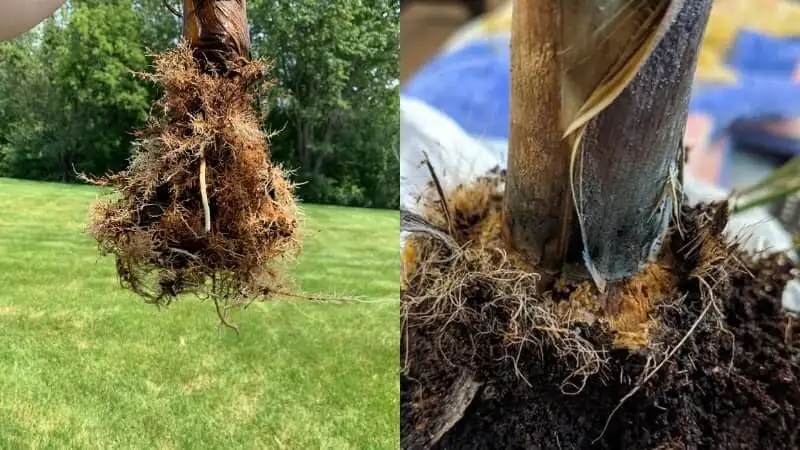
Early signs
- New growth stalls; lower fronds yellow then brown
- Pot feels heavy for days after watering; sour smell
- In severe cases, a loose or wobbly crown, and roots that are brown/black and mushy
What to do now
- Containers
- Stop watering; ensure the pot drains freely (no saucer filled with water).
- Unpot to inspect. Trim only mushy roots; keep firm, white/tan roots.
- Repot into fresh, free‑draining palm/cactus mix in a pot that just fits the root system.
- Water once to settle, then allow the surface to dry before watering again; hold fertilizer for 4–6 weeks.
- Move to bright light but out of harsh midday sun while recovering.
- In‑ground plants
- Improve drainage: create a slight mound, pull mulch back from the trunk, and reduce irrigation frequency.
- If crown/bud rot is suspected (spear leaf fails or pulls), consult a local extension or palm specialist for region‑appropriate fungicide guidance.
Prevent it next time
- In winter, water sparingly—wait for the surface to dry.
- Use fast drainage and avoid oversized pots.
- Keep the plant bright; light drives healthy water use.
—
Leaf scorch
Too much harsh sun or heat, not enough acclimation or moisture balance
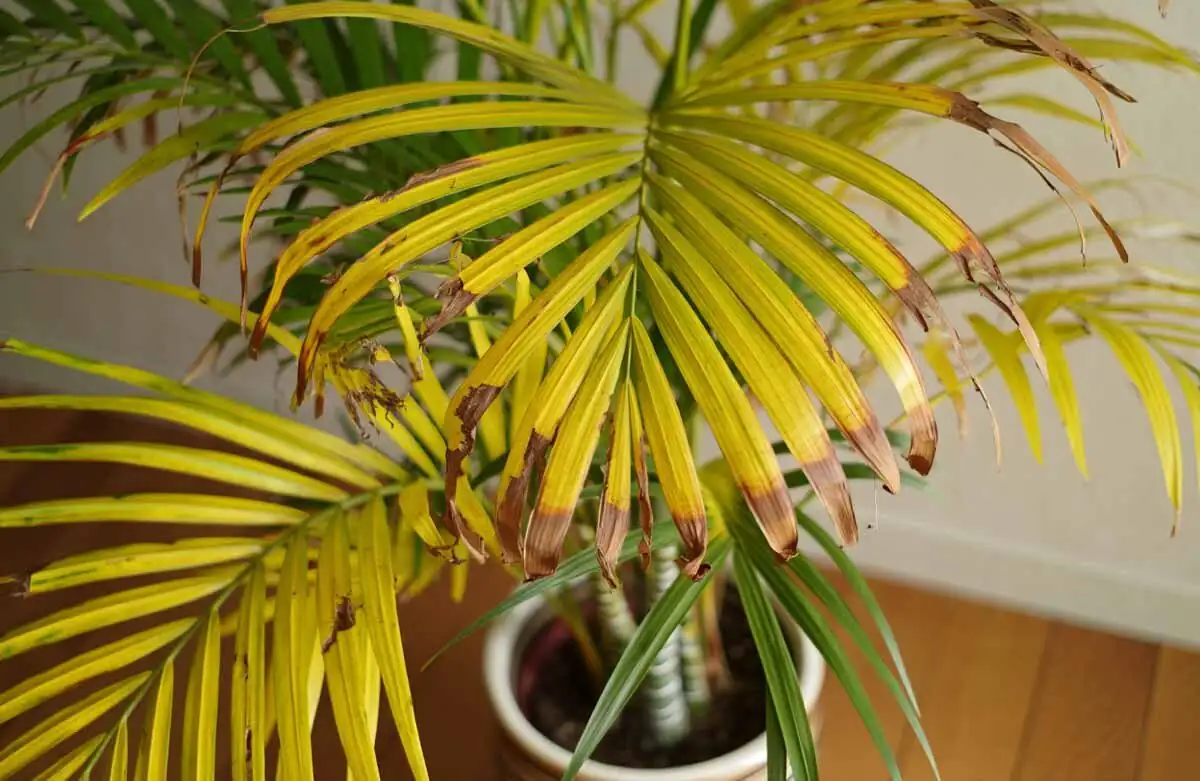
Early signs
- Crispy brown tips or margins, especially on the sunniest side
- Bleached, papery patches; fronds otherwise firm (not mushy)
- Follows heatwaves, sudden moves into full sun, or hot, dry winds
What to do now
- Indoors
- Give the brightest light you have, but filter harsh midday rays with sheer curtains.
- Raise humidity moderately; do not “overwater to fix crisping” if the soil is already moist.
- Outdoors
- Add temporary dappled shade at midday (30–40% shade cloth) in very hot spells.
- Water deeply, then allow the top layer to dry; keep mulch a few inches off the trunk to avoid rot.
Note: Only remove fronds once they’re fully brown. Green fronds, even if blemished, are still photosynthesizing and helping recovery.
—
A simple 3‑week IPM plan (safe indoors or out)
- Week 0 (today)
- Identify the culprit above.
- Rinse or wipe pests off; treat with insecticidal soap or light horticultural oil (evening application). Swab mealybugs/scale with alcohol first.
- Improve airflow and light; adjust watering to the plant’s season.
- Week 1
- Repeat treatment; re‑inspect hidden spots (leaf bases, crown).
- For containers with root issues or root mealybugs: repot into fresh, free‑draining mix.
- Week 2–3
- Repeat treatment again if any pests remain.
- Clean honeydew/sooty mold after pests are suppressed.
- Resume normal feeding only once vigorous growth returns.
If you plan to harvest fruit, stick to soaps and oils and heed pre‑harvest intervals on any product label.
—
Indoor vs. outdoor quick tips
- Indoors
- Brightest possible light, moderate humidity, and a pebble tray reduce mites and brown tips.
- Quarantine new plants; dust and rinse fronds regularly.
- Outdoors
- Part sun with protection from harsh midday glare in very hot climates prevents scorch stress.
- Rain and predators help you—support them by controlling ants and using gentle products.
—
When it’s not a crisis
- Old fronds naturally yellow and brown from the bottom up—wait until they’re fully brown before trimming.
- A few brown tips after a dry, hot spell are common; dial in humidity and watering rhythm rather than cutting green tissue.
—
Why this palm is worth the care
Pindo Palm’s strong, sculptural trunk and broad crown of blue‑green, feathered fronds bring relaxed coastal elegance to patios, conservatories, and warm gardens. It’s easy‑care when you combine bright light with excellent drainage—and its creamy summer flowers often lead to fragrant, edible fruits used for jellies and even fermented drinks. Handle with care (those leaf edges), enjoy the view, and with this troubleshooting playbook, keep it healthy for the long, sunny haul.