

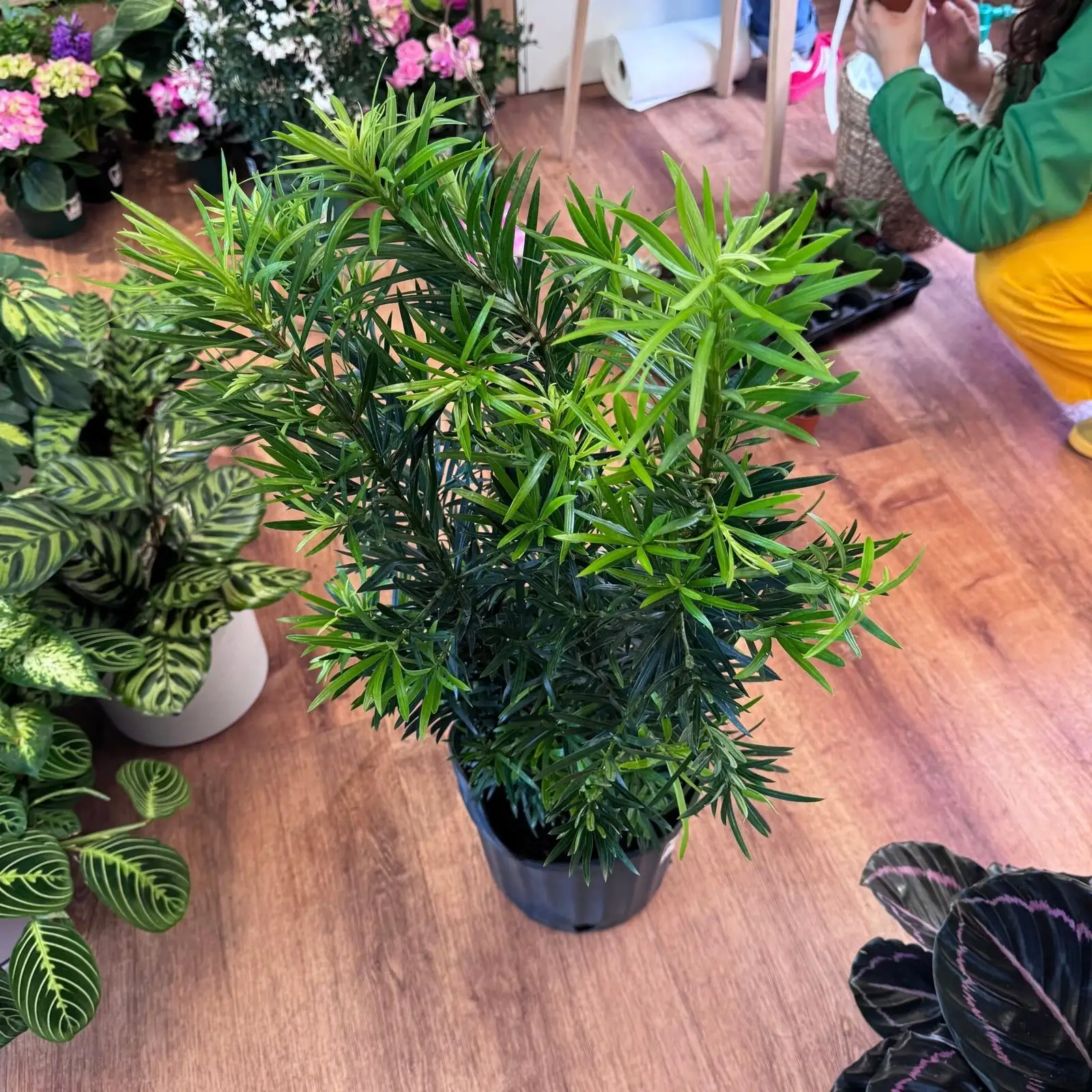
Quiet, sculpted, evergreen—and then one day you notice speckles on leaves, sticky drips, or a fine web glinting in the light. Buddhist pine (Podocarpus macrophyllus)—also called Japanese yew or yew plum pine—rewards good habits, and it tells you early when something’s off. Here’s a visual-first, action-ready guide to catching problems early, boosting airflow, and using simple soaps, oils, and cultural tweaks to stop pests and leaf-spot diseases in their tracks.
10‑second visual checks: early signs to catch now
Stand back, then move in close. These fast cues will save you weeks of damage.
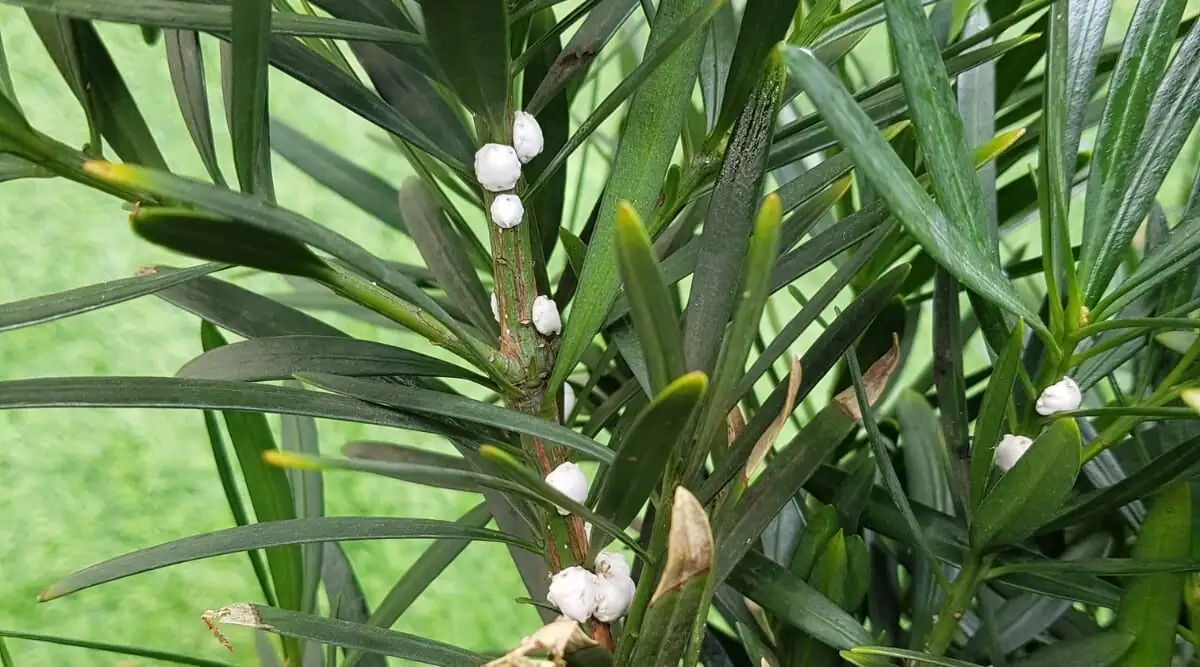
- Scale insects
- Look for tan to brown “barnacles” stuck along stems and leaf midribs.
- Leaves may feel tacky from honeydew; black sooty mold can follow.
- Spider mites
- Fine stippling (tiny pale dots) on deep green leaves; patches look dusty.
- Delicate webbing at shoot tips in dry, warm spells.
- Thrips
- Silvery, scraped-looking streaks with tiny black specks (frass).
- New growth looks distorted or unevenly colored.
- Leaf spot/anthracnose
- Irregular tan to brown lesions that may start as translucent specks.
- Spots can merge; in humid, stagnant air you may see tip dieback on tender growth.
Tip: Check the undersides of leaves, interior pads, and where foliage is densest. That’s where trouble hides first.
Airflow hacks that make Podocarpus tough
Buddhist pine thrives on calm light and quiet breezes. You can dial both in with simple moves.
Indoors (bright window growing)
- Elevate and space: Lift pots on stands or feet; keep 10–20 cm of air gap from walls and other plants.
- Gentle fan, low and slow: A small oscillating fan on the lowest setting for 2–4 hours/day prevents stagnant pockets without desiccating foliage.
- Rotate weekly: Quarter-turn the pot to even out growth and discourage pests that colonize shaded interiors.
- Clean leaves: Wipe dust from leaves every few weeks—mites love dusty, still foliage.

Outdoors (balcony, patio, or bonsai bench)
- Choose the right exposure: Bright light to partial shade is ideal. Shield from scorching midday summer sun—an east-facing balcony is perfect.
- Break up wind tunnels: Strong, hot wind stresses foliage, but still corners breed disease. Aim for a sheltered, lightly breezy nook.
- Thin the “cloud pads”: Lightly thin the undersides of dense pads to let light and air filter through, especially after spring flush.
Watering and hygiene that block disease
Leaf spot and anthracnose need moisture and still air to get going. Deny them both.
- Water by feel, not calendar: Water thoroughly, then wait until the top of the mix is nearly dry. Avoid constantly wet soil.
- Morning moisture only: If you rinse foliage, do it early so leaves dry quickly. Avoid wet leaves overnight.
- Drainage above all:
- Use a free-draining, airy mix for containers/bonsai: leaf mold/compost + fertile loam + coarse sand/grit.
- Never leave roots in soggy trays. Podocarpus strongly resents waterlogging.
- Prune clean: Sterilize tools. Remove and discard spotted leaves—don’t compost if disease is active.
- Summer boost, not soak: In hot spells, occasional misting can keep foliage fresh and richly green—but keep air moving and avoid heavy, lingering wetness.
Step‑by‑step controls: soap, oils, and cultural tweaks
Start gentle. Repeat consistently. Most outbreaks collapse with 2–4 weeks of steady care.
Universal first steps
- Quarantine: Move the plant a few feet from others to limit spread.
- Rinse: Take it to the sink or use a hose with a soft spray. Rinse leaf undersides and stems to dislodge pests and dust.
- Inspect and prune: Clip out the worst-hit shoots and any heavily spotted leaves.
How to use horticultural soap
- Mix per label (commonly about 2%: 20 mL soap per 1 L water).
- Spray to complete coverage, especially leaf undersides and stems.
- Repeat every 4–7 days for 3 cycles, then reassess.
How to use horticultural oil (including lightweight “summer” oils or neem oil)
- Mix per label (often 0.5–1%: 5–10 mL oil per 1 L water).
- Spray in the cool of morning with good airflow; avoid intense midday sun on wet leaves.
- Repeat every 7–10 days for 2–3 cycles. Oils smother scale and mites exceptionally well.
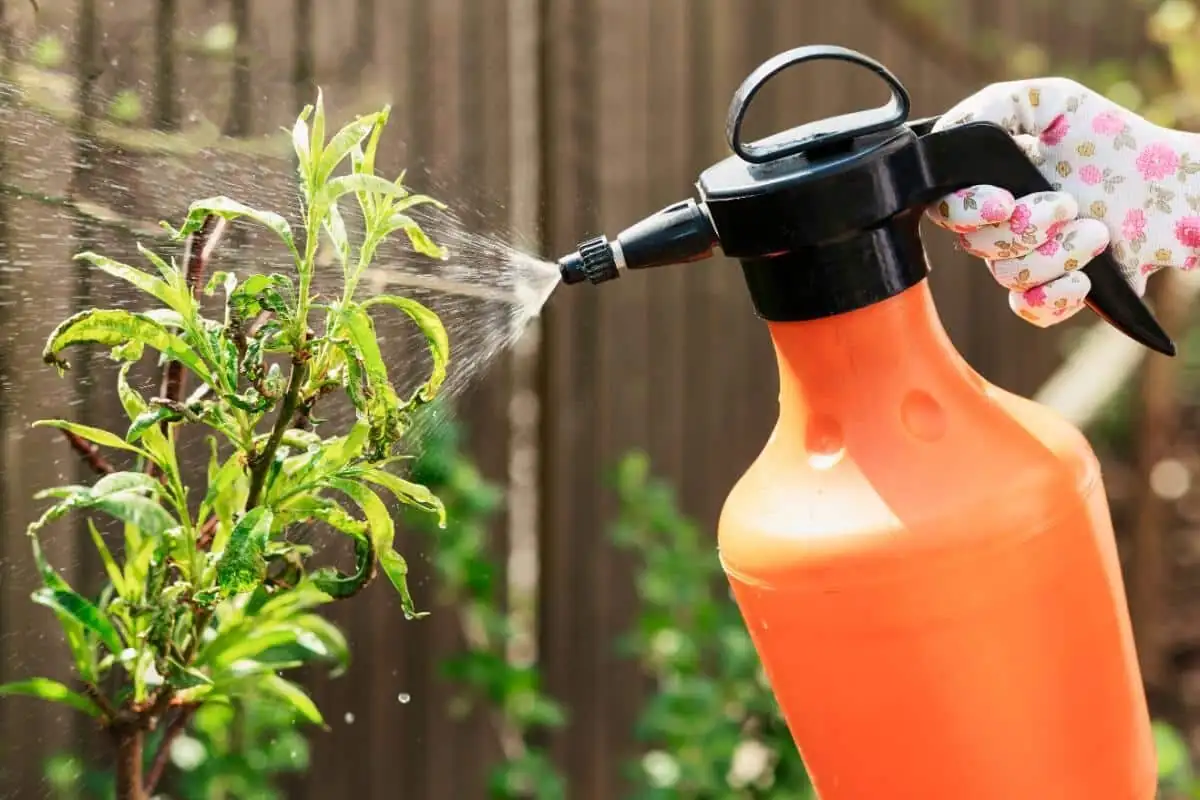
Note: Soap and oil can be alternated on different weeks; avoid mixing them in the same spray unless the label explicitly allows.
—
Pest-by-pest playbook
Scale insects
- Signs: Bumps on stems/leaf midribs; sticky honeydew; sooty mold.
- Tactics:
- Wipe stems with a cotton pad dipped in mild soapy water to dislodge soft scales.
- Spray oil thoroughly, targeting stems where scale anchor. Repeat 2–3 times.
- Improve airflow in dense pads; scale thrive in still, shaded interiors.
- Follow-up: Inspect weekly for crawlers (tiny mobile juveniles); a soap spray catches these before they settle.
Spider mites
- Signs: Fine stippling, dull leaves, silk threads in dry heat.
- Tactics:
- Rinse undersides weekly; then apply insecticidal soap. Repeat 3–4 times.
- Slightly raise humidity and add gentle airflow; mites hate movement and moisture pulses.
- Avoid chronic dryness at the root zone; keep watering “thorough, then nearly dry,” not parched.
- Follow-up: A single oil spray after soap cycles helps catch surviving eggs.
Thrips
- Signs: Silvery streaks on leaves, black specks, distorted new growth.
- Tactics:
- Prune worst-affected tips; bag and discard.
- Use blue or yellow sticky cards nearby to monitor adults.
- Soap sprays on tender new growth every 4–7 days for 3 cycles.
- Keep foliage pads thin enough for light to reach interior growth; thrips favor shaded creases.
- Follow-up: Recheck during the next flush of new leaves; repeat a single soap spray if fresh streaks reappear.
—
Leaf spot and anthracnose
- Signs: Translucent flecks that turn tan/brown, merging into irregular blotches; in humid, still conditions, tips of soft shoots can die back.
- Cultural cure (often sufficient):
- Remove spotted leaves and any dead shoot tips.
- Increase space/airflow; use a small fan indoors, thin pads outdoors.
- Switch to soil-level watering; keep leaves dry overnight.
- Refresh surface mulch or top a bonsai pot with fresh, clean grit to discourage splash‑back.
- If pressure remains high: Continue sanitation and airflow improvements. Where locally appropriate and labeled, consult your extension service or a licensed pro for fungicide options suitable for Podocarpus. Always prioritize cultural fixes first.
Bonsai-specific tweaks that prevent trouble
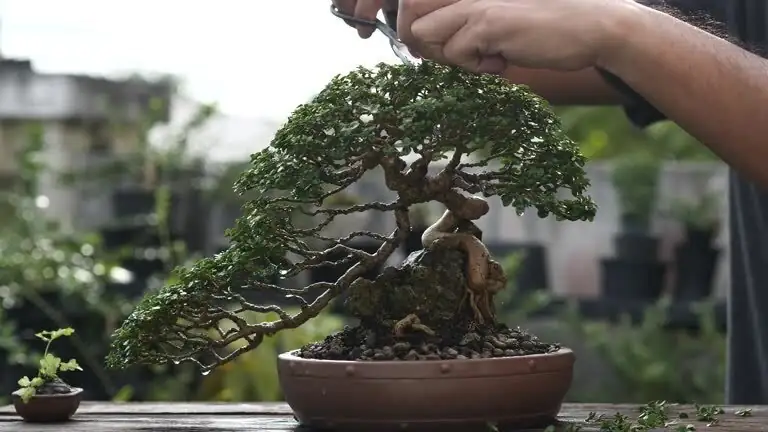
- Shorter leaves, tighter pads: During the spring growth flush, slightly reduce water to encourage shorter leaves—but never to wilting.
- Pinch and thin: In spring, pinch extension tips and lightly thin the undersides of pads to let air and light move through the canopy.
- Pot depth and stability: Bonsai are often kept in deeper containers (about 20–40 cm) for root health and stability—healthy roots mean stronger natural resistance.
- Summer sheen: An occasional morning mist in hot weather keeps the foliage vivid; pair with gentle airflow so moisture doesn’t linger.
The sweet spot: environment at a glance
- Light: Bright light to partial shade. Shield from harsh midday summer sun.
- Temperature: Best at 15–25°C (59–77°F). Brief tolerance to about -5°C (23°F); protect from hard freezes.
- Humidity: Moderate to high preferred. Boost lightly in hot weather with airflow.
- Soil: Free-draining, airy mix (leaf mold/compost + fertile loam + coarse sand/grit). Never waterlogged.
- Watering rhythm: Thorough water, then wait until the top of the mix is nearly dry. Adjust with heat, pot size, and soil. Avoid a rigid schedule.
- Feeding: Containers/bonsai—monthly during the growing season, stop in winter. In-ground—feed in spring and autumn.
Buying and first-week setup
- Choose: Deep green leaves, no yellowing, dieback, or pest scars. For bonsai, look for balanced branching and short, dense pads.
- Place: Bright, well-ventilated spot indoors or a sheltered east-facing outdoor site. Mist occasionally in hot spells; start your inspection routine right away.
Troubleshooting quick flow
- Sticky leaves or black sooty film → Check for scale on stems → Oil spray series + wipe stems.
- Fine stippling and webbing, especially in heat → Spider mites → Rinse + soap cycles; raise humidity gently; one follow-up oil spray.
- Silvery streaks/black dots on new leaves → Thrips → Prune worst tips; soap cycles; monitor with sticky cards.
- Brown leaf spots merging after rainy or still spells → Leaf spot/anthracnose → Sanitize leaves, stop overhead watering, thin pads, increase airflow.
Safety note
Toxicity is not specified. As a precaution, prevent pets and children from chewing any plant parts, and consult local poison control or a veterinarian if ingestion is suspected.
Why this plant forgives—and how you can help it shine
Native to China and Japan, Buddhist pine is an evergreen that takes pruning and wiring beautifully, creating those serene, layered “cloud-pad” silhouettes. It’s fairly forgiving once established, but it has two hard lines: it dislikes waterlogged soil and it bristles at stagnant, humid air. Keep the roots airy, the foliage breathing, and your inspection routine steady. With those habits—and a simple kit of soap, oil, and clean pruners—you’ll turn early blips into non-events and keep your Podocarpus deep green, dignified, and drama-free.