
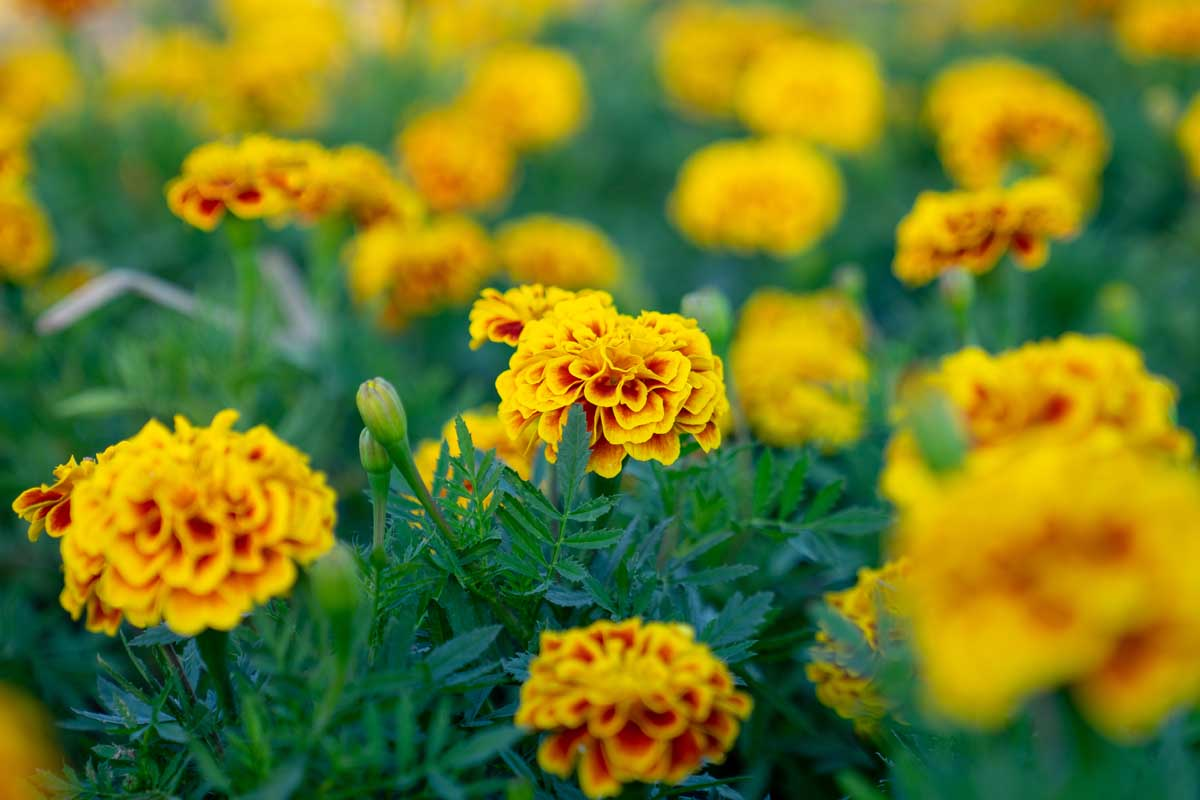
If your French Marigolds (Tagetes patula) suddenly show speckles, fuzz, or misshapen blooms, don’t wait—this is a “same-day” situation. The good news: most problems on these compact, spicy-scented beauties are easy to stop if you act fast with smart cultural tweaks and a couple of targeted treatments.
Below is an action-first troubleshooting guide to diagnose the usual suspects at a glance, then shut them down with integrated pest management (IPM): better airflow, base watering, correct spacing, and, when needed, a strong water spray plus neem or horticultural oil.
Meet Tagetes patula, fast
- Habit and size: compact, bushy annual, 15–30 cm tall and 15–20 cm wide (6–12 in × 6–8 in).
- Sun: full sun for best bloom; light afternoon shade only in very hot climates.
- Bloom season: early summer to frost; may slow in extreme midsummer heat, then rebound as it cools.
- Soil and water: well-drained soil; water at the base and let the top of the soil dry slightly between waterings.
- Spacing: 25–30 cm (10–12 in) apart; avoid overcrowding to reduce fungal issues.
The 10‑second health check
- Healthy look: bright green, finely divided leaves; clean petals; no stippling, webbing, or fuzzy growth.
- Early red flags:
- Fine stippling or bronzing on leaves
- Tiny webs between leaves and stems
- Silvery streaks on petals or leaf blades
- Round brown/black spots on leaves
- Sudden wilt or a sour smell from the soil
Jump to the matching problem below and take the first action today.
Troubleshooting and fast fixes
Tiny webs + dusty, speckled leaves = Spider mites
- What you’ll see
- Fine webbing on leaf undersides and between stems
- Pale speckling that turns bronze; leaves may crisp in hot, dry spells
- “Tap test”: tap a stem over white paper—pepper-like specks start to crawl
- First actions (today)
- Blast leaf undersides with a strong water spray (sink sprayer or hose with nozzle). Repeat every 2–3 days for a week.
- Prune and bin the worst-hit leaves; do not compost.
- Improve airflow: thin crowded growth lightly, and ensure plants aren’t jammed together.
- Follow-up (this week)
- Spray neem oil or a light horticultural oil, coating leaf undersides. Apply in early morning or evening; never in midday heat. Repeat in 7 days if needed.
- Prevention
- Keep plants spaced 25–30 cm apart; water at the base to avoid creating a damp canopy.
- Monitor weekly with the tap test, especially in hot, dry weather.
Silvery streaks, deformed buds, black specks = Thrips

- What you’ll see
- Silvery/bleached streaks and flecks on leaves and petals
- Buds or blooms look twisted or fail to open properly
- Black varnish-like dots (frass) on petals or leaves
- First actions (today)
- Strong water spray to dislodge adults and nymphs; repeat in 2–3 days.
- Deadhead and bag infested blooms; don’t compost infected petals.
- Space plants to open the canopy and reduce hiding spots.
- Follow-up (this week)
- Neem or horticultural oil directed into buds and leaf undersides; repeat in 7 days if needed.
- Use blue or yellow sticky cards nearby to monitor (helps you time follow-ups).
White, talc-like coating on leaves = Powdery mildew
- What you’ll see
- White powder on upper leaf surfaces; may spread to stems
- Worse in crowded, shaded, or still-air spots
- First actions (today)
- Snip off the most affected leaves; bag and bin.
- Create space: thin interior shoots lightly to improve airflow (avoid removing more than one-third of the plant).
- Water only at the base; keep foliage dry.
- Follow-up (this week)
- Apply neem or horticultural oil as a protective film on both leaf surfaces; repeat per label at 7–10 day intervals until new growth is clean.
Soft brown patches + gray fuzz on petals/leaves = Botrytis (gray mold)
- What you’ll see
- Mushy, tan-to-brown spots that quickly develop fuzzy gray spores
- Often starts on spent flowers or petals stuck to foliage after rain
- First actions (today)
- Deadhead all spent blooms and remove any stuck petals or slimy leaves; bag and bin.
- Increase airflow immediately; avoid overhead watering.
- Follow-up (this week)
- Continue strict sanitation and base watering. Oils can suppress spore spread, but dryness + airflow are the real cures.
Round brown/black spots, sometimes with yellow halos = Leaf spots (fungal or bacterial)
- What you’ll see
- Discrete, round spots on leaves; fungal spots turn tan/brown with defined edges
- Bacterial spots can look water-soaked or greasy at the start; may develop yellow halos
- First actions (today)
- Remove and discard affected leaves; disinfect shears between cuts (70% alcohol).
- Water at soil level only; avoid splashing. Thin plants for airflow.
- Follow-up (this week)
- Keep debris off the soil surface; consider a light, clean mulch to reduce splash.
- If spotting advances rapidly across several plants despite changes, cull the worst to protect the rest.
Wilting, sour smell, brown mushy roots = Root rot
- What you’ll see
- Persistent wilt even though soil is wet
- Pots feel heavy; roots are brown and soft with a sour odor
- First actions (today)
- Stop watering. Improve drainage immediately (raise containers on feet; check for clogged holes).
- If mild: let soil dry to the touch before watering again; remove mulch from the crown.
- If severe: repot into fresh, well-drained mix or replace the plant and fix drainage in that spot.
- Prevention
- Use well-drained soil, water deeply but infrequently, and never leave pots standing in saucers of water.
Sudden collapse with adequate moisture, often one-sided = Fusarium or Verticillium wilt
- What you’ll see
- Whole plant or one side wilts abruptly; cutting the stem may show brown streaks in vascular tissue
- No quick cure
- First actions (today)
- Pull and bin the plant; do not compost.
- Avoid replanting marigolds in the exact spot right away; refresh soil and ensure drainage.
- Prevention
- Start with healthy plants or clean seed; keep soil well-drained and tools clean.
Your prevention playbook (IPM that actually works)
- Sun is medicine: give at least 6 hours of direct light to power blooms and dry leaf surfaces.
- Space to breathe: plant 25–30 cm (10–12 in) apart; in containers, avoid cramming. Dwarf types do well in 15 cm (6 in) pots (often 2–3 per pot); standard types are happier solo in ~30 cm (12 in) pots.
- Water at the base: morning is best; keep foliage dry to slash fungal/bacterial risk.
- Keep it moving: ensure gentle airflow around plants—elevate pots, don’t crowd beds.
- Clean as you go: deadhead regularly; remove fallen petals/leaves. Disinfect shears with alcohol between plants.
- Monitor weekly:
- Tap test for mites/thrips onto white paper
- Scan leaf undersides and buds (thrips love to hide there)
- Quarantine newcomers: keep fresh purchases slightly apart for 1–2 weeks and inspect before integrating.
- Soil sense: well-drained soil with pH ~6–7; avoid waterlogging to prevent root rot.
Quick how‑tos for targeted remedies
Strong water spray (first line for mites and thrips)
- Use a sink sprayer or hose with a “jet/shower” setting.
- Aim at leaf undersides and into flower buds.
- Repeat every 2–3 days for 1 week, then weekly checks.
Neem or horticultural oil (follow-up knockdown)
- Mix and apply strictly per label.
- Spray in early morning or evening; coat both leaf surfaces and into buds.
- Avoid application during heat spikes; oils + high heat can scorch leaves.
- Repeat in 7–10 days if pests persist. Test on a small area first.
Base watering, the right way
- Use a watering wand or spout to soak soil evenly until water drains from the pot bottom.
- Let the top of the soil dry to the touch before the next watering.
- In hot spells, containers may need water more often (sometimes twice weekly).
Seasonal game plan
Spring
- Plant after frost in well-drained soil or quality potting mix.
- Pinch early tips to encourage branching; start with adequate spacing.
- Water in well, then switch to base watering only.
Summer
- Peak bloom. Deadhead to keep flowers coming.
- Watch for spider mites and thrips in hot, dry weather; use the tap test weekly.
- In extreme heat, offer light afternoon shade and keep moisture consistent (not soggy).
Autumn
- Blooms continue to frost. Keep deadheading and maintain airflow.
- After frost kills plants, you can chop and work healthy marigold debris into veggie beds as part of a nematode-suppressing practice.
- If you like self-seeding surprises, let a few blooms set seed before cleanup.
Winter
- Not frost-hardy; plants die back. Clear diseased material from beds and store containers dry and clean for spring.
Why fight for French Marigolds?
They’re easy, forgiving, and bloom for months in glowing yellows, oranges, reds, and bicolors. The spicy foliage scent and tidy habit make them perfect along paths, in pots, and around veggies—where they support beneficial insects and tend to discourage deer and rabbits from browsing.
A note on symbolism (花语)
Marigolds often symbolize warmth, passionate affection, and steadfast love—fitting for a plant that shines all season. In some traditions, they also carry a bittersweet note of grief or remembrance. That contrast likely springs from cultural history more than botany: in Mexico and Central America, marigolds are famously woven into Day of the Dead observances, where their vivid color and scent are said to help guide loved ones’ spirits. So the “flower language” here reflects human stories—joy and devotion, but also remembrance—carried by a plant that refuses to stop blooming until frost.
With quick diagnosis, base watering, plenty of space and airflow, and fast follow-ups using a strong water spray plus neem or horticultural oil, Tagetes patula will shrug off most pests and spots long before they think about spreading.