

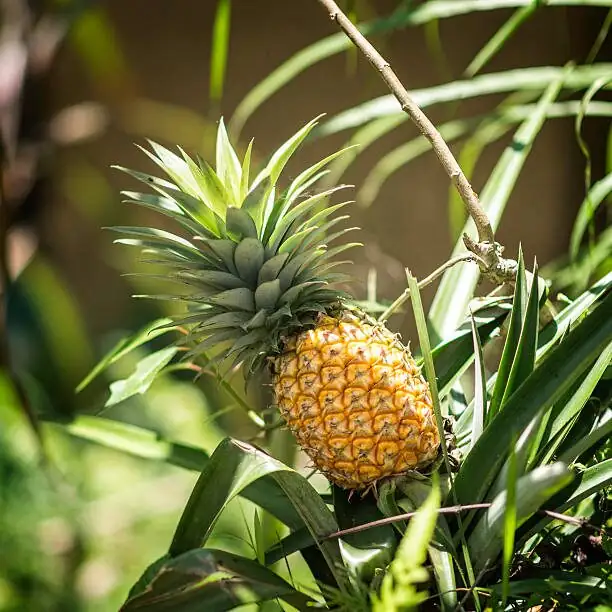
If your pineapple suddenly sports sticky, blackened leaves, odd silvery scuffs, or a slumped core, don’t panic—diagnosis and first aid can be fast. Ananas comosus is a tough tropical bromeliad built for blazing sun and lean, fast-draining soils. With a tight IPM routine, good airflow, and drainage that never lets roots stew, you can outpace mealybugs, scale, thrips, nematodes, root rot, and even a sneaky cold snap.
Here’s your quick-hit field guide—symptoms at a glance, fixes that work today, and prevention that sticks.
Rapid diagnostics: read the plant’s “SOS” in 30 seconds
- Cottony specks, sticky leaves, sooty mold: mealybugs (often escorted by ants).
- Hard, barnacle-like bumps that don’t wipe off; yellowing leaves: scale insects.
- Silvery or bronzed streaks on leaves; tiny black specks; distorted youngest leaves: thrips.
- Patchy stunting, thin foliage, weak root system with few fine roots (in-ground beds): nematodes.
- Plant wobbly at the base, heart smells sour; base leaves pull out easily; roots brown and mushy: root rot.
- After a chilly night: water-soaked, translucent leaf patches that later brown; wilting or reddening tips; fruit feels “glassy”: cold injury.
Tip: Always check the leaf axils (the tight folds near the center). Pineapple pests love to hide there.
Fix it fast: proven, practical actions by problem
Mealybugs
- Today
- Isolate the plant. Kill scouting ants—they farm mealybugs for honeydew.
- Dab clusters with 70% isopropyl alcohol on cotton swabs; wipe axils and the leaf undersides.
- Rinse the leaf “cup” with lukewarm water; tip the plant to drain. Refresh cup water every 2–3 weeks, never letting it stagnate in cool weather.
- This week
- Spray coverage: insecticidal soap or light horticultural oil, hitting leaf axils and the underside midribs. Repeat 7–10 days.
- Deploy ant baits around pots/beds and sticky barriers on benches to break the mealybug–ant alliance.
- Indoors/greenhouse: release beneficials such as Cryptolaemus montrouzieri (mealybug destroyer) or lacewings.
- Why it matters: Mealybugs can vector mealybug-wilt–associated viruses in pineapple. Early control prevents plant decline and poor fruiting.
Scale insects
- Today
- Scrape off encrusted adults with a blunt tool or nail, then wipe with alcohol.
- Spot-spray with horticultural oil; ensure thorough, glistening coverage.
- This week
- Time follow-up oil/soap sprays to hit the crawler stage (the only mobile stage). Repeat at 10–14 days.
- Boost airflow and sun exposure—scale escalates in shaded, still pockets.
Thrips
- Today
- Confirm: tap a leaf over white paper—thrips look like tiny slivers that scuttle.
- Prune the most distorted, infested new leaves if numerous.
- Place blue or yellow sticky cards at leaf height to monitor and reduce adults.
- This week
- Spray spinosad in the evening (kind to many beneficials). Rotate with insecticidal soap or an oil to avoid resistance. Repeat in 5–7 days.
- In protected culture, consider Orius insidiosus (minute pirate bugs) or predatory mites such as Amblyseius swirskii.
Nematodes (in-ground beds)
- Today
- Confirm by digging a small test plant: roots should be fibrous and white. If they’re sparse/pruned with little feeder root growth, suspect nematodes.
- This season
- Plant only clean, pest-free crowns/suckers/slips. Many growers use hot-water dips for planting material—follow local extension temperatures/timings precisely.
- Solarize future beds for 4–6 weeks of peak sun (clear plastic, sealed edges).
- Rotate out of pineapple and grass family crops; add organic matter and coarse sand to improve aeration.
- In mixed plantings, tagetes (marigold) cover crops can suppress some nematodes between cycles.
Root rot (often after overwatering or dense mixes)
- Today
- Tug test: if the central leaves pull free with a sour smell or blackened base, act now.
- Unpot, trim all brown/mushy roots with sterile shears, and let the base air-dry/callus several hours.
- Repot into a sharply draining, acidic mix (pH ~4.5–6.5): for example, 40% fine pine bark, 30% coarse perlite, 20% washed sand, 10% coco coir/compost.
- Water once, then allow the top 1–2 inches to dry before the next watering. Keep warmth and bright light.
- This week
- If legal and labeled for edible crops in your area, a targeted anti-oomycete drench (e.g., phosphite-based) can help. Otherwise stick to cultural fixes: drainage, warmth, and drying cycles.
- Improve airflow; keep the leaf cup fresh and never stagnant in cool spells.
Cold injury
- Tonight (before a chill)
- Move containers indoors or under cover when nights head below 10–16°C (50–60°F).
- In-ground plants: drape breathable frost cloth; add a warm mulch and windbreak. Brief dips to about -2°C (28°F) can still damage leaves without protection.
- Next 48 hours (after a chill)
- Keep leaves dry, bright, and warm; do not fertilize for 2–3 weeks.
- Wait to prune until damaged tissue demarcates; then remove only mushy parts back to firm, green tissue.
- Avoid water sitting in the cup on cold nights.
Airflow and drainage that actually work
Airflow that stops outbreaks
- Space plants so leaves don’t interlock; aim for consistent light penetration into the rosette.
- In greenhouses and indoors, add a gentle oscillating fan—enough to slightly stir leaves.
- Prune dead or tightly matted lower leaves to open the crown and dry the axils.
- Water early in the day; no evening leaf wetness in cool weather.
Drainage you can trust

- Containers: use pots with multiple large holes; add a coarse layer of mix (not rocks) from the bottom up.
- Mix recipe ideas (pick one and stick with it):
- Barky blend: 40% fine pine bark, 30% perlite, 20% washed sand, 10% coco/compost.
- Cactus/bromeliad base: 50% cactus mix + 30% perlite + 20% bark fines.
- Watering rhythm: deep soak, then let the top 2.5–5 cm (1–2 in) dry. Pineapple tolerates short dry spells but sulks in soggy soil.
- Leaf cup care: in warm, bright conditions, you can keep a little water in the cup—refresh every 2–3 weeks. Avoid this practice in cool, dim periods.
The IPM playbook for pineapple (that you’ll actually use)
- Start clean
- Choose vigorous crowns/suckers with green centers—no brown mush, no pests in leaf axils.
- Quarantine new plants for two weeks; inspect with a headlamp at night (pests are bolder then).
- Monitor smart
- Weekly 5-minute scan: leaf axils, undersides, and the central cup. Check sticky cards for thrips trends.
- Log what you see and what you did. Patterns inform timing.
- Cultural backbone
- Full sun fuels strong, pest-resilient growth; indoors, give the sunniest window you have.
- Keep warm: best growth near 24–27°C (75–80°F). Growth and immunity lag in cold rooms.
- Fertilize modestly during active growth (balanced, water-soluble feed monthly; lighter and more frequent in spring–summer if desired).
- Biological allies
- Encourage and release beneficials suited to your setting: mealybug destroyers, lacewings, Orius, predatory mites, and microbial tools like Beauveria bassiana.
- Targeted sprays, only when needed
- Use insecticidal soaps and oils first; hit hiding spots. Rotate modes of action if you escalate (e.g., spinosad for thrips).
- Always follow labels for edible crops, pre-harvest intervals, and pollinator safety.
Quick-reference: symptom-to-solution map
- Sticky, blackened leaves (sooty mold) + ants: treat mealybugs/scale and control ants.
- Silvery streaks on new leaves + black specks: thrips—use spinosad rotation and predators.
- Plant not anchoring, heart collapses: root rot—repot into airy mix, dry-down, warmth.
- Patchy stunting in a bed, weak fine roots: nematodes—clean planting stock, solarize, rotate.
- Red or browned tips after a cold night: cold injury—warmth, keep dry, prune later.
Pro tips for fruit-bound plants
- Sunshine sells sugar: keep fruiting plants in full, direct light and steady warmth.
- Feed, don’t flood: consistent, moderate nutrition with drying cycles prevents both rot and pest surges.
- After harvest: the mother declines—select the strongest sucker for a ratoon crop or propagate extras; keep up the same airflow and sanitation you used on the mother.
When to escalate
- You’ve repeated two soap/oil sprays and pests rebound quickly—add a compatible biological or rotate chemistry.
- Multiple plants show stunting with poor feeder roots—send a sample to a diagnostic lab for nematodes.
- Heart rot symptoms persist despite repotting—consult local extension on fungicide options labeled for edible bromeliads.
Environment snapshot (for prevention)
- Light: full sun outdoors; the brightest, direct-light window indoors.
- Temperature: prefers 18–35°C (65–95°F), happiest near 24–27°C (75–80°F); keep above 10–16°C (50–60°F) for steady growth.
- Humidity: enjoys it—but always with airflow.
- Soil: loose, fast-draining, sandy to sandy-loam; slightly acidic (pH ~4.5–6.5).
With sharp drainage, lively airflow, warm sun, and a simple weekly IPM walk-through, your pineapple’s rosette stays clean, the cup stays fresh, and pests never gain a foothold. That’s how you get from crown to a golden, aromatic fruit—without the drama.