

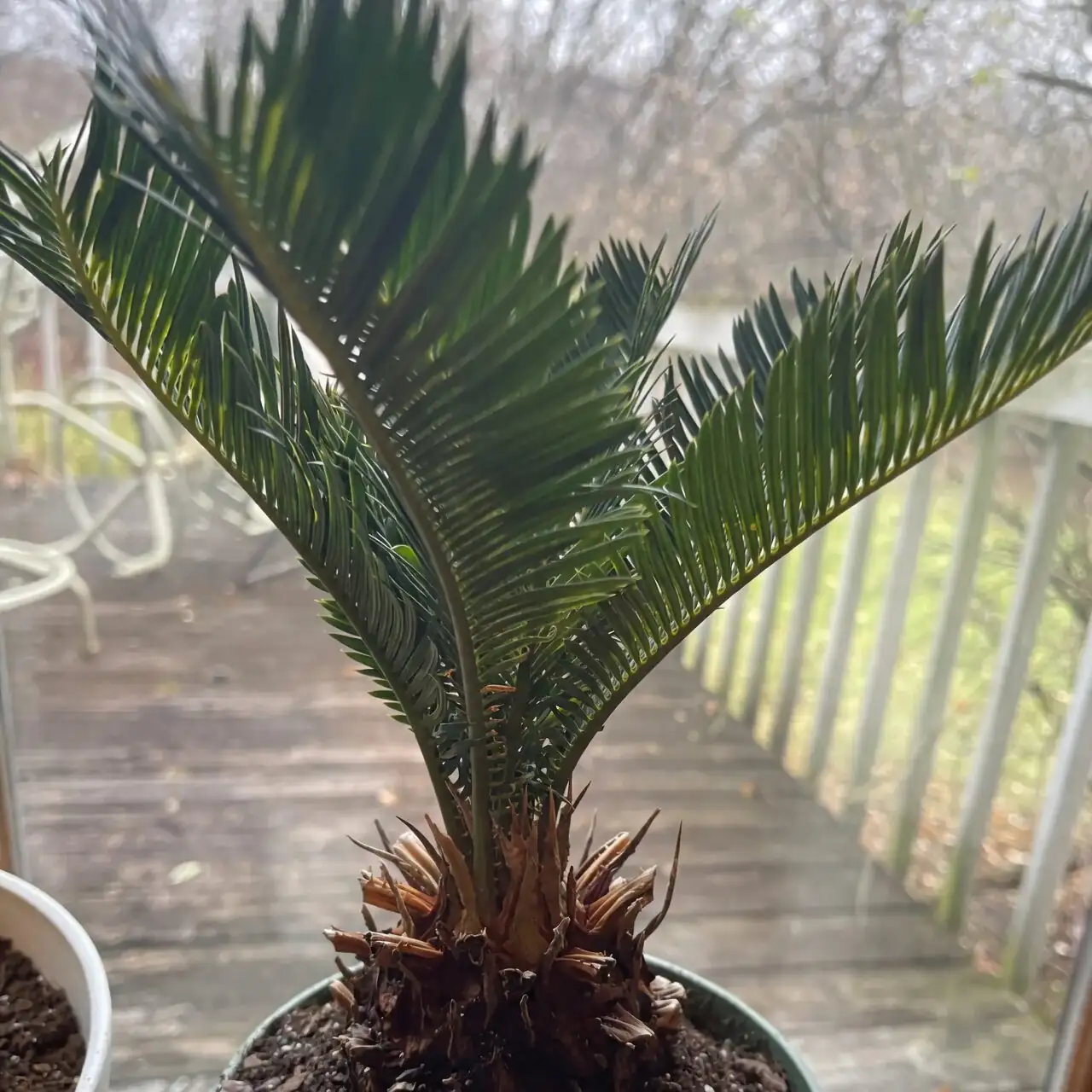
If your “Sago Palm” looks prehistoric, that’s because it is—Cycas revoluta is a true cycad, not a palm, with armor-like fronds and a slow, dignified pace. It’s also tough as nails… until pests or soggy roots sneak in. This guide starts with fast, photo-ready diagnostics so you can spot scale, mealybugs, or spider mites at a glance, then walks you through safe treatments and rot-proof care: airflow, correct watering, and fast-draining media.
Meet the plant in 20 seconds
- Identity: Cycas revoluta (aka Sago Palm, Japanese Sago Palm), a cycad from southern Japan
- Look: Chunky, textured trunk topped by a tidy rosette of glossy, stiff, needle-tipped fronds
- Light: Bright light with protection from harsh midday sun; bright window with filtered light indoors
- Size in pots: Commonly around 60 × 60 cm (24 × 24 in), larger with age
- Temperatures: 13–24°C (55–75°F); protect from frost
- Big cautions:
- Toxicity: Extremely poisonous (seeds especially). Keep away from pets and children.
- Crown care: Never pour water into the central crown—new growth emerges there and can rot.
Rapid triage: What’s wrong with my sago?
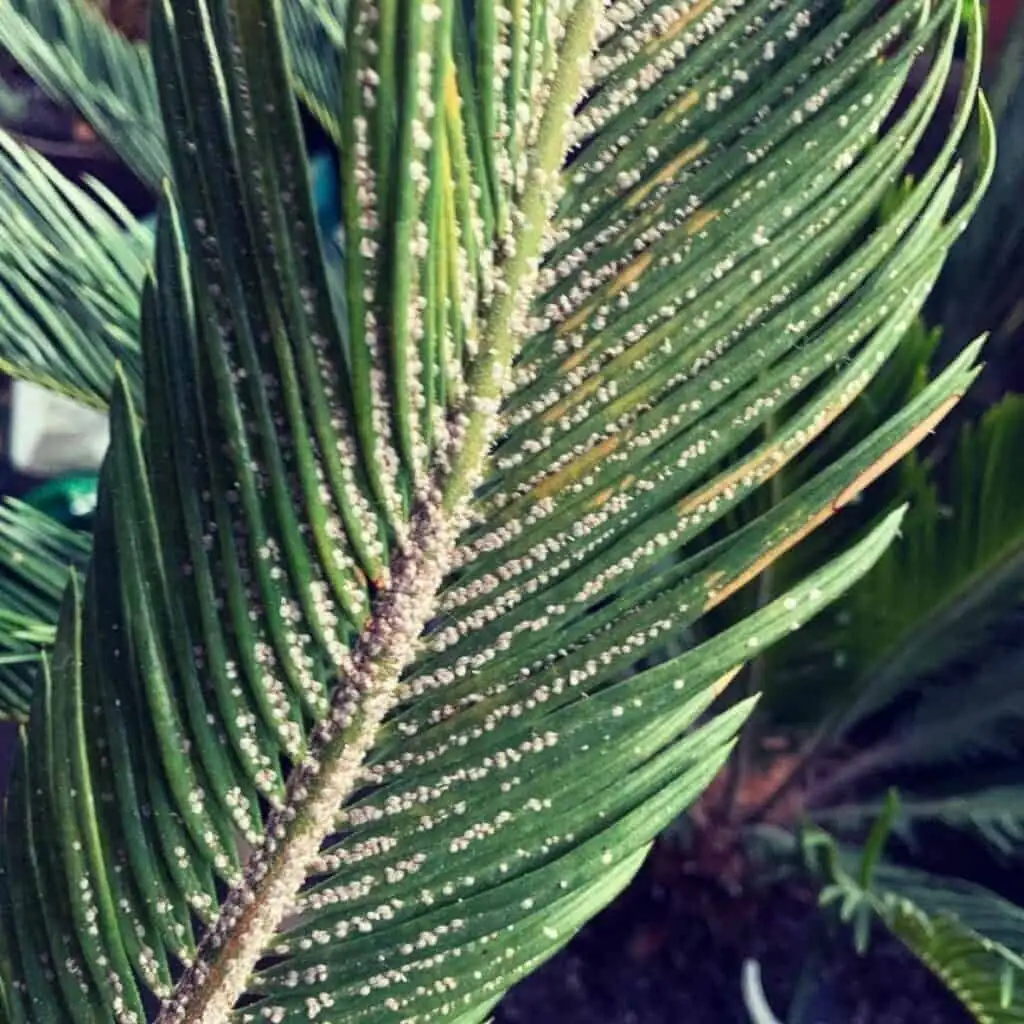
- Pests? Look for sticky residue, sooty mold, rough bumps (scale), cottony tufts (mealybugs), or fine webbing (spider mites).
- Rot? Think soggy mix, sour smell, soft trunk/crown, or yellowing with wilting in wet soil.
- Normal aging? Oldest, lowest fronds yellow and die naturally over time.
- Nutrition? New fronds yellowing or frizzling can signal micronutrient issues (often manganese deficiency) after you’ve ruled out pests and watering errors.
Photo-ready pest checklists (scale vs. mealybug vs. spider mite)
Scale (armored or soft scale)

- What you’ll see
- Pinhead-to-pea-sized, dome-like bumps stuck along the midribs and undersides of leaflets; colors vary (brown, tan, gray, black, or whitish)
- Leaves may look dull; sticky honeydew and black sooty mold may develop (especially with soft scales)
- Where to look
- Along the central midrib and leaflet bases; on the trunk’s crevices
- Feel/other clues
- Bumps don’t brush off easily; you must pry them up
- Quick confirm
- Gently lift one with a fingernail or toothpick—if it pops off with a tacky underside, it’s scale
Mealybugs
- What you’ll see
- Fuzzy, white, cottony specks or clumps in leaflet axils, along midribs, and in crown creases
- Honeydew and sooty mold; sometimes deformed new growth
- Where to look
- Deep in the crown and leaf bases, sheltered spots, underside of fronds
- Feel/other clues
- Smears into cottony fluff; ants often “farm” them for honeydew
- Quick confirm
- Dab with an alcohol-soaked cotton swab—mealybugs dissolve and smear
Spider mites

- What you’ll see
- Fine stippling (tiny pale dots) that turns bronzy; very fine webbing between leaflet edges or at tips
- Where to look
- Undersides of leaflets, especially in hot, dry, stagnant conditions
- Feel/other clues
- Fronds look dusty and dry despite normal watering
- Quick confirm
- White paper tap test: hold paper under a frond and tap—moving reddish or brown specks = mites
Safe, step-by-step treatments (indoor- and patio-friendly)
Always wear gloves—leaflets are sharp, and the plant is highly toxic.
1) Reset and isolate
- Move the plant away from others; improve airflow (a gentle fan nearby helps).
- Protect floors with a drop cloth; avoid wetting the crown during any rinsing.
2) Mechanical removal (first pass, all pests)
- Scale: Scrape with a fingernail, plastic card, or soft toothbrush. Prune and bag heavily infested fronds.
- Mealybugs: Swab visible clusters with cotton buds dipped in 70% isopropyl alcohol.
- Spider mites: Rinse leaf undersides with a firm, lukewarm spray. If indoors, take it to a shower or outdoors on a mild day—keep water out of the crown.
3) Low-toxicity sprays (repeat to break life cycles)
- Insecticidal soap: Excellent for mealybugs and mites; fair on scale crawlers. Thorough coverage, especially undersides. Rinse residue after a few hours; keep off the crown.
- Horticultural oil (light “summer” oil): Smothers scale, mealybugs, and mite eggs. Use in mild temperatures and indirect light; test on a small area first.
- Frequency
- Spider mites/mealybugs: Every 7–10 days for 3–4 rounds
- Scale: Every 10–14 days for 3–4 rounds, timed to nail newly hatched crawlers
- Tips
- Control ants outdoors; they protect mealybugs/scale.
- Rotate between soap and oil if needed. Avoid spraying in harsh sun or when temperatures are high.
- Indoors, avoid systemic insecticides; if you use any chemical outdoors, follow the label, keep away from pollinators, kids, and pets, and never bring treated soil or runoff near edible beds.
4) Aftercare
- Wipe off sooty mold once pests are controlled.
- Monitor weekly for a month—pests often rebound if you stop early.
Root and crown rot: prevent, spot early, act fast
Why cycads are rot-prone
- Their crowns hold new growth; trapped water there invites fungal/bacterial decay.
- Slow-growing roots hate stagnant, wet media.
Prevention blueprint
- Potting mix (fast-draining is non-negotiable)
- Blend: 1:1 soil-based mix and general-purpose potting mix
- Add extra grit/perlite for more drainage
- Pot and depth
- Use a pot with large drainage holes; unglazed clay helps the mix dry faster
- Plant no deeper than the original level—never bury the trunk
- Watering technique
- Spring–autumn: water when the top of the mix has just dried slightly
- Winter: keep almost dry
- Always water the soil, never the crown; tilt the pot or shield the crown if rinsing foliage
- Empty saucers; avoid pot sleeves that trap water
- Airflow and light
- Bright light with midday sun protection; keep air moving (a small fan helps indoors)
- Space away from walls so fronds and the crown can dry promptly
Early rot symptoms to catch
- Sour-smelling, wet potting mix; softening at the trunk base
- New flush browning or collapsing; yellowing with wilting while soil is wet
Rescue steps (if you catch it in time)
- Withhold water; move to bright, airy conditions
- Unpot gently; trim away all mushy, dark roots with sterile tools
- Let the root ball air-dry for several hours
- Repot into fresh, gritty mix in a clean pot; keep slightly snug rather than oversized
- Resume very cautious watering only after the top of the mix is dry
- If the crown itself is soft and foul, recovery is unlikely; dispose of the plant safely
Watering and airflow: the sago-safe way
- Think “thorough, then wait”
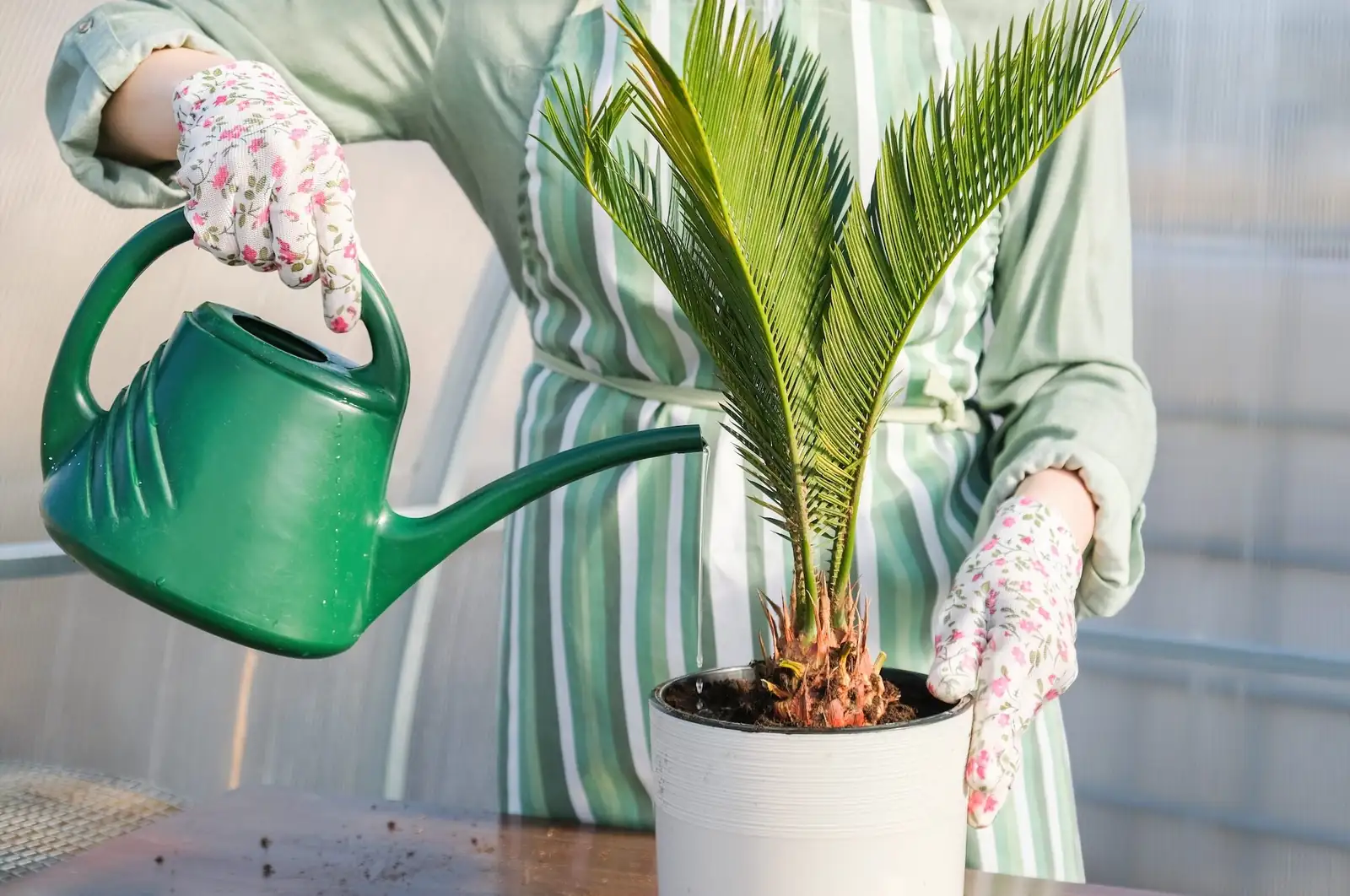
- Water deeply until a bit drains out; then don’t water again until the top of the mix dries slightly
- In winter, go sparse—almost dry is correct
- Never water into the crown where new fronds unfurl
- Air matters
- Gentle constant airflow reduces pest pressure and drying times
- Outdoors, avoid cramped, windless corners; indoors, a quiet fan is your friend
Quick care refresher (keep it thriving, not just surviving)
- Light: Bright, filtered light; protect from harsh midday rays
- Temperature: 13–24°C (55–75°F); shield from drafts and frost
- Humidity: Average home humidity is fine; in hot, dry spells, a light misting on fronds (not into the crown) keeps them looking fresh
- Feeding: Spring–autumn, monthly at half strength with a balanced liquid fertilizer; go easy—cycads are slow
- Pruning: Only remove fully brown, dead fronds; green fronds store energy
- Repotting: About every 3 years (or if root-bound), disturbing roots as little as possible
- Buying tip: Choose plants with firm trunks, clean crowns, deep green fronds; skip any with soft bases, sour soil, or yellowing plus wet mix
Yellowing: when to worry (and when not to)
- Normal: Lower, oldest fronds yellow and die—prune when fully brown
- Pests: Yellowing with sticky leaves, bumps, cotton, or webbing points to sap-suckers—treat as above
- Watering/rot: Yellowing plus wet soil or a sour smell signals trouble; improve drainage and airflow, adjust watering
- Nutrition: If new growth emerges pale or frizzled after you’ve ruled out pests and watering issues, consider a micronutrient deficiency. Adjust overall care first; targeted micronutrients can be considered if symptoms persist.
Safety first
- Toxicity: All parts are poisonous, seeds especially—serious risk to pets (dogs, cats) and humans if ingested
- Handling: Wear gloves and eye protection; leaflets are sharp
- Disposal: Bag infested prunings and any cones or seeds securely and trash them
Why many of us love it anyway
This “living fossil” offers sculptural fronds and resilient character with very little fuss—provided you respect its crown, keep its roots quick-draining, and stay a step ahead of quiet, sap-sipping pests. Master those three, and your cycad will repay you with decades of steady, architectural grace.